

High Quality 30x60mm Aluminum Wine Closures with Secure Fit
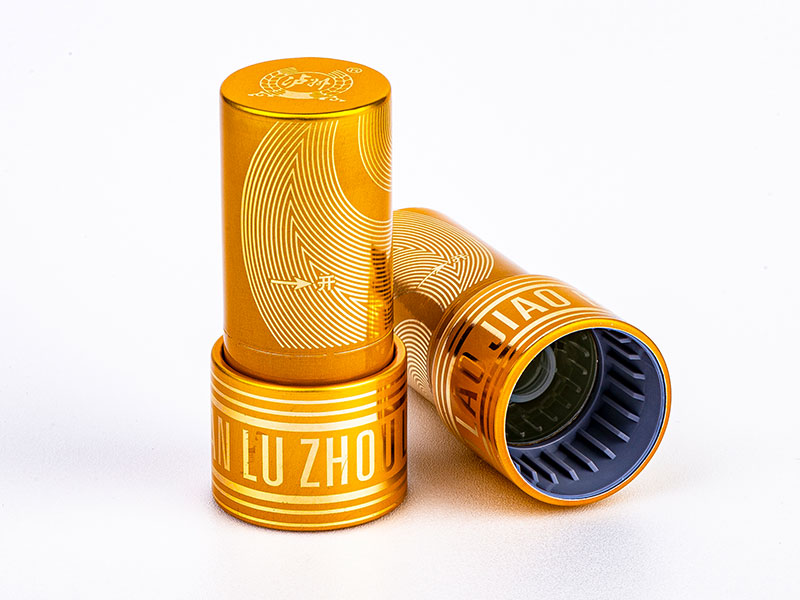
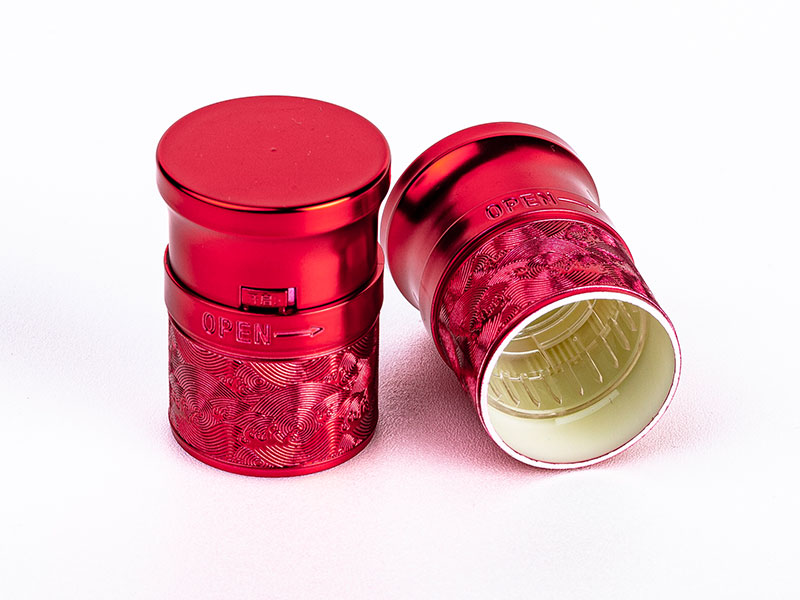
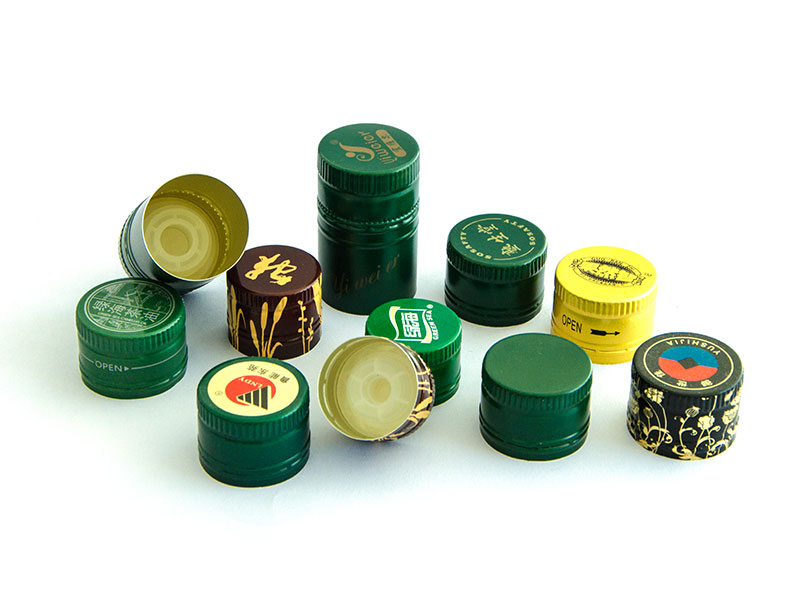
High Quality 30×60mm Aluminum Wine Closures with Secure Fit: Precision Sealing Seen Through a Metallurgist's Lens
A 30×60mm aluminum wine closure looks simple on the outside: a clean cylindrical cap, a crisp top, a polished skirt. Yet its real value is hidden in the material science and forming discipline that make it seal reliably across bottling lines, survive distribution, and protect aroma for months or years. From a metallurgical perspective, a "secure fit" is not just about tightness; it's the controlled relationship between alloy temper, skirt elasticity, thread geometry, liner compression behavior, and the micro-springback that happens after capping.
Why 30×60mm Matters in Modern Wine Packaging
The 30×60mm format has become a common choice for screwcap wine packaging because it balances several needs:
- A 30mm nominal diameter supports a broad sealing land and stable thread engagement for many standard wine bottle finishes
- A 60mm height provides skirt length for secure thread engagement, tamper evidence band integrity, and consistent liner compression without over-stressing the aluminum wall
- The geometry is compatible with efficient roll-on pilfer-proof application, where the cap is formed onto the bottle finish in a single controlled operation
When executed with high-quality aluminum alloy and stable temper, this size can deliver an airtight seal while still opening smoothly, preserving the "premium tactile" feel consumers associate with good packaging.
Secure Fit Is a Controlled Elastic Event, Not Just Tightness
A secure fit is created when the cap's skirt is plastically formed to the bottle's thread profile while retaining enough elastic recovery to maintain contact pressure over time. That balance depends on:
- Yield strength and elongation of the aluminum alloy and temper
- Work hardening during drawing, ironing, knurling, and pilfer band forming
- Dimensional control of inner diameter, wall thickness, and thread definition
- Liner type and compression set resistance
From a technical standpoint, "too soft" can mean thread deformation and torque drift. "Too hard" can mean cracked pilfer bridges, inconsistent thread roll-on, or liner under-compression. High quality 30×60mm closures are engineered for the narrow window where forming is stable, tamper evidence is robust, and sealing pressure remains consistent across storage conditions.
Parameters for 30×60mm Aluminum Wine Closures
The following parameters are commonly specified for premium closures, with tolerances adjusted based on customer bottle finish and capping system:
| Parameter | Typical Specification Range | Why It Matters |
|---|---|---|
| Nominal cap diameter | 30 mm | Matches common wine screw finish families and sealing lands |
| Overall height | 60 mm | Supports stable thread engagement and pilfer band geometry |
| Shell wall thickness | 0.20–0.23 mm | Controls formability, torque feel, and skirt strength |
| Alloy | AA 8011 / AA 3105 / AA 5052 (application-dependent) | Balances formability, strength, corrosion resistance |
| Temper | H14 / H16 / H18 (or optimized temper window) | Governs springback, thread definition, pilfer behavior |
| Internal liner | Saranex, PVDC-free barrier, EPE, Tin-Saran (market dependent) | Controls oxygen transmission and seal resilience |
| Application method | ROPP roll-on | Produces bottle-specific thread fit and tamper evidence |
| Surface finish | Anodized / lacquered / printed | Protects from corrosion and provides brand aesthetics |
| Tamper evidence | Pilfer band with bridges | Confirms integrity and provides opening feedback |
These are not "generic specs"; they are interdependent. For example, increasing thickness can improve pilfer band durability but may require a different temper or roller setup to avoid over-torquing or thread under-forming.
Implementation Standards and Quality Control: What "High Quality" Typically Complies With
High quality aluminum wine closures are usually produced under packaging and food-contact control systems that ensure consistency batch-to-batch and safety in contact with beverages.
Commonly referenced implementation frameworks include:
- ISO 9001 quality management for process control, traceability, and continuous improvement
- ISO 22000 or HACCP-style risk control for packaging that may contact food or beverages
- EU Regulation 1935/2004 and Good Manufacturing Practice Regulation 2023/2006 for food contact materials in Europe
- US FDA 21 CFR expectations applicable to indirect food contact packaging components, where relevant to the supply chain
- EN or equivalent industry methods for dimensional checks, torque performance testing, and coating adhesion verification, depending on region and customer requirements
On the production floor, "secure fit" is validated less by marketing claims and more by measurable indicators such as application torque window, removal torque stability over time, thread engagement uniformity, liner compression consistency, and leakage performance after thermal cycling.
Alloy Choice and Tempering: The Closure's Hidden Engineering
Alloy selection as a sealing strategy
Aluminum closures are commonly made from alloys designed for thin-gauge forming and good corrosion resistance. Three alloys appear frequently in closure manufacturing, chosen based on the desired balance of strength and drawability:
- AA 8011 is widely used for closure shells because it forms reliably at thin gauges and supports stable coating adhesion
- AA 3105 offers good formability and is often seen in packaging applications where controlled strength is needed
- AA 5052, with higher magnesium, can offer improved strength and corrosion resistance but may require tighter forming control depending on thickness and tooling
What temper "really" does for a wine screwcap
Temper in aluminum sheet reflects the level of strain hardening and any partial annealing. For 30×60mm wine closures, common tempers like H14, H16, and H18 represent increasing hardness and strength. The practical effect is:
- Softer temper improves drawability and reduces cracking risk during forming
- Harder temper improves thread crispness, resists skirt distortion, and supports tamper band integrity
- The optimal temper window is the one that forms cleanly at speed while retaining enough elasticity to maintain sealing pressure without excessive torque
A distinctive way to view it is this: the cap must behave like a spring after it has been shaped like a shell. Temper is how you tune that spring.
Chemical Composition and Material Properties Table
Exact chemistry can vary by mill and customer specification. The tables below provide widely recognized typical composition limits for common closure alloys (reference-style ranges consistent with standard alloy designations). Always confirm the purchased material certificate for the specific batch.
Typical chemical composition limits (wt.%)
| Alloy | Si | Fe | Cu | Mn | Mg | Zn | Ti | Al |
|---|---|---|---|---|---|---|---|---|
| AA 8011 | 0.50–0.90 | 0.60–1.00 | ≤0.10 | ≤0.20 | ≤0.05 | ≤0.10 | ≤0.08 | Balance |
| AA 3105 | ≤0.60 | ≤0.70 | ≤0.30 | 0.30–0.80 | 0.20–0.80 | ≤0.40 | ≤0.10 | Balance |
| AA 5052 | ≤0.25 | ≤0.40 | ≤0.10 | ≤0.10 | 2.20–2.80 | ≤0.10 | ≤0.15 | Balance |
Typical mechanical property ranges (sheet, indicative; depends on gauge and exact temper)
| Alloy / Temper | Ultimate Tensile Strength (MPa) | Yield Strength (MPa) | Elongation (%) |
|---|---|---|---|
| AA 8011-H14 | ~125–160 | ~110–145 | ~2–6 |
| AA 8011-H16 | ~140–175 | ~125–160 | ~2–5 |
| AA 3105-H14 | ~145–185 | ~130–170 | ~2–6 |
| AA 5052-H14 | ~190–230 | ~150–200 | ~4–10 |
These values are used by engineers to predict forming stability, springback, and thread retention. For secure-fit wine closures, the "best" numbers depend on the bottle finish, liner selection, and the capping head's roller profile.
Coatings, Lacquers, and Liners: Chemistry That Protects Flavor
Wine closures must protect both the product and the packaging itself.
- Exterior coatings and inks are designed for abrasion resistance, brand appearance, and corrosion protection during humid storage and ice bucket conditions
- Interior lacquers act as a barrier to prevent interactions between wine vapors and aluminum, especially in acidic environments
- Liners provide the primary seal, and high quality options are selected for low oxygen transmission and stable compression recovery
From the perspective of long-term wine quality, liner performance is as important as the metal shell. The aluminum provides geometry and pressure; the liner provides the micro-scale sealing that blocks oxygen ingress and protects aroma.
Secure Fit on the Line: What Good Implementation Looks Like
A secure fit is proven at speed. On high-throughput bottling lines, a high quality 30×60mm aluminum wine closure should demonstrate:
- Smooth roll-on forming without skirt wrinkles or thread skipping
- Consistent tamper evidence bridge formation and predictable break on opening
- Stable application torque that avoids bottle finish stress while ensuring liner compression
- Removal torque that remains within expected range after storage, vibration, and temperature cycling
- Minimal cosmetic defects such as scratches, denting, or print scuffing
When these outcomes are consistent across pallets and production days, it is typically a sign of stable temper, reliable thickness control, well-calibrated tooling, and good coating cure management.
It helps to think of a wine closure not as a cap, but as a micro-pressure management device. The cap must handle small pressure changes, headspace variations, and thermal expansion during shipping, all while keeping oxygen ingress low. That's why high quality aluminum closures prioritize:
- Uniform skirt thickness to avoid weak points that relax over time
- Controlled temper to keep elastic recovery predictable
- Barrier liner integrity to maintain the seal despite micro-movement of glass threads
- Coating chemistry to prevent corrosion pathways that could compromise aesthetics or cleanliness
A secure fit is the harmony of these parts, not the dominance of one.
https://www.bottle-cap-lids.com/a/high-quality-30x60mm-aluminum-wine-closures-with-secure-fit.html