

Custom Aluminum Soda Bottle Caps with Unique Branding Solutions
Custom Aluminum Soda Bottle Caps with Unique Branding Solutions
A soda bottle cap is a small object with a big job: it has to keep carbonation locked in, protect flavor, survive transport, and still look great under retail lighting. When the cap is made of aluminum, it becomes more than a closure. It becomes a lightweight billboard, a tactile brand cue, and a precision component engineered to seal consistently at high line speeds. Custom aluminum soda bottle caps are where packaging design meets metallurgy, and the best results come from treating both with equal respect.
Why aluminum caps feel "premium" before the bottle is even opened
Aluminum has an unmistakable hand-feel. It's cool to the touch, rigid without being brittle, and it accepts fine surface finishes that plastics struggle to replicate. For beverage brands, that translates into a closure that communicates quality immediately. For operations teams, aluminum offers stable dimensions, excellent corrosion resistance, and dependable performance on automated capping equipment.
The real advantage, though, is balance: aluminum can be formed into complex profiles while maintaining tight tolerances. That matters when the goal is a cap that threads smoothly, tamper-evident features that break cleanly, and a sealing surface that holds pressure without "micro-leaks" over shelf life.
Unique branding solutions that actually work on the line
Branding on a cap is not just decoration; it's a surface engineering choice. Great cap branding respects the realities of filling lines, pasteurization, condensation in cold chains, and consumer handling.
Common high-impact customization options include:
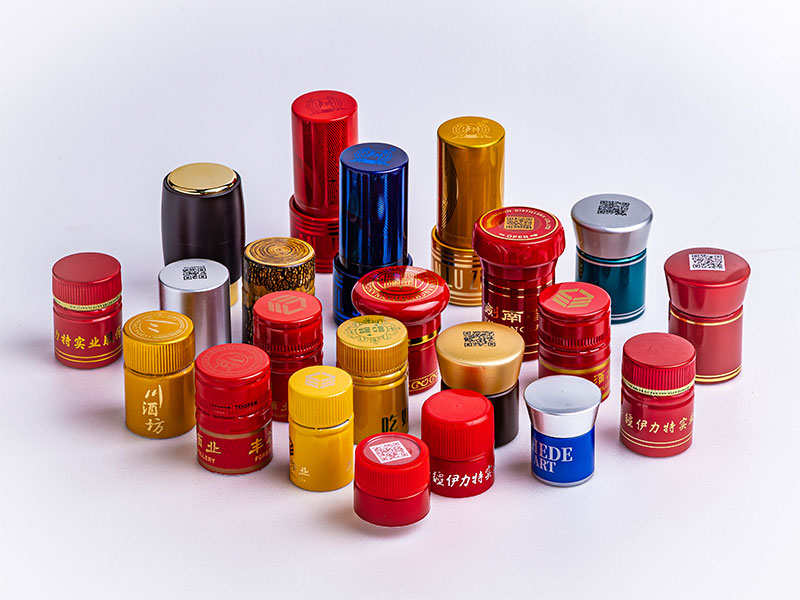
Top embossing and debossing
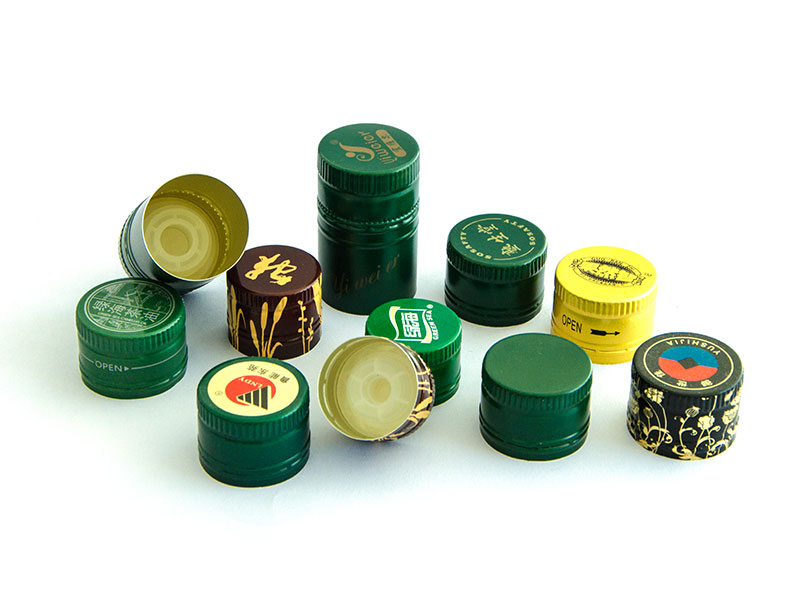
Raised logos add tactile recognition and stay legible even when scuffed. Debossed designs protect inked graphics around them and feel intentional in-hand. Both work well when the aluminum temper and thickness are selected to avoid springback and loss of detail.
High-adhesion printing with protective overvarnish
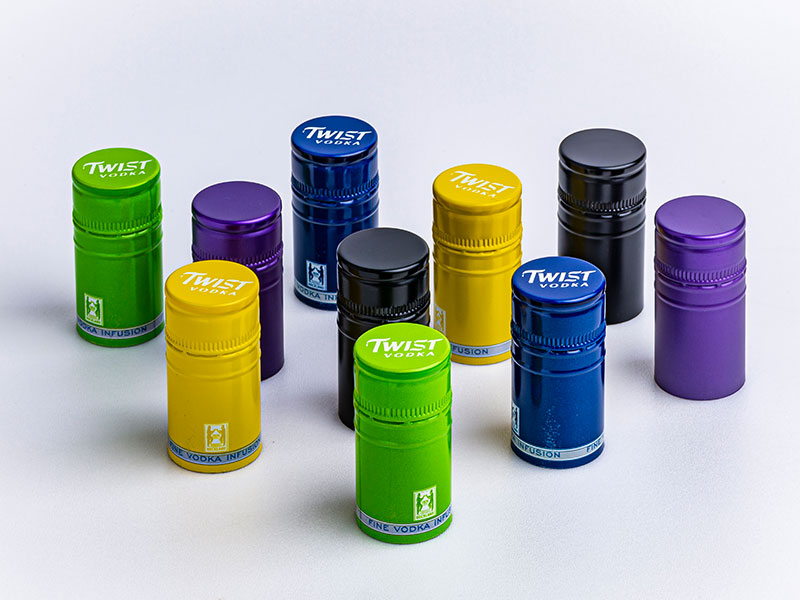
For vivid colors and QR-ready detail, offset or dry offset printing is widely used. Adding a clear overvarnish improves abrasion resistance and reduces color migration during moisture exposure.
Anodized or colored finishes
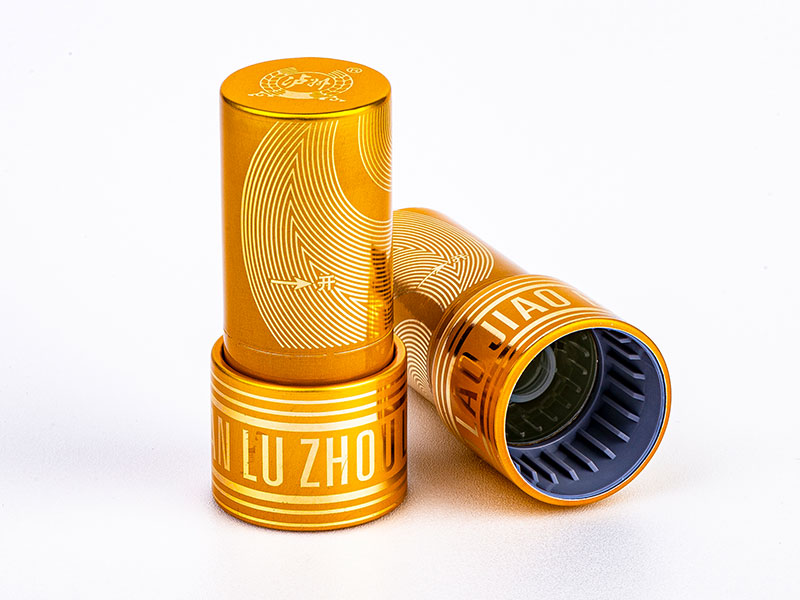
Where a metallic "jewel" look is desired, anodizing improves surface hardness and corrosion resistance while enabling color. For beverage caps, finishes must be compatible with liners and not shed particulates.
Laser marking for traceability and storytelling
Laser codes can add batch traceability or limited-edition personalization without adding ink systems. This is especially useful for campaigns, anti-counterfeiting, and regional runs.
The distinctive perspective here is simple: the best branding is the branding that survives the customer's refrigerator and the retailer's handling. That means testing for rub, water spotting, and chemical resistance is as important as the artwork itself.
parameters customers should specify for custom aluminum soda caps
A custom cap program runs smoothly when requirements are expressed as measurable parameters rather than just visuals. Typical items to define include:
Cap type: ROPP-style (roll-on pilfer-proof) for threaded necks, screw caps for pre-threaded finishes, or specialty profiles
Diameter and height: matched to bottle finish and headspace needs
Thread profile and bridge geometry: controls opening torque, re-close performance, and tamper evidence break
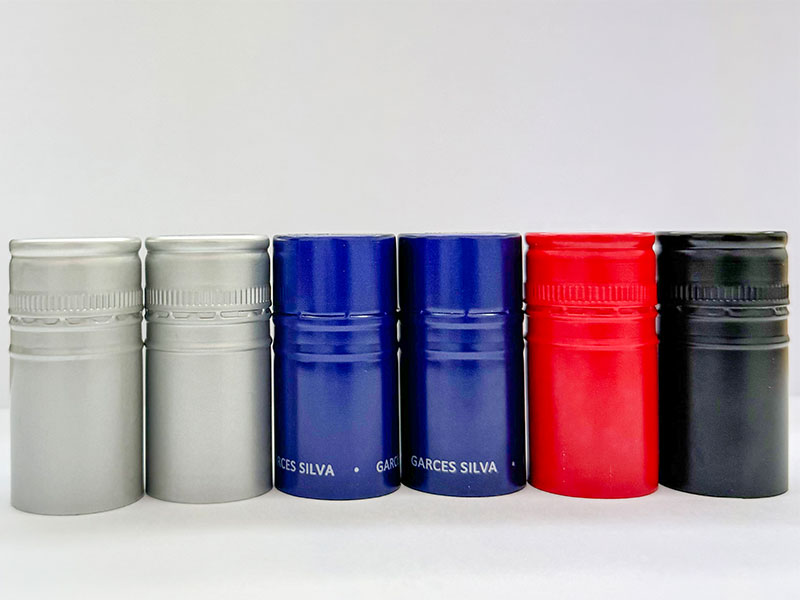
Skirt knurling: grip comfort and brand feel, from fine to aggressive knurl
Aluminum thickness: commonly in the 0.18–0.25 mm range depending on cap size and forming depth
Liner system: EPE, TPE, PVC-free compounds, or pressure-sensitive liners depending on carbonation level, product chemistry, and hot-fill/pasteurization
Sealing land width and curl shape: affects liner compression and leak resistance
Target application torque and removal torque: tuned for consumer usability while preventing back-off in transit
Surface finish: glossy, matte, satin, brushed, anodized, or coated aluminum
Print system and color standard: Pantone or custom references, plus adhesion and rub targets
Implementation standards and performance expectations
While exact standards depend on the market and bottle finish, aluminum soda caps are typically developed around widely recognized packaging and quality practices:
Dimensional and visual inspection under agreed AQL sampling plans
Torque testing for application and removal, with defined ranges and temperature conditions
Leak testing under internal pressure, often using burst or creep protocols suited to carbonated beverages
Tamper-evidence integrity testing, including bridge break consistency
Coating and print adhesion testing, such as cross-hatch adhesion and wet rub resistance
Corrosion resistance verification, especially for flavored sodas, acidic beverages, and humid storage
Food-contact compliance for coatings and liners aligned with applicable regulations in the destination market
A practical rule: if your soda will be cold, wet, and handled often, specify condensation resistance and abrasion resistance up front. A cap that looks perfect at the factory can look tired on a retail shelf if coatings are not matched to real-world handling.
Alloy selection and tempering: the quiet driver of cap quality
Aluminum bottle caps are usually made from aluminum sheet or coil engineered for formability and consistent deformation during rolling and threading. Two alloy families are common:
AA 8011
Popular for closures due to excellent formability, stable performance in deep drawing, and good compatibility with coatings.
AA 3105
Often used when additional strength is desired while still retaining suitable formability for cap forming.
Temper selection matters because caps must deform in controlled ways: the skirt must roll into threads, bridges must form and break predictably, and the top panel must resist denting. Typical tempers for closure stock include H14, H16, H18, and H19 depending on thickness, forming method, and cap geometry. Softer tempers form more easily and capture embossing detail, while harder tempers improve dent resistance and handling durability. The right choice is the one that meets torque targets without cracking, whitening, or losing graphic sharpness.
Chemical properties table for common closure alloys
Below is a reference-style table for typical chemical composition ranges. Exact limits can vary by standard and supplier certification; production should follow mill test certificates and agreed specifications.
| Alloy | Si (%) | Fe (%) | Cu (%) | Mn (%) | Mg (%) | Zn (%) | Ti (%) | Al |
|---|---|---|---|---|---|---|---|---|
| AA 8011 | 0.50–0.90 | 0.60–1.00 | 0.10 max | 0.20 max | 0.05 max | 0.10 max | 0.08 max | Balance |
| AA 3105 | 0.60 max | 0.70 max | 0.30 max | 0.30–0.80 | 0.20–0.80 | 0.40 max | 0.10 max | Balance |
From a branding standpoint, chemistry affects more than strength. It influences how consistently the cap forms, how coatings bond, and how the surface responds to finishing processes like anodizing or varnishing.
Matching liner and coating to soda chemistry
Soda is rarely just carbonated water. Acids, flavors, sweeteners, and preservatives can challenge seals over time. For that reason, cap development should consider:
Acidity and potential for flavor scalping
CO₂ pressure over intended storage temperatures
Hot-fill or tunnel pasteurization exposure
Compatibility between beverage vapors and liner materials
Resistance of coatings to humidity, salts, and cleaning chemicals in production
A well-designed aluminum cap uses a coating system to protect the metal, and a liner designed to compress evenly and rebound after opening. When these are aligned, you get a cap that opens with a confident twist and re-seals reliably.
The takeaway: a cap can be a signature, not an afterthought
Custom aluminum soda bottle caps succeed when brand design and engineering share the same brief. The cap should tell your story visually, but it must also pass torque, pressure, and corrosion realities without drama. Choose a proven alloy such as AA 8011 or AA 3105, specify the right temper for your forming and embossing depth, and treat coatings and liners as part of the product chemistry-not just accessories.