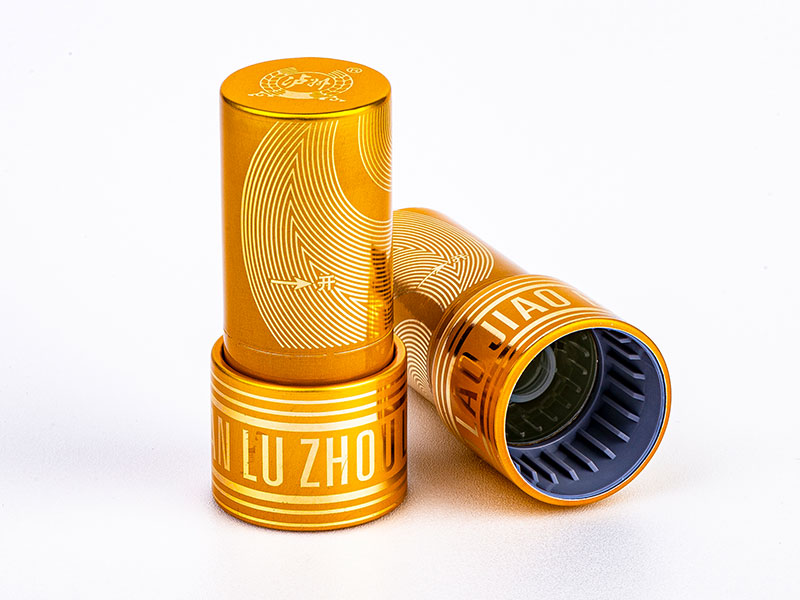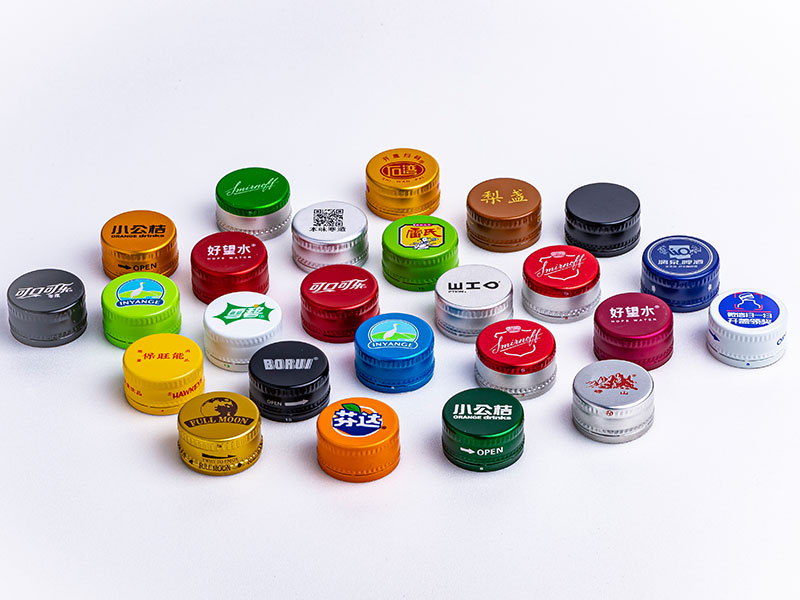


Leak Proof Aluminum Caps for Soda Bottles with Airtight Seal
In the soft drink industry, attention usually gravitates toward flavor systems, carbonation levels, bottle design, and branding. Yet one of the most decisive components in preserving product quality is often the smallest visible part of the package: the aluminum cap. For soda bottles, a leak proof aluminum cap with an airtight seal is not just a closure. It is a pressure-management device, a flavor-preservation barrier, a tamper-evident interface, and a critical contributor to shelf stability.
A useful way to understand this product is to stop thinking of the cap as a simple metal lid and start seeing it as a precision-engineered control point. From this perspective, the performance of aluminum bottle caps for carbonated beverages depends on the interaction of alloy selection, temper state, liner compatibility, thread geometry, shell dimensions, sealing torque, corrosion resistance, and compliance with packaging standards. When these factors are aligned, the result is a closure that keeps carbonation in, oxygen out, and leakage risk exceptionally low throughout filling, transport, storage, and consumer use.
Why leak proof aluminum caps matter for soda bottles
Soda is an unusually demanding packaging environment. Carbonated soft drinks place the closure under continuous internal pressure, often with fluctuating temperatures during warehousing and logistics. Even a slight imperfection in the cap shell, thread profile, liner compression, or material consistency can lead to micro-leakage, pressure loss, reduced sparkle, flavor flattening, and sticky handling problems in retail channels.
Leak proof aluminum caps are especially valuable because aluminum offers a combination of formability, dimensional consistency, light weight, corrosion resistance, and premium appearance. When paired with a well-designed sealing system, aluminum bottle caps can maintain airtight integrity across a broad range of carbonation conditions.
From a packaging science viewpoint, "airtight" in soda applications means more than blocking visible liquid escape. It also means controlling gas transmission, maintaining closure retention under pressure, and resisting deformation during capping and reopening. This is why advanced aluminum caps are designed as functional sealing systems rather than decorative accessories.
A distinctive viewpoint: the cap as a pressure translator
One distinctive way to evaluate aluminum caps for soda bottles is to consider them as pressure translators. The carbonated beverage inside the bottle creates upward force. The bottle neck finish transfers that force to the cap threads and sealing land. The cap, in turn, translates that force into controlled liner compression and circumferential retention.
If the cap is too soft, it may deform excessively during application and lose dimensional stability. If it is too hard, it may crack during forming or fail to generate reliable thread conformity. If the liner is too soft, it may extrude or creep under load. If it is too rigid, it may not accommodate bottle finish variation. So the ideal leak proof aluminum cap is not defined by a single material property. It is defined by balance.
This balance is where alloy tempering becomes central. The temper condition of the aluminum shell affects drawability, thread formation, buckle resistance, skirt performance, opening torque behavior, and long-term sealing reliability. For carbonated drinks, that balance must be managed with unusual precision.
Core structure of an airtight aluminum cap for soda bottles
A typical leak proof aluminum cap for soda bottles includes several integrated elements:
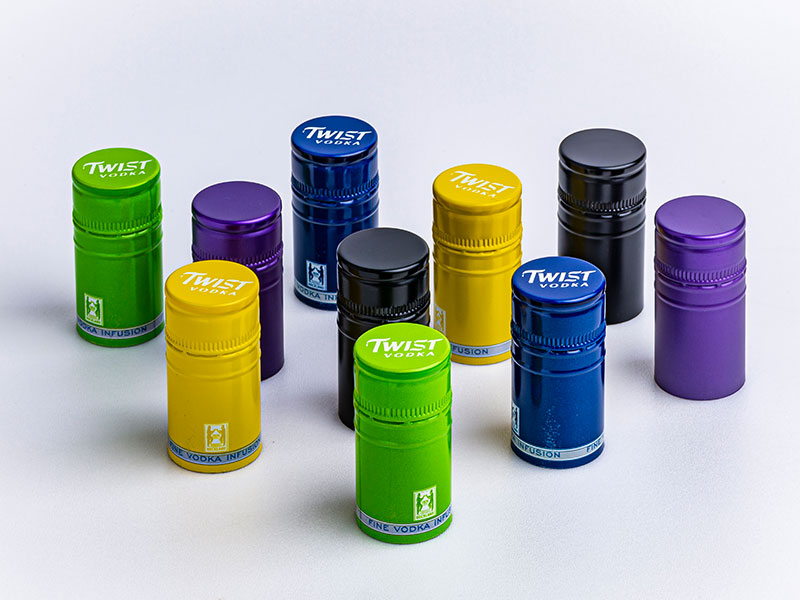
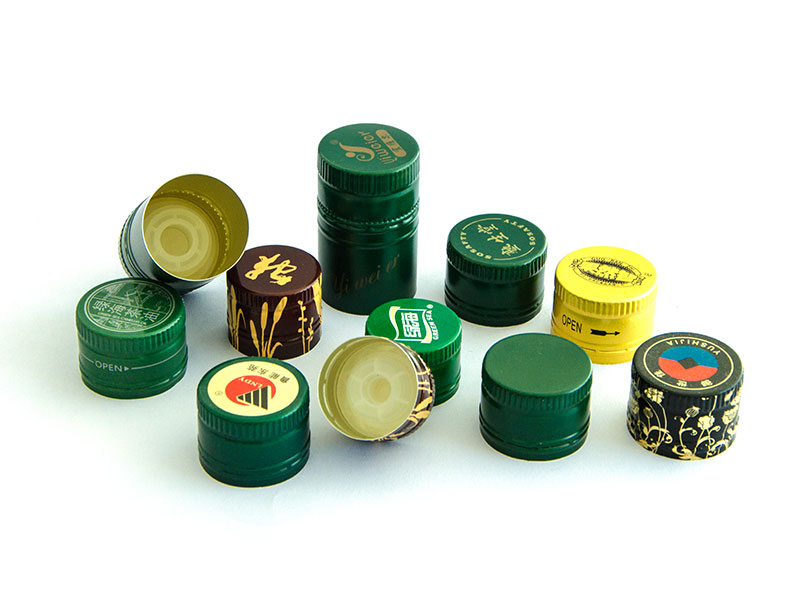
An aluminum shell formed by stamping and drawing, often with rolled or threaded features that match the bottle neck finish.
A sealing liner, gasket, wad, or insert designed to provide compression sealing against the bottle lip and internal pressure retention.
A tamper-evident band or pilfer-proof structure, depending on closure format.
Internal geometry engineered to distribute capping force evenly and maintain sealing performance through pressure cycles.
Surface treatments, coatings, or printing systems that improve corrosion resistance, appearance, and food-contact suitability.
In practical production, cap performance depends not only on the cap itself but also on the total package interface, including PET bottle neck tolerance, filling line torque control, beverage acidity, storage temperature, and transport vibration.
Common technical parameters for leak proof aluminum caps for soda bottles
The exact dimensions vary by bottle finish and market requirements, but the following parameters are commonly considered in industrial specification and procurement:
| Parameter | Typical Range / Condition | Functional Significance |
|---|---|---|
| Cap diameter | 28 mm, 30 mm, 38 mm, custom | Must match bottle neck finish precisely |
| Shell height | 12 mm to 18 mm | Influences thread engagement and tamper band design |
| Aluminum thickness | 0.18 mm to 0.25 mm | Affects formability, strength, and seal stability |
| Internal pressure resistance | 0.4 MPa to 0.8 MPa, application-dependent | Critical for carbonated beverage retention |
| Opening torque | Customized, often 0.8 N·m to 1.8 N·m | Balances consumer convenience with sealing security |
| Application torque | Typically 1.0 N·m to 2.5 N·m | Depends on bottle finish, liner, and cap geometry |
| Liner type | EPE, PE foam, TPE, PVC-free, pressure-sensitive, custom | Determines airtightness and chemical compatibility |
| Leak test condition | Vacuum and pressure testing per internal or customer protocol | Verifies seal integrity before shipment |
| Surface finish | Plain, printed, coated, embossed, anodized-like decorative effect | Supports branding and corrosion protection |
| Tamper evidence | Break ring, pilfer band, score line design | Provides package security and consumer confidence |
| Operating temperature | Typically -20°C to 60°C, product-dependent | Important for transport and storage reliability |
These parameters should not be treated as isolated figures. A cap with excellent pressure resistance may still fail in practice if liner recovery is poor or if neck finish tolerances are inconsistent. For soda packaging, system compatibility is the true measure of success.
Suitable aluminum alloys for soda bottle caps
For aluminum bottle caps, several alloys are widely used due to their forming behavior and strength profile. The most common include the 1xxx and 3xxx series, with selected 8xxx-series materials also used in some packaging applications depending on design and process.
Typical alloy choices include:
| Alloy | Common Temper | Characteristics | Suitability for Soda Caps |
|---|---|---|---|
| 1060 | O, H14 | High purity, excellent formability, good corrosion resistance | Suitable for deep drawing and decorative cap shells |
| 1070 | O | Very high aluminum content, soft, highly workable | Good where extreme formability is needed |
| 8011 | H14, H16, H24 | Widely used in packaging, balanced strength and workability | Very common for bottle cap stock |
| 3105 | H14, H16 | Improved strength with good forming performance | Useful for closures requiring better rigidity |
Among these, 8011 aluminum alloy is especially popular for aluminum bottle cap production because it combines stable mechanical performance, reliable processability, and good compatibility with coating and printing operations. In soda applications, where airtightness and deformation resistance are equally important, 8011 in suitable temper conditions often provides an effective balance.
Alloy tempering and why it affects leak proof performance
The temper of aluminum defines its mechanical state after processing, especially in terms of hardness, tensile strength, elongation, and forming behavior. This matters greatly for soda bottle caps because the cap must survive multiple mechanical events: stamping, drawing, threading, lining, capping, pressure retention, transport vibration, and opening.
Common temper conditions for cap stock include O, H14, H16, and H24.
The O temper is annealed and relatively soft. It offers excellent ductility and deep drawability, which helps avoid cracking in forming. However, if used without proper structural compensation, it may provide lower resistance to deformation under closure torque or internal bottle pressure.
H14 indicates strain-hardened material to a half-hard condition. It is often a preferred middle ground because it improves shell stability while maintaining adequate formability.
H16 is harder than H14 and may be selected where increased rigidity and dent resistance are desirable, though process windows must be controlled carefully to prevent forming defects.
H24 combines strain hardening with partial annealing, offering a useful compromise between hardness and ductility.
From a sealing perspective, temper selection influences:
Thread definition after cap forming
Skirt resilience during capping
Retention of sealing load over time
Resistance to buckling under carbonation pressure
Consistency of opening torque after storage
A leak proof aluminum cap is therefore not merely "made of aluminum." It is made from aluminum in a carefully chosen metallurgical state.
Mechanical and chemical properties of common cap alloys
Below is a general reference table for commonly used aluminum alloys in bottle cap applications. Actual values vary by supplier, temper, gauge, and production route, so these should be used as indicative ranges rather than absolute purchase criteria.
| Alloy | Temper | Tensile Strength MPa | Yield Strength MPa | Elongation % | Density g/cm³ | Main Alloying Elements | General Corrosion Resistance |
|---|---|---|---|---|---|---|---|
| 1060 | O | 60–95 | 15–35 | 20–35 | 2.70 | Al ≥ 99.6% | Excellent |
| 1060 | H14 | 95–125 | 75–110 | 4–10 | 2.70 | Al ≥ 99.6% | Excellent |
| 1070 | O | 55–90 | 15–30 | 22–36 | 2.70 | Al ≥ 99.7% | Excellent |
| 8011 | H14 | 125–165 | 110–145 | 2–8 | 2.71 | Fe, Si | Very good |
| 8011 | H16 | 145–185 | 125–160 | 1–5 | 2.71 | Fe, Si | Very good |
| 3105 | H14 | 140–180 | 115–150 | 3–8 | 2.73 | Mn, Mg | Very good |
For buyers focused on soda bottle cap performance, the most important properties are not always the highest strength values. Instead, the is matching tensile behavior and elongation with the forming route and final closure requirements.
Chemical composition table for common aluminum cap materials
Chemical composition influences corrosion behavior, formability, coating adhesion, and mechanical consistency. Typical compositional references are shown below.
| Alloy | Si % | Fe % | Cu % | Mn % | Mg % | Zn % | Ti % | Al % |
|---|---|---|---|---|---|---|---|---|
| 1060 | 0.25 max | 0.35 max | 0.05 max | 0.03 max | 0.03 max | 0.05 max | 0.03 max | 99.6 min |
| 1070 | 0.20 max | 0.25 max | 0.04 max | 0.03 max | 0.03 max | 0.04 max | 0.03 max | 99.7 min |
| 8011 | 0.5–0.9 | 0.6–1.0 | 0.1 max | 0.2 max | 0.05 max | 0.1 max | 0.08 max | Balance |
| 3105 | 0.6 max | 0.7 max | 0.3 max | 0.3–0.8 | 0.2–0.8 | 0.4 max | 0.1 max | Balance |
For carbonated soft drinks, corrosion resistance is especially important because the closure may be exposed to acidic vapors, condensate, syrup splashes, and humid storage conditions. Appropriate coatings and liners are often as important as alloy chemistry itself in preserving long-term performance.
Implementation standards and compliance considerations
Reliable leak proof aluminum caps for soda bottles are usually manufactured with reference to recognized quality, packaging, and food-contact frameworks. The exact standard set depends on the export destination, customer category, and application, but the following are commonly relevant in the global market:
| Standard / Framework | Relevance to Aluminum Soda Bottle Caps |
|---|---|
| ISO 9001 | Quality management system for consistent manufacturing and traceability |
| ISO 22000 or FSSC 22000 | Food safety management in packaging supply chains |
| FDA food-contact requirements | Important for closures entering the US market |
| EU food-contact regulations | Required for products supplied into European food packaging applications |
| RoHS / REACH screening where applicable | Supports chemical compliance expectations in some regions |
| Internal carbonation and leak test protocols | Essential for soft drink closure validation |
| AQL inspection standards | Used for dimensional, cosmetic, and functional quality acceptance |
In addition to formal standards, many beverage brands maintain proprietary closure validation programs covering torque retention, pressure resistance, stress cracking, drop impact, liner migration, organoleptic neutrality, and accelerated aging. This is one reason why cap manufacturing for soda bottles often demands tighter process discipline than general-purpose closures.
Liner systems: the invisible heart of airtight sealing
If the aluminum shell is the architecture of the cap, the liner is its memory foam. It adapts, compresses, recovers, and compensates for the real-world imperfections that exist between theory and production. For soda bottles, liner selection strongly affects airtight seal performance.
Common liner options include PE foam, EPE, TPE-based compounds, and PVC-free sealing inserts. The best choice depends on beverage acidity, carbonation level, hot-fill or cold-fill conditions, bottle finish design, and regulatory expectations.
A good soda cap liner should offer:
Reliable compression sealing under internal pressure
Low odor and taste neutrality
Resistance to beverage vapor exposure
Stable recovery after capping torque is applied
Compatibility with aluminum shell coatings and bottle resin
Minimal sealing degradation under temperature variation
This is why many closure failures attributed to "cap leakage" are actually interface failures involving liner compression set, torque drift, or bottle neck inconsistency.
Manufacturing process and its influence on seal integrity
The journey from aluminum sheet to leak proof cap includes several critical stages: material preparation, stamping, drawing, trimming, shell shaping, thread or pilfer band formation, internal coating, external decoration, lining, curing where required, inspection, and packing.
Each step influences final performance.
If sheet thickness varies excessively, the cap may form with uneven wall distribution. If lubrication and die conditions are not optimized, micro-cracks or residual stress may develop. If thread geometry is inconsistent, torque application becomes unstable. If the liner is inserted off-center or with variable thickness, airtight sealing may fail even when the metal shell looks perfect.
This is why high-quality aluminum bottle cap manufacturing relies heavily on:
Tight dimensional tolerances
Stable alloy and temper supply
Inline vision inspection
Burst and leak testing
Torque verification
Coating adhesion control
Clean production conditions for food packaging
From a buyer's standpoint, the most valuable cap supplier is often not the one offering the lowest unit price, but the one capable of controlling variation at every stage.
Performance under carbonation pressure
Soda bottles create a dynamic pressure environment. Depending on formulation and temperature, internal pressure can rise significantly. A closure intended for still beverages may not be suitable for carbonated drinks even if the dimensions appear similar.
For leak proof aluminum caps used on soda bottles, engineers typically evaluate:
Seal retention under pressure cycling
Carbon dioxide loss over time
Resistance to thread back-off during vibration
Leakage after thermal fluctuation
Reclose performance after first opening
Panel or shell deformation under storage load
Airtight seal performance is especially important for maintaining sensory quality. Carbon dioxide loss changes mouthfeel, aroma release, and perceived freshness. In premium soda packaging, the closure is therefore a direct contributor to brand experience.
Surface treatment, printing, and corrosion management
The outer appearance of aluminum caps is commercially important, but decorative quality should never come at the expense of sealing reliability. Surface coating systems must support both branding and durability.
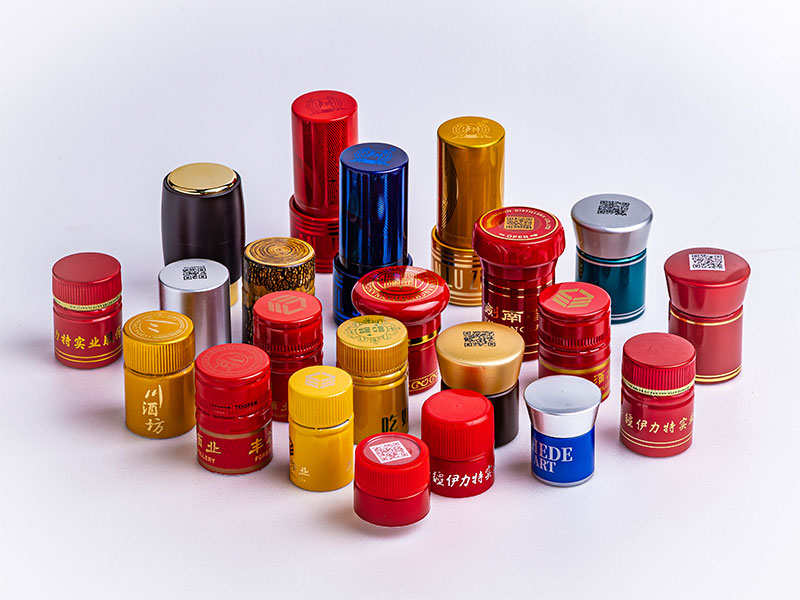
Common surface options include color coating, lithographic printing, embossing, matte finishes, gloss finishes, and custom top decoration. For soda bottle caps, the internal side may also require food-safe lacquer or protective coating to reduce the risk of corrosion, product interaction, or odor transfer.
In humid logistics environments, especially where bottles are refrigerated and exposed to condensation, coating integrity becomes crucial. Well-designed aluminum caps maintain both attractive appearance and structural reliability even after prolonged storage.
How to choose the right leak proof aluminum cap supplier
Choosing the right closure supplier involves more than matching diameter and color. Buyers should evaluate whether the manufacturer can align material science with application reality.
Useful evaluation points include:
Experience with carbonated beverage packaging
Capability to recommend alloy and temper based on pressure conditions
Availability of custom liner solutions
Compliance with food-contact requirements
Control of torque and leak testing
Consistency in shell dimensions and thread formation
Support for logo printing and branding
Traceability of raw material and process batches
For aluminum bottle cap buyers in the soda market, supplier competence is best measured by closure consistency over millions of units, not by isolated sample performance.
Market advantages of aluminum caps for soda bottles
Leak proof aluminum caps are increasingly valued not only for function but also for sustainability and shelf appeal. Aluminum is widely recyclable, visually premium, and suitable for high-quality printing. In many beverage categories, it helps products is know while supporting packaging circularity goals.
For soda brands, aluminum caps can offer:
Strong sealing reliability for carbonation retention
Premium metallic appearance
Light weight and good machinability
Customization in color, embossing, and branding
Compatibility with tamper-evident design
Good recyclability profile
These benefits explain why aluminum bottle caps remain a preferred packaging solution in many beverage applications where appearance and performance must coexist.
Final thoughts
The true story of a leak proof aluminum cap for soda bottles is not just about preventing spills. It is about preserving pressure, protecting flavor, supporting safety, and expressing brand value through a meticulously engineered component. When viewed from the distinctive perspective of pressure translation, the cap becomes one of the most technically consequential parts of the entire beverage package.
The best airtight aluminum caps are born from the right combination of alloy chemistry, temper condition, liner design, dimensional precision, and implementation standards. Whether using 8011-H14 for balanced closure performance or selecting a specialized liner for high-carbonation products, every detail affects the final seal.
For soda bottle manufacturers, beverage fillers, and packaging buyers, investing in high-quality aluminum bottle caps means investing in freshness itself. And in a market where consumers notice every hiss, sparkle, and first sip, that seal makes all the difference.
https://www.bottle-cap-lids.com/a/leak-proof-aluminum-caps-for-soda-bottles-with-airtight-seal.html