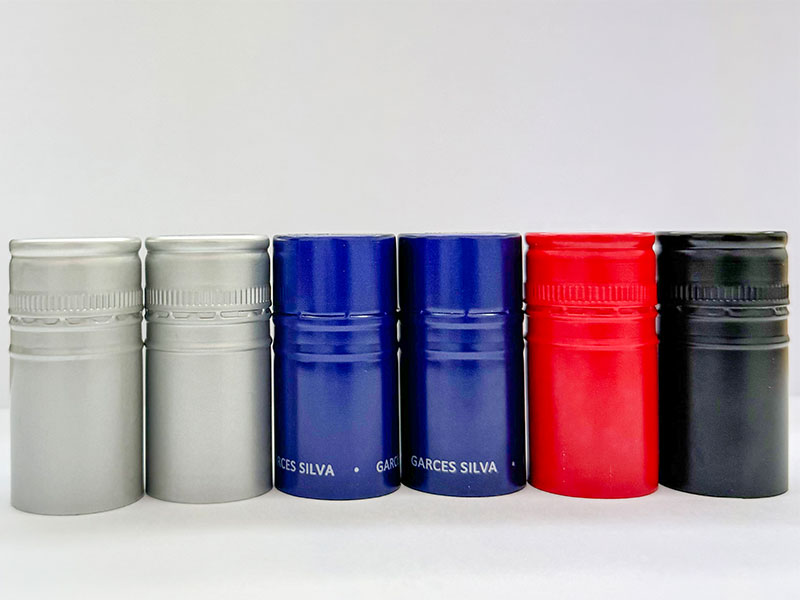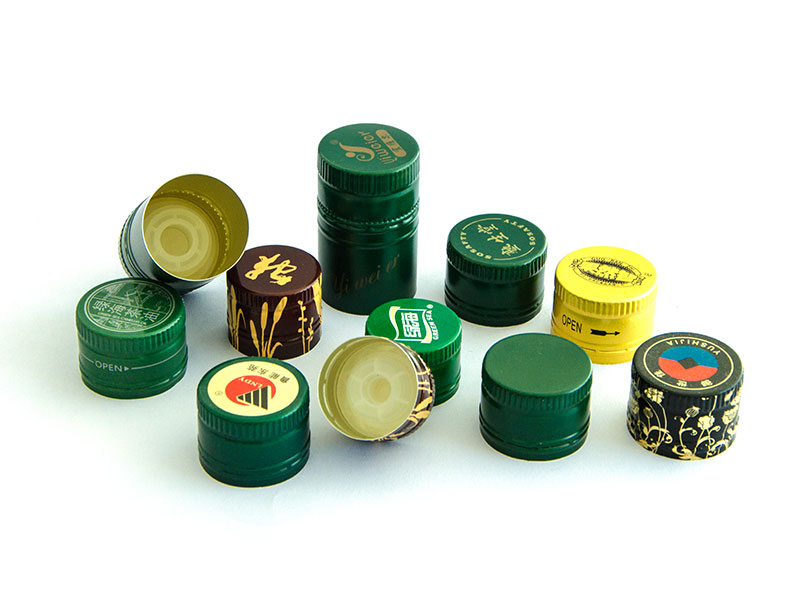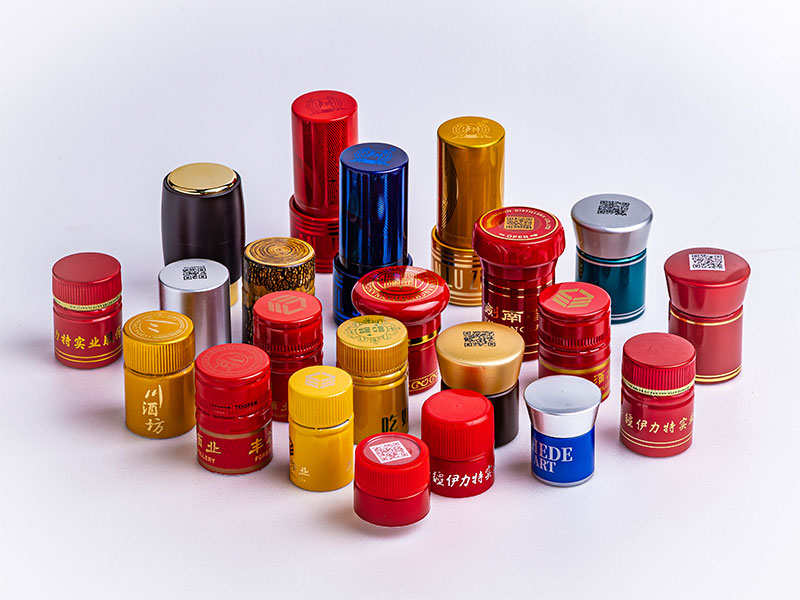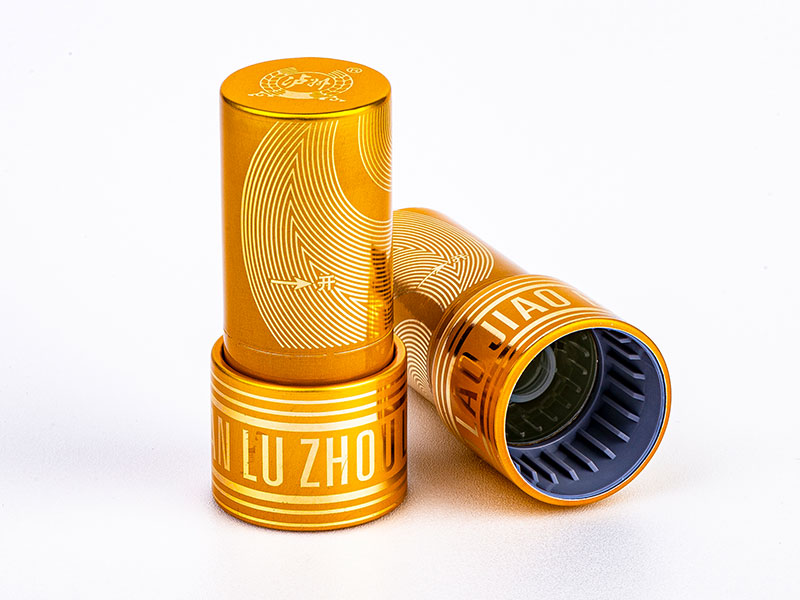


Aluminum Bottle Caps for Soda Bottles with Strong Seal Technology
Carbonated drinks are demanding products. The moment a soda is bottled, the package begins a silent battle against internal pressure, flavor loss, oxygen ingress, and the consumer's expectation of a perfect "psst" when the bottle is opened. In that battle, the aluminum bottle cap is not a simple closure. It is a pressure-management component, a barrier system, a forming-engineered part, and a branding surface all at once.
From a technical and commercial perspective, aluminum bottle caps for soda bottles with strong seal technology represent a sophisticated balance of alloy selection, temper control, liner compatibility, dimensional precision, corrosion resistance, and sealing performance. What makes them especially interesting is that their success is often invisible: when the cap works perfectly, the consumer notices only freshness.
Why Soda Bottles Need Strong Seal Technology
Still beverages can tolerate a closure with moderate barrier performance. Soda cannot. Carbonated soft drinks generate and maintain internal pressure that can vary with formulation, filling temperature, storage condition, and transport environment. A closure for soda bottles must therefore deliver several simultaneous functions:
- reliable torque application during high-speed capping
- strong seal integrity under CO2 pressure
- resistance to liner creep and leakage
- compatibility with acidic formulations
- stable opening performance for consumers
- aesthetic consistency for retail presentation
- long-term flavor protection
An aluminum bottle cap is particularly well suited to this role because aluminum combines low weight, formability, corrosion resistance, and decorative flexibility. More importantly, when properly engineered with an appropriate liner system and thread profile, it creates a highly controlled seal that performs under dynamic pressure conditions.
A Distinctive Way to Understand the Cap: It Is a Controlled Deformation System
One of the most useful ways to understand a soda bottle cap is to stop thinking of it as a rigid cover. In reality, it is a controlled deformation system.
During application, the cap is torqued onto the bottle finish. The shell, threads, pilfer band if present, and liner each deform in a carefully planned manner. This deformation is not accidental. It is the basis of sealing.
The aluminum shell must be strong enough to retain thread integrity, yet ductile enough to form precisely during manufacturing and application. The liner must compress sufficiently to fill micro-irregularities in the bottle finish. The internal geometry must distribute sealing stress evenly, preventing localized gas escape pathways. For carbonated beverages, this stress balance is especially critical because CO2 molecules exploit even minor sealing inconsistencies over time.
From this perspective, strong seal technology is the art of managing elastic recovery, compression set, torque retention, and interface pressure within a very small component.
Core Structure of Aluminum Bottle Caps for Soda Bottles
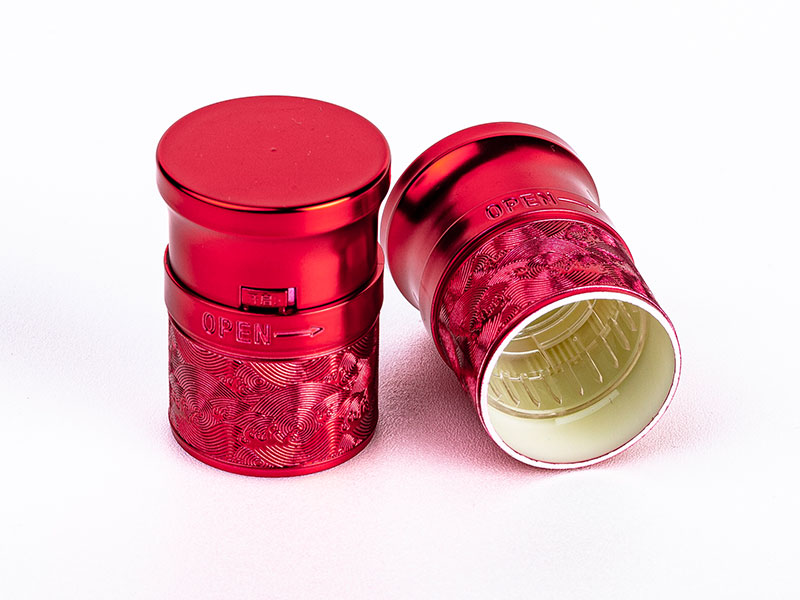
A typical aluminum cap for soda bottles includes several integrated design elements:
- an aluminum shell produced from rolled sheet or coil
- a precisely formed top panel and skirt
- internal threads or ROPP-style formed engagement geometry, depending on bottle design
- a sealing liner, often EPE, PE-based, or specialized gas-barrier compound
- optional tamper-evident band or breakable security feature
- internal coating or lacquer for product-side protection when required
- external printing, embossing, or color coating for brand identity
For carbonated beverages, the liner is often the hidden hero. The shell provides the mechanical force, but the liner often determines whether the seal remains effective after thermal cycling, warehousing, and transport vibration.
Common Technical Parameters for Aluminum Bottle Caps for Soda Bottles
The exact parameters depend on bottle neck finish, beverage pressure, filling line speed, and regional packaging norms, but the following ranges are commonly referenced in production and procurement discussions.
| Parameter | Typical Range / Option | Notes |
|---|---|---|
| Cap diameter | 28 mm, 30 mm, 38 mm | 28 mm is common for many beverage bottle finishes |
| Cap height | 12 mm to 18 mm | Customized according to neck design and sealing requirement |
| Aluminum thickness | 0.18 mm to 0.25 mm | Depends on shell strength and forming method |
| Alloy grade | 8011, 3105, 5052 | Selected according to formability, strength, corrosion performance |
| Temper | H14, H16, H24, H26 | Chosen based on drawability and final strength balance |
| Internal pressure resistance | Often 0.6 MPa to 1.0 MPa or higher in validation | Must be verified by application-specific testing |
| Application torque | Approx. 10 lbf·in to 20 lbf·in, or customized | Depends on neck finish and liner type |
| Removal torque | Defined relative to application target | Important for consumer experience and seal retention |
| Liner type | EPE, PE foam, induction wad, barrier liner | Carbonation and product chemistry determine the selection |
| Printing finish | Offset printing, roll coating, embossing | Supports premium branding and traceability |
| Corrosion protection | Internal lacquer / food-grade coating | Important for acidic soda formulations |
| Operating line speed | High-speed bottling compatible | Caps must maintain dimensional stability in mass production |
These values are not universal specifications, but they reflect the kind of technical language buyers often need when discussing aluminum bottle caps for soda bottles with suppliers.
Strong Seal Technology: Where Real Performance Comes From
The phrase "strong seal technology" can sound like marketing language, but in technical practice it has a very concrete meaning. It refers to how well the closure maintains a gas-tight and liquid-tight interface throughout the product life cycle.
Sealing interface design
A soda bottle cap performs best when the contact area between the liner and bottle finish is engineered for consistent compression. Too little compression increases leakage risk. Too much compression may damage the liner, alter opening torque, or create long-term compression set.
Torque retention
When the cap is first applied, the closure system contains stored mechanical energy. Over time, factors such as polymer relaxation in the liner, temperature swings, and material recovery in the shell can reduce effective sealing load. Strong seal technology therefore requires a cap shell and liner combination that preserves torque and sealing force over time.
CO2 retention capability
Carbon dioxide retention is central for soda quality. A closure may appear leak-free in short-term handling but still allow enough gas migration to flatten the beverage during shelf life. For this reason, closure validation often includes pressure retention tests, leakage tests, and accelerated aging evaluations.
Bottle finish compatibility
Even an excellent aluminum cap can underperform if bottle neck tolerances are inconsistent. Strong sealing depends on the interaction between cap dimensions and the bottle finish standard. This is why beverage manufacturers often evaluate cap performance as part of the full bottle-closure system rather than in isolation.
Liner compression behavior
A liner used for carbonated beverages must maintain resilience while resisting flavor scalping, chemical interaction, and excessive compression set. The cap's effectiveness often depends as much on polymer science as on metal forming.
Aluminum Alloys Commonly Used for Bottle Caps
Several aluminum alloys are used in cap manufacturing, with selection based on fabrication route, performance requirement, and cost-performance balance.
Alloy 8011
8011 aluminum is one of the most widely used alloys for packaging closures. It offers excellent formability, good corrosion resistance, light weight, and suitability for surface coating and printing. For many cap applications, 8011 provides an excellent balance between manufacturing efficiency and sealing performance.
Alloy 3105
3105 aluminum is often valued for good formability, moderate strength, and coating compatibility. It can be a practical option for decorative closure applications and certain beverage cap formats where a stable formed structure is required.
Alloy 5052
5052 aluminum offers higher strength and excellent corrosion resistance, especially in demanding environments. For some closure systems requiring enhanced structural performance, 5052 may be preferred, though its forming behavior and cost profile must be evaluated carefully.
Alloy Tempering: Why Temper Matters as Much as Alloy
In cap manufacturing, buyers sometimes focus on alloy grade but overlook temper. This is a mistake. Temper condition controls the balance between formability and strength, which directly affects shell forming, thread integrity, and sealing reliability.
Common temper states include:
- H14: strain-hardened to a medium level, offering good formability with moderate strength
- H16: harder than H14, useful where greater shell rigidity is desired
- H24: strain-hardened and partially annealed, providing a useful compromise between stiffness and forming stability
- H26: higher hardness, suitable for applications needing stronger shape retention but requiring process control during forming
For soda bottle caps, the ideal temper depends on the cap geometry and capping method. A shell that is too soft may deform excessively during application or handling. A shell that is too hard may crack, form inconsistently, or fail to deliver the intended thread engagement. Strong seal technology therefore starts with selecting not just the right alloy, but the right alloy-temper combination.
Chemical Composition of Common Aluminum Alloys for Bottle Caps
The following table shows typical composition ranges for common alloys used in aluminum closure production. Exact values may vary according to applicable standards and supplier specifications.
| Alloy | Si % | Fe % | Cu % | Mn % | Mg % | Zn % | Other % | Al % |
|---|---|---|---|---|---|---|---|---|
| 8011 | 0.5–0.9 | 0.6–1.0 | ≤0.1 | ≤0.2 | ≤0.05 | ≤0.1 | ≤0.15 | Balance |
| 3105 | ≤0.6 | ≤0.7 | ≤0.3 | 0.3–0.8 | 0.2–0.8 | ≤0.4 | ≤0.15 | Balance |
| 5052 | ≤0.25 | ≤0.4 | ≤0.1 | ≤0.1 | 2.2–2.8 | ≤0.1 | ≤0.15 | Balance |
These chemical profiles influence practical cap behavior in important ways. Iron and silicon affect formability and strength in packaging alloys like 8011. Magnesium plays a major role in strengthening 5052. Manganese can improve mechanical stability in 3105. In closure applications, the chemistry must support not only metal performance but also coating adhesion, forming consistency, and long-term corrosion resistance.
Mechanical and Functional Properties Relevant to Soda Bottle Caps
A cap alloy is not selected simply because it can be stamped into shape. It must also function throughout filling, shipping, storage, and consumer opening. The following table summarizes property considerations.
| Property | 8011 | 3105 | 5052 | Relevance to Soda Bottle Caps |
|---|---|---|---|---|
| Formability | Excellent | Good | Good to moderate | Needed for shell shaping and thread formation |
| Corrosion resistance | Good | Good | Excellent | Important for acidic beverages and humid storage |
| Strength level | Moderate | Moderate | Higher | Affects shell rigidity and seal stability |
| Coating/printing compatibility | Excellent | Excellent | Good | Important for brand graphics and lacquer adhesion |
| Lightweight potential | Excellent | Excellent | Good | Supports packaging efficiency |
| Suitability for high-speed production | Excellent | Good | Good | Helps maintain dimensional consistency |
| Seal support capability | Very good | Good | Very good | Depends on temper, liner, and closure design |
Implementation Standards and Reference Specifications
In international trade and beverage packaging production, aluminum bottle caps are usually manufactured and tested in accordance with a combination of material, safety, and application standards rather than one single universal rule.
Relevant implementation references may include:
- ASTM standards for aluminum sheet and coil properties where applicable
- EN standards related to aluminum and aluminum alloy rolled products
- GB/T standards commonly used in Chinese manufacturing and export supply chains
- ISO quality management systems such as ISO 9001
- food-contact compliance frameworks such as FDA, EU food contact regulations, or corresponding national legislation
- migration and coating safety requirements based on destination market
- internal beverage company validation protocols for torque, leak resistance, and pressure testing
For soda bottle cap procurement, practical implementation often includes the following control items:
- raw material certificate verification
- alloy and temper confirmation
- dimensional tolerance inspection
- coating adhesion testing
- liner bonding reliability
- torque and removal torque testing
- carbonation pressure resistance evaluation
- leakage and vacuum/pressure hold tests
- sensory and migration compliance for food contact
A reliable supplier of aluminum bottle caps for soda bottles should be able to provide not only dimensions and pricing, but also documentation related to alloy composition, temper, coating system, and compliance status.
Surface Treatment and Coating Conditions
A strong seal is not only about mechanics. Surface engineering also matters.
The exterior of an aluminum bottle cap can be printed, varnished, embossed, matte-finished, or gloss-coated to support brand identity. The interior may be treated with food-grade lacquer or specialized coating systems to improve chemical resistance and reduce interaction with acidic beverage vapors.
For soda applications, coating considerations include:
- resistance to citric or phosphoric acid environments
- adhesion during cap forming and capping
- scratch resistance during high-speed handling
- color stability in warehousing
- compatibility with liner insertion or wad bonding processes
If the cap is used in humid or temperature-variable logistics chains, anti-corrosion performance becomes even more important. Aluminum naturally forms an oxide layer, but engineered coating systems provide an additional level of protection and appearance consistency.
Soda Beverage Chemistry and Closure Selection
Soda is not chemically neutral packaging content. It may contain carbonic acid, flavor compounds, sweeteners, preservatives, colorants, and fruit-derived acids. These variables influence closure design.
A cola beverage, for example, may create different closure demands than a citrus soda or sparkling functional drink. Acidic and flavor-sensitive products often require more careful liner and coating selection to prevent interaction, odor transfer, or barrier decline. This is why aluminum bottle cap strong seal technology should always be matched to beverage formulation, not chosen purely by cap size.
The most successful closure solutions are developed with a systems approach:
- beverage chemistry
- bottle neck geometry
- filling temperature
- carbonation level
- storage duration
- transport conditions
- consumer opening expectations
From a manufacturing standpoint, the performance of aluminum bottle caps begins long before the cap reaches the filling line. Coil quality, lubrication control, stamping precision, shell forming, thread geometry, liner placement, curing conditions, and surface coating all influence the final result.
A subtle but critical point is that process variation accumulates. A tiny deviation in shell thickness, combined with slight liner density variation and a high-speed torque fluctuation, may create inconsistent sealing performance in production batches. That is why experienced cap manufacturers emphasize statistical process control, online vision inspection, and batch traceability.
In premium soda packaging, consistency often matters as much as peak performance. One exceptional cap design is less valuable than millions of consistently performing caps.
Sustainability Advantage of Aluminum Bottle Caps
Beyond performance, aluminum offers a strong sustainability narrative. It is lightweight, recyclable, and compatible with circular packaging strategies. For beverage brands under pressure to improve environmental positioning, aluminum bottle caps support both functionality and recyclability goals.
The sustainability value becomes stronger when closure production includes:
- recycled aluminum input where specification allows
- optimized gauge selection for lightweighting
- low-VOC coating systems
- efficient scrap recovery in stamping operations
- compliance with regional recycling requirements
For many beverage brands, the cap is now both a technical component and a visible sustainability signal.
How to Choose the Right Aluminum Bottle Cap Supplier for Soda Bottles
A capable supplier should be able to discuss much more than appearance and unit price. For soda bottle applications, the real questions are technical:
- Which alloy and temper are recommended for the target neck finish?
- What liner structure is suggested for the carbonation level?
- What pressure resistance data is available?
- Which food-contact regulations does the coating system meet?
- What are the dimensional tolerances and torque windows?
- Can the supplier support pilot trials and line compatibility checks?
- What quality controls are in place for shell forming, liner insertion, and decoration?
When a supplier answers these questions confidently and with documentation, it usually indicates manufacturing maturity.
The Real Value of Strong Seal Technology
The value of a high-performance aluminum cap is often measured indirectly. It appears in lower leakage rates, better carbonation retention, fewer customer complaints, more stable opening torque, cleaner branding, smoother line operation, and stronger shelf-life confidence.
In other words, a strong seal aluminum bottle cap for soda bottles does more than close a package. It protects product identity from filling line to final sip.
That is why the most advanced closures should be viewed not as commodity items, but as precision-engineered packaging components. Their alloy chemistry, temper condition, dimensional accuracy, coating design, and liner behavior all work together to control pressure, preserve freshness, and deliver a reliable consumer experience.