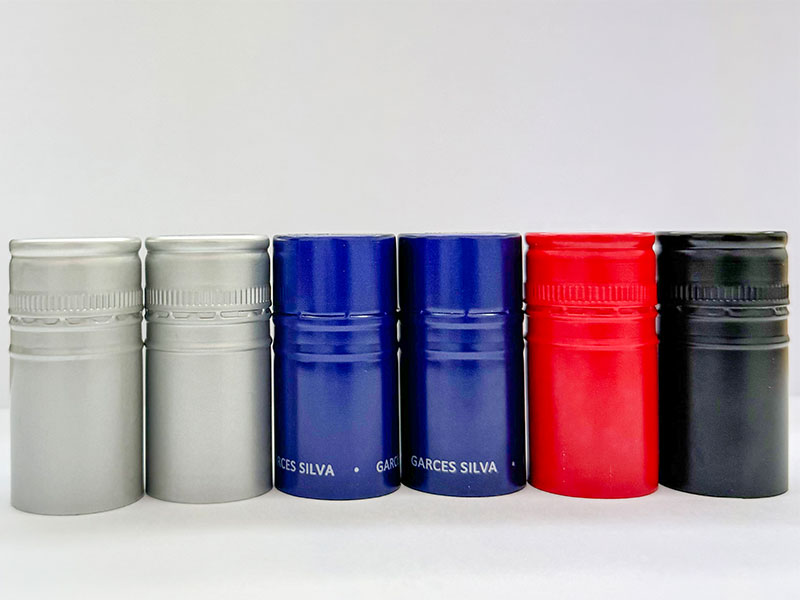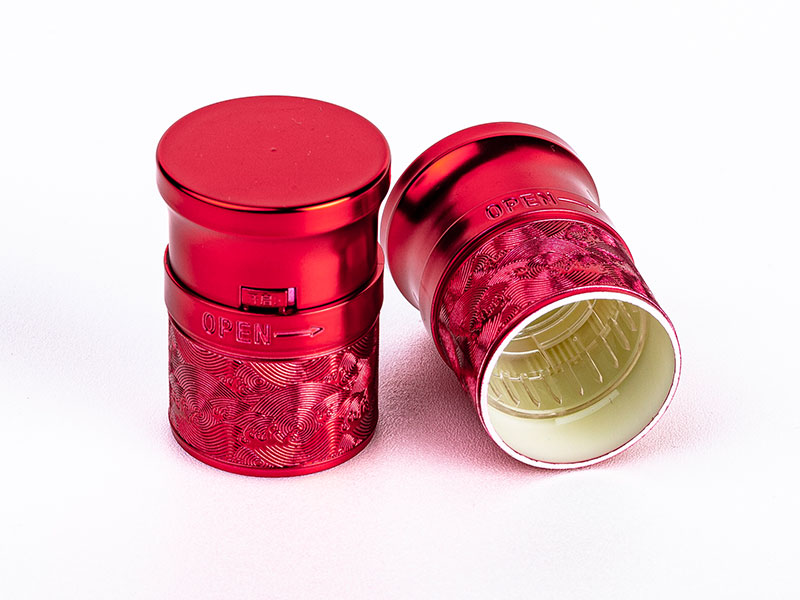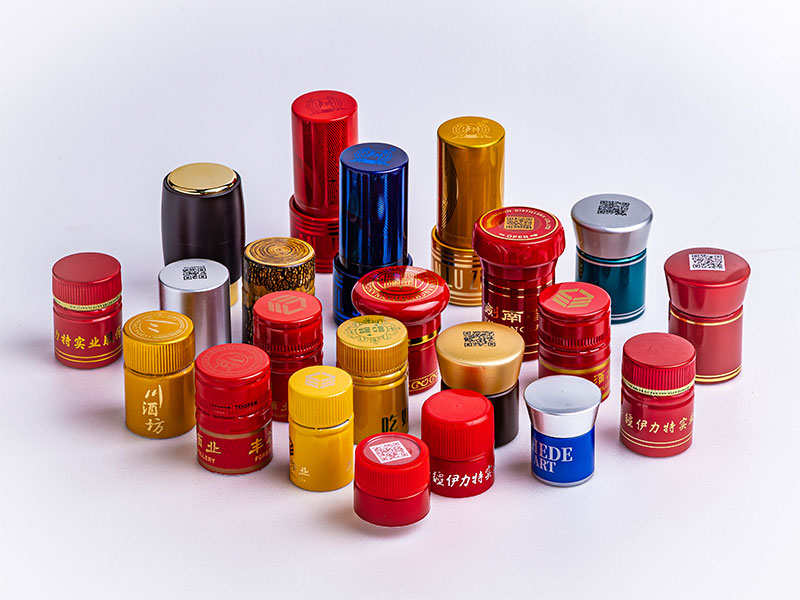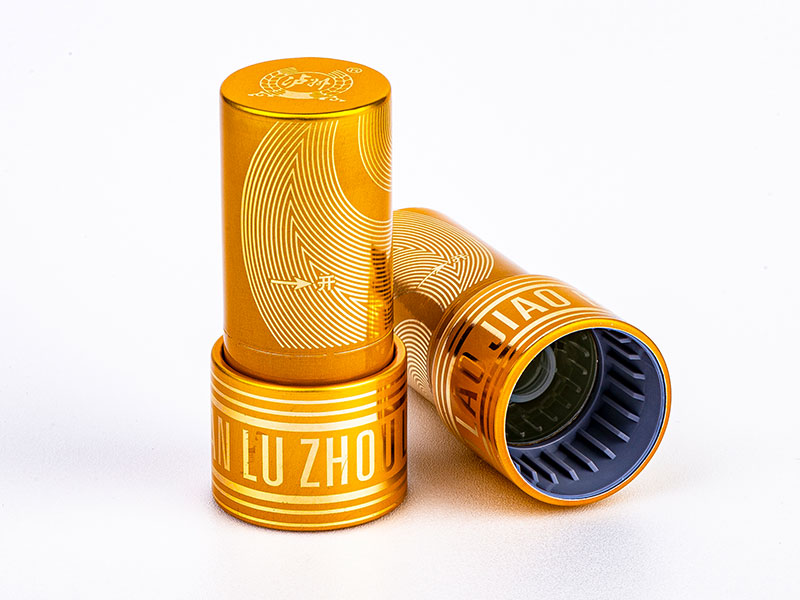


Bulk Aluminum Caps for Soda Bottles with Leak Proof Design
When people talk about soda packaging, the conversation usually lands on bottle shapes, label graphics, or the satisfying snap of carbonation when you twist a cap. Yet the most underappreciated engineering in the entire system is the small ring of metal that has to do everything at once: seal pressure, survive shipping, open smoothly, and still look premium after rolling through cold rooms, warm trucks, sticky retail shelves, and human hands. Bulk aluminum caps for soda bottles are not just "closures bought by the pallet." They are a quiet quality guarantee-and in a leak proof design, they become the difference between a brand that feels dependable and a brand that gets returned.
From the viewpoint of an aluminum-alloy specialist, the best way to understand leak proof aluminum caps is to stop seeing them as a commodity and start seeing them as a controlled deformation tool. A cap doesn't "sit" on a bottle; it is formed onto a finish, it compresses a liner, it manages internal pressure, and it resists relaxation over time. Leak proof performance is an alloy story, a temper story, and a process window story-every bit as much as it is a bottle-thread story.
What "leak proof" really means for carbonated beverages
Soda is a hostile environment for closures. CO₂ pressure rises with temperature, and in real distribution chains temperatures vary constantly. A practical leak proof design aims to maintain seal integrity under pressure spikes, vibration, and micro-movements caused by thermal cycling.
In aluminum roll-on pilfer-proof designs, leak resistance depends on three cooperating elements.
The first is the cap shell's ability to be formed cleanly without cracking while still holding its shape afterward. This is where alloy and temper are decisive.
The second is the liner system, typically a compressible material that fills microscopic irregularities between cap and bottle finish. A perfect shell with an inconsistent liner still leaks; a perfect liner with a shell that relaxes also leaks.
The third is application consistency: controlled torque, roll-on force, and thread formation. Even a premium cap will leak if it is applied outside its designed forming envelope.
Why aluminum, and why in bulk?
Aluminum caps have a particular advantage for soda: they can be engineered to crimp, roll, and lock into a bottle finish with a crisp tactile feel while offering corrosion resistance and low weight. In bulk purchasing, the benefit is not only cost-bulk lots enable tighter process control. When closures arrive from the same alloy batch, the same temper window, and the same coating system, the capper can run closer to the ideal settings with less "chasing" variability.
For beverage producers, the hidden cost of inconsistent caps is line downtime and quality escapes. A leak that shows up in a retailer's backroom is not just wasted product; it's a stain on brand trust. Buying bulk aluminum caps from a supplier that documents alloy, temper, coating, and liner specifications reduces that risk.
Alloy selection and temper: the quiet backbone of seal reliability
Aluminum closures commonly rely on the 3xxx series (Al-Mn) for deep drawability and controlled strength. A frequently used choice is AA 3105, while AA 3003 is also seen depending on regional practices and cap design. These alloys offer a balance: they form without tearing, resist corrosion, and maintain enough rigidity to keep the formed threads stable.
Temper matters as much as alloy. A cap shell must be soft enough to form but not so soft that it creeps or relaxes excessively after application. In closure stock, H14 or similar partial-hard tempers are often used as a compromise between formability and shape retention; some designs use variants that are tuned to the forming style and liner compression target. Selecting the wrong temper can lead to classic field problems: slow weeping leaks after hot storage, or micro-cracks near the skirt after aggressive rolling.
Below is a practical reference table for typical closure stock alloys used in aluminum caps. Actual selection should match cap geometry, forming method, and liner system, but these ranges reflect common industrial practice.
Typical Aluminum Alloy Options for Soda Bottle Cap Shells (Reference)
| Alloy (AA) | Main alloying elements | Typical temper for closure stock | advantages for leak proof cap shells | Notes |
|---|---|---|---|---|
| 3105 | Mn, Mg | H14, H24 (varies by supplier) | Excellent formability, good stiffness balance, stable coating adhesion | Widely used for roll-on closures |
| 3003 | Mn, Cu | H14 | Very good deep drawability, reliable corrosion resistance | Slightly different strength profile vs 3105 |
| 8011 (regional use) | Fe, Si | H14/H16 | Good formability and cost efficiency | Composition control important for consistent rolling |
Typical Chemical Composition Limits (wt%, reference ranges; consult mill certificates for exact spec)
| Alloy | Si | Fe | Cu | Mn | Mg | Zn | Ti | Al |
|---|---|---|---|---|---|---|---|---|
| 3105 | ≤0.60 | ≤0.70 | ≤0.30 | 0.30–0.80 | 0.20–0.80 | ≤0.40 | ≤0.10 | Balance |
| 3003 | ≤0.60 | ≤0.70 | 0.05–0.20 | 1.00–1.50 | - | ≤0.10 | - | Balance |
| 8011 | 0.50–0.90 | 0.60–1.00 | ≤0.10 | ≤0.20 | ≤0.05 | ≤0.10 | ≤0.08 | Balance |
These compositions influence forming behavior and springback. For leak proof performance, the goal is predictable deformation: the threads and tamper band form consistently, the skirt does not crack, and the shell does not relax so much that liner compression falls below the sealing threshold.
The leak proof design is a deformation plan, not a shape
A cap is often judged by its appearance, but it should be judged by its strain map-where it stretches, where it compresses, and where it must remain stable.
A practical leak proof aluminum cap design typically includes:
A skirt geometry that distributes forming strain and avoids sharp transitions that can initiate cracks, especially when the cap is applied at high line speeds.
A controlled thread profile that forms cleanly on the bottle finish without cutting into it. For PET bottle finishes, a design that is too aggressive can damage the plastic thread, creating a path for leakage.
A tamper-evident band that breaks reliably yet does not compromise the seal zone. The band is for security; the liner zone is for sealing. Good designs keep these functions mechanically distinct.
A liner interface designed for carbonation. Carbonated beverages need a liner that maintains resilience over time and temperature swings. The liner is where "leak proof" lives day after day, long after the cap has been applied.
Coatings and surface treatments also matter. Aluminum is naturally corrosion resistant, but beverage environments include sugars, acids, and cleaning chemicals. A robust internal lacquer system and controlled external coating reduce corrosion risk and help maintain consistent friction during application-friction variability can translate into torque variability, and torque variability translates into seal variability.
Implementation standards that matter on the line
A leak proof cap is only as good as its application control. In bulk supply programs, it is wise to align closure specs with practical testing and standards-based controls.
Commonly referenced standards and control methods include ISO 9001 quality systems for manufacturing traceability, ASTM practices for coating evaluation, and internal beverage-industry protocols for torque, top-load, and leak testing. While exact standard numbers can vary by company and region, the is that the supplier can provide certificates of analysis for alloy and coating, plus inspection data for critical dimensions and liner integrity.
On the filling line, practical acceptance tests usually include application torque monitoring, burst or pressure-hold testing (especially for carbonated products), and thermal cycle checks that simulate warehouse and transport conditions. A truly leak proof design survives not just a lab test at room temperature, but also the messy reality of warm trucks and cold storage.
A different way to buy bulk caps: purchase stability, not just units
The most distinctive perspective I can offer is this: buying bulk aluminum caps is not buying closures; it's buying stability in a pressure system.
If you are sourcing for a soda brand, ask for the data that predicts stability. Ask for the alloy and temper certificate. Ask for coating thickness targets and cure controls. Ask how liner compression is verified. Ask what process controls keep thread-forming behavior consistent across lots. Leak proof performance is not a single feature you "add." It is the absence of surprises across millions of cycles of forming, sealing, transporting, and opening.
In the end, the cap is the smallest part of the soda experience, but it has the largest responsibility. A well-designed bulk aluminum cap with a leak proof architecture is a promise that carbonation stays in, mess stays out, and your product reaches the consumer exactly as intended-crisp, clean, and confidently sealed.
https://www.bottle-cap-lids.com/a/bulk-aluminum-caps-for-soda-bottles-with-leak-proof-design.html