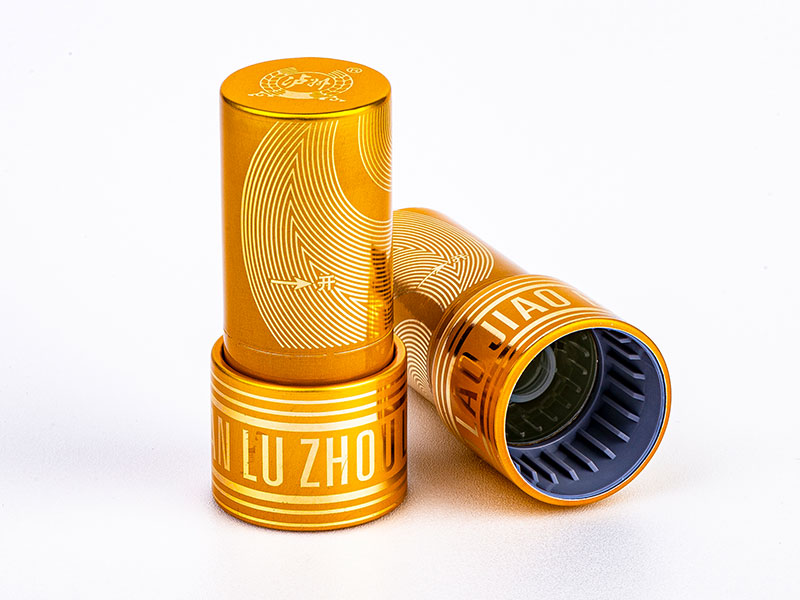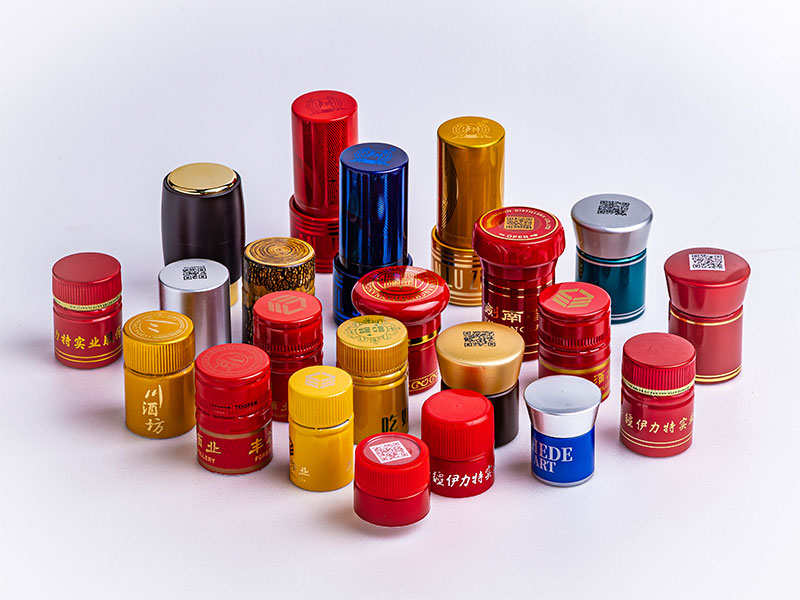


30x60mm Aluminum Screw On Caps for Wine Bottles with Custom Engraving
If you spend enough time around wine, you start to notice a quiet truth: the "first sip" often happens before the bottle is opened. It happens in the hand. In the glance that lands on the neck finish. In the small moment when a customer twists the cap and hears that clean, dry crack of the tamper band releasing. For wineries that care about consistency and modern presentation, 30x60mm aluminum screw on caps with custom engraving have become more than a closure choice-they're a brand behavior.
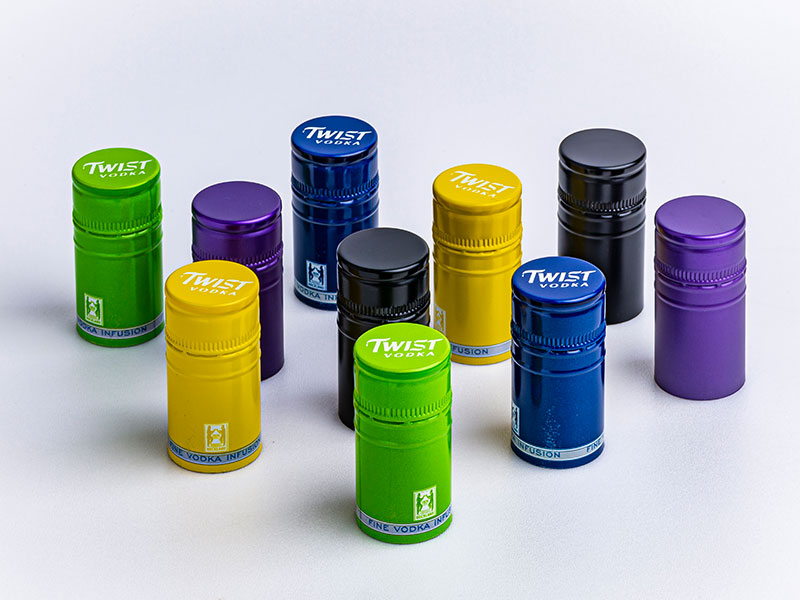
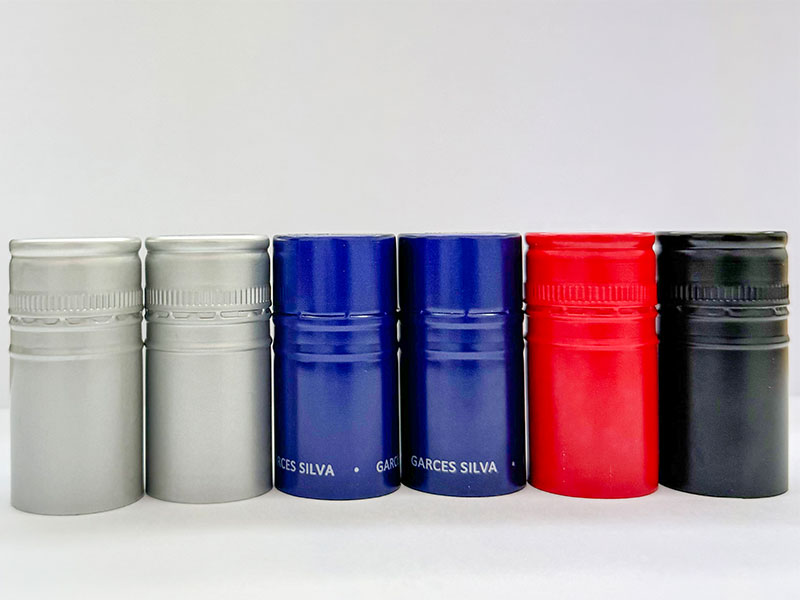
I like to think of the 30x60mm format as the workhorse size that still knows how to dress up. It fits the expectations of many standard wine bottle neck finishes while giving enough vertical real estate for design presence. And when you add engraving-true, tactile engraving rather than only ink-you turn a disposable component into a signature.
Why 30x60mm feels "right" in the real world
The size designation 30x60mm is a practical shorthand used across the packaging supply chain. The "30" generally refers to the closure's internal diameter dimension category, while the "60" refers to its skirt length. That skirt length isn't just aesthetic. It influences how the cap sits on the bottle, how much area is available for branding, and how effectively the tamper-evident band can perform.
From a production viewpoint, this format tends to run smoothly on high-speed capping lines because it balances rigidity and formability. You get enough skirt to guide the capping head and form consistent thread engagement, yet it's not so long that it becomes fussy about alignment or prone to cosmetic denting during handling.
For the winery, it means a cap that looks substantial. For the consumer, it means the bottle feels finished.
The material story: aluminum that behaves, not just aluminum that shines
A screw cap lives a hard life in a short time. It gets conveyed, oriented, capped, torque-tested, packed, shipped, chilled, handled, opened. Aluminum is popular here because it offers corrosion resistance, low mass, strong barrier compatibility with liners, and excellent decorative options. But not all aluminum behaves the same.
Most quality wine caps are made from aluminum alloy sheet designed for deep drawing and forming. Typical choices in the industry include AA8011, AA3105, and AA5052, depending on the supplier's forming route and the target balance of strength and ductility. Tempers are commonly in the H14 to H24 range (work-hardened, partially annealed states), selected to prevent tearing during forming while keeping the finished cap resistant to deformation.
The liner system matters as much as the metal. The aluminum shell provides structure and decoration, while the liner delivers sealing performance and oxygen management. Common liner constructions include Saranex-based, PVDC-based, or PVDC-free alternatives depending on regulatory, recycling, and oxygen transmission targets. For wine, the liner choice is where "closure philosophy" becomes chemistry.
Custom engraving: when branding becomes tactile
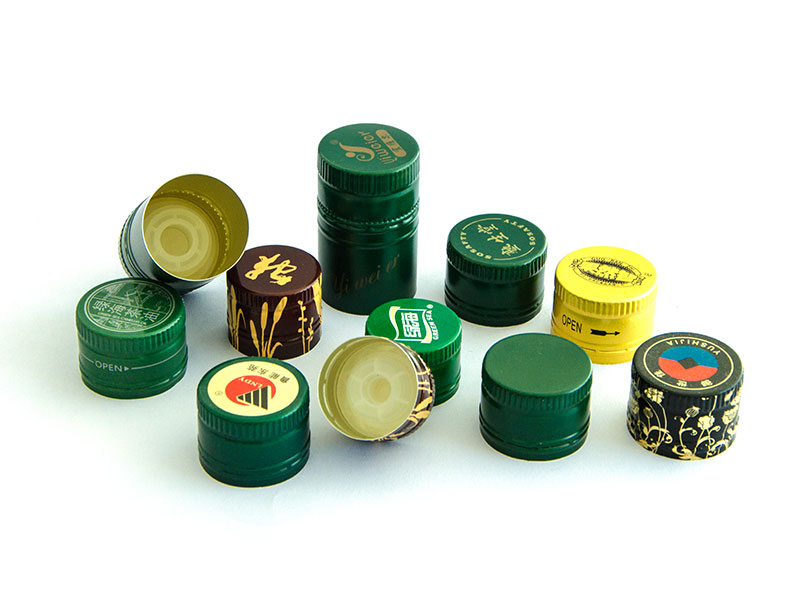
Printing can be beautiful, but engraving changes the consumer's relationship with the package. Engraving can be done as embossing or debossing, often created during stamping with matched tooling. It's not merely a graphic overlay; it's geometry built into the cap.
That brings three advantages that are easy to miss if you only judge by photos.
The first is durability. Engraved features don't rub off during transport, wet-handling, or ice bucket service.
The second is authenticity. Counterfeit packaging tends to imitate color and layout first. Precision engraving, especially if it includes micro-text, crest details, or controlled depth, is harder to replicate without the correct tooling.
The third is emotional. A cap that catches light on raised lettering feels intentional-like the winery thought about the bottle the way it thinks about the wine.
Engraving does come with design boundaries. Fine lines that look sharp in vector artwork may soften once translated to metal flow, coating thickness, and forming stresses. The best engraved designs respect the way aluminum moves: bold enough to read, balanced across the top panel, and placed so the capping head and forming operations don't flatten or distort the feature.
Implementation standards that keep things predictable
Reliability is a closure's real luxury. In practice, good performance comes from aligning three systems: the bottle finish, the cap dimensions, and the capping process.
Most 30mm-class wine screw caps are designed to match common roll-on pilfer-proof (ROPP) bottle finishes used globally. The neck finish geometry determines the thread form and the pilfer band engagement. If the bottle finish varies too much, even a premium cap will behave inconsistently.
On the line, torque control is crucial. Too little application torque risks leakage and poor tamper evidence formation. Too much torque can deform threads, stress the liner, or create opening torque complaints. Cap suppliers typically provide recommended application torque windows, and wineries should verify those against their specific bottle finish, liner type, and fill conditions.
Quality checks that matter in day-to-day production include dimensional inspection of cap diameter and skirt, coating integrity, liner placement, bridge consistency in the tamper band, opening torque and re-seal behavior, and leakage testing under temperature cycling. Wine is not a static product; it expands and contracts with temperature, and closures need to behave through that breathing.
Tempering, coatings, and corrosion: the quiet engineering under the color
An aluminum cap is usually coated-inside and out. The external coating carries the color, gloss level, and print or engraving highlights. The internal coating protects against interaction with moisture and any volatiles and prevents corrosion beneath the liner edge.
Temper selection influences dent resistance and forming. A softer temper forms easily but can be more prone to cosmetic damage. A harder temper resists dents but may crack during forming if pushed too far. The right answer is often not "harder" but "appropriate," based on the forming die design and the depth of engraving.
Corrosion resistance is typically excellent when coatings are intact and process controls are stable. Problems tend to come from coating pinholes, aggressive cleaning agents, long-term exposure to salty environments, or incompatible interactions at the liner interface. A supplier who understands wine closures will treat coatings as a system, not a paint color.
Typical aluminum alloy options for 30x60mm caps
Below is a practical reference table of common alloys used in closure sheet, along with typical properties. Exact values depend on supplier, gauge, and temper, so treat these as guidance for specifying and comparing.
| Alloy (AA) | Typical Temper for Caps | Alloying Elements (approx.) | Notable Traits for Screw Caps | Typical Tensile Strength (MPa) | Typical Yield Strength (MPa) | Elongation (%) |
|---|---|---|---|---|---|---|
| 8011 | H14 / H16 / H24 | Fe, Si (each ~0.5–1.0%) | Excellent formability, widely used for closures and foil | 120–160 | 95–140 | 4–10 |
| 3105 | H14 / H16 | Mn (~0.3–0.8%), Mg (~0.2–0.8%) | Good strength-formability balance, stable during forming | 140–190 | 120–160 | 3–8 |
| 5052 | H14 / H24 | Mg (~2.2–2.8%), Cr (~0.15–0.35%) | Higher corrosion resistance and strength; forming requires good control | 190–260 | 140–210 | 4–12 |
If your cap includes deep engraving or aggressive top features, discuss with your supplier whether the alloy/temper pairing supports that tooling without creating surface "orange peel," thinning, or stress marks.
A different way to judge a cap: listen to it
From my perspective, the best 30x60mm engraved screw cap is one you can almost evaluate with your eyes closed. It threads on smoothly, seats with confidence, and opens with a controlled release-not a squeal, not a gritty drag. The tamper band breaks cleanly, and the cap doesn't feel sharp at the edge.
That sensory experience is not accidental. It's the outcome of sheet selection, temper control, coating cure, liner quality, and capping torque discipline. Engraving adds one more dimension, literally, but it shouldn't compromise that fundamental ritual.
In the end, a wine closure is a promise made in aluminum. The 30x60mm screw on cap is a promise of convenience, consistency, and modernity. Add custom engraving, and it becomes a promise you can feel with your fingertips-quietly persuasive, long after the label has done its talking.