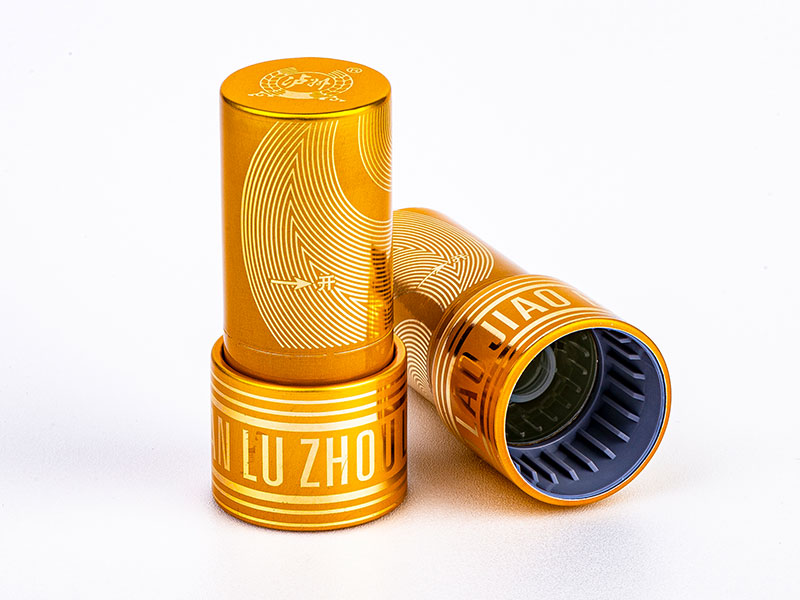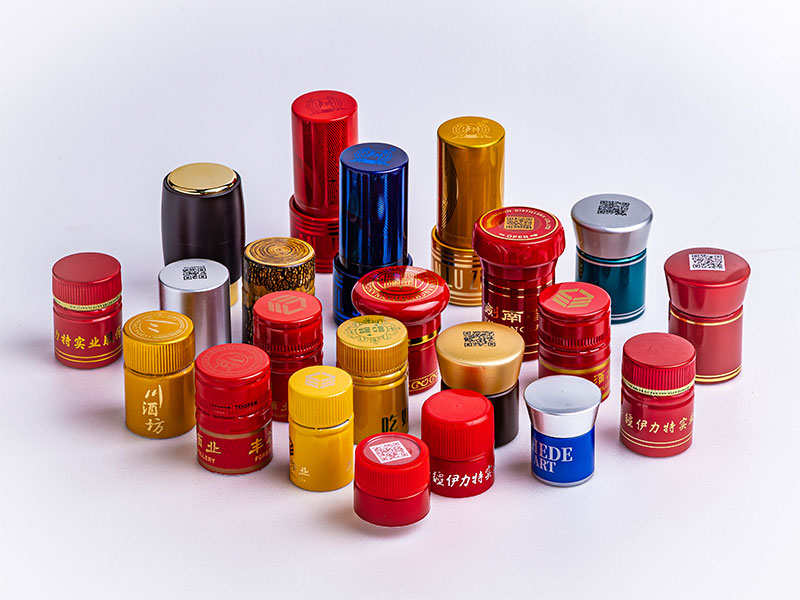


30x60mm Aluminum Wine Closures with Smooth Finish and Secure Seal
30x60mm Aluminum Wine Closures with Smooth Finish and Secure Seal: Where Metallurgy Meets the Moment of Pour
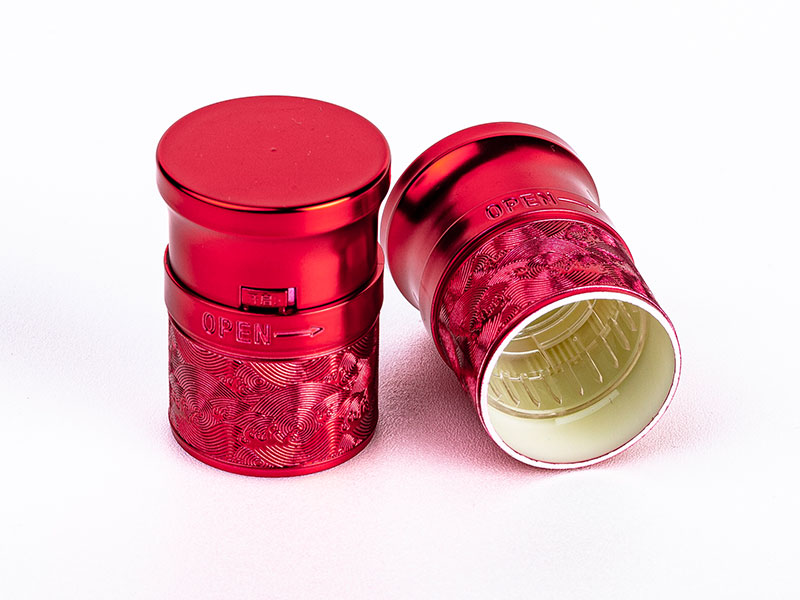
A wine closure is often described in romantic terms, but it performs an unromantic job with absolute precision: it must protect aroma compounds, manage oxygen transfer, resist corrosion, survive logistics, and still open cleanly at the table. The 30x60mm aluminum wine closure with smooth finish and secure seal is a practical answer to that entire chain of demands-built less like a "cap" and more like a thin-walled engineered component designed for consistent sealing performance.
From a distinctive viewpoint, think of this closure as a controlled interface between three worlds: the bottle's glass geometry, the liner's sealing behavior, and the aluminum shell's formed stress state. When these three align, you get what wineries actually want: repeatable tightness, clean aesthetics, and fewer variables across bottling runs.
Why 30x60mm Is a Workhorse Format for Wine Packaging
The 30x60mm size is widely chosen because it balances handling, presentation, and sealing geometry. The 30mm diameter accommodates common bottle-neck finishes and thread profiles used in wine, while the 60mm skirt gives enough vertical real estate for stable roll-on pilfer-proof formation and a premium silhouette on-shelf.
This size also provides a favorable forming window for aluminum: enough material length to form secure threads and a pilfer band without overstressing the shell, while keeping weight and material usage economical for high-volume brands.
Smooth Finish Isn't "Just Cosmetic"-It's a Functional Surface
A smooth finish on an aluminum wine closure does more than look refined. It improves downstream performance and brand consistency in subtle, measurable ways.
A smooth outer surface reduces micro-scratching during conveying, bulk packing, and feeding into the capping head. That matters because surface defects become stress concentrators when the closure is formed onto the bottle. Reduced defect density supports more uniform forming and helps maintain a consistent torque profile across a bottling run.
Smooth finish also supports cleaner printing, foiling, and lacquering. If a winery uses minimalistic branding, smooth finish delivers the "quiet luxury" effect while still allowing sharp ink edges and controlled gloss.
Secure Seal: The Closure as a System, Not a Single Part
A secure seal is not the result of aluminum alone. It is the result of the aluminum shell, the liner selection, and the way the closure is applied.
The aluminum shell provides the structural confinement and the formed thread geometry. The liner provides the compliant sealing surface that mates to the bottle's top and side sealing areas. The application conditions-especially head pressure, roll profile, and target torque-determine how reliably the liner is compressed and how stable the closure remains over temperature changes during shipping.
Common liner configurations for wine-grade aluminum closures include:
- EPE or EPE composite liners for reliable compression and general-purpose sealing
- Saranex-based liners for enhanced barrier performance and aroma protection
- Tin-Saran or specialized barrier stacks for products requiring stricter oxygen management
Selecting the liner is ultimately a packaging strategy decision: oxygen management, cost, and sensory goals all factor in. The 30x60mm format supports these liner systems well due to its skirt height and stable forming zone.
Parameters for 30x60mm Aluminum Wine Closures (Production-Oriented)
Below is a set of typical manufacturing and product parameters used for 30x60mm smooth-finish aluminum wine closures. Exact values can be adjusted according to customer bottle finish, liner type, and capper setup.
Dimensional parameters
- Nominal diameter: 30 mm
- Nominal height: 60 mm
- Skirt configuration: suitable for ROPP formation with pilfer band
- Thread formation: generated during capping (roll-on) to match bottle finish
- Wall thickness range: typically 0.20–0.23 mm (common practice; can be tuned for stiffness vs. formability)
Performance and processing parameters
- Recommended application: ROPP capping heads matched to bottle finish
- Target torque: set by bottler specification, liner type, and bottle finish (verified by torque testing and strip/bridge integrity checks)
- Seal integrity checks: vacuum/pressure retention, leak test, liner compression verification, bridge break consistency
Surface and decoration
- Smooth finish: controlled surface roughness supporting clean lacquer and printing
- Coatings: food-contact compliant internal lacquers; external protective lacquer as needed
- Decoration options: offset printing, UV printing, hot stamping, embossing/debossing
Alloy Choice and Temper: Why Closures Prefer "Formable Strength"
Aluminum wine closures depend on a careful balance: strong enough to resist dents and deformation in transit, but formable enough to roll threads and create a tamper-evident band without cracking.
For closures, producers commonly use AA8011 or AA3105 in tempers selected for closure forming. While different manufacturers may optimize differently, the engineering intent is consistent: achieve stable forming behavior and reliable post-form strength.
Typical alloy options for 30x60mm aluminum wine closures
- AA8011: widely used in packaging applications; good formability and consistency
- AA3105: commonly used for caps and closures; good strength/formability balance
Typical temper conditions
- H14 / H16 / H24 ranges are commonly used depending on thickness, tooling, and the desired "springback" behavior after forming
- Temper selection is tuned to avoid skirt cracking, maintain thread definition, and support consistent pilfer band bridging
The practical way to understand temper here is to view it as a "forming personality." Too soft and the closure can feel flimsy, dent easily, or lose crisp thread definition. Too hard and it may crack at the fold lines during roll-on, especially near the pilfer band and thread start.
Implementation Standards and Food-Contact Compliance (Integrated into Real Production)
Wine closures sit at the intersection of metal packaging and food-contact requirements. Implementation standards typically cover dimensional tolerances, coating performance, and migration safety, and they are validated through production controls rather than paperwork alone.
Commonly referenced compliance frameworks include:
- EU food-contact expectations aligned with Framework Regulation (EC) No 1935/2004 and GMP Regulation (EC) No 2023/2006 for coated metal packaging systems
- US FDA expectations for food-contact materials, including coatings and liners, depending on the formulation used
- Packaging supply chain quality systems such as ISO 9001, and, where required by brand owners, broader schemes such as BRCGS Packaging Materials
In practice, the closure manufacturer verifies compliance through coating cure control, adhesion testing, corrosion resistance testing, and supplier declarations for liners and inks-then backs it up with batch traceability.
Chemical Properties: Aluminum Alloy Composition Table (Typical Ranges)
Chemical composition varies by alloy standard and supplier melt practice. The table below reflects commonly cited nominal limits for widely used closure alloys. For purchasing and quality agreements, composition should be confirmed against the applicable ASTM/EN/GB standard and mill certificate.
Typical Chemical Composition (wt.%)
| Element | AA8011 (typical range) | AA3105 (typical range) |
|---|---|---|
| Al | Balance | Balance |
| Si | 0.50–0.90 | ≤ 0.60 |
| Fe | 0.60–1.00 | ≤ 0.70 |
| Cu | ≤ 0.10 | ≤ 0.30 |
| Mn | ≤ 0.20 | 0.30–0.80 |
| Mg | ≤ 0.05 | 0.20–0.80 |
| Zn | ≤ 0.10 | ≤ 0.40 |
| Ti | ≤ 0.08 | ≤ 0.10 |
| Cr | - / ≤ 0.05 (supplier-dependent) | ≤ 0.10 |
Note on interpretation: AA8011 leans on Fe and Si as its characteristic alloying elements, while AA3105 uses Mn and Mg to raise strength and improve performance during forming. The "best" choice depends on your capper setup, bottle finish, and the sensory targets tied to oxygen management and seal behavior.
The Hidden Engineering of a "Clean Open"
Smooth finish and secure seal are also about the consumer moment. A well-engineered 30x60mm aluminum closure should open without gritty torque spikes, tearing bridges, or unpredictable band separation. That experience is not accidental; it comes from controlling:
- Shell thickness and temper uniformity, so the pilfer band bridges break evenly
- Coating friction behavior, so application torque and opening torque stay within target bands
- Liner compression resilience, so the closure doesn't "relax" after thermal cycling
From a winery's operational standpoint, this consistency reduces line stoppages and lowers the risk of sporadic leakers-problems that can hide inside an otherwise "good" batch of wine.
Where 30x60mm Smooth-Finish Aluminum Wine Closures Fit Best
This closure format is particularly well-suited for:
- Brands seeking modern presentation with reliable, repeatable bottling performance
- Export-oriented SKUs needing corrosion resistance and robust logistics behavior
- Wines where seal stability matters across seasonal temperature swings
- Premium lines that want clean decoration and a refined tactile feel
A 30x60mm aluminum wine closure is a small part with a big job: it must form precisely, seal reliably, and present beautifully. With the right alloy temper, controlled coating system, and liner pairing, smooth-finish aluminum closures deliver a secure seal that is less about marketing claims and more about repeatable packaging science-batch after batch, bottle after bottle.