

Soda Bottle Closures with Aluminum Caps for Better Shelf Life
Soda Bottle Closures with Aluminum Caps for Better Shelf Life
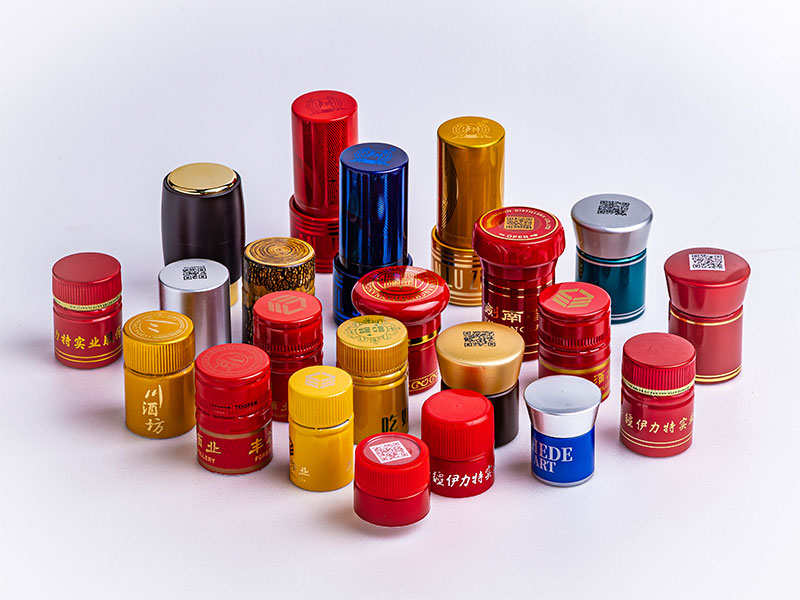
From the outside, a soda bottle cap looks like a small, forgettable detail. In reality, it is a carefully engineered barrier between your drink and the entire surrounding atmosphere. When that closure is made from aluminum, the cap becomes more than a lid; it becomes a controlled micro-environment that quietly decides how long the bubbles last, how fresh the flavor stays, and how safe the drink remains on the shelf.
Looking at soda closures from the aluminum alloy perspective reveals why so many beverage brands are shifting to metal caps, especially for products that travel far or stay in storage for extended periods.
The cap as a pressure vessel
A carbonated drink is essentially a controlled pressure system. Carbon dioxide is dissolved in the beverage under pressure, and over time it will always try to escape. The cap’s job is to restrain that gas for as long as possible without deforming, leaking, or corroding.
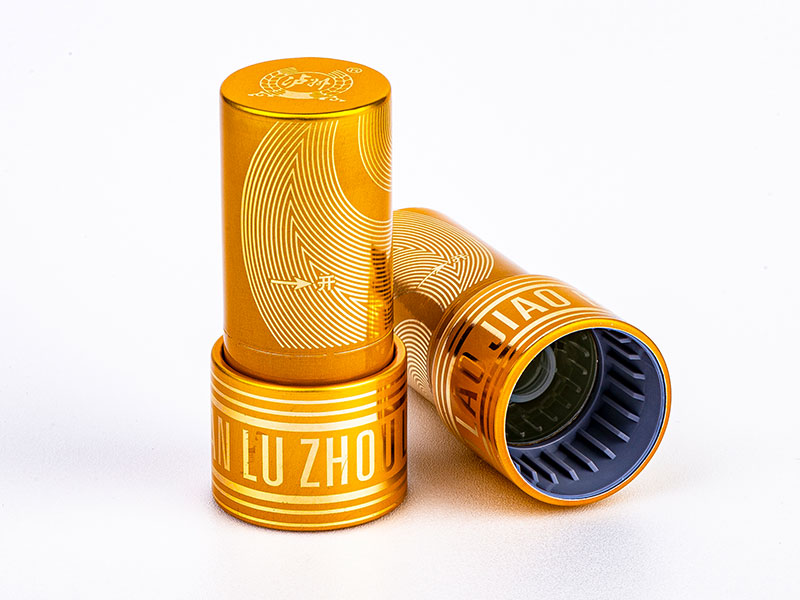
Aluminum closures work like miniature pressure vessels. Their strength and rigidity are not accidental; they come from specific alloy choices and temper treatments. In soda applications, a common material is an aluminum–magnesium alloy such as AA 3105, AA 8011, or AA 5182, optimized for deep-drawing and crimping while resisting stress cracking and corrosion. A typical closure alloy for such applications may resemble:
- Base metal: Aluminum (Al) balance
- Magnesium (Mg): about 1.0–4.5% for strength and work hardening
- Manganese (Mn): about 0.2–1.0% for additional strength and stability
- Iron (Fe), Silicon (Si), Copper (Cu), others: kept low to maintain formability and corrosion resistance
An indicative chemical composition range for a commonly used closure alloy like 5182 might look like this:
- Mg: 4.0–5.0%
- Mn: 0.20–0.50%
- Fe: ≤0.35%
- Si: ≤0.20%
- Cu: ≤0.15%
- Cr: ≤0.10%
- Zn: ≤0.25%
- Ti: ≤0.10%
- Al: Remainder
These ranges are controlled according to standards such as ASTM B209 for flat-rolled products, adapted for closure stock and then further refined by internal specifications of major closure manufacturers.
Such alloys are usually delivered in tempers like H19 or H48, which indicate a heavily cold-worked condition. This tempering increases yield strength, so when the cap is crimped onto the bottle, it holds its shape. That stable crimp is vital: any relaxation or spring-back can open microscopic paths for gas to escape or for oxygen to creep in.
A quiet shield against oxygen, light, and migration
Shelf life is not just about keeping CO₂ inside; it is also about keeping destructive agents out. Oxygen permeation is the slow enemy of flavor, color, and some functional ingredients like vitamins and natural extracts.
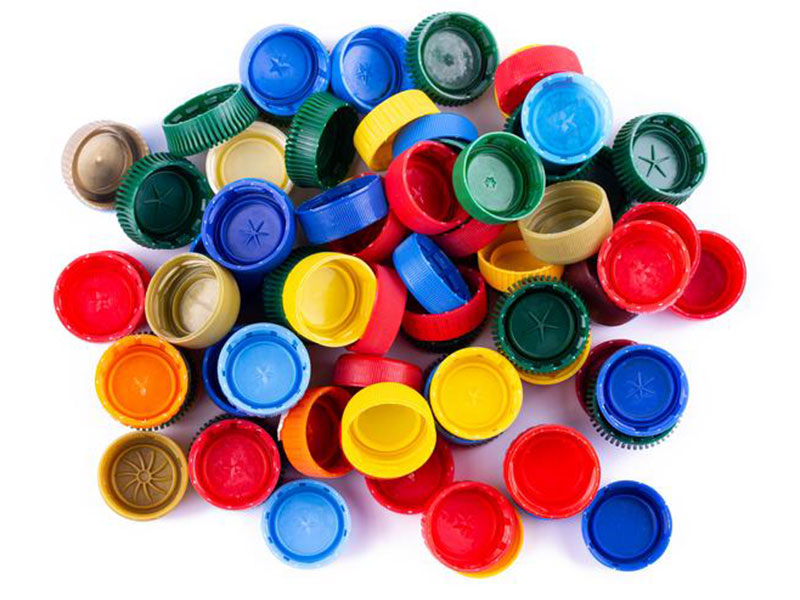
Plastic caps alone, especially in warm climates or under long storage, can allow more oxygen diffusion over time. Aluminum is effectively impermeable to gases in solid sheet form, so when combined with an appropriate liner, the closure becomes a high-performance barrier. You can think of it as a double seal:
- The liner forms a soft, conforming interface with the bottle neck, closing off surface irregularities.
- The aluminum shell forms a rigid barrier and protects the liner from mechanical damage and temperature swings.
There is a secondary protection that often goes unnoticed: resistance to aroma migration. Certain volatile flavor compounds can slowly pass through polymers or be absorbed into them. The inner lining of a metal closure can be formulated to minimize both absorption and diffusion, while the surrounding aluminum layer shields the liner from external chemicals, oils, or odors that might be present in warehouses or distribution environments.
For drinks using natural citrus oils, botanicals, or low-sugar formulations that are more sensitive to oxidation, this dual barrier can significantly extend functional shelf life—the time during which consumers still perceive the drink as “tasting fresh”.
Engineering the “pssst”: sealing torque, liner design, and standards
A cap’s performance is strongly influenced by details that most consumers never see. The sealing liner, typically a PVC-free or EVA- or PE-based material, is formulated for controlled compression, chemical compatibility, and low extractables. During capping, the closure is torqued to a defined range that compresses the liner against the bottle neck finish.
If the torque is too low, CO₂ loss and oxygen ingress increase; if too high, thread damage or cap deformation can compromise reuse or cause leaks after thermal cycling. Beverage producers rely on internal specifications, often guided by standards such as:
- ISO 12821 and ISO 11406 for closure systems and performance testing
- Internal torque, leak, and pressure-retention tests based on methods similar to ASTM D3198 and ASTM F1921
In accelerated shelf-life tests, filled bottles are stored at elevated temperatures and monitored for internal pressure, dissolved CO₂, oxygen ingress, and sensory changes. Aluminum caps, when correctly specified and assembled, typically show lower pressure loss and more stable oxygen levels, especially over long distributions or in hot climates.
That satisfying “pssst” when you open the bottle is actually the audible proof that the cap has held its internal environment intact until the moment of consumption.
Surface treatments: corrosion control and food safety
Soda environments are more aggressive than they appear. Between carbonation, organic acids like citric or phosphoric acid, dissolved oxygen traces, and elevated temperatures during transport, the headspace above the liquid becomes a miniature corrosion chamber.
Bare aluminum would be vulnerable in such conditions, particularly at creases and score lines. For this reason, closure stock is usually coated on both sides with carefully selected organic coatings. These might be epoxy, polyester, or BPA-NI (Bisphenol A–non-intent) lacquers, applied and cured according to food-contact regulations such as:
- FDA 21 CFR §175.300 and related clauses (in the United States)
- EU Regulation No. 1935/2004 and specific national measures (in Europe)
The coating system performs several functions simultaneously:
- Shields the aluminum from acidic vapors in the headspace, preventing pitting and discoloration.
- Prevents any interaction between the alloy and the beverage, ensuring no off-flavors or metallic tastes.
- Provides a stable base for exterior printing and brand decoration without compromising the inner barrier.
From a shelf-life perspective, stable coatings mean that the protective barrier does not degrade over time, even if pallets sit in containers crossing oceans or warehouses without perfect climate control.
Aluminum closures on PET and glass: different bottles, same mission
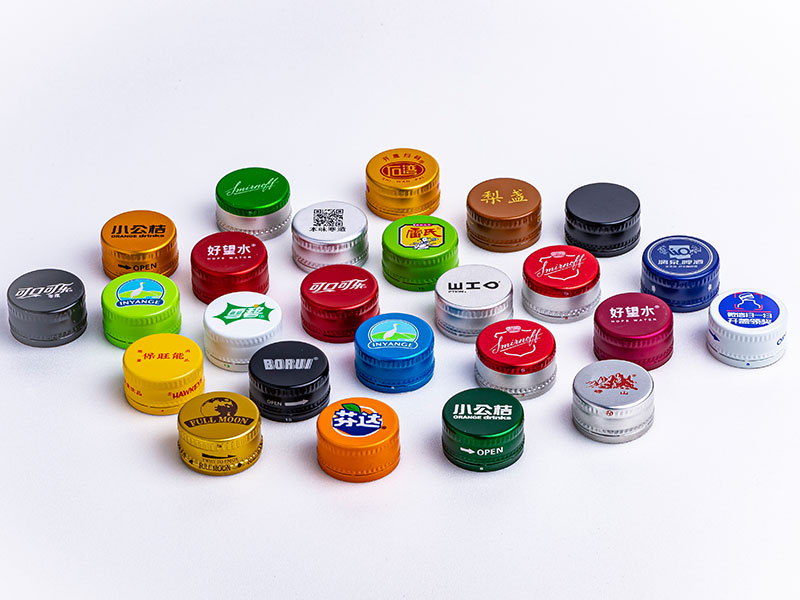
On glass bottles, aluminum roll-on pilfer-proof (ROPP) caps have a long history. They are formed directly onto the glass thread by rolling, generating an almost tailor-made seal. Glass is impervious to gases, so in this pairing, the closure becomes the primary variable controlling carbonation retention and oxygen ingress through the neck finish.
On PET bottles, aluminum caps are less common than plastic screw caps, but they are gaining attention for premium sodas, mixers, and functional beverages where extended shelf life and product image justify a higher closure cost. PET has its own gas-permeation characteristics; even with barrier additives or coatings, the bottle body allows some CO₂ loss and oxygen ingress over very long times. That makes the neck and closure even more critical. When the closure area is sealed by a metal cap with a high-performance liner, the most vulnerable region—the interface between bottle and cap—is better protected.
In both systems, the guiding philosophy is the same: make the neck and closure area the strongest link in the chain, not the weakest.
Sustainability, recycling, and the second life of a cap
Shelf life is not only a technical question; it is also an environmental one. A drink that spoils early because of poor closure performance wastes all the energy and resources invested in its production, filling, and transportation. A better cap is therefore indirectly a lower-carbon solution, because it reduces product loss throughout the supply chain.
Aluminum adds another dimension: it is endlessly recyclable without meaningful loss of properties. Closure stock can be produced with high recycled content, depending on the purity requirements and in-house melt controls. After use, aluminum caps can be collected with mixed packaging, separated magnetically and by eddy-current systems, and fed back into the aluminum recycling stream. Each recycling cycle typically consumes only a fraction of the energy needed for primary aluminum production.
For brand owners, this means that specifying an aluminum closure is not just a matter of shelf life, but also of aligning packaging design with circular-economy goals and regulatory pressures on extended producer responsibility.
The cap as a quiet guarantee
When a consumer picks a soda from the shelf, they rarely consider the microstructure of the cap alloy, the torque profile applied on the bottling line, or the migration limits dictated by food-contact legislation. Yet all of these invisible decisions determine whether that product will still feel crisp, lively, and safe after months in a warehouse or days in a hot car trunk.
Soda bottle closures with aluminum caps are, in effect, precision-engineered guardians of shelf life. Through careful selection of alloy chemistry, tempers, coating systems, liner formulations, and sealing parameters, they create a controlled environment above the liquid that keeps carbonation in, oxygen out, and flavors as close as possible to the day they left the filling line.
Seen from this perspective, the cap is not a disposable accessory. It is the smallest pressure vessel in the beverage world—one that, when designed and executed correctly, quietly protects both product quality and the resources behind every bottle.
https://www.bottle-cap-lids.com/a/soda-bottle-closures-with-aluminum-caps-for-better-shelf-life.html