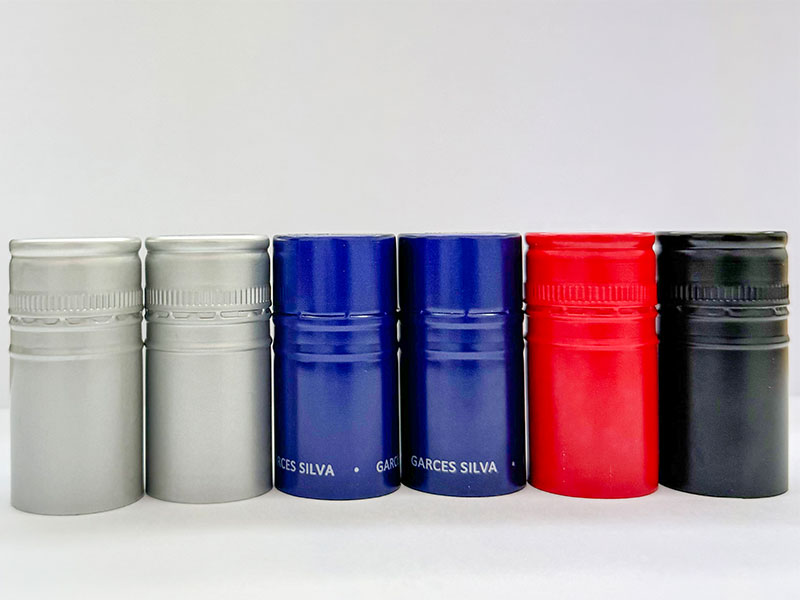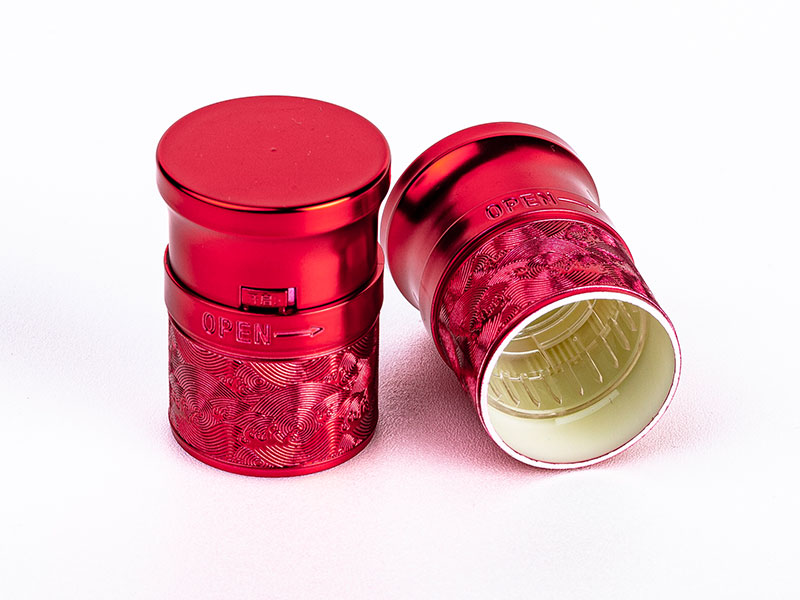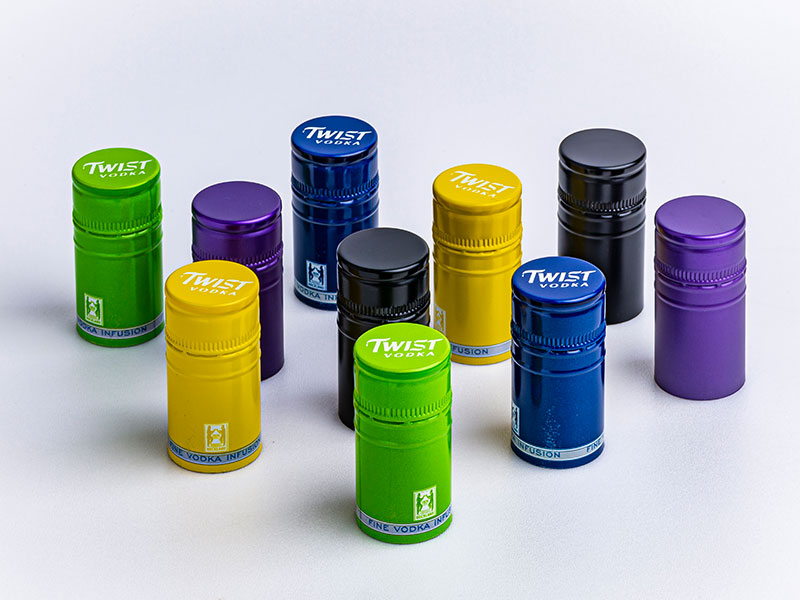


Lightweight Aluminum Soda Caps with Secure Carbonation Seal
Lightweight aluminum soda caps rarely get credit for how much engineering is packed into a few grams of metal. When a carbonated drink hisses open with exactly the right sound and zero leakage beforehand, that’s not an accident. It is the result of alloy design, precision tempering, and microscopic control of surface chemistry, all working together to hold carbonation under pressure without adding unnecessary weight.
Below is a deep dive into how lightweight aluminum soda caps achieve secure carbonation sealing while meeting tough implementation standards—and why the underlying metallurgy matters so much for modern beverage brands.
Rethinking the Soda Cap: A Micro Pressure System
Every carbonated beverage is essentially a controlled gas–liquid equilibrium. Inside a sealed bottle, carbon dioxide dissolves in the liquid and builds internal pressure in the headspace. The cap must:
- Maintain a gas-tight barrier at typical internal pressures between roughly 0.25–0.6 MPa (about 2.5–6 bar), sometimes higher for specialty drinks
- Resist creep and relaxation over time so that the torque applied at bottling translates into long-term seal integrity
- Survive storage, transport, thermal cycling, and handling without losing mechanical properties or corroding
From this viewpoint, a lightweight aluminum soda cap is optimized not only for cost and sustainability, but also for its ability to elastically store and maintain clamping force on the sealing liner while under constant carbonation pressure.
Why Lightweight Aluminum Wins Over Traditional Materials
Traditional crown caps were often made from steel. Aluminum has displaced steel in many applications because it offers a different balance of properties that are particularly valuable for carbonated beverages:
- High specific strength: Good mechanical strength relative to its very low density
- Excellent corrosion resistance: Especially when combined with appropriate alloying and coatings
- Precise formability: Essential for knurling, threading, and forming the sealing panel without cracking
- Consistent tempering behavior: Allows engineers to “tune” ductility and springback, which control how well the cap grips the bottle finish
This balance allows significant weight reduction without sacrificing the integrity of the carbonation seal—a critical SEO angle for sustainability-focused brands: “lightweight aluminum soda caps,” “reduced packaging weight,” and “optimized CO₂ retention.”
Alloy Selection: The Hidden Architecture of Performance
The alloy behind a high-performance soda cap is almost always a wrought aluminum alloy tailored for deep drawing, good strength, and excellent corrosion resistance. Manufacturers commonly choose from:
- 3xxx-series aluminum alloys (Al–Mn based)
- 5xxx-series aluminum alloys (Al–Mg based)
These series deliver a combination of moderate strength, good elongation, and stable performance after work hardening. For twist-off or roll-on aluminum soda caps, an alloy like EN AW-3104, EN AW-3004 or similar is typical, often supplied in a work-hardened temper.
A representative alloy composition suitable for lightweight soda caps might look like this:
| Element | Typical Range (wt%) | Function in Cap Performance |
|---|---|---|
| Aluminum (Al) | Balance | Base metal; low density and corrosion resistance |
| Manganese (Mn) | 0.8 – 1.5 | Strengthens via solid-solution and dispersoids, improves formability |
| Magnesium (Mg) | 0.3 – 1.2 | Increases strength, contributes to strain hardening |
| Iron (Fe) | ≤ 0.8 | Controls grain structure; excessive Fe can reduce ductility |
| Silicon (Si) | ≤ 0.4 | Influences casting and forming; kept low for cap applications |
| Copper (Cu) | ≤ 0.1 – 0.2 | Slight strength contribution; kept low to protect corrosion resistance |
| Others (each) | ≤ 0.05 | Impurities strictly controlled |
| Others (total) | ≤ 0.15 | Combined impurity limit |
This chemical architecture balances three competing needs:
- Enough manganese and magnesium to strengthen the cap shell
- Low copper to avoid aggressive corrosion in contact with acidic beverages
- Tight control of iron and silicon to prevent brittle intermetallic phases that could trigger cracks during forming
For SEO, phrases like “optimized aluminum alloy composition for soda caps” and “corrosion-resistant beverage closure alloy” naturally arise from these metallurgical choices.
Tempering: Tuning Springback for Secure Carbonation Seals
The temper of the aluminum cap sheet is where precision engineering meets the seemingly simple task of sealing a bottle. While most consumers will never hear terms like H14, H19, or H48, these temper designations are what make the difference between a cap that leaks and one that locks in carbonation for months.
Commonly used tempers for cap stock include:
- H14: Strain-hardened to a medium strength level
- H16/H18: Progressively harder tempers for higher yield strength
- “Cap-specific” tempers such as H48: Tailored to rolling and forming behaviors used by individual producers
The temper sets crucial mechanical parameters such as:
- Yield strength: The stress at which the cap begins to deform permanently, controlling how it clamps onto threads or crown beads
- Ultimate tensile strength: The maximum load it can withstand before failure
- Elongation: The ability to stretch without cracking during deep drawing and knurling
Typical mechanical parameters for a soda cap alloy in a work-hardened temper might be:
| Property | Typical Range | Relevance to Soda Cap Performance |
|---|---|---|
| Yield strength (Rp0.2) | 150 – 230 MPa | Governs clamping force and resistance to relaxation |
| Tensile strength (Rm) | 240 – 300 MPa | Ensures integrity during capping and transport |
| Elongation (A50) | 3 – 10 % | Prevents cracking during forming and crimping |
| Modulus of elasticity (E) | ~ 70 GPa | Influences springback and torque transfer |
| Hardness (HV) | 60 – 90 HV | Connected to wear resistance and forming behavior |
| Density | ~ 2.7 g/cm³ | Enables lightweight design |
Cap designers think of tempering almost as setting a spring constant. The cap must stay elastic enough to maintain sealing pressure but rigid enough to handle torque and internal pressure. Too soft, and it may relax over storage; too hard, and it may crack during forming or screwing onto the bottle.
Implementation Standards: Aligning with Global Beverage Requirements
Soda caps exist inside a dense ecosystem of standards that control dimensions, safety, and recyclability. These include:
- International closure standards such as those aligned with GPI (Glass Packaging Institute) or CETIE guidelines for thread and finish geometry
- Food-contact safety regulations such as FDA (21 CFR) in the United States and EU Regulation (EC) No 1935/2004 for materials in contact with food
- EU REACH and RoHS requirements governing restricted substances in coatings and liners
- ISO and EN standards for aluminum strip, sheets, and coatings that define mechanical and dimensional tolerances
From the perspective of a beverage brand, these standards guarantee:
- Cap–bottle compatibility across filling lines worldwide
- Verified migration limits for coatings and liners in contact with acidic, carbonated media
- Controlled torque windows to avoid over-tightening (which can damage threads) or under-tightening (which can cause slow CO₂ loss)
By aligning alloy, temper, and forming parameters with these implementation standards, manufacturers secure not just carbonation but also regulatory compliance and operational efficiency.
Secure Carbonation Seal: Where Metal Meets Polymer
The “secure carbonation seal” is created not by metal alone, but by the controlled interface of aluminum, liner material, and bottle finish. The cap is essentially the load-bearing structure that compresses a polymeric liner against the bottle rim and threads.
contributions of the aluminum alloy to this seal:
- Dimensional stability: The formed cap must maintain thread geometry and crown shape under load and temperature changes
- Elastic recovery: The cap slightly “springs back” after crimping or screwing, providing sustained compression on the liner
- Surface integrity: The inner enamel or lacquer and outer coating must adhere firmly to the alloy, without blistering, to prevent underfilm corrosion and preserve liner bonding
Typical functional parameters related to sealing performance include:
- Internal pressure resistance: Commonly designed for at least 0.6–1.0 MPa internal pressure without leakage
- Torque retention: Ability to maintain opening torque within a specified range (for example, 12–20 in·lbf or regional equivalents) throughout shelf-life
- CO₂ retention: Measured by long-term tests at elevated temperatures, ensuring minimal carbonation loss
Adjustments in alloy temper, gauge thickness, and knurl geometry give closure designers a fine level of control over these parameters, which is why “precision-engineered aluminum soda caps for carbonation retention” is not just a marketing phrase; it captures real engineering work.
Chemical and Surface Behavior: Corrosion Control from the Inside Out
Carbonated soft drinks and sparkling waters are chemically active environments. They can be acidic, contain flavoring agents, sugars, salts, and in some cases alcohol. The aluminum alloy alone, though naturally corrosion-resistant, needs a well-designed coating system to withstand such exposure and prevent any metal–beverage interaction.
A simplified view of surface chemistry and related properties for cap alloys:
| Property / Feature | Typical Characteristic | Role in Soda Cap Durability |
|---|---|---|
| Native oxide film (Al₂O₃) | ~2–10 nm passive layer | Base corrosion resistance; anchor for coatings |
| Inner enamel / lacquer type | Epoxy, polyester, or BPA-NI systems | Prevents contact between beverage and metal |
| Outer coating | Polyester, acrylic, or UV-curable finish | Protects against humidity, transport wear, and external corrosion |
| Corrosion resistance in acidic media | Excellent with proper coating and low Cu | Prevents pitting and maintains mechanical strength |
| Galvanic behavior | Stable in contact with glass; managed vs steel | Avoids galvanic corrosion scenarios |
| Coating adhesion | High, with controlled surface prep | Prevents delamination and underfilm corrosion |
The synergy between alloy chemistry and coating systems explains why minor changes in impurities or surface treatment can have major effects on shelf-life and aesthetic quality.
Process Conditions: From Coil to Cap
The journey from aluminum coil to finished soda cap integrates multiple closely controlled process conditions that preserve the alloy’s carefully defined properties:
- Casting to hot rolling: Produces homogeneous microstructure and controlled grain size
- Cold rolling to final gauge: Introduces the work hardening that produces required strength and temper
- Continuous annealing or partial annealing (where used): Fine-tunes formability and residual stresses
- Coating and curing: Applies internal and external coatings under controlled thickness, curing temperature, and line speed
- Punching, forming, and knurling: Shapes the cap with tight tolerances on thickness distribution and thread geometry
Each process stage is governed by internal standards and often references external specifications such as EN 485, EN 573 (for chemical composition), and internal closure design standards. A shift in rolling reduction or over-curing the lacquer can subtly alter how the cap reacts when applied to the bottle, affecting both torque and leak resistance.
This production chain offers another SEO-relevant viewpoint: “from alloy design to high-speed capping lines, fully traceable aluminum soda cap manufacturing.”
Aluminum’s recyclability turns the soda cap into more than a seal—it becomes a recyclable energy bank. Recycling aluminum typically uses around five percent of the energy required for primary metal production. By carefully reducing cap weight through optimized alloy and temper design, manufacturers:
- Decrease life-cycle carbon footprint
- Lower transportation emissions by reducing packaging weight
- Maintain or improve performance even as thickness is reduced
The same mechanical properties that secure carbonation—high strength-to-weight ratio, consistent tempering, and corrosion resistance—also make aluminum caps ideal candidates for closed-loop recycling systems.
A Distinctive Technical View: Caps as Engineered Interfaces
The most distinctive way to understand lightweight aluminum soda caps with a secure carbonation seal is to see them not as separate objects, but as engineered interfaces:
- Between internal pressure and external atmosphere
- Between liquid chemistry and metal surface
- Between industrial standards and consumer expectations
Their alloy composition governs microstructure. Their temper shapes mechanical response. Their coatings manage chemical interaction. Their forming and knurling control how torque translates into compressive force on the liner and bottle finish. Each parameter, from manganese content to lacquer curing temperature, participates in a tightly integrated system designed to protect carbonation.
For beverage producers searching for closures that support premium branding, extended shelf-life, food safety, and sustainability, modern lightweight aluminum soda caps provide a technologically sophisticated solution. From a metallurgist’s eye, each cap is a micro-engineered component whose value is measured in megapascals, microns, and millivolts of corrosion potential—but whose impact is felt in every perfectly carbonated sip.
https://www.bottle-cap-lids.com/a/lightweight-aluminum-soda-caps-with-secure-carbonation-seal.html