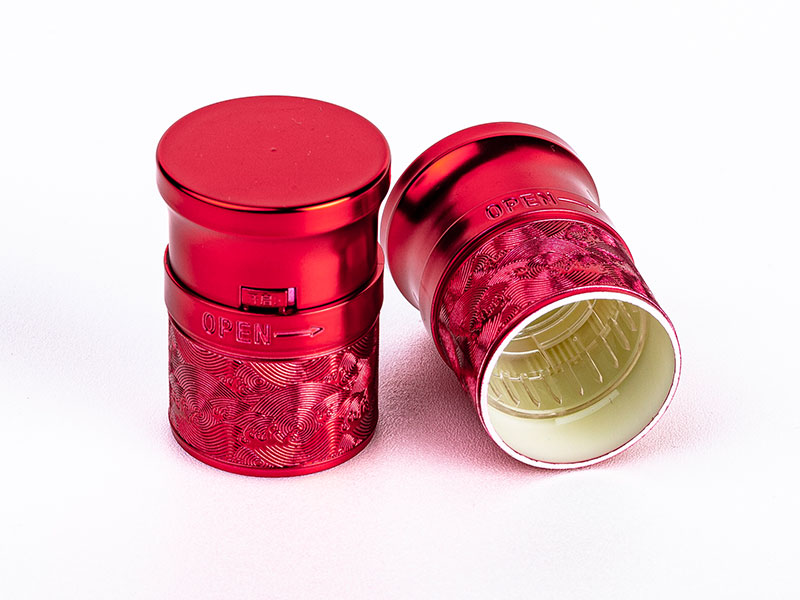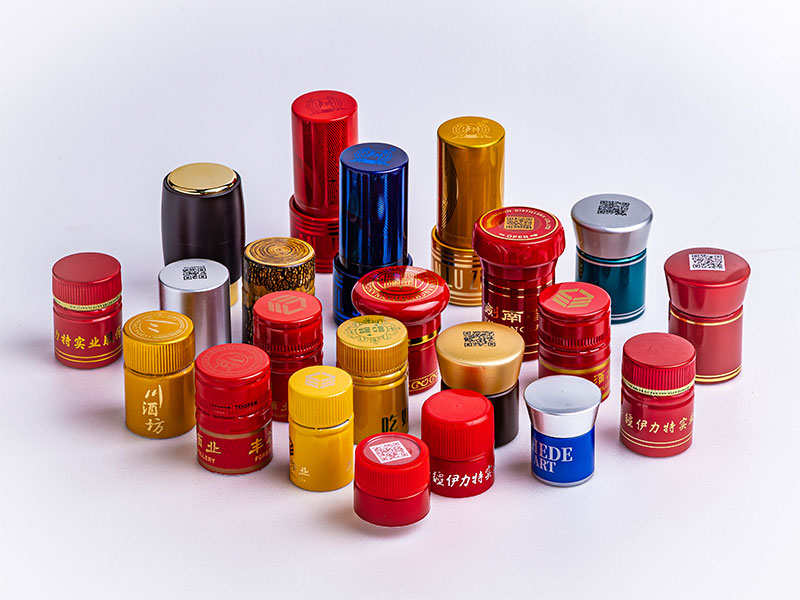


Custom Aluminum Soda Caps for Bottled Drinks with Easy Twist Off Feature
Custom Aluminum Soda Caps With Easy Twist Off Feature: A Technical Deep Dive From The Cap Up
Custom aluminum soda caps for bottled drinks look simple on the shelf, yet they are quietly sophisticated pieces of engineering. When a consumer twists off a cap with almost no effort and still hears that satisfying hiss of carbonation, it is the result of a careful balance of alloy design, temper, surface treatment, and sealing technology.
From this perspective, an aluminum soda cap is not just packaging. It is a calibrated pressure vessel closure, a mechanical interface for the human hand, and a controlled sacrificial barrier between the beverage and the outside world.
Keywords naturally integrated: custom aluminum soda caps, easy twist off cap, aluminum bottle cap manufacturer, aluminum alloy temper, beverage closure standards, soda bottle caps.
The Aluminum Cap As A Micro Mechanism
A custom aluminum soda cap works like a micro mechanism where tiny components and invisible properties decide whether the consumer experiences ease or frustration. The easy twist off function depends on three interlocked design layers.
First is the metal matrix itself, the aluminum alloy and temper. This determines whether the cap will crack under thread forming, stretch during capping, or recover its shape after deformation.
Second is the interface geometry. Cap height, thread profile, knurl pattern, and pilfer band design all dictate how much torque is needed to open the bottle and how securely the cap resists internal carbonation pressure before that first twist.
Third is the protective system. Lacquers, coatings, and liners protect the beverage from the metal, the metal from the environment, and the brand from quality complaints.
When these three layers are tuned together, an easy twist off feature does not mean a weaker closure. It means a smarter one.
Why Custom Aluminum Caps For Soda Instead Of Steel
From a practical engineering view, aluminum offers several advantages over steel for soda and carbonated soft drink caps.
Aluminum has a lower density than steel, which reduces cap weight and total package mass. For high volume beverage production, every gram saved per cap compounds into substantial logistics and sustainability benefits.
Aluminum forms more easily at lower forces, which allows precise knurling, rolling of threads, and shaping of pilfer bands without excessive tool wear. This gives more freedom to engineers to tune the cap geometry for easy twist off performance without sacrificing strength.
Corrosion resistance is also crucial. With appropriate alloy selection and interior lining, aluminum contact points are stable even with acidic soft drinks. Unlike uncoated steel, aluminum naturally forms an oxide layer, and this passive film is reinforced by coatings and food grade lacquers.
Finally, recyclability is a major factor. Aluminum soda caps can follow the same recycling flows as beverage cans and aluminum bodies, supporting fully recyclable bottle and cap systems.
Alloy Selection From A Functional Viewpoint
Instead of beginning with chemistry codes, a cap designer can approach alloy selection by asking what the metal must actually do on the line and in the consumer’s hand.
The alloy must allow deep drawing and shell forming without tearing. It must tolerate thread and knurl formation with high dimensional repeatability. It must accept coatings uniformly for visual branding. It must retain sufficient yield strength after baking and curing processes. And it must respond predictably to the torque applied by both capping machines and end users.
These functional demands lead to common cap alloys in the 3xxx and 5xxx series. They offer a controlled mix of strength, formability, and corrosion resistance. Below is a reference example of a widely used aluminum closure alloy. Actual values should be tailored by each manufacturer to specific bottle and line conditions.
Example Chemical Composition For Aluminum Soda Cap Alloy
Typical alloy example: AA3104 or similar 3xxx series closure grade
| Element | Typical Content, wt percent | Functional Role in Cap Performance |
|---|---|---|
| Aluminum, Al | Balance | Base metal, provides lightweight structure |
| Manganese, Mn | 0.8 – 1.5 | Increases strength and work hardening response |
| Magnesium, Mg | 0.8 – 1.3 | Raises strength, improves strain hardening |
| Iron, Fe | 0.3 – 0.8 | Controls grain size, affects formability and earing |
| Silicon, Si | 0.1 – 0.4 | Influences fluidity and surface finish in rolling |
| Copper, Cu | 0.05 – 0.25 | Adjusts strength, limited for corrosion control |
| Chromium, Cr | 0.01 – 0.10 | Stabilizes grain structure, improves processability |
| Zinc, Zn | 0.01 – 0.25 | Fine tuning of mechanical properties |
| Titanium, Ti | 0.01 – 0.05 | Grain refiner, enhances uniformity during forming |
| Others, each | ≤ 0.05 | Trace elements controlled to avoid defects |
| Others, total | ≤ 0.15 | Total impurity control for consistent performance |
This composition supports a closure material that can be rolled thin, drawn into shallow shells, and mechanically worked into complex features, yet still maintain coherent behavior under internal bottle pressure.
Alloy Tempering: Where Easy Twist Off Is Actually Engineered
The surprising truth is that the easy twist off characteristic is not only a matter of cap shape. It is strongly encoded into the alloy temper, the heat treatment and mechanical working history of the metal.
For soda caps, temper design often uses strain hardened tempers such as H14, H16, H19 or customized process tempers between these. The objective is to balance stiffness and ductility in a narrow window.
Fully soft temper would deform nicely but lack the torque resistance needed to hold carbonation under temperature swings and rough transport. Excessively hard temper would maintain closure strength but transfer too much resistance to the consumer, resulting in high opening torque or even thread tearing.
By controlling cold rolling reduction, intermediate annealing, and final leveling, manufacturers tune properties such as:
- Yield strength, which sets how easily the cap deforms microscopically during capping and opening.
- Tensile strength, which secures the cap against pressure-induced blow off.
- Elongation, which allows the skirt and pilfer band to flex without cracking.
The easy twist off feature emerges when the temper allows the thread and knurl regions to offer stored elastic energy that releases smoothly at first twist, rather than abruptly.
Illustrative Mechanical Property Ranges For Aluminum Soda Cap Sheet
Typical values for closure stock, dependent on alloy and temper.
| Property | Typical Range | Relevance To Easy Twist Off |
|---|---|---|
| Yield Strength, Rp0.2 | 150 – 260 MPa | Controls initial resistance to twisting |
| Tensile Strength, Rm | 220 – 320 MPa | Maintains integrity under carbonation load |
| Elongation, A50 | 4 – 12 percent | Avoids cracking during forming and opening |
| Hardness, HV | 60 – 95 HV | Influences feel of twist and dent resistance |
| Thickness Tolerance | ± 0.005 – 0.015 mm | Ensures uniform capping and liner sealing |
These values are not arbitrary. They are tuned so that at a specified opening torque, the cap yields just enough at the thread interface to break the seal cleanly while still feeling stable in the hand.
From Sheet Coil To Easy Twist Off Cap: A Process Centric View
Imagine the path of a sheet coil rather than the path of a bottle. The journey transforms a flat strip of metal into a highly tuned component.
Precision rolling sets the initial thickness, surface roughness, and mechanical properties. Uniformity across the coil is critical for consistent knurl formation and torque values.
Coating lines apply external and internal lacquers. These coatings do more than color. They adjust friction, protect against corrosion, and influence how torque transfers from fingers to metal. A well designed outer coating can provide micro grip, reducing the force needed for opening even before knurl geometry is considered.
Shell forming presses punch and draw discs into shallow cups. In this step, the forming behavior reveals the hidden quality of alloy and temper. Excessive earing, thinning, or wrinkling signals imbalances in texture and strain hardening.
Thread rolling and knurling are the heart of the closure mechanism. These plastic deformation steps build the mechanical interface with the bottle neck, shaping the path for torque. Precise control of thread depth, flank angle, and knurl sharpness is essential to achieve a controlled slip at human scale forces.
Finally, liner application and curing lock in the sealing performance. The elastomeric liner must bond well to the metal, conform to minute bottle neck variations, and release smoothly without sticking when the cap is twisted.
Designing The Easy Twist Off Experience
From a user centric point of view, easy twist off is not just low torque. It is a sequence of micro sensations. Grip, initial break, continued rotation, and final release all shape the perceived quality of the beverage.
Cap diameter and height influence leverage. A slightly taller skirt or optimized knurl orientation can reduce perceived opening difficulty without changing the actual torque value.
Knurl design, including pitch, depth, and flank shape, governs how fingers interact with the cap surface. Deep, sharp knurls can assist grip but may feel aggressive or uncomfortable. Finer knurls can provide a premium feel but require careful surface friction control so that the cap does not slip.
Pilfer band engineering governs tamper evidence and first opening behavior. For twist off designs, bridges between the band and the main cap must fracture reliably at a specific torque. Too strong and consumers struggle; too weak and the band may separate prematurely during capping or transport.
By controlling alloy temper and local deformation in the pilfer band region, manufacturers can control bridge toughness and predict fracture behavior. The result is an easy, decisive snap at first twist rather than a ragged tearing.
Implementation Standards And Compliance Considerations
A professional aluminum bottle cap manufacturer designs custom soda caps in alignment with a network of international and regional standards. From the cap oriented perspective, these standards define envelopes within which the cap must perform, regardless of which bottling line or beverage it meets.
Relevant standards and guidelines typically include:
- Food contact safety regulations such as FDA requirements in the United States and EU food contact materials frameworks. These govern lacquer compositions, ink systems, and liner compounds.
- Management system standards like ISO 9001 for quality control and ISO 14001 for environmental management, ensuring consistent alloy performance, traceability, and waste handling.
- Specialized closure and packaging standards developed by industry bodies, defining dimensions, leak tightness, and torque test methods for beverage closures.
- Migration and sensory standards for coatings and liners, to guarantee that aluminum soda caps do not impart flavor, odor, or contaminants to carbonated beverages.
For custom projects, technical data sheets typically specify:
- Nominal alloy designation and temper, with mechanical property ranges.
- Sheet thickness with tolerances and flatness criteria.
- Coating type, thickness, and curing conditions.
- Line compatibility notes, such as recommended capping head pressure and twist off torque windows.
By harmonizing alloy behavior with these standards, manufacturers ensure that custom caps operate as drop in solutions across diverse bottling environments.
Corrosion And Chemical Resistance: Protecting The Beverage From The Cap And The Cap From The Beverage
Soda and flavored sparkling beverages are chemically active environments, dominated by carbonic acid and organic acids such as citric or phosphoric acid. Without proper design, these liquids can degrade metal surfaces or extract components from coatings and liners.
Aluminum alloys for soda caps receive multi layer protection. A thin native oxide layer forms spontaneously on aluminum, providing a first level barrier. Over this, internal food grade lacquer is applied, chosen for its resistance to acidic beverages, carbonation, and pasteurization or hot fill if applicable.
Chromium free conversion coatings or alternative treatments may be used on the metal surface to enhance paint adhesion and corrosion resistance, reflecting modern eco conscious standards.
Externally, decorative and protective coatings resist condensation, abrasion through distribution, and UV exposure on shelves. For outdoor or warm climate markets, UV stable systems prevent chalking, fading, and loss of branding clarity.
Chemical resistance testing includes:
- Immersion or storage tests in model beverages at elevated temperatures.
- Carbonation pressure testing over storage time.
- Coating adhesion checks after thermal cycling.
From the cap up viewpoint, corrosion resistance is simultaneously a safety shield and a design constraint, shaping both alloy choices and finishing processes.
Tuning Performance Through Parametric Design
In custom aluminum soda cap development, performance is not guessed; it is tuned. Engineers manipulate a set of parameters much like a sound engineer adjusts frequencies on a mixing board.
adjustable parameters include:
- Cap diameter and height for torque leverage and aesthetic profile.
- Shell thickness for a balance of rigidity and light weight.
- Knurl count and angle to control friction and tactile feeling.
- Thread profile and depth for consistent engagement with bottle necks.
- Pilfer band bridge count and width for reliable tamper evidence.
- Liner formulation and thickness for sealing efficiency and flavor neutrality.
- Alloy temper level, controlling hardness and formability.
By modeling and testing how each parameter affects opening torque, pressure retention, and deformation under load, manufacturers create cap designs optimized for specific beverages, bottle materials, and markets. Carbonated soft drinks, energy drinks, flavored waters, and sparkling juices can each demand subtle variations in cap behavior.
Sustainability And Resource Efficiency From The Cap Perspective
When viewed from the cap up, sustainability is not only about recyclability, but also about performance density. How much sealing, strength, and user friendliness can be delivered per gram of metal.
Aluminum offers nearly infinite recyclability with minimal property loss. Lightweight custom caps reduce total material consumption per bottle without compromising closure integrity. Precision alloy and temper control allow down gauging, reducing thickness while still delivering required torque and sealing specifications.
Advanced coating systems are increasingly chromium free and solvent optimized, aligning cap production with modern environmental regulations. Coordinated design between bottle and cap can also improve overall recycling flows, especially when both are aluminum, creating monomaterial packages that are easier to sort and reprocess.
Looking from the cap up, rather than from the beverage down, reveals a different truth about custom aluminum soda caps with easy twist off features. They are not minor accessories. They are the first physical touchpoint between the consumer and the drink, the gate through which brand promise becomes actual experience.
Every twist off motion is a small engineering demonstration. The alloy temper silently negotiates with the applied torque. The threads and knurls translate hand motion into controlled mechanical release. The liner disengages just enough to let carbonation speak without losing control of the seal.
When these elements are precisely integrated, the result is a custom aluminum soda cap that opens with ease, protects with reliability, and supports both performance and sustainability. In that moment, a thin disc of engineered aluminum becomes the unseen hero of the bottled drink.