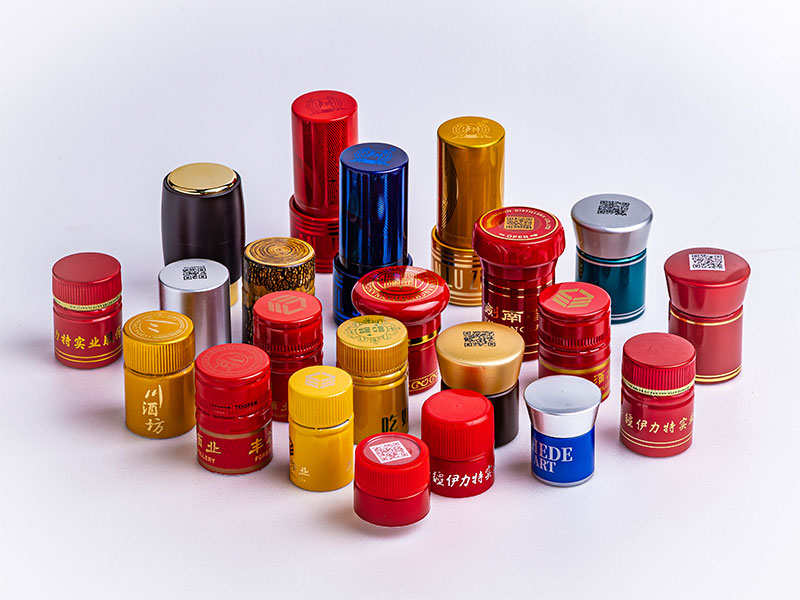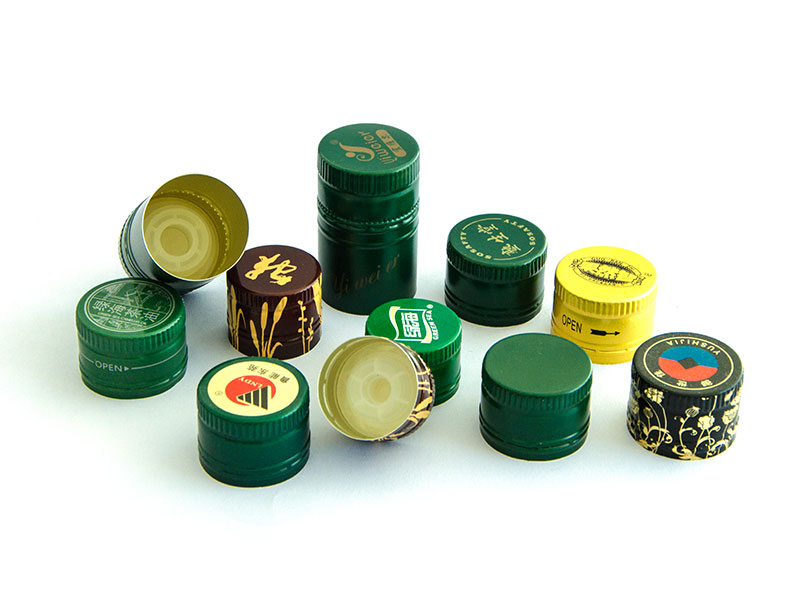


Durable Aluminum Soda Caps for Carbonated Drinks with Pressure Seal
Carbonation is a small engineering miracle: invisible gas held in suspension, waiting for the first twist and that unmistakable release. The unsung hero is the cap. A durable aluminum soda cap for carbonated drinks isn't just a "lid"-it's a pressure-management component that has to seal, flex, recover, resist corrosion, and still look good on a fast-moving filling line. From a practical standpoint, the best caps behave like a spring and a shield at the same time: they maintain compression on the liner to hold pressure, and they protect the beverage from oxygen, leaks, and flavor loss.
Why aluminum caps excel under carbonation pressure
Carbonated beverages continuously push outward. Temperature swings during storage and transport raise internal pressure, and the cap must keep sealing force without creeping, cracking, or losing torque retention. Aluminum is particularly effective here because it combines low weight, good formability, and consistent mechanical properties after tempering. When properly coated and paired with a compatible liner, an aluminum cap can hold the tight balance between "strong enough to contain pressure" and "ductile enough to form clean threads and knurling without fracture."
A useful way to picture a quality aluminum soda cap is as a controlled elastic system. The shell provides structural stiffness, while the liner supplies micro-level sealing by conforming to finish irregularities. Under pressure, the liner is compressed; when pressure fluctuates, the aluminum shell should resist permanent deformation so sealing force remains stable over time.
parameters customers actually feel: seal confidence, opening experience, and consistency
For carbonated drinks, the customer's first interaction is tactile and auditory: a smooth twist, a crisp hiss, no sticky threads, no surprise drips. Those "sensory" outcomes come from measurable parameters:
- Cap size and finish match such as 28 mm and 38 mm beverage finishes are common; thread profile and tamper-evident band geometry must match the bottle neck finish precisely.
- Application torque and removal torque window must be stable across production batches, typically tuned to the bottle material and liner type to prevent back-off while keeping openability comfortable.
- Top load and buckle resistance support stacking and transport; the cap should not dish or collapse under compressive loads.
- Internal pressure resistance depends on liner compression set, shell stiffness, and thread engagement; it should withstand expected CO₂ pressure at elevated temperatures without weeping.
- Coating integrity on the inside prevents corrosion and taste impact; outside coating preserves appearance and brand graphics.
In short, the cap is a repeatability product. The best aluminum soda caps feel "boring" in the best way: every bottle opens the same, and none leak.
Materials choice: alloys and tempers designed for forming and sealing
Most aluminum bottle caps are produced from aluminum sheet that is then punched, formed, knurled, and lined. The alloy and temper determine how well the metal forms without cracking and how well it holds shape after crimping/rolling.
Commonly used alloys for cap shells include AA8011 and AA3105, with tempers often in H14/H16/H18 ranges depending on forming needs and stiffness targets. AA8011 is widely used in packaging because it offers good formability and barrier-friendly characteristics. AA3105 is also popular, especially where slightly higher strength and stable formability are desired.
Tempering matters because the shell must tolerate deformation during forming while retaining enough strength to resist "paneling" or permanent set after capping. A too-soft temper may deform and relax, reducing liner compression; too-hard may crack at knurls or threads.
Typical cap shell thickness ranges are often around 0.18–0.25 mm, selected by cap diameter, knurl depth, tamper band design, and expected internal pressure conditions.
Pressure seal design: where the real work happens
The pressure seal in an aluminum soda cap is created by the combined action of:
- The cap shell geometry that delivers downward load
- The threads that convert torque into axial compression
- The liner that conforms to the bottle's sealing land
- The coating system that protects the metal and improves liner compatibility
Liners for carbonated drinks frequently use food-grade materials such as EPE (expanded polyethylene), PE, or composite liners; some applications use more specialized sealing compounds depending on hot-fill, pasteurization, or aggressive ingredients. For high-carbonation products, liner resilience and low compression set are crucial. If the liner "takes a set" permanently, pressure cycling can gradually reduce sealing force and lead to micro-leaks.
Implementation standards and production controls that matter on filling lines
A cap that looks perfect but runs poorly at 30,000 bottles per hour is not a real solution. Aluminum soda caps for carbonated beverages are typically produced and validated under recognized packaging and quality frameworks:
- ISO 9001 quality management is commonly used for process consistency and traceability.
- Food contact compliance should align with applicable regulations for coatings and liners, such as FDA 21 CFR (USA) and EU Framework Regulation EC 1935/2004, plus relevant plastic and coating provisions, depending on destination market.
- Migration testing, sensory testing, and coating adhesion tests are essential for beverage applications, especially with acidic sodas and flavored carbonated drinks.
- Dimensional inspection standards for diameter, skirt height, thread profile, and tamper-evident band break force help ensure smooth capping and consistent opening.
On the line, the practical controls include capping head condition, torque calibration, cap feed orientation, and cleanliness to avoid liner contamination. Aluminum is forgiving in many ways, but pressure sealing is not forgiving of variability.
Typical specification window for durable aluminum soda caps (reference)
Actual requirements depend on bottle finish and beverage type, but durable pressure-seal caps often align with these expectations:
- Diameter options: 28 mm, 30/31 mm, 38 mm (others available by finish)
- Shell thickness: 0.18–0.25 mm
- Alloy/temper: AA8011-H14/H16/H18 or AA3105-H14/H16 (application-dependent)
- Coating: internal epoxy or BPA-NI systems; external polyester/UV coatings for graphics and abrasion resistance
- Liner: EPE/PE or customized compound for carbonation and temperature profile
- Pressure performance: designed for typical carbonated beverage internal pressure ranges and thermal cycling during transport and storage
If your product sees warm distribution, high carbonation, or frequent temperature changes, it's worth specifying pressure hold performance at elevated temperatures rather than only room temperature checks.
Aluminum alloy chemical composition table (typical ranges)
Below are typical composition limits used in packaging sheet. Always confirm mill certificates for your exact coil/lot.
| Alloy | Si (%) | Fe (%) | Cu (%) | Mn (%) | Mg (%) | Cr (%) | Zn (%) | Ti (%) | Al (%) |
|---|---|---|---|---|---|---|---|---|---|
| AA8011 | 0.50–0.90 | 0.60–1.00 | ≤0.10 | ≤0.20 | ≤0.05 | ≤0.05 | ≤0.10 | ≤0.08 | Remainder |
| AA3105 | ≤0.60 | ≤0.70 | ≤0.30 | 0.30–0.80 | 0.20–0.80 | ≤0.20 | ≤0.40 | ≤0.10 | Remainder |
These alloys are chosen not for exotic chemistry, but for reliable forming behavior, stable strength after tempering, and compatibility with coating systems used in beverage closures.
The "durable" promise: what it really means for your brand
Durability in an aluminum soda cap is not just dent resistance. It means the cap keeps its seal through pressure cycles, holds torque through logistics, resists corrosion from acidic beverages and humid storage, and preserves brand appearance through handling. Done well, the cap becomes a quiet quality signal: consumers may never comment on it, but they trust the bottle because it behaves exactly as expected.