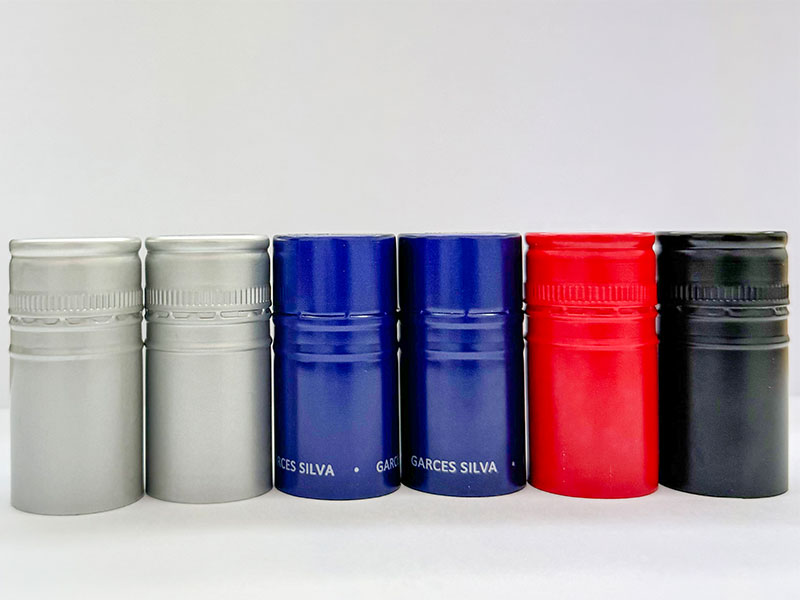


Aluminum Bottle Closures for Wine with Anti Oxidation Technology
Aluminum Bottle Closures for Wine with Anti‑Oxidation Technology
A practical, technical guide from a packaging engineer’s perspective
Aluminum closures quietly decide how a wine will taste months or years after bottling. For many producers, the switch from natural cork to aluminum screw caps wasn’t just about convenience—it was about controlling oxidation, preserving freshness, and delivering a consistent glass every time.
Today’s aluminum bottle closures for wine with anti‑oxidation technology combine metallurgy, surface chemistry, liner engineering, and tight process control. Below is a detailed yet practical look at how they work, what they’re made of, and the technical standards behind them.
1. Why Oxidation Control Matters in Wine Closures
1.1 What “anti‑oxidation” really means in this context
When we talk about anti‑oxidation for wine closures, we’re addressing two separate but related phenomena:
Wine oxidation
- Uncontrolled oxygen ingress can cause:
- Color browning in whites
- Premature aging or flattening of aromas
- Development of aldehydic, “sherry‑like” notes in wines not made for oxidative styles
- Anti‑oxidation technology = managing Oxygen Transfer Rate (OTR) to fit each wine style.
- Uncontrolled oxygen ingress can cause:
Metal / packaging oxidation and corrosion
- Aluminum must not corrode, leach metals or react with acidity or sulfur dioxide (SO₂).
- Anti‑oxidation technology = protecting the aluminum via alloy design + coatings + liners, so the closure remains inert over the wine’s shelf life.
Modern aluminum wine closures are engineered to handle both, through:
- Proper aluminum alloy selection
- Anodizing or lacquer systems
- High‑performance liners with tuning of OTR
- Strict implementation standards and quality controls
2. The Structure of an Aluminum Wine Closure
A typical roll‑on, pilfer‑proof (ROPP) aluminum wine closure has four critical layers:
Aluminum shell
- Forms the visible cap and the threaded profile that grips the bottle neck.
Exterior coating
- Protects the metal from the environment; provides decorative and branding surface.
Interior coating / varnish
- Directly faces the headspace above the wine and sometimes touches it; must be food‑contact safe and chemically resistant.
Liner / gasket system
- Pressed into the interior top.
- Creates the gas and liquid seal.
- The main driver for oxygen control.
3. Alloy and Temper: Why the Choice Matters
From an engineer’s viewpoint, choosing the right aluminum alloy + temper is central to closure performance:
- It must be soft enough to form crimps and threads without cracking.
- It must be strong and springy enough to retain sealing pressure.
- It must resist corrosion and maintain stability in humid, acidic environments.
3.1 Typical Alloys Used for Wine Closures
For screw‑caps and other wine closures, manufacturers commonly use non‑heat‑treatable alloys in the 3xxx and 5xxx series, sometimes 1xxx, depending on region and performance needs.
Common choices include:
AA 8011 (Al‑Fe‑Si alloy)
- Excellent formability
- Good corrosion resistance
- Widely used for closures and foil
AA 3003 / 3004 (Al‑Mn / Al‑Mn‑Mg)
- Good combination of strength and elongation
- Enhanced corrosion resistance
- Very common in packaging
AA 3105
- Similar to 3003, slightly different Mn content and composition
- Good formability, good corrosion resistance, common in coated sheets
AA 5052 (Al‑Mg)
- Higher strength and excellent corrosion resistance
- Used when more mechanical robustness is required, sometimes for taller closures or special applications.
3.2 Preferred Tempers
The temper controls strength and formability. Forming the pilfer band and thread roll‑on profile requires good ductility.
Typical tempers:
H14 / H16 – Half‑hard / 3/4 hard:
- Adequate strength with reasonable formability.
- Suited for many roll‑forming processes.
H18 – Full hard:
- Higher strength but lower elongation.
- Sometimes used where high dimensional stability is needed, paired with optimized forming conditions.
H19 / special tempers – Vendor‑specific tunes between strength and ductility for a specific closure line.
The actual choice depends on the:
- Closure height and diameter
- Threading and pilfer‑band design
- Filling line torque strategy and application speed
4. Dimensional & Performance Parameters
While designs vary, the industry tends to standardize around critical parameters:
4.1 Typical Dimensional Specs
For a standard 30x60 mm wine screw cap (common on still wine bottles):
- Nominal diameter: 30 mm
- Overall height: 60 mm
- Shell wall thickness: 0.20 – 0.23 mm (depending on alloy & strength)
- Pilfer band height: 7 – 9 mm
- Thread type: Standardized ROPP geometry per glass bottle neck finish (e.g., BVS standard neck).
4.2 Mechanical and Sealing Parameters
closure performance parameters include:
Application torque:
- Typically ~0.8 – 1.5 N·m (depending on bottle, liner, filling line)
- Ensures tightness without glass stress.
Removal (break‑loose) torque:
- 50–80% of application torque after aging (typical range 0.6–1.2 N·m).
- Ensures consumer can open easily but counterfeit / tampering remains obvious.
Top load resistance:
- Strength of closure under axial load on pallet or during capping.
- Often specified in Newtons or kgf (e.g., ≥ 1000 N without damage, dependent on design).
Leakage performance:
- 0 leakage under internal overpressure (e.g., 1 bar for still wine) for defined time and conditions (e.g., 30 min).
Oxygen Transfer Rate (OTR):
- The to anti‑oxidation performance.
- Typically tested at 23 °C and 50–70% RH.
- Modern liners can offer:
- Very low OTR (~0.001–0.006 mg O₂/day)
- Medium OTR for controlled micro‑oxygenation
5. Anti‑Oxidation Technology: How Aluminum Closures Really Work
5.1 Managing Wine Oxidation: The Role of the Liner
From a wine stability perspective, the liner is more important than the aluminum shell.
Common liner types for wine closures include:
Saran‑Tin (PVDC/Tin foil composite)
- Ultra‑low OTR
- Excellent barrier to oxygen
- Traditional choice for sensitive aromatic whites
- Now declining in some markets due to PVC / PVDC regulatory and sustainability concerns.
Saranex (multi‑layer PE / PVDC)
- Moderate OTR
- Allows controlled oxygen ingress
- Good for reds that benefit from gentle evolution.
PVC‑free liners (multi‑layer polyolefins, EVOH‑based, or advanced co‑extrusions)
- Targeted OTR profiles
- Better regulatory and environmental profile
- Increasing adoption as “next‑generation” liners.
Modern anti‑oxidation wine closures are often marketed not just with generic “low OTR” but with calibrated OTR ranges, allowing producers to match closure type to wine style:
- Aromatic whites & rosés: very low OTR liners to lock in freshness.
- Age‑worthy reds: moderate OTR to allow controlled oxygen ingress that helps tannin polymerization and flavor development.
- Entry‑level wines: lined for shelf‑life assurance but cost‑optimized.
5.2 Protecting the Metal From Corrosion
Wine is an aggressive medium:
- pH 2.8–4.0
- Contains organic acids (tartaric, malic, citric)
- Contains SO₂ (sulfur dioxide), an antioxidant but also corrosive.
To prevent corrosion, an aluminum closure is protected by:
- Natural oxide layer (Al₂O₃)
- Managed passivation / surface treatment
- Inner lacquers / coatings
Standard approaches:
Chromate‑free conversion coatings or modern zirconium/titanium‑based systems:
Improve adhesion between aluminum and lacquer, add corrosion resistance.Inner food‑grade epoxy, polyester or BPA‑NI coatings:
- Provide barrier to wine vapors and condensate.
- Resist SO₂, acids, ethanol, and cleaning agents.
Outer coatings:
- Often polyester or acrylic systems; more focused on UV and decorative resistance, but still contribute to overall durability.
5.3 Combining Both: Functional “Anti‑Oxidation Systems”
A complete anti‑oxidation closure system is achieved when:
- The aluminum shell remains chemically inert across shelf life.
- The liner OTR profile matches the target wine oxidation curve.
- The glass neck finish and torque are consistent enough to ensure replicable sealing pressure.
In high‑end implementations, closure suppliers often work with wineries to:
- Measure the actual DO (dissolved oxygen) and TPO (total package oxygen) during bottling.
- Adjust closure type (OTR class) to reach a desired oxygen exposure curve over years.
- Maintain parametric controls on torque, storage temperature, and logistics.
6. Implementation Standards and Quality Requirements
Global and regional standards set the framework for material safety and performance.
6.1 Food Contact and Safety Standards
Common standards and regulations guiding the coatings and liners include:
EU Framework Regulation (EC) No 1935/2004:
- Materials in contact with food must not transfer contaminants at levels that endanger health or change food composition or organoleptic properties.
Regulation (EU) No 10/2011 on plastic FCMs:
- Governs plastics in liner materials.
EU Regulation (EC) No 2023/2006 (Good Manufacturing Practice – GMP)
- Ensures controlled, documented, repeatable manufacturing processes.
FDA 21 CFR (US):
- Section 175.300: resinous and polymeric coatings
- Section 177.xxx: various plastics used in contact with food
BPA‑NI compliance (BPA non‑intent):
- Many markets now require or strongly favor coatings and liners that are BPA‑NI.
6.2 Performance and Dimensional Standards
While standards vary by region and industry body, some guidance includes:
- EN / ISO standards for aluminum and its alloys (e.g., EN 573 for composition, EN 485 for mechanical properties).
- EN 602 / EN 1392, EN 546 for aluminum packaging precursors in Europe.
- BVS (Bureau Veritas des Standard) neck finishes for wine bottles, aligning closure and glass manufacturer specifications.
- Internal company standards for:
- Torque retention
- OTR margins
- Coating thickness and curing
- Pilfer band break characteristics
7. Chemical Properties of Aluminum Alloys Used in Closures
Below is a simplified example of chemical compositions and their relevance to anti‑oxidation screw caps. Percentages are mass fraction.
7.1 Representative Alloy Composition Table
Table 1 – Typical Chemical Composition of Selected Closure Alloys (%)
| Alloy | Si | Fe | Cu | Mn | Mg | Cr | Zn | Ti | Other (each) | Al (approx.) |
|---|---|---|---|---|---|---|---|---|---|---|
| AA 8011 | 0.45–0.8 | 0.60–1.0 | ≤0.10 | ≤0.10 | – | – | ≤0.10 | ≤0.08 | ≤0.05 | Balance |
| AA 3003 | ≤0.60 | ≤0.70 | ≤0.05 | 1.0–1.5 | – | – | ≤0.10 | ≤0.05 | ≤0.05 | Balance |
| AA 3105 | 0.20–0.6 | 0.20–0.7 | ≤0.30 | 0.30–0.8 | 0.20–0.8 | ≤0.10 | 0.20–0.8 | ≤0.10 | ≤0.05 | Balance |
| AA 5052 | ≤0.25 | ≤0.40 | ≤0.10 | ≤0.10 | 2.2–2.8 | ≤0.25 | ≤0.10 | ≤0.15 | ≤0.05 | Balance |
Notes:
- Exact ranges may differ by supplier/spec revision.
- Balance = remainder aluminum.
7.2 Why This Chemistry Works for Anti‑Oxidation
Low Copper (Cu):
Minimizes galvanic corrosion; for acidic wine environments.Controlled Iron (Fe) and Silicon (Si):
These elements influence grain structure and mechanical properties. Excess Fe or Si can cause inclusions and lower ductility, raising risk of micro‑cracks and localized corrosion sites.Manganese (Mn) and Magnesium (Mg):
Increase strength moderately without sacrificing formability. Good compromise for deep drawing and thread rolling.Low Chromium (Cr), Zinc (Zn), Titanium (Ti):
Small amounts from grain refining or hardening, but strictly limited for behavioral predictability and food contact.
8. Mechanical and Physical Properties: Typical Values
Table 2 – Examples of Mechanical Properties (Sheet for Caps, 0.20–0.23 mm)
| Alloy / Temper | UTS (MPa) | YS (0.2%) (MPa) | Elongation A50 (%) | Typical Use Note |
|---|---|---|---|---|
| 8011‑H14 | 110–145 | 50–120 | 6–12 | Very good formability, standard closures |
| 3003‑H16 | 160–190 | 140–170 | 4–8 | Stronger body, suitable for tall caps |
| 3105‑H16 | 150–185 | 120–160 | 4–10 | Balance of strength & forming |
| 5052‑H18 | 230–280 | 190–250 | 3–7 | High strength, special applications |
(Values depend on processing route and thickness; actual specs based on EN/AA standards and supplier data.)
For wine closures, elongation is especially important. Good anti‑oxidation performance relies on a consistent seal: any micro‑cracks formed during rolling can later propagate under stress and humidity, undermining corrosion resistance.
9. Manufacturing Conditions That Influence Anti‑Oxidation Performance
Anti‑oxidation isn’t just about composition; it’s about how the closure is made.
9.1 Critical Process Conditions
Sheet surface preparation & degreasing
- Ensures uniform adhesion of primers and lacquers.
- Poor surface prep can “open” pathways for corrosion.
Conversion coating (chromate‑free)
- Thickness and uniformity are tightly controlled.
- Typical layer thickness: tens to a few hundred nanometers.
Coating application
- Inner lacquer: specific solids content, drying curve, final thickness (often 5–15 µm).
- Curing conditions: carefully monitored oven temperatures and time to ensure full cross‑linking.
Forming & thread rolling
- Controlled lubricant type, quantity, and removal.
- Excessive thinning or strain hardening during forming can weaken corrosion resistance if the coating is damaged.
Liner insertion and compression
- Press‑fit liner depth and compression profile define seal integrity and OTR consistency.
Quality checkpoints
- Coating adhesion and porosity tests.
- Salt‑spray / humidity tests.
- Headspace and leakage testing after application on test bottles.
9.2 Storage & Handling Conditions
Even a perfectly made anti‑oxidation closure can fail if handled poorly:
- Avoid high humidity + chloride contamination in storage.
- Use FIFO logistics to maintain gasket and lacquer freshness.
- Protect from direct UV or heat that could age liners or coatings.
10. Advantages of Aluminum Anti‑Oxidation Wine Closures
From both a technical and commercial perspective:
Controlled Oxygen Ingress
- Far more consistent than natural cork.
- Ability to choose targeted OTR liners for each wine style.
Reduced TCA / TBA Risk
- Aluminum and synthetic liners eliminate cork taint (TCA) and similar off‑flavors from closure materials.
Consistency Bottle to Bottle
- Reduced variation improves brand reliability.
- Essential for international markets and large volume SKUs.
Corrosion‑resistant, Inert Surface
- Properly coated aluminum does not affect taste, aroma, or appearance of the wine.
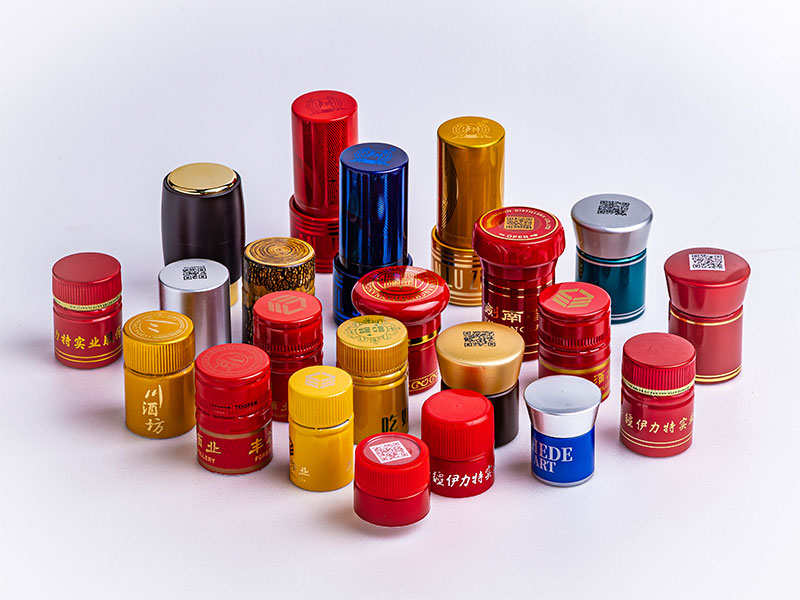
Design Flexibility & Branding
- High‑quality printing, embossing, and colored lacquers.
- Tamper‑evidence via pilfer band.
Recyclability
- Aluminum is widely recycled with high value in the scrap stream.
- Attractive for wineries with sustainability messaging.
11. Application Matching: Fitting the Closure to the Wine
A practical decision matrix used by many producers:
Young, aromatic whites & rosés (Sauvignon Blanc, Riesling, Pinot Grigio)
- Choose: Very low OTR liners (e.g., Saran‑Tin or advanced low‑OTR PVC‑free)
- Aim: Preserve thiol and ester freshness, reduce premature oxidation.
Structured reds (Cabernet, Syrah, premium blends)
- Choose: Medium OTR liners that allow slow controlled micro‑oxygenation.
- Aim: Enable bouquet development without oxidation faults.
Everyday wines with 1–3 year shelf life
- Choose: Balanced OTR, cost‑optimized liners with proven anti‑corrosion lacquers.
- Aim: Stable sensory profile throughout retail shelf, under typical logistic stress.