

Aluminum Bottle Caps for Soda with Customizable Design Options
Soda is a small engineering miracle: dissolved CO₂ stored under pressure, waiting for the moment a seal yields on your terms, not the product's. Aluminum bottle caps sit exactly at that boundary between chemistry and experience. They are not "just closures." They are precision-formed metal components designed to hold pressure, resist corrosion from acidic beverages, survive high-speed capping lines, and still look brand-new after months of handling, chilling, and transport.
From a distinctive viewpoint, an aluminum soda cap is best understood as a controlled "elastic gateway." It must flex just enough to create a reliable seal with a liner, then return to a stable geometry without stress cracking, whitening, or losing torque retention. That balancing act is where alloy selection, temper, coating chemistry, and dimensional control become the real story behind great packaging.
Why Aluminum Bottle Caps Are Ideal for Carbonated Soft Drinks
Carbonated beverages put closures under continuous mechanical load. Inside the bottle, CO₂ pressure pushes outward; outside, caps face abrasion, condensation, and sometimes salt fog during logistics. Aluminum excels here because it brings together low density, high formability, excellent corrosion resistance, and outstanding printability.
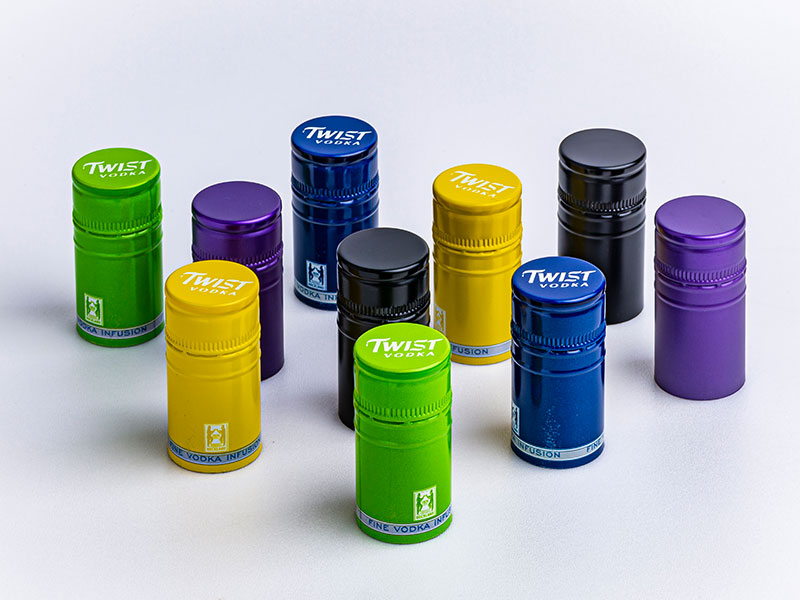
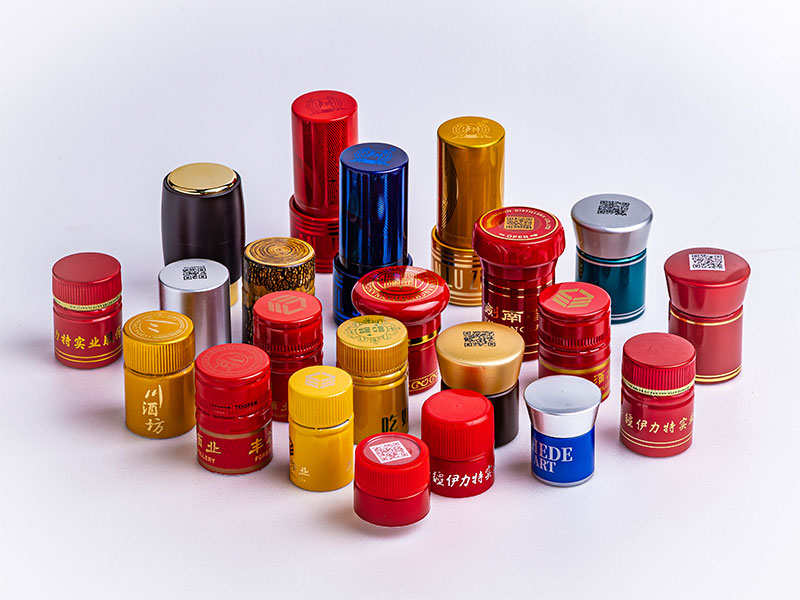
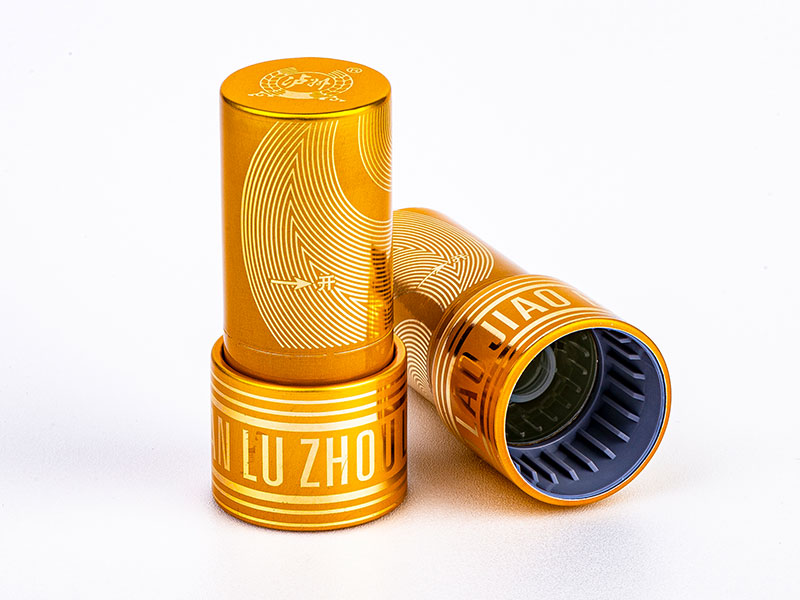
For soda brands, aluminum caps also offer a marketing advantage: sharp embossing, deep color control, premium matte or gloss finishes, and fine detail reproduction for custom designs. Unlike many plastics, aluminum maintains dimensional consistency across temperature swings, supporting stable opening torque and seal behavior in real-world distribution.
Customizable Design Options that Still Respect the Physics of Sealing
Custom design is not only about appearance. Every visual or tactile feature changes how metal flows during forming and how the cap behaves during application. A well-designed custom aluminum bottle cap for soda integrates branding with manufacturability and sealing reliability.
Popular customization directions include:
Full-wrap printing and color systems
High-resolution lithographic printing, UV inks, or solvent-based systems can be applied with protective overvarnish. Color matching can be managed to Pantone references, while maintaining adhesion under cold-chain condensation.
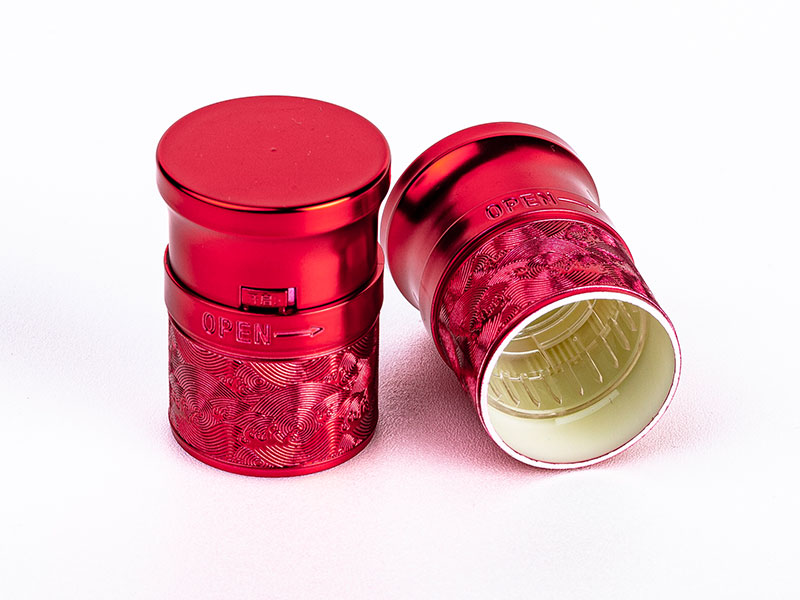
Embossing and debossing for tactile branding
Embossing increases perceived premium quality, but it also work-hardens localized areas. The cap design should place relief away from critical sealing lands to preserve liner compression consistency.
Knurling patterns and grip textures
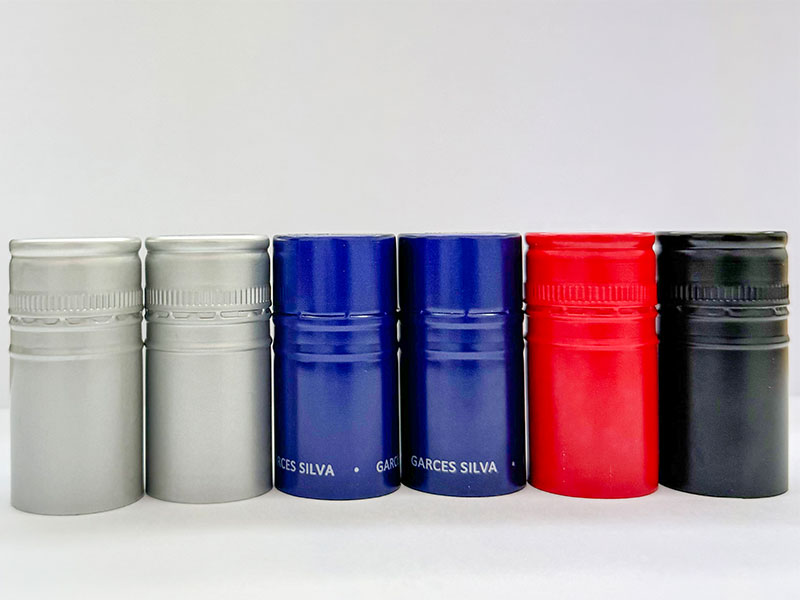
Knurl geometry influences consumer opening feel and automated chuck grip in capping heads. Knurl depth and pitch must align with capper tooling to avoid scuffing.
Surface finish engineering
Gloss, matte, satin, and metallic effects can be achieved through varnish selection and surface preparation. For high-speed lines, the coefficient of friction between caps matters; controlled slip additives in coatings can improve feeding performance.
Tamper-evidence integration
Depending on bottle finish and market requirements, tamper-evident bands or pilfer-proof features can be designed to separate cleanly while keeping application torque within target.
The most successful "custom" aluminum soda caps treat decoration as part of the mechanical system, not a layer added afterward.
Technical Parameters That Matter on a Soda Capping Line
For carbonated drinks, closure performance is typically evaluated as a combination of seal integrity, application consistency, and consumer opening behavior. parameters for aluminum bottle caps commonly include:
Cap diameter and profile
Common soda and beverage formats include 28 mm and 30/31.5 mm families, depending on bottle finish standards and regional practice. Cap height and thread profile must match the bottle neck finish to avoid cross-threading and inconsistent torque.
Shell thickness and weight
Typical aluminum shell thickness often sits in the approximate range of 0.20 mm to 0.30 mm for many beverage closures, tuned for formability and strength. Thicker shells can improve dent resistance; thinner shells can reduce cost and improve forming speed, but must still maintain buckle resistance under pressure and handling.
Torque windows and retention
Application torque must be high enough to compress the liner for seal, but not so high that opening torque becomes consumer-unfriendly. Torque retention after temperature cycling is critical for soda, where pressure varies with heat.
Internal pressure resistance
Carbonated beverages may experience internal pressures that vary widely with temperature and formulation. Caps are validated through pressure hold tests, leak tests, and thermal cycling to confirm the sealing system remains stable.
Coating and liner compatibility
The liner does the sealing; the aluminum shell provides the clamping force and geometry. The inner coating must resist beverage acidity and prevent metal contact with moisture that could lead to taste impact or corrosion. Liner choice (such as PVC-free options, EPE, or specialized elastomer systems) is selected based on bottle finish, carbonation level, and filling process.
Implementation Standards and Quality Benchmarks (Practical, Not Abstract)
For soda caps, "standard" is best understood as interoperability: the cap must run on existing bottling equipment, match bottle finish specifications, and satisfy food-contact compliance in target markets.
Commonly referenced implementation frameworks include:
Neck finish and closure fit standards
Many beverage closures follow established bottle finish ecosystems, such as 28 mm PCO-style finishes for carbonated beverage applications. Matching the correct finish specification is essential to achieve intended sealing land contact and tamper-evidence behavior.
Food-contact and chemical compliance
Caps typically need to comply with relevant food-contact regulations depending on destination markets. This includes coatings, inks, and liner materials, not only the aluminum.
Process capability and inspection
On production lines, caps are monitored for dimensional tolerances, coating weight consistency, adhesion, and cosmetic defects. Inks and varnishes are validated for rub resistance and pasteurization or hot-fill exposure if applicable.
Alloy Selection and Temper: A Closure's Hidden "Personality"
Aluminum alloy and temper selection dictates how the metal behaves during stamping, curling, threading, and knurling. It also affects how the cap springs back after being applied, which is crucial for maintaining liner compression over time.
Common alloy families for aluminum bottle caps include AA 3xxx and AA 5xxx series, chosen for formability and corrosion resistance.
Typical alloy considerations for soda caps
- AA 3105 and AA 3004 are widely used for closure stock due to excellent drawability and stable forming behavior.
- AA 5052 can be chosen when higher strength or different forming behavior is required, though formability and cost balance must be considered.
Temper choices and what they really mean
- H14 / H16 tempers often balance strength and formability for high-speed forming.
- Softer tempers can improve deep forming but may reduce dent resistance.
- Harder tempers can improve buckle resistance and cosmetic durability but risk cracking in aggressive emboss or tight knurl designs.
In practical terms, temper is the dial that sets how "forgiving" the aluminum is during forming and how "stubborn" it is when resisting deformation during transport.
Chemical Composition and Properties Table (Typical Reference Ranges)
Below is a reference-style table for commonly used aluminum alloys in closure applications. Exact composition and mechanical properties depend on supplier practice, coil processing, and temper. Values shown are typical ranges drawn from standard alloy definitions and common temper behavior.
Typical Chemical Composition (wt.%)
| Alloy | Si | Fe | Cu | Mn | Mg | Zn | Cr | Others (each) | Al |
|---|---|---|---|---|---|---|---|---|---|
| AA 3105 | ≤0.60 | ≤0.70 | ≤0.30 | 0.30–0.80 | 0.20–0.80 | ≤0.40 | ≤0.10 | ≤0.05 | Balance |
| AA 3004 | ≤0.30 | ≤0.70 | 0.25 | 1.00–1.50 | 0.80–1.30 | ≤0.25 | - | ≤0.05 | Balance |
| AA 5052 | ≤0.25 | ≤0.40 | ≤0.10 | ≤0.10 | 2.20–2.80 | ≤0.10 | 0.15–0.35 | ≤0.05 | Balance |
Typical Mechanical Properties by Common Tempers (Guidance Values)
| Alloy / Temper | Tensile Strength (MPa) | Yield Strength (MPa) | Elongation (%) |
|---|---|---|---|
| AA 3105-H14 | ~165–205 | ~145–180 | ~2–6 |
| AA 3004-H19 | ~250–310 | ~220–285 | ~1–4 |
| AA 5052-H34 | ~230–280 | ~180–240 | ~4–10 |
For soda cap shells, the target is not "maximum strength." The goal is predictable forming, stable curl geometry, controlled springback, and long-term torque retention. That's why many closure programs prioritize process consistency over headline tensile numbers.
Coatings, Corrosion Resistance, and Beverage Acidity: The Quiet Performance Layer
Soda is typically acidic, and the closure environment is humid. Aluminum naturally forms a protective oxide, but closures still rely on engineered coatings for taste neutrality and long-term corrosion resistance.
coating expectations for aluminum bottle caps used with soda include:
- Strong adhesion to aluminum under condensation and refrigeration cycles
- Resistance to acidic vapors and occasional external exposure (spills, rinse water, cleaning agents)
- Compatibility with liners and sealing compounds without plasticizer migration issues
- Scuff and abrasion resistance to maintain premium appearance in cartons and crates
From a technical viewpoint, a closure system is only as robust as its weakest interface. Many field failures trace back to coating pinholes, poor cure, or mismatch between liner compression set and bottle finish geometry rather than the metal itself.
Manufacturing Conditions That Influence Quality (Without Turning the Cap Into a Lab Sample)
Aluminum bottle caps for soda are typically produced through high-speed stamping and forming from coil stock, followed by coating/printing and liner insertion. Real performance is shaped by how controlled the process is.
conditions that affect outcome include:
Coil quality and surface cleanliness
Surface oils, residues, or inconsistent roughness can reduce coating adhesion and print clarity.
Tooling wear and forming speed
Thread definition, knurl consistency, and curl geometry drift as tooling wears. Maintaining tooling condition prevents torque scatter and cosmetic defects.
Curing parameters for inks and varnishes
Under-cure causes scuffing and poor chemical resistance; over-cure can reduce flexibility and contribute to microcracking during forming.
Liner compression behavior
The liner must maintain sealing force without excessive compression set. Correct liner selection is especially important for carbonation pressure and temperature cycling.
If you view an aluminum bottle cap only as a branding surface, you miss why aluminum dominates premium beverage closures. If you view it only as a seal, you miss why customization matters to conversion and shelf differentiation.
An aluminum soda cap is a pressure-managed canvas:
- The alloy and temper define how the canvas can be formed without tearing or springback surprises.
- The coatings define how the canvas survives chemistry, friction, and time.
- The geometry defines how the canvas clamps a liner to hold carbonation until the exact moment of opening.
That is why the best aluminum bottle caps for soda are designed from the inside out: sealing land stability first, then forming robustness, then decoration that respects both.
Choosing the Right Aluminum Bottle Cap Partner for Custom Soda Programs
For brands and bottlers, the most reliable route is working with a supplier who can align alloy temper, cap geometry, coating system, and decoration method to your bottle finish and filling conditions. The payoff is fewer line stoppages, tighter torque distributions, better shelf appearance, and a consumer opening experience that matches your brand promise.