

High Quality Aluminum Bottle Caps for Soda with Custom Printing Options
High Quality Aluminum Bottle Caps for Soda with Custom Printing Options
For soda brands, the bottle cap is more than a piece of metal that seals carbonation. It is a pressure vessel, a hygiene barrier, and a tiny billboard competing for attention on a crowded shelf. High quality aluminum bottle caps for soda blend metallurgy, printing technology, and strict beverage standards into a component that must perform perfectly thousands of times a day, under filling lines that do not slow down and consumers who never think twice about what’s happening above the neck of the bottle.
Why Aluminum Is the Preferred Choice for Soda Bottle Caps
Aluminum caps stand at the intersection of performance and sustainability. For carbonated soft drinks, the cap must hold internal pressures of up to 0.4–0.6 MPa, survive temperature changes during pasteurization or cold filling, and still open smoothly with a simple twist.
Aluminum brings several advantages:
- Low density, reducing overall packaging weight and transportation costs
- Excellent resistance to corrosion when appropriately alloyed and coated
- High formability, allowing precise threading and consistent sealing beads
- Compatibility with a wide range of liners for CO₂ retention
- Full recyclability without loss of performance
When you pick up a soda bottle, the lightness of the cap is part engineering, part consumer experience. Aluminum allows brands to achieve that easy-open feel while preserving the snap and hiss that signals a fresh, carbonated drink.
A Closer Look at the Alloy and Temper
Behind every reliable aluminum cap is a carefully selected alloy and temper. For soda applications, manufacturers typically use non-heat-treatable aluminum alloys in the 3xxx or 5xxx series. These alloys balance strength, ductility, and corrosion resistance, and they respond well to cold working.
A common configuration might be:
- Alloy series: 3104, 3004, or 5052
- Temper: H14, H19, or custom hard tempers optimized for cap forming
In practice, this means the cap material is strain-hardened to achieve sufficient tensile strength while maintaining enough elongation to avoid cracking during stamping and threading. An overly hard alloy may form sharply but crack at the knurling or under the liner; too soft, and the threads deform, leading to leaks and compromised carbonation.
Typical mechanical requirements for soda cap stock may include:
- Tensile strength: approximately 200–280 MPa
- Yield strength: approximately 140–240 MPa
- Elongation: generally 3–12%, depending on thickness and temper
- Hardness: targeted within a narrow window to ensure consistent capping torque
These values are tuned to the cap design, bottle neck finish, and filling line conditions. This is where alloy tempering becomes strategic. The material is cold rolled to the desired thickness, often in the range of 0.18–0.25 mm for standard soda caps, then tempered to provide the right combination of stiffness and formability.
Surface Treatments and Protective Coatings
The metal alone is only half the story. Soda is often acidic and flavored with ingredients that could attack unprotected aluminum. To prevent corrosion and preserve taste, the cap’s interior and exterior surfaces are coated.
Typical coating system:
- Internal side: Food-grade epoxy, BPA-NI (non-intent) epoxy, or alternative coatings that meet FDA, EU, and national food-contact regulations. This layer protects the metal from the beverage, particularly in acidic colas, citrus sodas, and flavored carbonated waters.
- External side: Primer plus topcoat, engineered for print adhesion, abrasion resistance, and gloss or matte appearance.
These coatings ensure that aluminum never directly contacts the liquid, eliminating any risk of metallic taste or unwanted reactions. They also act as a barrier against humidity, storage conditions, and mechanical damage during handling.
Technical Parameters That Matter on the Line
From a filling line perspective, a cap that looks beautiful but performs poorly is useless. High quality soda caps are defined by tightly controlled parameters:
- Cap diameter and height tailored to standard neck finishes (for example, 28 mm PCO for PET soda bottles)
- Precise thread profile ensuring proper engagement, torque retention, and easy reopening
- Liner compression characteristics that maintain CO₂ retention over shelf life
- Consistent pull-off and application torque values to match the capping machine settings
Cap makers work backward from these line requirements. The alloy temper, thickness, and tooling design all evolve around the mechanical behavior needed during capping and opening. In modern production, cap performance is validated through pressure tests, torque tests, CO₂ loss tests, and environmental aging simulations.
Custom Printing: Turning Caps into Brand Assets
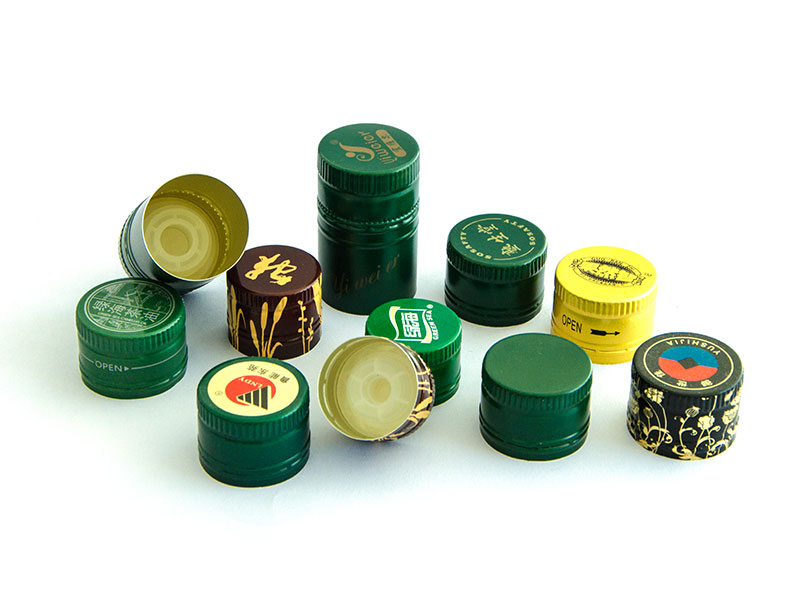
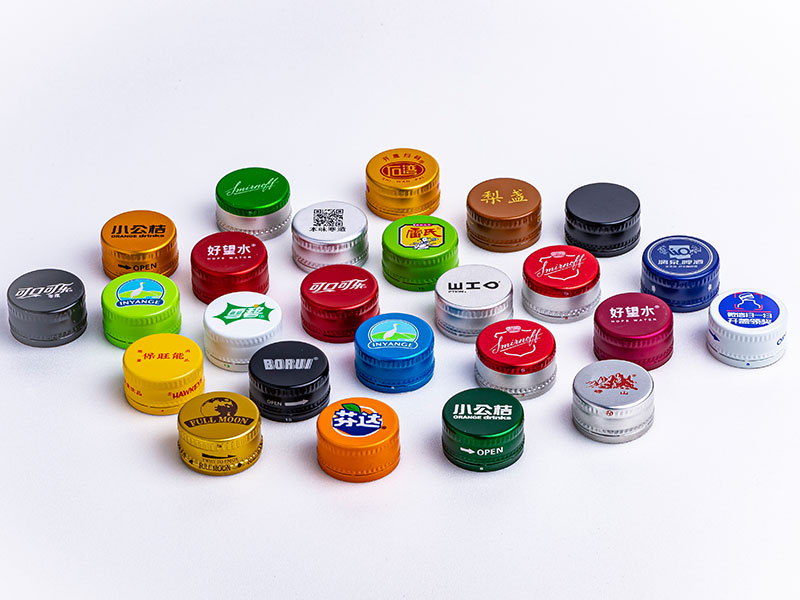
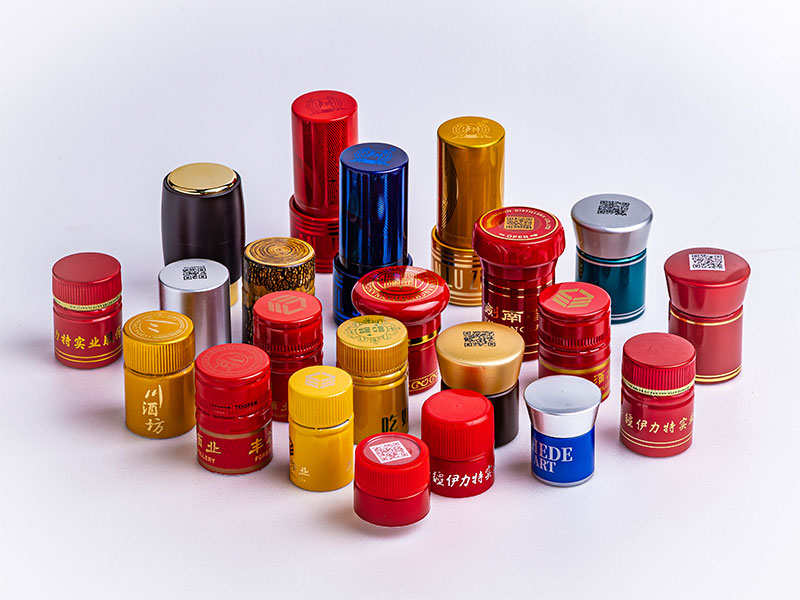
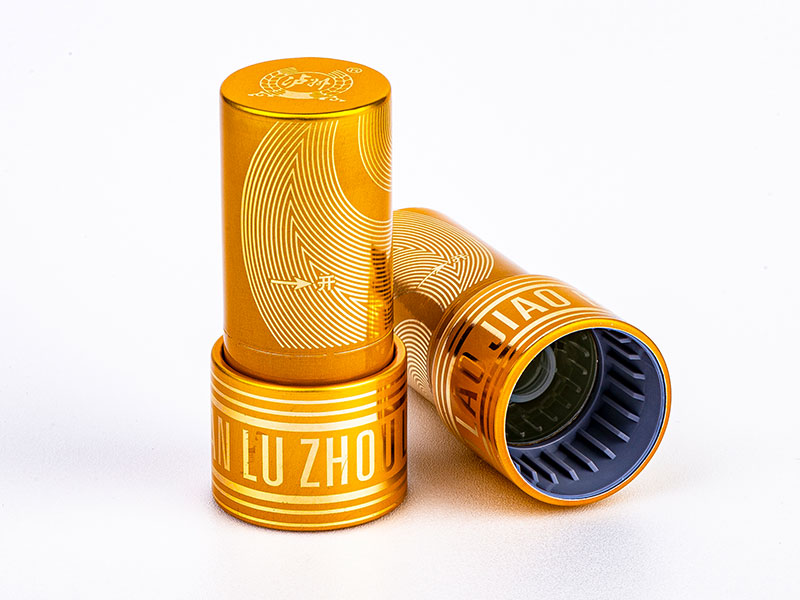
The top surface of an aluminum cap is a miniature canvas. Custom printing transforms a functional closure into an extension of a brand’s story. With aluminum, the printing surface is stable, flat, and receptive to multiple color layers.
Brands can choose:
- Multi-color offset printing for intricate logos and gradients
- Spot colors matched to Pantone or custom brand standards
- Matte, semi-gloss, or high-gloss finishes based on positioning and shelf impact
- Under-the-cap printing for promotions, QR codes, and serialized campaigns
Because soda is often purchased impulsively, the cap can play a subtle but powerful visual role. Limited-edition designs, co-branded campaigns, and regional variations are easier to manage when the printing process is tightly integrated with cap manufacturing.
The ink systems used are food-compliant, designed to resist abrasion on conveyor belts and in packaging, and compatible with the curing conditions set by the coating line. Any custom printing program blends graphic design with process engineering: line speed, curing temperature, ink viscosity, and coating thickness all affect the final color and sharpness.
Implementation Standards and Compliance
Soda brands and bottlers operate under strict quality and safety frameworks. Aluminum bottle caps are typically produced in compliance with standards and guidelines such as:
- ISO 9001 for quality management
- FSSC 22000 or similar food safety systems for plants supplying beverage closures
- EU and FDA regulations on food contact materials
- Industry standards for CO₂ retention, torque, and pressure resistance
In addition, migration testing is carried out to verify that no harmful substances migrate from coatings, inks, or liners into the beverage under expected storage conditions. Traceability systems track each batch of caps back to alloy source, coating lots, and production line settings.
Chemical Composition: Typical Cap Alloys
The exact alloy depends on the manufacturer, but a typical composition for aluminum cap stock may look like this (values are approximate mass percentages):
| Element | Typical Range (%) | Function in Alloy |
|---|---|---|
| Al | Balance | Base metal, light weight, high formability |
| Mn | 0.8 – 1.5 | Strengthens alloy, improves corrosion resistance |
| Mg | 0.5 – 1.3 | Increases strength and work hardening rate |
| Fe | 0.2 – 0.8 | Controls grain structure, strength |
| Si | 0.1 – 0.6 | Assists in processing, affects strength |
| Cu | ≤ 0.25 | Improves strength but limited for corrosion reasons |
| Zn | ≤ 0.25 | Minor strengthening, kept low for stability |
| Ti | ≤ 0.10 | Grain refiner for better mechanical properties |
| Others | ≤ 0.05 each | Kept very low for food safety and consistency |
This chemistry is optimized for beverage applications: strong enough to withstand converting and capping, stable under acidic conditions with protective coatings, and consistent enough to run at high speed with minimal variability.
Balancing Performance, Aesthetics, and Sustainability
The distinctive strength of aluminum bottle caps lies in how they unify different priorities:
- For engineers, they deliver precise mechanical performance under pressure and speed.
- For marketers, they offer a compact yet powerful branding platform through custom printing and finishes.
- For sustainability teams, they provide a recyclable, lightweight solution that fits into existing aluminum recycling streams.
When specified correctly—choosing the right alloy and temper, validating performance to beverage standards, and leveraging advanced coatings and printing—aluminum caps become a quiet but essential part of the soda experience.
For brands and bottlers looking to differentiate their product, investing in high quality aluminum bottle caps with tailored printing is not just a packaging upgrade; it is a strategic move that touches product quality, shelf appeal, and environmental credentials in a single, precisely engineered component.