

Eco Friendly Aluminum Caps for Soda Bottles with Custom Designs
If you want to understand whether a soda package is truly "eco friendly," don't start with the bottle. Start with the cap.
That little closure is where physics, chemistry, branding, and recycling behavior all collide. A bottle can be made from recycled PET or even glass, but if the cap leaks, breaks, corrodes, or is hard to sort, the whole package loses its advantage. Aluminum caps-especially when designed thoughtfully and produced with the right alloy temper-offer an unexpectedly elegant answer: they can protect carbonation, carry distinctive custom designs, and still fit comfortably into a circular economy.
Why aluminum feels like the "quiet hero" of sustainable closures
Aluminum is often described as infinitely recyclable, but the more meaningful truth is practical: aluminum retains high value in scrap markets and is routinely recovered at scale. That economic pull is a powerful sustainability tool because it makes collection and recycling more consistent.
For caps, aluminum brings a few technical strengths that translate directly into less waste. Aluminum closures can be made thin yet strong, which means less material per unit. They also accept high-quality printing, embossing, and surface finishes without requiring thick plastic label layers. Most importantly for soda, aluminum's stiffness and dimensional stability help keep a tight seal over repeated handling, temperature changes, and internal pressure fluctuations.
The engineering reality of a soda cap: pressure, torque, and a demanding seal
A carbonated beverage closure is not simply "tight." It is a controlled system.
Inside the bottle, carbonation generates pressure that rises with temperature. The cap must maintain a stable seal without deforming, and it must open at a predictable torque so consumers can twist it off without a wrestling match. In practice, this means the cap is engineered around several parameters:
- Application torque and removal torque must balance line efficiency with consumer usability.
- Top-load and buckling resistance protect the bottle during stacking and transport.
- Thread accuracy and skirt geometry ensure consistent engagement with the bottle finish.
- Liner performance creates the barrier against CO₂ loss and oxygen ingress.
Aluminum helps because it can be formed precisely and, when matched with the right temper, it springs back just enough to hold shape without cracking.
Choosing an aluminum alloy for caps: why temper matters as much as chemistry
From a production perspective, cap shells and cap components are commonly made from 3xxx and 5xxx series aluminum. The choice is shaped by formability, strength after forming, corrosion behavior, and compatibility with coatings.
A sustainable cap is not "bare metal." It is a system consisting of an aluminum shell, a protective conversion or primer layer, an exterior coating/ink system, and usually a liner. Each layer matters for corrosion resistance, taste neutrality, and recyclability outcomes.
Here are commonly used alloy options and what they offer in cap applications:
Typical alloy and temper options for aluminum caps (reference)
| Alloy | Typical Temper for Caps | Benefits | Notes |
|---|---|---|---|
| AA3105 | H14 / H16 / H18 | Good formability, cost-effective, stable in coating | Widely used for closures and packaging |
| AA3003 | H14 / H16 | Excellent formability, good corrosion resistance | Very common in packaging sheet |
| AA5052 | H32 | Higher strength, good corrosion resistance | Useful where added stiffness is needed |
| AA5182 | H19 / H48 (sheet applications) | High strength, excellent formability in certain forming modes | More common in can ends; can be used where higher strength is required |
Temper selection is critical. A softer temper forms easily but may dent or lose thread sharpness. A harder temper holds geometry but can crack during deep drawing or knurling if tooling and lubrication are not optimized.
The eco-friendly part is also about coatings, inks, and liners
When customers ask for "eco friendly aluminum caps," they often mean recycled content. That matters, but so does what touches the beverage and what complicates recycling.
Modern closures typically use food-contact compliant coatings and liners designed to prevent metal taste, avoid corrosion from acidic beverages, and maintain carbonation. Eco-minded choices include:
- Low-VOC or waterborne exterior coatings where feasible
- BPA-NI (BPA non-intent) internal coatings depending on regulatory needs
- Thin, efficient coating weights that still pass corrosion and adhesion tests
- Liners engineered for sealing performance with minimal material
The goal is not to remove all coatings. The goal is to use coatings that do their job at the lowest practical thickness, with chemistry designed to be safe, compliant, and compatible with recycling streams.
Implementation standards and quality checks that keep sustainability honest
Sustainability claims collapse quickly if closures fail in the field. The most responsible cap is the one that prevents product loss, because spilled soda is wasted water, sugar, energy, logistics, and labor.
In real manufacturing, aluminum caps are validated through performance and compliance frameworks such as:
- ASTM B209 for aluminum and aluminum-alloy sheet and plate (a common reference for incoming sheet quality)
- ISO 9227 salt spray testing for corrosion performance validation of coated systems
- ISO 2409 cross-hatch adhesion testing for coatings
- FDA food-contact requirements in the US and EU Framework Regulation (EC) No 1935/2004 plus relevant plastics/printing ink guidance for materials intended to contact food (liners and internal coatings are typically the focus)
Operationally, closure suppliers also rely on in-house tests that matter just as much: torque consistency, leak testing under pressure, CO₂ retention over time, drop tests, and thread gauge verification.
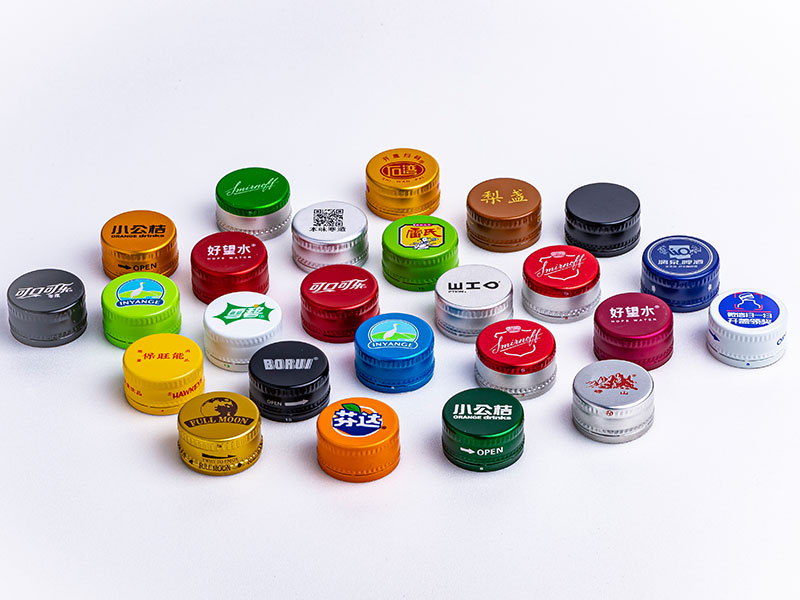
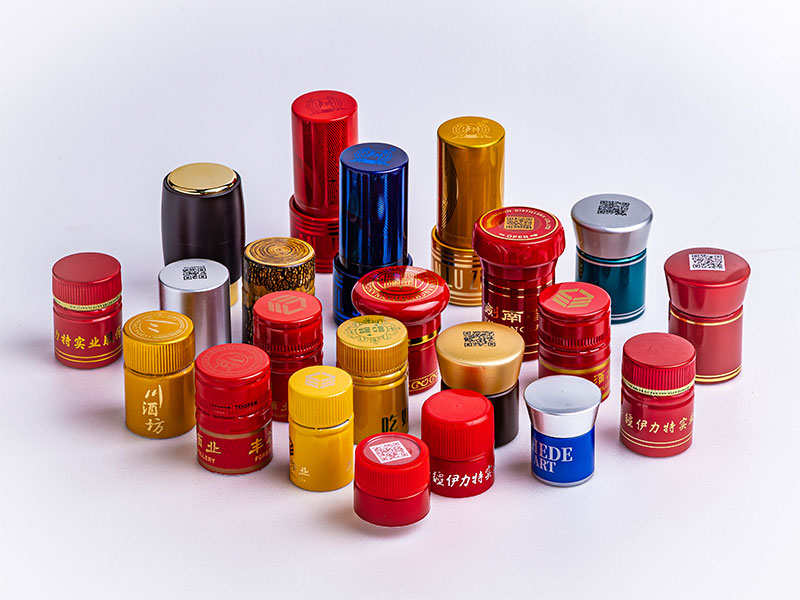
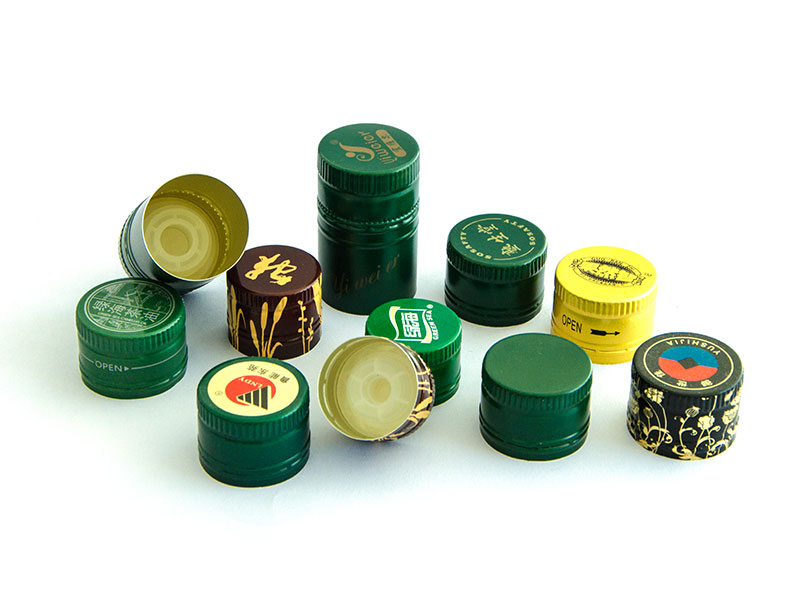
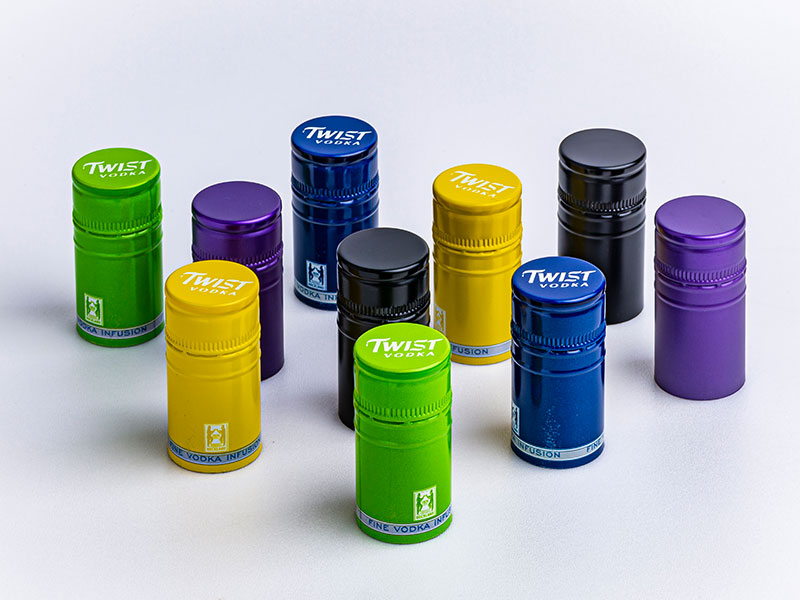
Custom designs: where branding meets metal forming
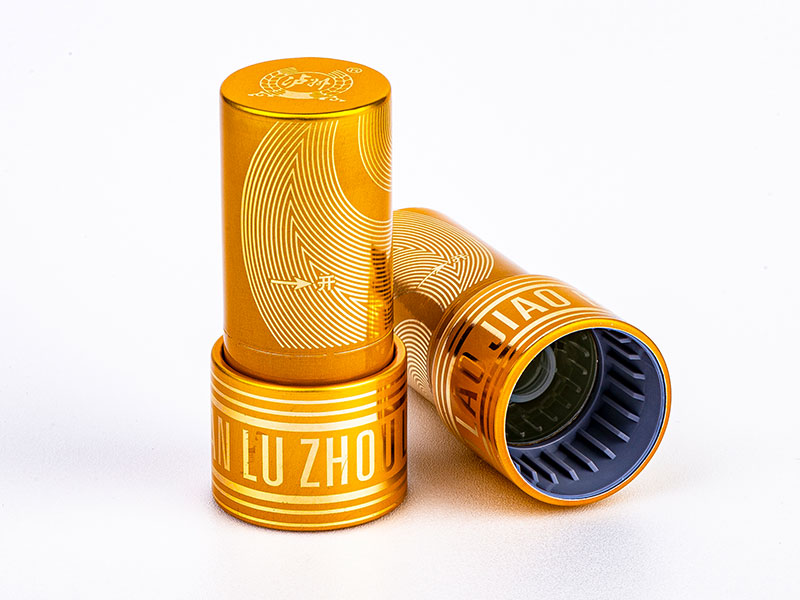
Aluminum is unusually expressive for such a small component. It can carry brand identity in a way that feels permanent, not pasted on.
Custom design options typically include:
- Offset printing for sharp graphics and gradients
- Digital printing for short runs and campaign variation
- Embossing and debossing for tactile logos that survive abrasion
- Knurling patterns that improve grip and add visual texture
- Anodized looks or metallic effects achieved through coating systems rather than heavy laminates
From an eco perspective, good design is not about adding layers. It's about using the metal itself-light relief, micro-texture, clean ink laydown-to do more with less.
One distinctive perspective: a custom cap is a micro-billboard that consumers keep touching. If the texture feels premium and the opening torque feels smooth, people unconsciously rate the entire drink as higher quality. That reduces the "disposable" feeling. The more a package feels intentionally made, the more likely it is to be handled properly and recycled rather than tossed.
What recycled content really changes in aluminum caps
Recycled aluminum typically has a much lower carbon footprint than primary aluminum, but cap producers must manage chemistry and cleanliness carefully.
The practical considerations include:
- Trace elements in recycled feedstock can affect corrosion behavior and forming
- Surface quality must remain high for printing and coating adhesion
- Consistency matters for high-speed cap forming and lining operations
Responsible suppliers often specify recycled content targets while still controlling alloy composition tightly, blending recycled and primary metal as needed to meet mechanical properties and forming performance.
Chemical composition table (common closure alloys)
Below is a reference composition range for typical alloys used in packaging sheet. Actual specifications depend on the governing standard and supplier agreements.
| Alloy | Si (%) | Fe (%) | Cu (%) | Mn (%) | Mg (%) | Zn (%) | Cr (%) | Al |
|---|---|---|---|---|---|---|---|---|
| AA3003 | ≤0.6 | ≤0.7 | 0.05–0.20 | 1.0–1.5 | ≤0.05 | ≤0.10 | - | Balance |
| AA3105 | ≤0.6 | ≤0.7 | ≤0.30 | 0.3–0.8 | 0.2–0.8 | ≤0.40 | ≤0.20 | Balance |
| AA5052 | ≤0.25 | ≤0.40 | ≤0.10 | ≤0.10 | 2.2–2.8 | ≤0.10 | 0.15–0.35 | Balance |
| AA5182 | ≤0.20 | ≤0.35 | ≤0.15 | 0.2–0.5 | 4.0–5.0 | ≤0.25 | ≤0.10 | Balance |
These alloys are chosen because they sit in a sweet spot: formable enough for mass production, strong enough to survive logistics, and compatible with protective coatings used in beverage packaging.
The takeaway: the cap is small, but it sets the tone for circular packaging
Eco-friendly aluminum caps with custom designs are not a trend accessory. They are a compact intersection of material science and consumer experience.
When the alloy and temper are right, the cap forms cleanly and seals reliably. When coatings and liners are specified responsibly, taste and safety are protected without burdening recycling systems. When design uses the metal's strengths-texture, precision printing, crisp embossing-the cap becomes part of the brand story without becoming extra waste.
In other words, the most sustainable closure is the one that quietly does everything: protects the drink, delights the hand, communicates the brand, and still has a clear path back into the loop.