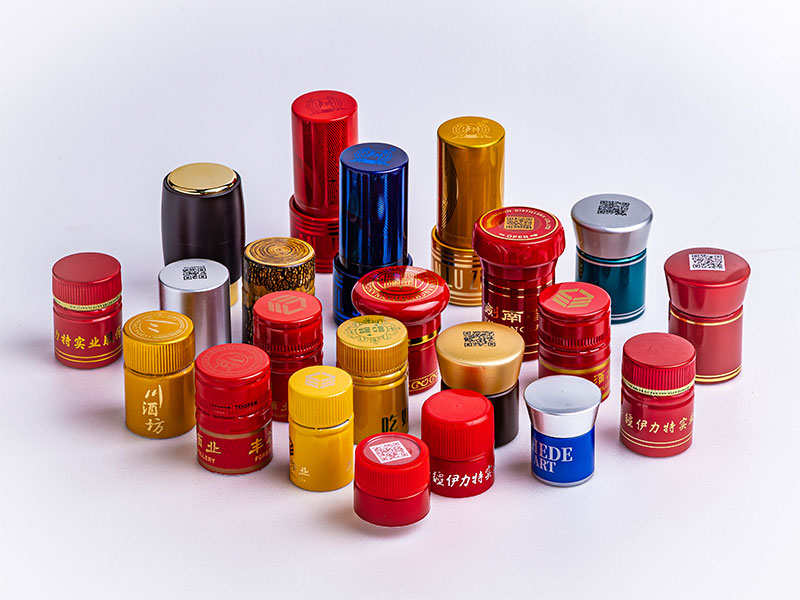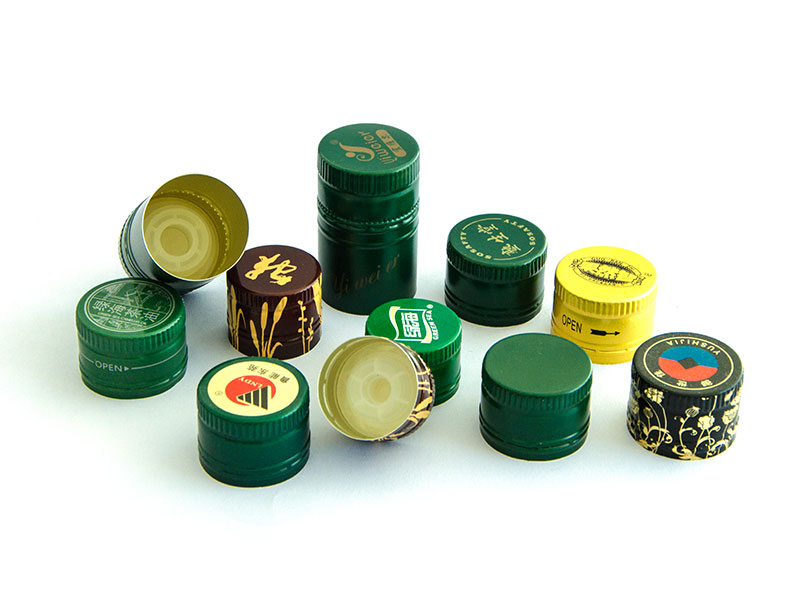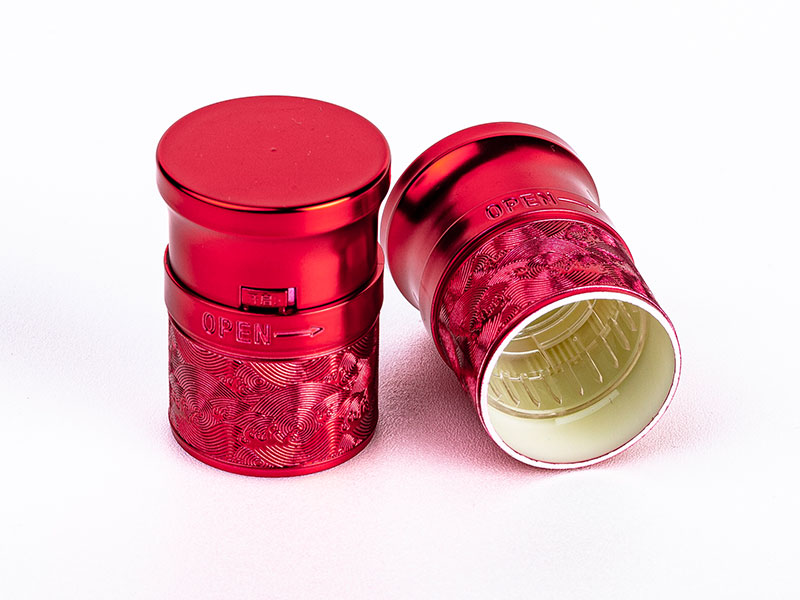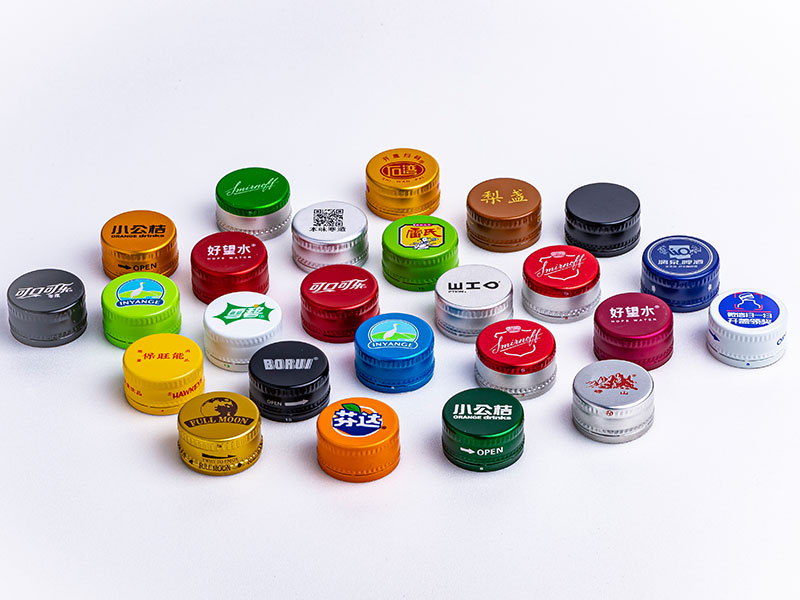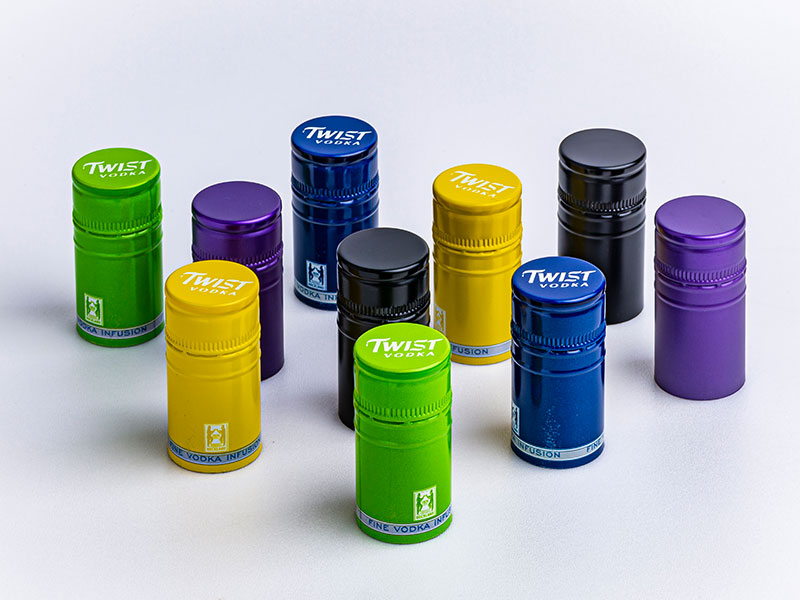


30x60mm Aluminum Wine Closures with Secure and Leak Free Design
30x60mm Aluminum Wine Closures with Secure and Leak Free Design: The Quiet Engineering Behind Every Confident Pour
Wine is often described in poetic terms-aroma, terroir, patience, ritual. Yet one of the most practical pieces of wine culture is also one of the most overlooked: the closure. A 30x60mm aluminum wine closure might look simple, but it behaves like a small, highly engineered pressure-management system. Its job is to protect flavor, prevent leaks, survive shipping, and still open smoothly in the customer's hand. When it's designed correctly, nobody notices it. That's the point.
Why 30x60mm? The size that fits the workflow
In closure language, "30x60mm" usually refers to a cap with an approximate diameter of 30 mm and a skirt height of 60 mm. That skirt height gives extra grip area for application torque, better thread engagement, and more room for tamper-evident features. It is frequently chosen for premium glass bottles, spirits-style wine packaging, and designs where the closure is part of the brand's visual identity.
Typical dimensional parameters for 30x60mm aluminum wine closures can include:
- Nominal diameter: 30 mm
- Skirt height: 60 mm
- Recommended bottle finish compatibility: commonly designed for 30 mm threaded finishes such as MCA-style or customized glass finishes
- Thread type: continuous thread (common), customized multi-start thread available
- Wall thickness: typically around 0.20–0.28 mm aluminum shell depending on rigidity needs
- Liner thickness: commonly 1.0–2.5 mm depending on sealing system
- Application torque window: depends on bottle finish, liner, and thread geometry; controlled in capping to ensure seal without over-stressing glass
In practice, the "right" dimensions are not only about fit-they're about consistent seal compression. A secure cap is less about brute force and more about repeatable geometry.
What "leak-free" really means: sealing under motion, heat, and time
A leak-free design must hold against several everyday stressors:
Shipping vibration and impact
A closure can be perfectly sealed at the line, then micro-move during transport. A well-designed thread and liner combination resists back-off and maintains compression.
Temperature swings
Wine moves with temperature. Headspace pressure changes, liner materials expand and relax, and the glass neck can slightly change its contact behavior. A stable aluminum shell combined with the right liner helps preserve sealing force across a realistic temperature range.
Product chemistry
Wine is mildly acidic and contains alcohol, sulfur compounds, and aroma molecules that can interact with liner materials. The closure system must avoid flavor scalping and resist chemical softening.
A secure, leak-free 30x60mm aluminum wine closure usually relies on two sealing mechanisms working together:
Thread-driven axial compression
The thread pulls the cap down to compress the liner against the bottle's sealing land.
Liner resilience and recovery
The liner must deform to fill microscopic glass irregularities, then maintain "memory" to keep sealing force over time.
Aluminum alloy and temper: why the shell behaves the way it does
The aluminum shell must be formable (to create clean knurling, thread detail, and a consistent skirt), yet strong enough to resist denting, thread stripping, and deformation during capping.
Common alloy choices for aluminum closures include AA8011 and AA5052, selected based on forming requirements and performance targets.
- AA8011 is widely used for packaging foils and closures due to excellent formability and stable processing.
- AA5052 offers higher strength and corrosion resistance, useful when extra rigidity is desired.
Temper matters because it defines hardness and formability. For closures, typical tempers include:
- H14 / H16: balances strength with workable forming behavior
- H24: slightly higher work hardening, used where more rigidity is needed without sacrificing manufacturability
The goal is to keep the skirt from "springing" unpredictably while also preventing cracks at the knurl or thread roots.
Liner system: the unseen interface that decides everything
Even the best aluminum shell cannot seal without a capable liner. For wine closures in 30x60mm, common liner options include:
- EPE (expanded polyethylene): good resilience and economy; suitable for many standard applications
- Saranex or PVDC-based barrier facings: used when improved aroma retention and lower oxygen transmission are required
- TPE liners: offer elastic recovery and premium sealing behavior; useful for repeated open-close cycles
For secure, leak-free performance, the liner design is typically engineered for:
- Compression set resistance (stays springy after being squeezed)
- Low extractables and odor neutrality
- Compatibility with ethanol and organic acids
- Consistent thickness and concentricity to avoid "high spots" that cause leaks
Implementation standards and quality checkpoints that matter on the bottling line
A closure can meet dimensional drawings and still fail if production control is weak. Reliable manufacturers align closures to packaging and quality standards commonly used across the industry, such as:
- ISO 9001 quality management practices for manufacturing consistency
- Food-contact compliance aligned with FDA (21 CFR) or EU framework regulation (EC) No 1935/2004, depending on destination market
- Migration testing expectations for liner materials intended for alcoholic beverages
- Internal AQL sampling plans for critical defects such as liner voids, poor thread formation, coating scratches, and skirt ovality
On the bottling line, leak-free success is reinforced by practical controls:
- Consistent application torque and capper head condition
- Clean, dry bottle finish surfaces
- Matching cap thread to the bottle's glass finish specification
- Post-cap inversion or vacuum/pressure testing as part of QA
Surface protection and corrosion behavior: aluminum's advantage
Aluminum naturally forms a thin oxide layer that resists corrosion. Closures typically add coatings for aesthetics and extra protection:
- External coatings for color, gloss, and scratch resistance
- Internal lacquer or varnish systems to reduce interaction between aluminum and humid environments, and to protect the shell near the liner interface
For wineries shipping internationally or storing bottles for extended periods, coating integrity matters as much as appearance.
Chemical properties table: typical composition of common closure alloys
Below is a reference-style table of typical chemical composition ranges for aluminum alloys commonly used in packaging closures. Actual values vary by supplier standard and coil specification.
| Alloy | Si (%) | Fe (%) | Cu (%) | Mn (%) | Mg (%) | Zn (%) | Ti (%) | Al (%) |
|---|---|---|---|---|---|---|---|---|
| AA8011 | 0.50–0.90 | 0.60–1.00 | 0.10 max | 0.20 max | 0.05 max | 0.10 max | 0.08 max | Balance |
| AA5052 | 0.25 max | 0.40 max | 0.10 max | 0.10 max | 2.20–2.80 | 0.10 max | 0.15 max | Balance |
If your closure is positioned as "premium," specifying alloy and temper in purchasing documents reduces batch-to-batch variation, especially in skirt rigidity and thread definition.
The distinctive viewpoint: the closure as a promise, not a part
A 30x60mm aluminum wine closure with a secure and leak-free design isn't simply a replacement for cork. It's a promise that the bottle will behave the same way in a warehouse, in a restaurant bucket, and on a customer's shelf. When the thread engages smoothly, when the liner compresses evenly, when the tamper-evident band breaks cleanly, the drinker feels something subtle: confidence.
That confidence is engineered-through alloy selection, temper control, liner chemistry, dimensional tolerance, and standards-driven manufacturing. If you want a closure that protects your wine as carefully as you crafted it, 30x60mm aluminum closures deliver a modern, reliable seal while keeping branding and user experience in the foreground.