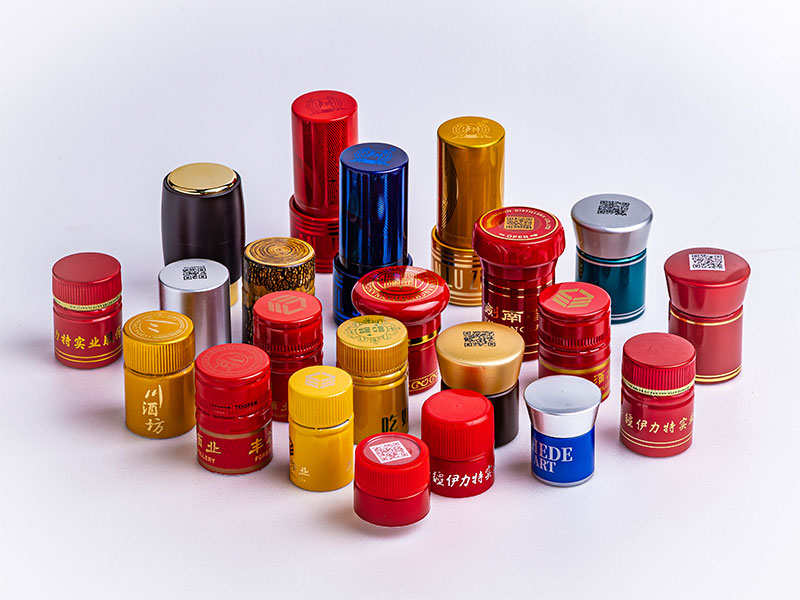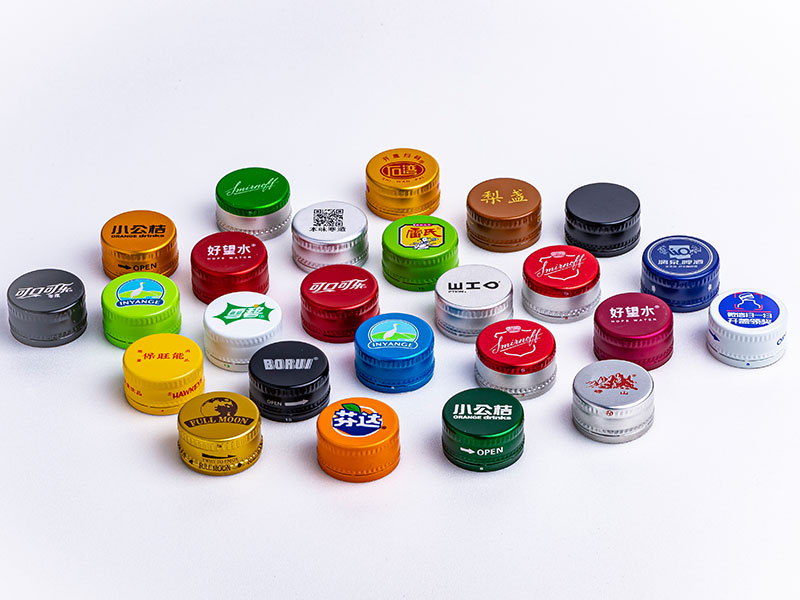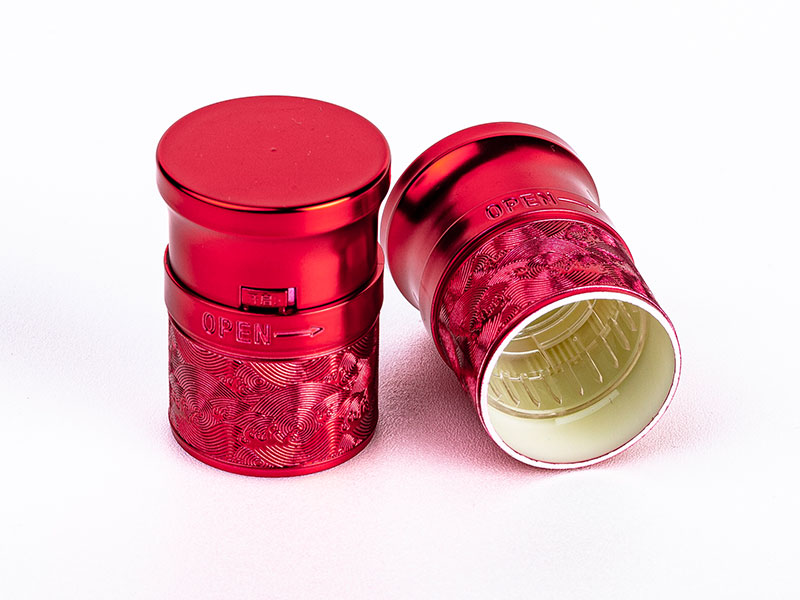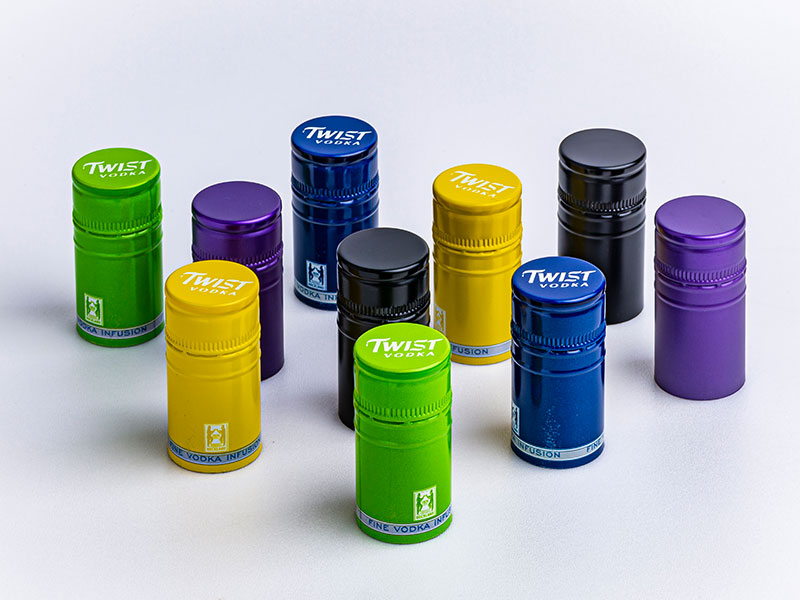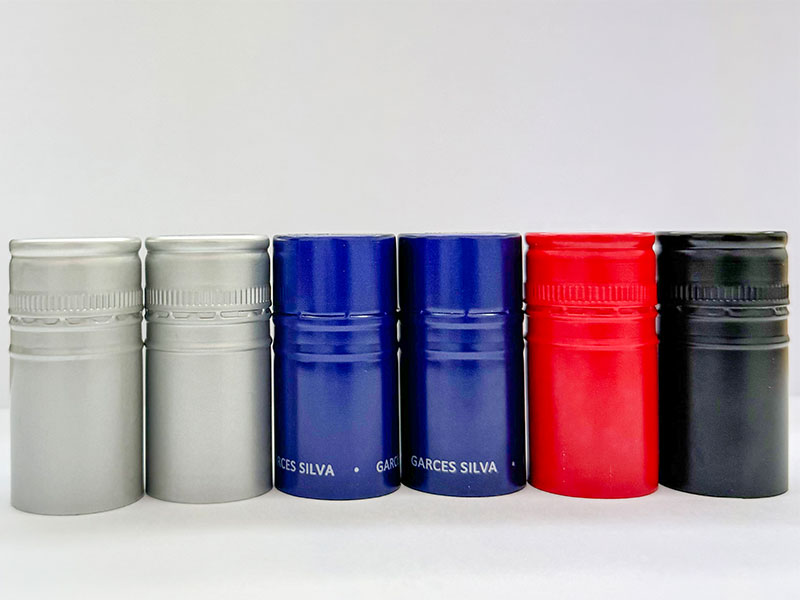


30x60mm Aluminum Screw Caps for Wine with Leak Proof and Tight Fit
In the world of wine packaging, attention usually settles on the bottle shape, the label texture, the capsule color, or the emotional language of the brand. Yet one of the most decisive components in product integrity is far smaller and often overlooked: the 30x60mm aluminum screw cap for wine. From a technical and commercial perspective, this closure is not simply a cap. It is a precision-formed barrier system that protects aroma, controls oxygen interaction, supports line efficiency, and helps define the consumer's opening experience.
A distinctive way to understand this closure is to view it not as decoration on the bottle neck, but as a micro-engineered sealing structure. Every wall thickness, alloy choice, temper condition, thread profile, liner system, and coating layer contributes to one essential performance goal: a leak-proof and tight fit across filling, transport, storage, and final opening.
For wineries, beverage brands, and packaging buyers searching for reliable closure solutions, 30x60mm aluminum screw caps offer a balance of elegance, consistency, recyclability, and scalable manufacturing performance.
Why 30x60mm Aluminum Screw Caps Matter in Wine Packaging
The 30x60mm format is widely used in wine bottling because it fits standard bottle neck finishes designed for roll-on pilfer-proof closures. The dimensions are associated with both compatibility and functionality. The cap must deform in a controlled way during application so it conforms precisely to the bottle thread profile while maintaining enough structural integrity to resist distortion and leakage.
What makes this closure especially valuable is its ability to deliver a tight mechanical fit combined with an internal sealing interface. In practical terms, that means the cap is not relying on one single sealing principle. It uses coordinated elements such as:
- formed aluminum shell
- skirt and thread geometry
- tamper-evident band
- internal liner or wad
- external and internal coatings
- application torque control
This integrated structure helps prevent wine leakage during logistics, temperature fluctuation, and long-term shelf positioning. It also reduces the risk of closure inconsistency that can affect product quality and brand trust.
Many descriptions of wine screw caps focus on convenience. A more technical and more useful perspective is to see the cap as a controlled flex system. Aluminum is selected because it can be formed with precision and because its mechanical behavior allows the closure to adapt to the bottle neck during capping.
A leak-proof wine closure must do two things at once. It must be rigid enough to preserve geometry and resist accidental deformation. At the same time, it must be ductile enough to roll into threads cleanly during the capping process. This is why alloy selection and tempering are not background details. They are central to performance.
In the 30x60mm wine screw cap, the aluminum shell behaves almost like a responsive skin. Under the pressure of the capping rollers, it conforms to the bottle finish. After application, it retains sufficient elastic and structural stability to maintain sealing force. That combination of formability and post-application stability is where high-quality aluminum closures stand apart.
Typical Parameters of 30x60mm Aluminum Screw Caps for Wine
The exact specification can vary according to customer drawings, bottle neck standard, liner type, and decoration requirements, but the following parameters are common in commercial production.
| Parameter | Typical Value / Range |
|---|---|
| Product name | 30x60mm Aluminum Screw Cap for Wine |
| Closure type | ROPP aluminum screw cap |
| Diameter | 30 mm |
| Height | 60 mm |
| Application | Wine bottles, still wine, selected spirits, specialty beverages |
| Material | Aluminum alloy sheet |
| Common alloy grades | 8011, 3105, 1070, 1060 |
| Typical temper | H14, H16, H24, customized according to forming performance |
| Liner options | Saranex, Tin-Saran, PE-based liner, customized oxygen management liner |
| Surface finish | Gloss, matte, embossed, printed, lacquered |
| Decoration | Offset printing, top embossing, side printing, hot stamping |
| Sealing property | Leak proof, tight fit, tamper evident |
| Neck compatibility | Standard wine bottle neck finish for ROPP closures |
| Opening torque | Customized according to filling line and market requirements |
| Internal coating | Food-grade protective lacquer |
| External coating | Protective and decorative coating system |
| Packaging | Cartons, PE liners, pallets |
| Recycling property | Fully recyclable aluminum shell |
These parameters are only meaningful when they are matched correctly. A premium liner with a poorly selected temper will not produce ideal application behavior. Likewise, an excellent alloy cannot compensate for improper neck finish tolerances.
Leak-Proof Performance: Where Tight Fit Really Comes From
Leak-proof performance is often presented as a simple feature, but in reality it is the outcome of several technical controls working together.
Precision of the aluminum shell
The shell must be manufactured with stable wall thickness and dimensional accuracy. Variations can alter thread formation, sealing pressure, and opening torque. Consistency in shell production supports stable capping performance at high bottling speeds.
Alloy and temper suitability
The alloy must have adequate ductility for thread rolling and enough strength to preserve closure integrity after application. If the material is too soft, it may deform excessively. If it is too hard, thread formation may become irregular and sealing reliability may decline.
Liner compression behavior
The liner acts as the direct sealing interface between cap and bottle. Its compression set, elasticity, chemical compatibility, and oxygen transfer performance all affect the final result. For wine, liner selection can influence not only leakage resistance but also shelf-life behavior.
Bottle neck dimensional control
Even a perfectly made aluminum screw cap cannot guarantee sealing if the glass neck finish is out of tolerance. High-performance closure systems depend on compatibility between cap specification and bottle finish geometry.
Application torque and roller setting
The bottling line plays a decisive role. Proper roll-on settings, thread formation pressure, and application torque are necessary to achieve a stable, tamper-evident, tight-fitting closure.
From this viewpoint, a 30x60mm aluminum wine screw cap is not just purchased as a product. It is implemented as part of a closure system.
Common Aluminum Alloys Used for Wine Screw Caps
In aluminum bottle cap manufacturing, several alloys are widely used depending on design, line conditions, and required formability.
8011 aluminum alloy
8011 is one of the most common choices for bottle cap applications. It offers good strength, excellent processing performance, corrosion resistance, and compatibility with high-speed cap making. For wine screw caps, it is often favored for its balanced forming behavior and stable end-use performance.
3105 aluminum alloy
3105 contains manganese and offers good strength with solid corrosion resistance. It is suitable where a slightly different balance of formability and mechanical stability is required. It also performs well in coated and decorated cap systems.
1060 and 1070 aluminum
These high-purity aluminum grades provide excellent ductility and corrosion resistance. They are sometimes selected for applications that demand easy forming, though alloy choice depends on specific cap structure and performance targets.
Alloy Tempering and Why It Changes the Sealing Result
Temper is often underappreciated by buyers outside manufacturing, but it has a direct effect on whether the cap achieves a reliable tight fit.
Typical tempers for aluminum screw cap stock include H14, H16, and H24. These represent strain-hardened conditions with different levels of hardness and formability.
- H14 generally offers a moderate balance between strength and ductility
- H16 is harder and may be selected where greater rigidity is desired
- H24 is strain-hardened and partially annealed, often giving a useful combination of controlled softness and shape retention
In practice, the right temper depends on:
- cap shell design
- skirt depth
- thread geometry
- capping machine settings
- liner structure
- customer opening torque target
- bottle neck specification
A well-chosen temper supports smooth thread rolling without cracking, preserves tamper band function, and helps maintain post-application seal tightness.
Chemical Composition of Common Aluminum Alloys for Screw Caps
The following table shows typical chemical composition ranges for several aluminum alloys commonly used in aluminum bottle cap production. Actual values may vary according to mill standard and customer specification.
| Alloy | Si % | Fe % | Cu % | Mn % | Mg % | Zn % | Ti % | Al % |
|---|---|---|---|---|---|---|---|---|
| 8011 | 0.5–0.9 | 0.6–1.0 | ≤0.1 | ≤0.2 | ≤0.05 | ≤0.1 | ≤0.08 | Balance |
| 3105 | ≤0.6 | ≤0.7 | ≤0.3 | 0.3–0.8 | 0.2–0.8 | ≤0.4 | ≤0.1 | Balance |
| 1060 | ≤0.25 | ≤0.35 | ≤0.05 | ≤0.03 | ≤0.03 | ≤0.05 | ≤0.03 | ≥99.6 |
| 1070 | ≤0.20 | ≤0.25 | ≤0.04 | ≤0.03 | ≤0.03 | ≤0.04 | ≤0.03 | ≥99.7 |
These chemical properties influence more than raw material classification. Iron and silicon content affect strength and forming behavior. Manganese can improve mechanical properties and corrosion performance. High-purity aluminum grades offer excellent softness and formability. For wine closure manufacturing, alloy chemistry must align with forming, coating adhesion, and long-term packaging stability.
Mechanical and Functional Conditions That Influence Cap Quality
A high-quality 30x60mm aluminum screw cap for wine with leak-proof and tight fit is defined by a combination of physical and operational conditions.
| Condition | Typical Requirement |
|---|---|
| Surface quality | Clean, smooth, free from oil stains, scratches, dents, and coating defects |
| Formability | Stable thread rolling without fracture or severe wrinkling |
| Coating adhesion | Strong adhesion with no peeling during forming and transport |
| Corrosion resistance | Suitable for humid storage and contact environment around wine bottling |
| Liner bonding | Secure liner placement with no displacement |
| Seal integrity | No leakage under standard storage and transport conditions |
| Tamper evidence | Bridge or band structure breaks clearly on first opening |
| Opening performance | Controlled consumer opening torque |
| Print quality | Clear graphics, color consistency, abrasion resistance |
| Food contact safety | Compliance with food-grade contact requirements |
Implementation Standards and Reference Specifications
In international cap manufacturing and aluminum material supply, production is often guided by recognized standards and internal quality systems. Exact implementation standards depend on destination market, bottle finish design, and customer requirements, but commonly referenced frameworks include:
- GB/T standards for aluminum and aluminum alloy sheet, strip, and foil in industrial supply chains
- ASTM standards for aluminum alloy material properties and testing references
- EN standards for aluminum wrought materials and packaging-related performance control
- ISO quality management systems, especially ISO 9001 for manufacturing consistency
- Food contact compliance requirements such as EU food contact regulations, FDA-related requirements, or equivalent local standards
- RoHS or REACH-related compliance, where applicable for material control and chemical restrictions
For wine screw caps specifically, implementation is rarely about one isolated standard. It is a combined compliance process involving:
- aluminum substrate qualification
- coating and ink food-contact suitability
- liner material validation
- dimensional inspection
- torque testing
- leakage testing
- sensory neutrality where required for beverage packaging
A serious supplier of aluminum bottle caps will typically provide material certificates, coating declarations, and production traceability support.
Internal Coatings and Liners: The Invisible Layer That Protects Wine
One of the most distinctive technical aspects of wine screw caps is that much of the sealing science is hidden inside. The external shell catches the eye, but the liner and internal lacquer define much of the cap's barrier performance.
Internal lacquer
The inside of the aluminum cap is usually coated with a food-grade lacquer. This coating helps protect the aluminum from interaction with beverage-related moisture, vapor, acidic residues, and environmental exposure during storage. It also improves hygiene and preserves product integrity.
Liner systems
Different liner systems are chosen according to wine style, shelf-life expectations, oxygen management strategy, and market preferences.
Common options include:
- Saranex liners, often used where controlled oxygen transmission is desired
- Tin-Saran liners, often preferred for very low oxygen ingress requirements
- PE-based or customized liners, used in selected beverage or specialty packaging applications
From a distinctive performance viewpoint, the liner should not be seen merely as a cushion. It functions as a calibrated interface that helps transform the cap from a formed metal shell into a true packaging seal.
Decoration Meets Performance
Wine brands expect closures to be visually aligned with label identity, but decoration cannot compromise function. Premium 30x60mm aluminum screw caps often support:
- side wall multi-color printing
- top embossing or debossing
- matte and gloss finish combinations
- metallic effects
- customized brand colors
- anti-scratch coating layers
The technical challenge is that decorative systems must remain stable during shell forming, transport, capping, and consumer handling. High-performance inks and varnishes are therefore selected not just for appearance, but for adhesion, abrasion resistance, and forming compatibility.
Manufacturing Stages
the production route helps explain why quality variation exists between suppliers.
The manufacturing of aluminum wine screw caps generally includes:
- aluminum coil selection
- slitting and blanking
- shell forming
- trimming and shaping
- internal and external coating
- printing and decoration
- curing
- liner insertion
- quality inspection
- packaging
Each stage has a direct relationship to leak-proof performance. For example, inaccurate shell forming may affect thread conformity. Poor curing may reduce coating adhesion. Unstable liner insertion may weaken sealing uniformity.
Quality Tests for Leak-Proof and Tight-Fit Assurance
A professional supplier of 30x60mm aluminum screw caps for wine should apply multiple quality checks to verify closure performance. These commonly include:
- dimensional inspection
- visual surface inspection
- coating adhesion test
- liner placement verification
- torque test
- thread formation validation
- seal leakage test
- pressure or vacuum simulation, depending on product requirement
- corrosion resistance assessment
- print abrasion resistance test
These tests are not just internal procedures. They directly support winery efficiency, lower packaging complaints, and improve export reliability.
Advantages of Aluminum Screw Caps for Wine
The increasing preference for aluminum screw caps in wine packaging is not accidental. Their advantages are both technical and market-driven.
- excellent sealing consistency
- good leak-proof performance
- reliable tamper evidence
- efficient opening and resealing
- suitability for automated bottling lines
- strong decoration flexibility
- lightweight packaging solution
- corrosion resistance
- recyclable aluminum structure
- compatibility with modern premium branding
For wineries seeking a closure that combines presentation and engineering discipline, the 30x60mm aluminum screw cap is one of the most practical choices available.
Choosing the Right Supplier for 30x60mm Aluminum Bottle Caps
A supplier should offer more than cap dimensions. The real value lies in the ability to align closure material, temper, liner, and decoration with your wine packaging system.
Look for a manufacturer that can support:
- customized alloy and temper recommendations
- neck finish compatibility checks
- liner selection for oxygen management goals
- print and embossing customization
- food-grade coating compliance
- batch stability for high-volume bottling
- documented quality control
- export packaging support
Because the company's main product is Aluminum Bottle Cap, expertise in cap forming, alloy handling, and sealing performance becomes especially important. Specialized manufacturers generally understand that wine caps are not generic metal parts. They are application-specific closure systems with strict performance expectations.
Final Thoughts
The best way to understand a 30x60mm aluminum screw cap for wine with leak-proof and tight fit is to stop thinking of it as the bottle's finishing touch and start seeing it as the bottle's protective engineer. Its success depends on the right alloy, the right temper, the right liner, the right coating, and the right application conditions.
When all these elements are controlled, the result is a closure that protects wine quality, strengthens shelf appeal, improves consumer convenience, and supports modern sustainable packaging goals. In a market where product integrity and brand trust are closely linked, a well-made 30x60mm aluminum screw cap is not a small detail. It is one of the most decisive components in the entire wine packaging system.