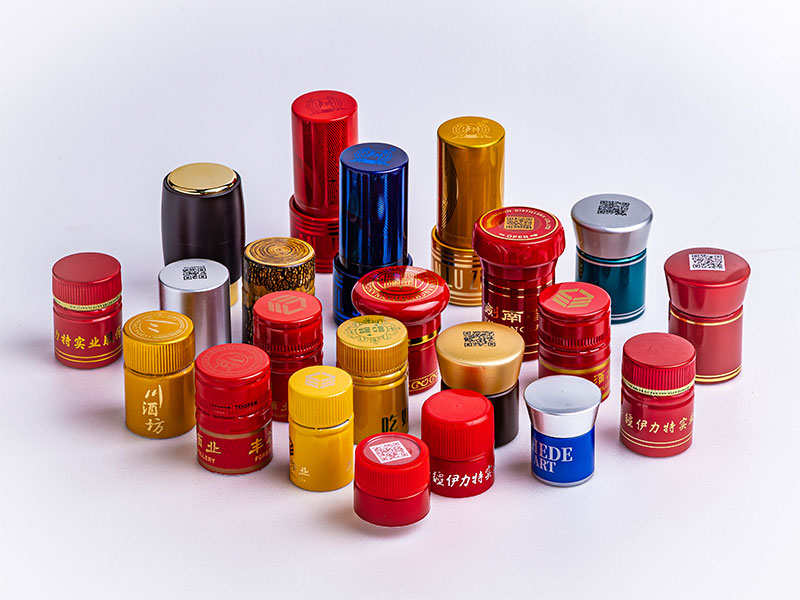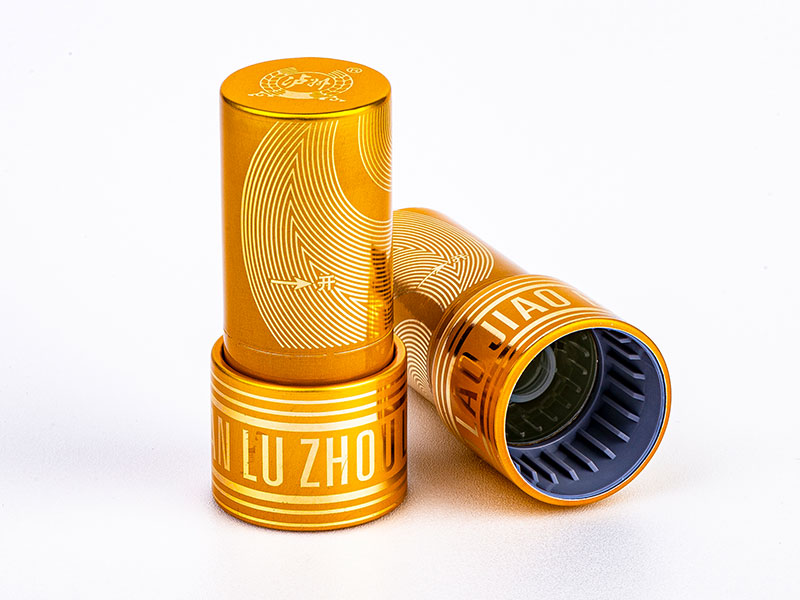


30x60mm Aluminum Caps for Wine Bottles with Advanced Protection Features
A wine bottle closure is often treated like an accessory: a small, shiny cylinder perched on the neck, there to look finished, feel premium, and reassure the buyer. From the perspective of aluminum alloy engineering, that "small cylinder" is closer to a compact protective system-one that must survive shipping vibration, humidity swings, abrasion in ice buckets, and the quiet chemistry of storage without compromising the wine's image or integrity. The 30x60mm aluminum cap has become a workhorse size in this role, balancing aesthetics, manufacturability, and performance while leaving room for advanced protection features that go far beyond decoration.
Why 30x60mm is a "sweet spot" for modern bottling lines
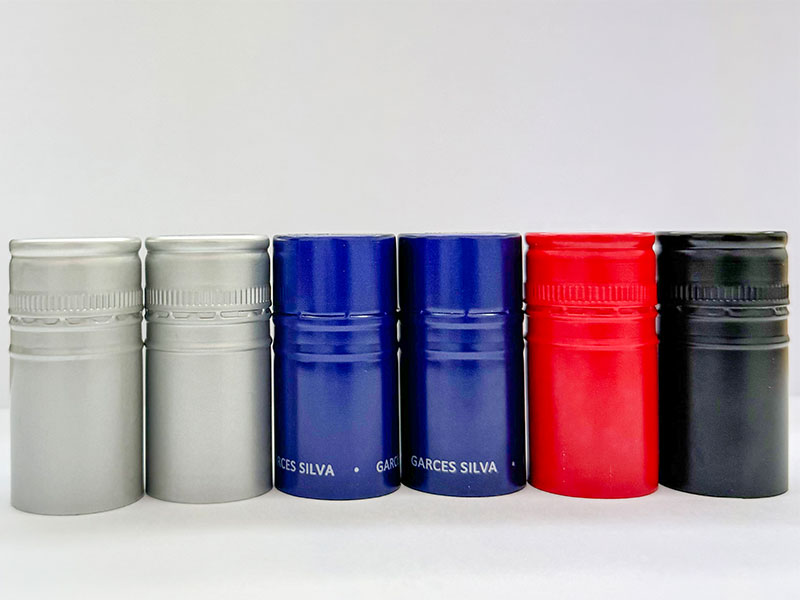
A 30mm diameter with a 60mm height is widely compatible with common wine bottle neck finishes and presents a clean proportion: tall enough to communicate premium branding, yet not so tall that it interferes with capsule cutters, heat tunnels, or packing geometry. On automated lines, this size tends to behave predictably during feeding, orienting, and pressing operations. In logistics, it stacks neatly in bulk packaging, resists ovalization, and keeps its shape under normal compression loads.
The cap's job is not to seal the wine in the way a cork or screwcap does. Instead, it protects the closure system beneath, shields the neck and cork area from contamination, reduces label and neck abrasion, and delivers tamper evidence. Those requirements are where "advanced protection features" become meaningful-features built into alloy choice, temper, coatings, and forming design.
Most high-performance wine capsules are made from aluminum alloys that offer consistent deep-drawing behavior and stable surface finishing. Two families dominate in practice:
The 1xxx series (near-pure aluminum) is extremely formable, which is helpful when a capsule design requires aggressive embossing, tight radii, or very smooth drawing. The tradeoff is lower mechanical strength, so designers compensate with thickness, temper, or geometry.
The 3xxx series (Al-Mn, such as AA3105) raises strength and dent resistance without losing manufacturability. For 30x60mm caps that must keep crisp branding and avoid "soft" handling marks during packing, AA3105 is a common and practical choice.
Typical thickness for aluminum wine caps often falls around 0.18–0.23 mm depending on desired stiffness, emboss depth, and the chosen decoration system. The cap may look delicate, but it must behave like a protective shell.
Temper and mechanical behavior: the hidden lever for dent resistance
Temper selection is where capsule performance is quietly tuned. If the temper is too soft, the cap emboss looks great but the capsule dents easily in cartons, turning a premium bottle into something that feels mishandled. If the temper is too hard, you risk cracking during drawing or splitting at embossed edges, especially when production speed increases.
For many 30x60mm capsules, a balance is achieved with H14–H24 style tempers, depending on alloy and tooling. A slightly work-hardened state improves shape retention and scuff resistance while still allowing the cap to be formed cleanly. In practical terms, the "advanced protection feature" here is not a gadget-it is simply the correct mechanical window that avoids field damage.
Advanced protection is often a surface system, not a single coating
A modern aluminum wine cap is usually a layered structure. The aluminum provides the shape and stiffness. The coatings provide protection, appearance, and friction control.
An exterior lacquer system can be engineered for abrasion resistance, gloss retention, and chemical durability. Think of the cap sliding in a case, rubbing against dividers, meeting condensation in a cooler, then drying again. A strong topcoat reduces visible scuffs and protects metallic inks or color layers.
An interior coating serves a different role: it prevents interaction between the aluminum surface and any moisture, additives, or contact materials, and helps stabilize friction against the bottle neck finish. Even when the capsule is not in direct contact with wine, storage environments are not laboratory-clean. Good interior lacquers help prevent oxidation staining, "black marks," or spotty discoloration that can occur with humidity and packaging contact.
When clients ask for "advanced protection," it often means they want caps that still look newly applied after transportation and shelf handling. That's usually achieved through the correct lacquer chemistry and curing control, more than by adding thickness.
Tamper evidence: subtle geometry that signals integrity
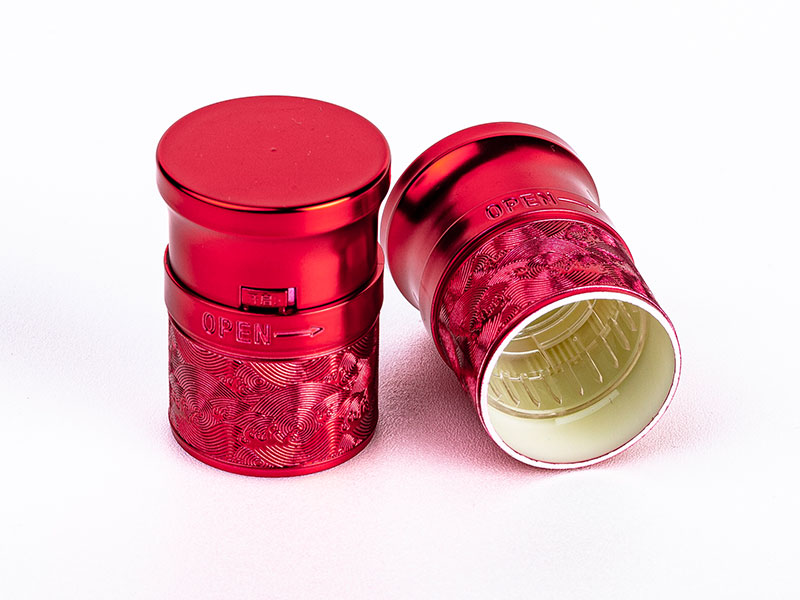
A 30x60mm cap can integrate tamper evidence in ways that feel elegant rather than aggressive. Tear bands, perforation lines, or breakable bridges can be engineered so that opening is clean and intuitive while still providing an obvious sign of interference.
The engineering challenge is consistency. Perforations must open reliably without unintended tearing during application. That depends on foil temper, perforation pattern, and how the capsule is pressed or shrunk. A well-designed tamper feature is an "advanced protection" element because it protects brand trust, not just the bottle.
Barrier features for the real world: humidity, salt air, and temperature swings
Not every bottle lives in a calm cellar. Coastal restaurants, high-humidity warehouses, export shipments, and seasonal temperature cycling can stress a capsule finish. The advanced approach is to treat the capsule as a corrosion-control problem:
Aluminum naturally forms a protective oxide layer, but decorative inks, embossing peaks, and handling scratches can become initiation points for cosmetic corrosion if the coating system is inadequate or cure is inconsistent.
For demanding distribution routes, specifying higher-performance lacquers, tighter cure control, and stricter incoming inspection of coil coating becomes more valuable than simply choosing a "stronger" alloy.
Implementation standards and practical quality checks
While wine capsules are not pressure vessels, good manufacturers apply process discipline similar to packaging standards in other industries. Common practical controls include:
Coating adhesion and flexibility checks after forming, ensuring the lacquer does not crack at emboss peaks or draw corners.
Solvent rub or cure verification, to confirm the coating is fully crosslinked and won't become tacky or scuff-prone in warm cartons.
Dimensional checks for diameter, height, and skirt roundness to ensure stable application on high-speed lines.
Visual standards for gloss, color consistency, metallic effect uniformity, and defect limits such as pinholes, scratches, or fisheyes.
Food-contact compliance is addressed through lacquer selection and declarations aligned with applicable regulations in the destination market. Even if the capsule is not intended for direct food contact, brands often request compliance documentation as part of broader packaging governance.
Below is a practical reference table for two widely used options in aluminum wine capsule manufacturing.
| Alloy (AA) | Typical Use in 30x60mm Caps | Strength | Advantage | Typical Chemical Composition (wt%) |
|---|---|---|---|---|
| 1050A (EN AW-1050A) | High-formability capsules, deep emboss, complex drawing | Low–moderate | Excellent forming, smooth surface | Al: ≥ 99.5; Fe: ≤ 0.40; Si: ≤ 0.25; Cu: ≤ 0.05; Mn: ≤ 0.05; Mg: ≤ 0.05; Zn: ≤ 0.07; Ti: ≤ 0.05 |
| 3105 (AA3105) | Dent-resistant capsules, crisp branding, higher handling robustness | Moderate | Better strength with good formability | Al: balance; Mn: 0.30–0.80; Mg: 0.20–0.80; Fe: ≤ 0.70; Si: ≤ 0.60; Cu: ≤ 0.30; Zn: ≤ 0.40; Ti: ≤ 0.10; others each ≤ 0.05 |
Exact limits vary by standard edition and supplier practice; for procurement, the governing material certificate should reference the applicable AA/EN standard and coil-coating specification.
A different way to judge a "premium" cap
From a customer's point of view, a premium capsule is glossy, well-embossed, and color-matched. From a protection point of view, a premium 30x60mm aluminum cap is the one that arrives without dents, opens cleanly, resists scuffs, stays bright in humid storage, and preserves the visual promise of the bottle all the way to the pour.
Advanced protection features are not always dramatic. They're often quiet decisions: a manganese-bearing alloy that holds its shape, a temper that resists carton pressure, a lacquer that stays hard after heat and time, and a tamper design that communicates integrity in a single tear. When these elements work together, the cap stops being an accessory and becomes what it was meant to be-a small, reliable guardian of the wine's first impression.