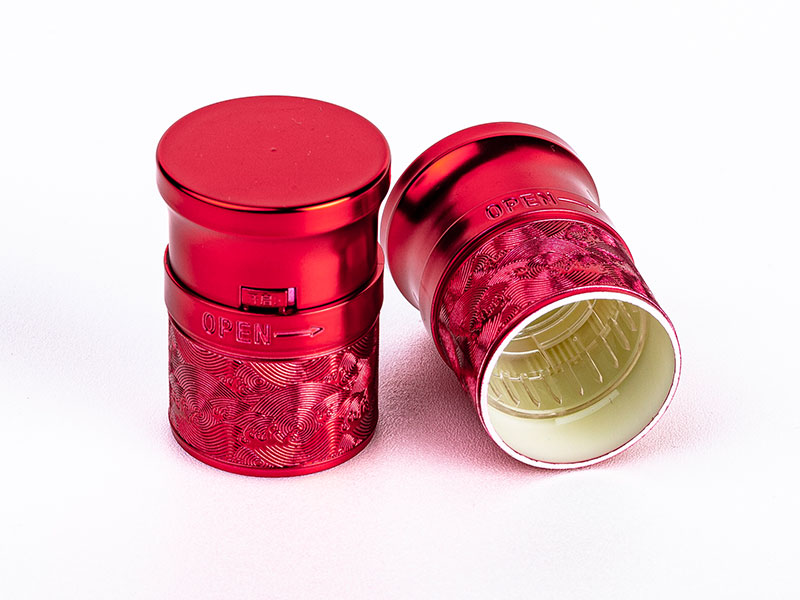


Aluminum Caps for Soda Bottles with High Quality Seal and Custom Branding
People rarely remember the cap. They remember the fizz, the bite of carbonation, the cold bottle in the hand, the satisfying twist that says "fresh." Yet in the life of a soda bottle, the aluminum cap is the quiet gatekeeper of everything that makes the drink feel alive. From an aluminum-alloy perspective, a great cap is not only a piece of packaging; it is a controlled mechanical system designed to protect pressure, flavor, hygiene, and brand identity-often for months-while surviving transport vibration, temperature swings, and consumer handling.
The cap as a pressure device, not a decoration
Carbonated beverages live under pressure. A typical soda bottle headspace can sit around 2–6 bar depending on carbonation level and temperature. That pressure constantly tries to lift the closure. Meanwhile, the cap must also block CO₂ loss outward and oxygen ingress inward. In practice, "high quality seal" means a reliable combination of metal shell geometry, thread accuracy, liner material, and torque window.
Aluminum is excellent here because it forms a stable, protective oxide film, resists corrosion in humid environments, and can be formed into precise shapes at high production speeds. The alloy is the hidden choice that determines how the cap behaves when it is rolled, knurled, threaded, and crimped. Too soft, and threads deform and torque retention suffers. Too hard, and forming cracks appear, especially around sharp knurl patterns or bridges.
A cap's seal integrity is also a story about repeatability. Brand owners want millions of closures that behave the same way on high-speed cappers. Aluminum alloys used for closure shells are typically chosen for a balanced combination of formability, strength after forming, and surface finish for printing and coating.
A distinctive view: the cap as the first brand handshake
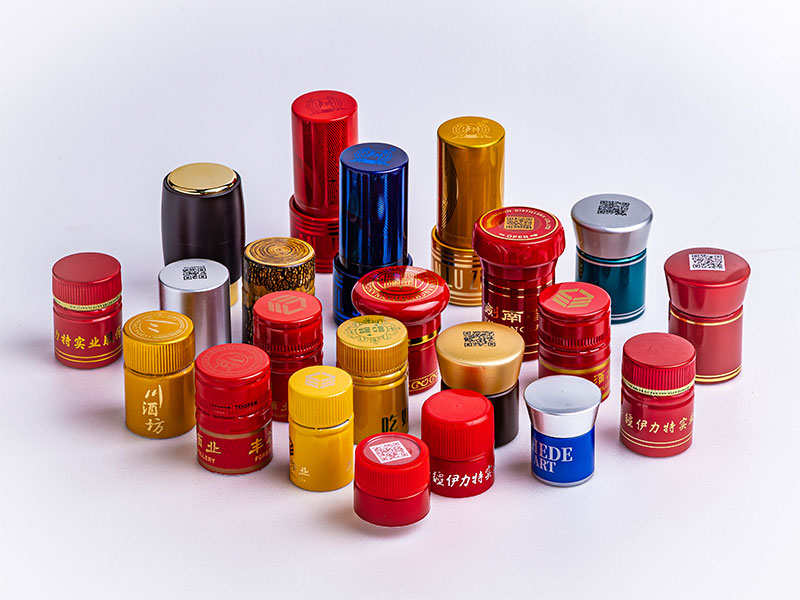
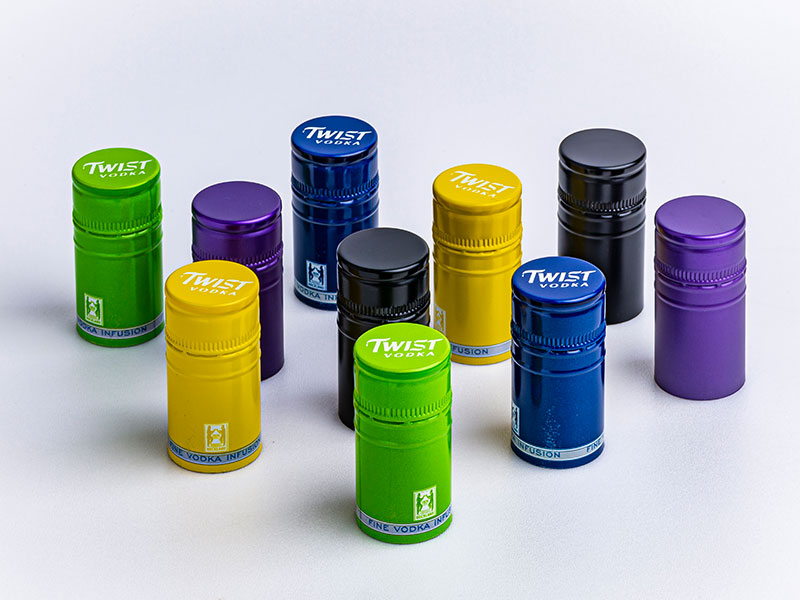
Custom branding on caps often gets treated as a "nice-to-have." From a consumer's point of view, though, the cap is the first touchpoint: the fingertip finds the knurl, the eye catches the color, the wrist feels the breakaway band, and the ear registers the first release of pressure. That's an entire sensory handshake before the beverage even reaches the lips.
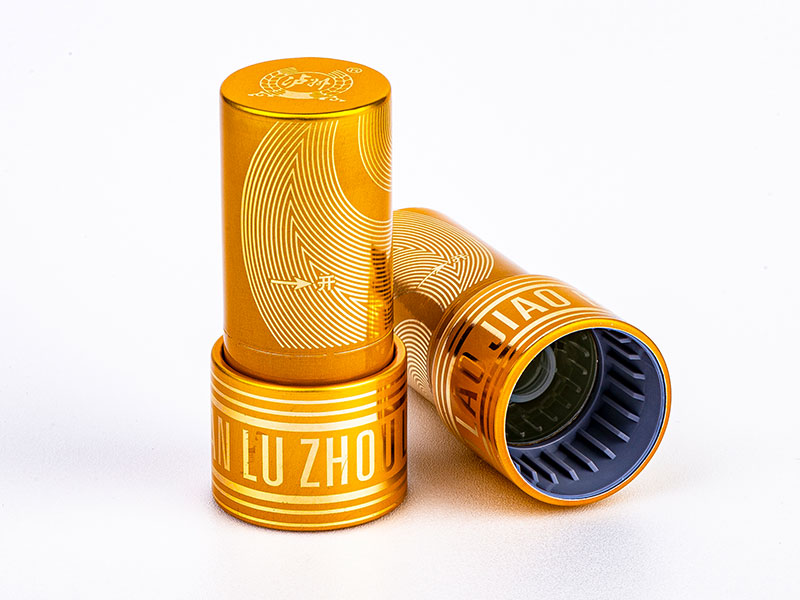
This is where aluminum quietly outperforms many alternatives. It accepts high-fidelity printing and coating, holds metallic effects and gloss well, and maintains clean edges that make small logos readable. If you want a premium tactile identity, knurl design and coating friction become part of brand language: fine knurl feels "technical," deeper knurl feels "rugged," matte coating reads "modern," high gloss reads "classic."
alloy options for aluminum caps
For soda bottle caps, closure manufacturers commonly use AA 3xxx or AA 5xxx series aluminum because these families offer strong forming behavior with good corrosion resistance. The final choice depends on cap design, liner system, and the forming process (cold forming, deep drawing, shell punching, thread rolling).
Below is a practical reference table of typical compositions and properties used in packaging/closure applications. Exact limits should follow the mill certificate and applicable standards.
Typical aluminum alloys for cap shells (reference)
| Alloy (AA) | Typical use in closures | Nominal chemical composition (wt%) | Notes on formability & corrosion |
|---|---|---|---|
| 3003 | General-purpose shells, drawn parts | Mn 1.0–1.5, Fe ≤0.7, Si ≤0.6, Cu 0.05–0.20, Zn ≤0.1, Al balance | Excellent formability; good corrosion resistance; widely available coil stock |
| 3105 | Cap shells requiring good strength after forming | Mn 0.3–0.8, Mg 0.2–0.8, Fe ≤0.7, Si ≤0.6, Cu ≤0.3, Zn ≤0.4, Al balance | Common in coated sheet; good surface for printing; good drawability |
| 5052 | Higher strength shells, demanding handling | Mg 2.2–2.8, Cr 0.15–0.35, Fe ≤0.4, Si ≤0.25, Cu ≤0.1, Zn ≤0.1, Al balance | Stronger and more fatigue-resistant; very good corrosion resistance; slightly higher forming load |
Typical mechanical properties by temper (sheet/coil reference)
| Alloy | Temper | Typical tensile strength (MPa) | Typical yield strength (MPa) | Typical elongation (%) | Practical implication for caps |
|---|---|---|---|---|---|
| 3003 | H14 | 130–180 | 110–150 | 3–10 | Stable forming with moderate stiffness; good for knurling and thread rolling |
| 3105 | H14 | 150–200 | 130–170 | 2–8 | Good balance for thin-gauge shells; supports crisp printing after coating |
| 5052 | H34 | 230–280 | 180–240 | 4–10 | Higher torque resistance; better dent resistance; more demanding tooling control |
These are typical ranges; final properties depend on thickness, coil processing, and supplier.
Tempering and process control: where seal quality is won
Tempering is not just metallurgy jargon; it is the reason two visually identical caps behave differently on the capping line. H-temper sheet (strain hardened) is common for closures because it provides enough stiffness so the cap doesn't "relax" after application. Relaxation matters: if the shell relaxes too much, the liner compression drops, and seal performance can drift during storage.
At the same time, the forming route introduces local work-hardening around threads and knurls. A good closure design anticipates these gradients so that bridges on tamper-evident bands break predictably while the top panel remains stable under pressure cycling.
In production, reliable sealing usually comes from controlling a few fundamentals:
Material thickness consistency across the coil, because thread geometry and bridge strength are sensitive to gauge variation
Surface cleanliness and conversion coating compatibility, because liners and coatings need stable adhesion and low pinhole risk
Tooling polish and forming radii, because micro-cracks become corrosion initiation sites under humid distribution
Coatings, liners, and corrosion: the inside matters more than the outside
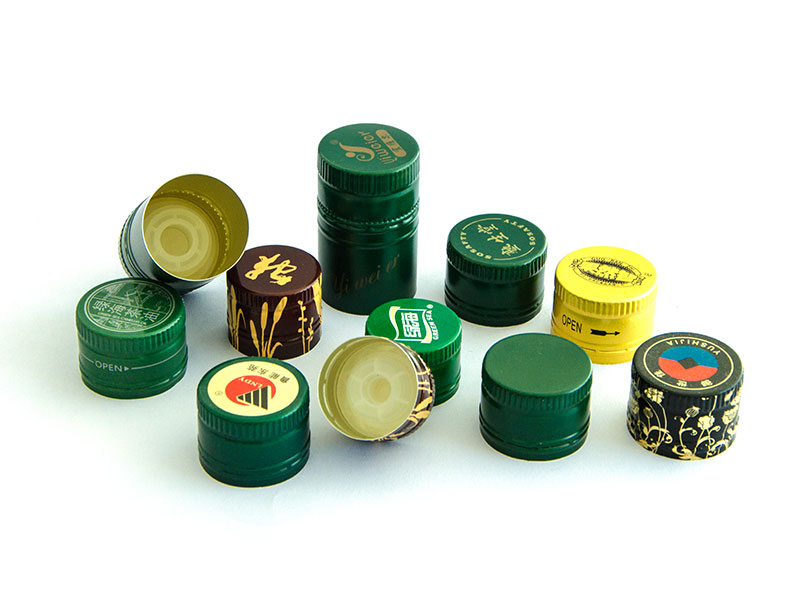
A soda cap is a mixed-material system. The aluminum shell carries load, but the liner creates the seal. For carbonated soft drinks, liners often use food-contact compliant materials such as PE-based liners or specialized compounds designed for CO₂ retention. The liner must maintain elasticity across cold-fill, ambient, and occasional heat exposure during logistics.
On the metal side, internal coatings are selected to resist beverage vapors and external humidity while remaining compliant with food-contact regulations. Aluminum itself is corrosion resistant, but closures live in harsh reality: sticky sugar residues, condensation, salt exposure in coastal transport, and abrasion in packing lines. A properly specified coating system reduces staining and protects brand appearance.
Typical coating and compliance references used globally include FDA 21 CFR for food-contact components (for the US market) and EU Framework Regulation (EC) No 1935/2004 for materials intended to contact food (for EU markets). Final regulatory responsibility depends on the complete closure system, including inks and liners.
Implementation standards that keep performance measurable
A high-quality seal is not a claim; it is a measurable performance envelope. Closure programs commonly align with established test concepts used in beverage packaging such as:
Application torque and removal torque windows, to ensure consumer-openability without leakage
Top load and buckle resistance, especially for stacked transport
Leak testing under pressure and temperature cycling, to simulate warehouse and delivery conditions
CO₂ retention and oxygen ingress monitoring, for shelf-life assurance
While specific protocols vary by brand and region, closure suppliers typically build internal control plans that mirror beverage industry practices and customer specifications.
Custom branding that survives real life
Branding on caps must endure abrasion from conveyors, scuffing in cartons, and moisture. Aluminum's advantage is not only print clarity but also coating durability when the right pretreatment is used. For premium programs, you can specify:
High-opacity basecoats for consistent color across coil lots
Metallic or pearlescent effects that remain stable after forming
Matte clearcoats for scratch masking and modern tactile feel
Laser marking on coated shells for batch traceability or promotional codes
A strong branding program also considers the tamper-evident band: it's the most handled part, so ink rub resistance and knurl geometry must be designed together.
What "high quality" looks like in daily use
The best compliment a cap can receive is that nobody notices it. It opens smoothly, it doesn't leak in a backpack, it doesn't loosen in a hot car, and it still looks sharp after weeks on a store shelf under harsh lights. That quiet reliability is engineering: alloy selection that forms without cracking, temper that maintains torque retention, coatings that resist corrosion and scuffing, and liner design that holds CO₂ like a promise.
From the outside, a soda cap is small. From the inside, it's a pressure seal, a brand signature, and a manufacturing discipline-compressed into a few grams of aluminum alloy and a few square centimeters of liner. When those details are chosen with intention, the cap stops being an afterthought and becomes a subtle advantage your customers can feel with every twist.