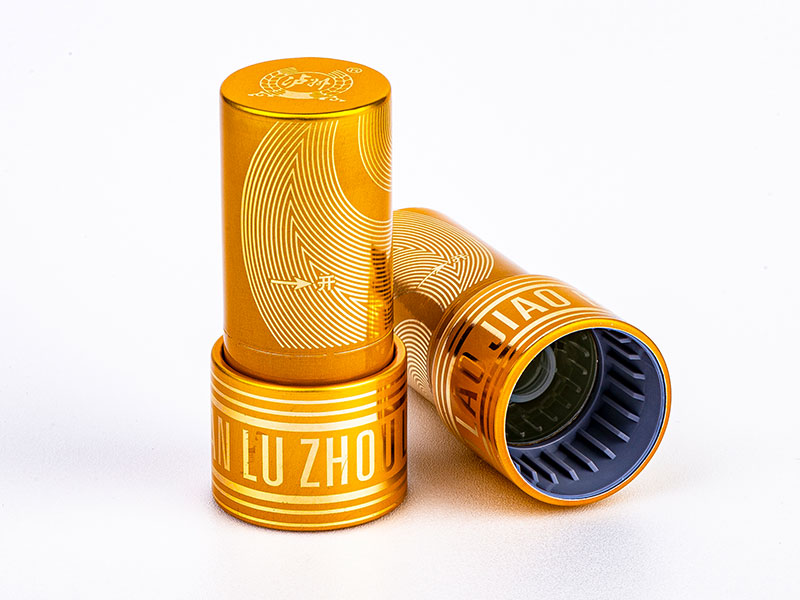


Aluminum Wine Closures for Bottles with Seamless Thread and Tight Fit
Aluminum wine closures have quietly become one of the most reliable components in modern bottling, especially when they feature a seamless thread and a precisely engineered tight fit. From the outside, they look simple: a clean metal cap that twists smoothly on and off the bottle. But inside, they represent a carefully controlled combination of material science, precision forming, food safety, and brand experience.
Why Seamless Thread Matters for Wine Closures
On a screw-cap closure, the “thread” is where most of the functional magic happens. A seamless threaded closure is produced from a single piece of aluminum, with no welded or mechanically joined segments in the threaded area. This has several advantages:
- The thread profile is continuous and consistent, which helps distribute torque evenly as the cap is applied and removed.
- There are no weak points or stress concentrations at weld seams that might crack or deform under capping pressure.
- The inner seal (usually a liner or compound inside the cap) is compressed uniformly against the bottle finish, improving long-term tightness and oxygen control.
For wine, especially still wine and delicate aromatics, this consistency is critical. A slightly uneven thread or distorted closure can lead to micro-leaks, oxygen ingress, or loss of dissolved SO₂, which eventually shows up as premature oxidation or off-flavors in the glass.
The Tight Fit: More Than Just “Screwed On”
When producers talk about a “tight fit” in aluminum wine closures, they are not describing a subjective feeling. Tightness is engineered through a combination of:
- Thread profile geometry on both bottle and closure
- Cap height and wall thickness
- Liner formulation and compression properties
- Applied torque during the capping process
- Elastic recovery of both glass and aluminum after sealing
The goal is to achieve a seal that:
- Prevents leakage even under temperature fluctuations in the supply chain
- Controls gas exchange at a predictable rate (often near-zero for most wines, or tuned using specific liner materials)
- Avoids over-compression that might shatter glass or deform the cap permanently
A high-quality aluminum wine closure feels firm as you twist it, but the opening torque should remain consistent over time. That is why manufacturers specify both application torque (on bottling lines) and removal torque (for consumers), with tight tolerance ranges.
Material Choice: Alloy and Tempering for Performance
Aluminum closures are not made from generic aluminum sheet. They are produced from carefully selected alloys that balance strength, ductility, corrosion resistance, and surface quality.
For wine closures, a common lineage is the 3xxx and 8xxx series alloys. Depending on producer and application, alloy codes can include variants such as 3105, 8011, or similar Al-Mn and Al-Fe-Si compositions tailored for closure stock.
The temper (mechanical condition of the aluminum after rolling and heat treatment) is equally important. Tempers such as H14, H16, or H18 are frequently used because they offer:
- Sufficient hardness for precise thread forming without tearing
- Enough ductility to allow crimping and spin-on operations without cracking
- Good “memory” so the cap retains shape under load and after repeated twisting
Higher temper (e.g., H18) means greater hardness and tensile strength but lower elongation; lower temper provides more formability but less rigidity. Closure manufacturers typically choose a temper that matches:
- Bottle thread design
- Capping line speed and forming method
- Required tamper-evidence band performance
- Brand requirements for opening torque and user feel
Implementation Standards and Quality Control
Behind every simple-looking aluminum closure is a framework of standards and controls that keep performance consistent across millions of units.
Common reference frameworks include:
- EN and ISO standards for aluminum and aluminum alloy sheets and strips used for closures
- Food-contact directives and FDA/EC regulations governing lacquers, inks, and liners
- Industry guidelines from wine and spirits packaging associations for oxygen transmission, torque, and seal tests
On the production line, several parameters are continuously monitored:
- Thickness of the aluminum sheet and uniformity
- Roundness and concentricity of formed caps
- Thread height, pitch, and angle after forming
- Liner weight and uniformity inside each closure
- Surface coating thickness for internal and external lacquers
These controls ensure that each closure fits securely on standardized bottle finishes such as BVS (Bague Vin Screwcap) or other regional glass standards, avoiding compatibility issues when bottling at high speed.
Internal Coatings, Liners, and Chemical Stability
The interior of a wine closure is a chemically sensitive environment. Wine is acidic and can contain sulfur compounds, tannins, and other reactive components. To protect both the wine and the aluminum, closures are lined and coated in several layers:
- Internal lacquer: A food-grade coating that isolates the metal from direct liquid contact. Common chemistries include BPA-NI (BPA-non-intent) epoxy or alternative polymer systems designed for low migration and no impact on aroma or taste.
- Liner or sealing insert: A compressible disk or compound that physically seals against the bottle rim. Different liner structures can be used to create very low oxygen transmission rates (OTR) or slightly higher rates when wine style demands micro-oxygenation through the closure.
This inner system must remain stable over the full lifecycle of the bottle, from filling and transport to years of cellaring in varying temperatures and humidity levels.
Typical Parameter Ranges for Aluminum Wine Closures
Dimensions and mechanical properties vary by brand, bottle size, and closure design. The following ranges represent common specifications for standard still-wine screw closures:
- Closure height: about 25–60 mm (short for entry-level wines, taller for premium or decorative necks)
- Body diameter: commonly around 28 mm
- Aluminum thickness: approximately 0.20–0.25 mm
- Tensile strength (Rm): roughly 130–200 MPa, depending on alloy and temper
- Elongation: around 2–10% (A50) to allow reliable forming
- Internal lacquer coating weight: typically 5–12 g/m² per side (varies by system)
For bottling line performance:
- Application torque: set within a narrow window appropriate to bottle design, often around 10–20 N·m for wine screwcaps, depending on specification
- Removal torque: controlled to remain comfortable for consumers over shelf life
Typical Chemical Composition (Example Alloy for Wine Closures)
Below is an example of a commonly used aluminum closure alloy type. Actual values and alloy designations vary by supplier and local standard, but the ranges illustrate how the material is tuned for closure applications.
| Element | Typical Range (wt%) |
|---|---|
| Aluminum (Al) | Balance |
| Manganese (Mn) | 0.2 – 0.8 |
| Iron (Fe) | 0.3 – 0.9 |
| Silicon (Si) | 0.1 – 0.6 |
| Copper (Cu) | ≤ 0.1 |
| Magnesium (Mg) | ≤ 0.3 |
| Zinc (Zn) | ≤ 0.2 |
| Titanium (Ti) | ≤ 0.1 |
| Others (each) | ≤ 0.05 |
| Others (total) | ≤ 0.15 |
This type of composition delivers a fine balance of:
- Good formability for deep drawing and thread forming
- Adequate strength to resist deformation during handling and transport
- High resistance to corrosion when coupled with proper coatings
A Distinctive Advantage: Predictability for Winemakers and Brands
From the winemaker’s point of view, the most valuable property of a high-quality aluminum closure with seamless thread and tight fit is predictability. Each cap behaves like the last, which means:
- Consistent oxygen ingress behavior across all bottles in a batch
- Fewer sealing failures or leakage-related returns
- Reliable performance in export markets with long transit times and varied climates
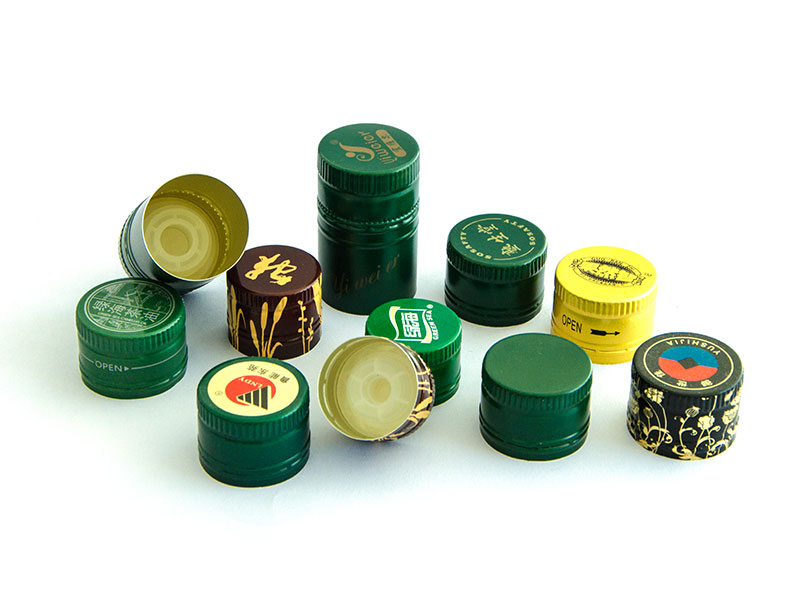
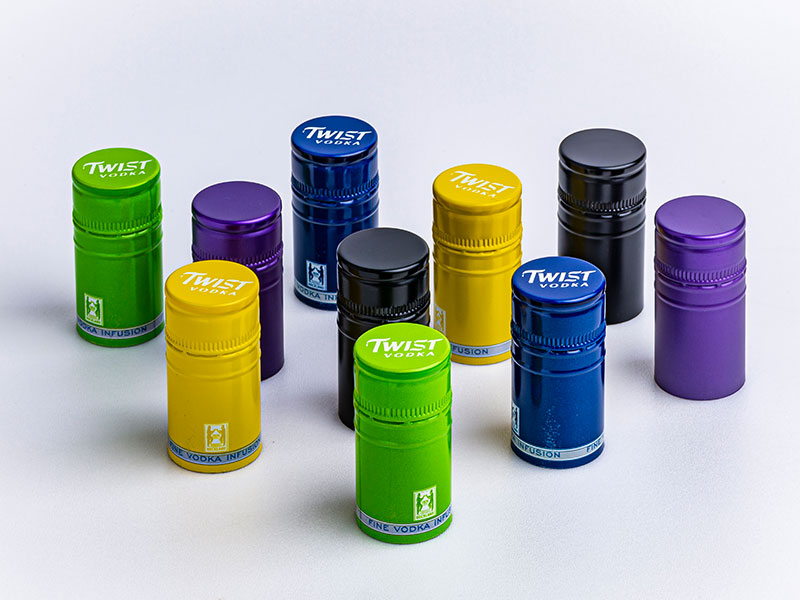
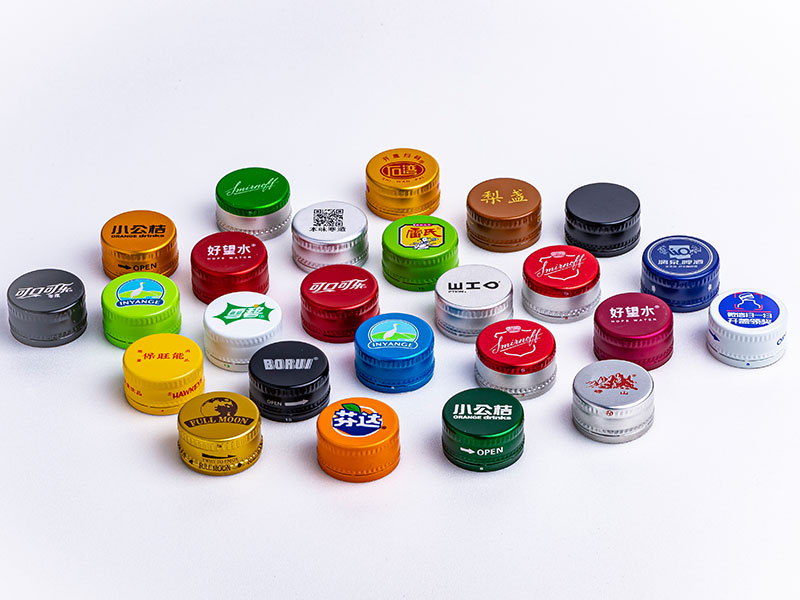
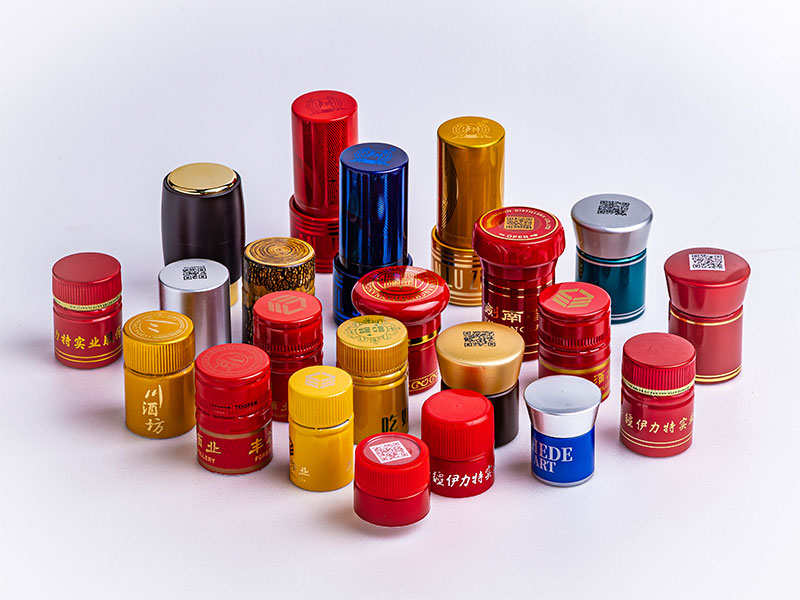
For brands, aluminum closures also provide a large, printable surface that can carry logos, premium color finishes, embossing, and tamper-evident features. The same engineering precision that produces a tight-fitting closure also supports sharp, high-end aesthetics that reinforce brand value on the shelf.
Bringing It All Together
What looks like a simple twist cap is, in reality, a highly optimized system:
- Alloy and tempering control how the metal behaves under forming, sealing, and opening.
- Seamless thread design ensures uniform torque and tight, reliable sealing.
- Internal lacquers and liners create a stable, food-safe interface between wine and closure.
- Implementation standards keep all of these factors consistent on high-speed bottling lines and across global supply chains.
For bottlers and wineries seeking both technical reliability and a premium consumer experience, aluminum wine closures with seamless thread and tight fit are not just an alternative to traditional cork—they are a carefully engineered solution designed for the modern wine market.