

Aluminum Bottle Closures for Soda with Extra Tight Fit
Aluminum Bottle Closures for Soda with Extra Tight Fit
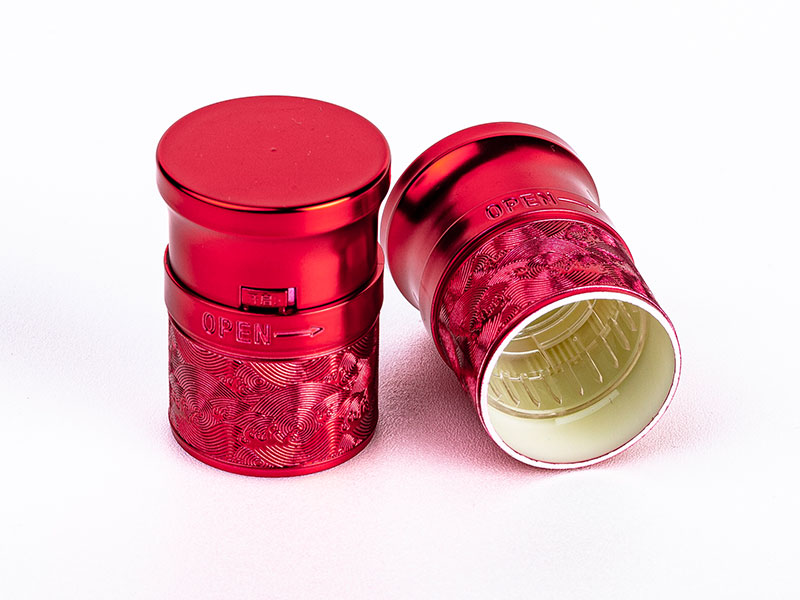
If you've ever cracked open a soda that tasted "tired," you've met the invisible enemy: lost carbonation. The drama doesn't happen at the bottling line; it happens later-during transport vibration, warehouse heat cycling, long shelf time, and the casual abuse of consumer handling. From my perspective as someone who spends too much time thinking about aluminum alloys and how they behave under pressure, an "extra tight fit" closure is not a macho marketing claim. It's a carefully tuned mechanical relationship between metal temper, liner compression, neck finish geometry, and the very specific way carbonated beverages try to escape.
An aluminum closure is, in essence, a controlled spring. It must deform enough to lock onto the bottle finish and compress the sealing liner, but it must also resist relaxing over time. For soda, the internal pressure is a constant negotiation. Depending on temperature and carbonation level, pressures can typically range around 2–6 bar in common packaging conditions, with spikes possible in warmer environments. That pressure pushes upward on the seal interface, hunting for micro-channels. The closure wins by maintaining stable contact stress at the sealing land and by keeping threads and/or roll-on features from backing off.
What "extra tight fit" really means in soda packaging
A tight fit is not just high torque. In fact, chasing torque alone can create its own failures: liner over-compression, thread damage on PET, stress whitening, or inconsistent opening performance. "Extra tight fit" is better understood as a closure that achieves high sealing security with lower variability.
That security usually comes from a combination of factors:
A shell that has predictable forming behavior so the thread profile and tamper band are consistent from cap to cap. Aluminum alloy choice and temper are central here.
A liner system that maintains resilience, especially through thermal cycles. Soda bottles can experience cold-fill, ambient storage, or hot warehouse peaks; the liner must keep pushing back.
A controlled application window on the capping line so the cap deforms exactly as intended-no more, no less.
A neck finish that provides the right sealing land and thread engagement. A cap cannot "extra-tight" its way out of a poor bottle finish.
From a materials viewpoint, the most underappreciated reality is that the cap is formed metal. Unlike injection-molded plastic closures, aluminum caps rely on drawing, ironing, knurling, and roll-on threading. Every one of those steps depends on alloy ductility, work hardening behavior, and temper stability.
Alloy selection: why soda closures often favor 3xxx or 5xxx series
Most aluminum closures for beverages are based on Al-Mn (3xxx series) or Al-Mg (5xxx series) alloys because they offer a useful balance of formability, strength, and corrosion resistance. A soda environment is acidic and wet; while the beverage itself may not contact the cap shell directly because of the liner, condensation and sugar residue can create a persistent corrosion challenge on the outside.
Common closure stock alloys you will see in the supply chain include AA 3105, AA 3003, AA 5052, and AA 5182, selected according to forming route and strength needs. For extra tight fit designs, the bias is often toward alloys and tempers that provide a slightly higher yield strength after forming, which helps the cap keep its shape and maintain liner compression.
Below is a practical reference table for typical alloys used in closure sheet. Actual procurement should always be tied to your supplier's mill certs and the closure maker's forming process.
Typical chemical composition ranges for closure alloys (wt.%)
| Alloy | Si | Fe | Cu | Mn | Mg | Cr | Zn | Ti | Al |
|---|---|---|---|---|---|---|---|---|---|
| AA 3003 | ≤0.6 | ≤0.7 | 0.05–0.20 | 1.0–1.5 | - | - | ≤0.1 | - | Balance |
| AA 3105 | ≤0.6 | ≤0.7 | ≤0.3 | 0.3–0.8 | 0.2–0.8 | ≤0.2 | ≤0.4 | ≤0.1 | Balance |
| AA 5052 | ≤0.25 | ≤0.4 | ≤0.1 | ≤0.1 | 2.2–2.8 | 0.15–0.35 | ≤0.1 | - | Balance |
| AA 5182 | ≤0.2 | ≤0.35 | ≤0.15 | 0.2–0.5 | 4.0–5.0 | ≤0.25 | ≤0.25 | ≤0.1 | Balance |
Note on interpretation: 5xxx alloys (Mg-bearing) tend to provide higher strength, which can help retention of a tight fit, but they can be more demanding to form and may require tighter control of lubrication, tooling, and forming strain to avoid cracks or inconsistent thread formation.
Temper and forming: the closure's "memory" comes from metallurgy
Extra tight fit performance is strongly tied to how much the shell "springs back" after capping. If the cap relaxes, liner compression drops and CO₂ migrates. Temper selection influences both formability and post-forming strength.
In closure stock, suppliers frequently use H-temper sheet intended for drawing and forming, such as H14, H16, or intermediate tempers, depending on alloy and the closure maker's tooling. Softer tempers form easier but can be more prone to relaxation; harder tempers hold shape but may crack during forming or create inconsistent roll-on threads.
For soda closures designed for high sealing security, the practical sweet spot is a temper that permits clean forming of knurls, threads, and tamper evidence features while ending up with sufficient work-hardened strength in the finished cap. The forming process itself strain-hardens the material, so the starting temper is not the whole story-it's the combined effect of starting temper plus the deformation history imposed by your tooling.
From a buyer's standpoint, what matters is that your closure supplier can demonstrate stable mechanical properties batch-to-batch and correlate them to sealing performance. Typical mechanical property targets vary widely by alloy and temper, but closure makers often manage to a band of yield strength and elongation that keeps roll-on quality stable. If you're sourcing "extra tight fit" caps, ask for the supplier's capability data rather than a single nominal number.
Sealing architecture: liner, land, and micro-leaks
A soda seal fails most often through micro-channels at the interface between liner and bottle land. Even a tiny discontinuity can become a CO₂ highway. Extra tight fit closures usually rely on one or more of these sealing strategies:
A compressible liner with strong recovery, commonly based on PVC-free systems such as EPE or TPE-based liners depending on regulatory and brand requirements. The liner must resist compression set over time.
A designed sealing bead geometry that concentrates contact pressure where it matters, instead of spreading force everywhere.
A shell stiffness profile that keeps the top panel from "dishing" under internal pressure.
The phrase "extra tight fit" is sometimes used for caps that provide higher prevailing torque and better retention against back-off. In aluminum, that is often achieved through precise thread forming and controlled skirt geometry. The cap isn't just gripping; it's distributing stress in a way that does not creep loose.
Standards and implementation controls that actually matter
Aluminum closure performance isn't only metallurgy; it's process discipline. The most relevant implementation standards are the ones that govern food contact safety, dimensional control, and sealing verification.
For food contact, common compliance frameworks include FDA 21 CFR for indirect food additives in the United States and EU Framework Regulation EC 1935/2004 along with relevant GMP requirements. Coatings and inks used on the cap exterior should also be evaluated for migration risk if there is any chance of contact with the beverage path during use.
For dimensional and performance validation, the closure and bottle system is typically qualified using application torque control, removal torque targets, leak testing, and pressure retention testing. In real production environments, the critical controls are capper head condition, torque calibration, bottle neck finish consistency, and cleanliness of the sealing land. Sugar residue or particulate contamination can defeat even the best extra-tight design by creating a leak path.
A practical note from the field: if you are seeing sporadic carbonation loss, don't only blame the cap. Look for neck ovality, inconsistent thread start, flash on the sealing land, or temperature-driven changes in PET neck stiffness. An aluminum cap can be perfectly made and still lose the argument if the bottle finish is inconsistent.
Corrosion and aesthetics: tight fit should not mean ugly fit
Soda distribution is a humidity test in disguise. Condensation forms, labels trap moisture, and warehouses do the rest. Aluminum closures should use a robust exterior lacquer system to prevent filiform corrosion and staining, especially when the brand demands bright colors or metallic finishes. Alloy choice helps, but coating quality and edge coverage are often decisive.
If you want extra tight fit without sacrificing appearance, specify coating performance alongside sealing performance. Salt spray or cyclic corrosion tests can be used as comparative tools, though real-world correlation depends on your distribution environment.
The distinctive payoff: tight fit as a promise of "first sip integrity"
The reason I like aluminum for extra tight soda closures is not just tradition; it's the honest mechanical clarity of it. The cap is a shaped piece of metal that holds its decision. When the alloy, temper, forming, liner, and application parameters are aligned, the closure becomes a quiet guardian of carbonation. It doesn't need to be overtightened; it needs to be correctly tightened-repeatably, at scale, across millions of bottles.
https://www.bottle-cap-lids.com/a/aluminum-bottle-closures-for-soda-with-extra-tight-fit.html