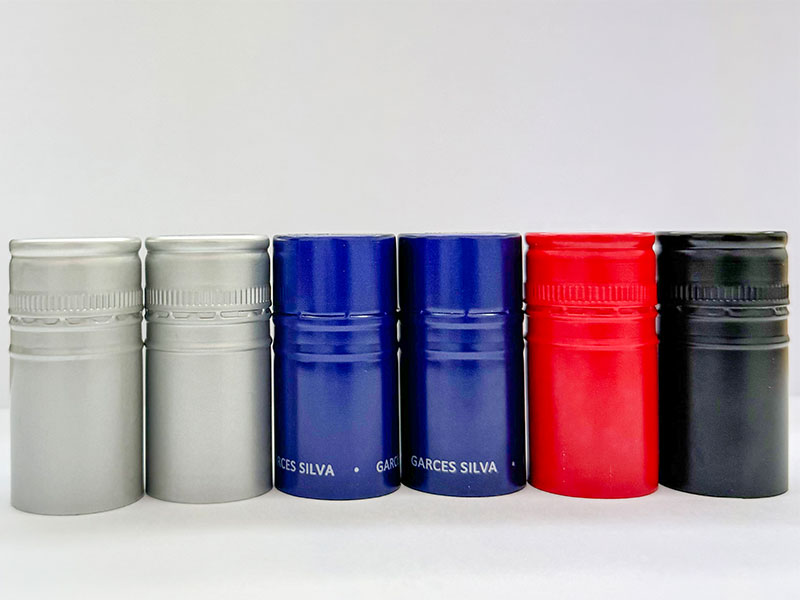


Soda Bottle Aluminum Caps with High Seal Strength for Carbonated Drinks
Soda Bottle Aluminum Caps with High Seal Strength for Carbonated Drinks: Engineering Pressure into Quiet Confidence
Carbonated drinks are not "bottled beverages" so much as controlled pressure systems dressed up for retail. The cap is the smallest component, yet it carries the loudest responsibility: holding CO₂ in place through temperature swings, vibration in transit, shelf time, and the consumer's first twist. When high seal strength is the priority, soda bottle aluminum caps become a study in alloy behavior, temper design, liner chemistry, and geometry that works with the bottle finish rather than fighting it.
Why carbonated drinks punish weak caps
Carbonated beverages typically sit at internal pressures that climb as temperature rises. A cap must keep seal stress above internal pressure while staying elastic enough to accommodate:
- Creep and relaxation in liner materials over time
- Dimensional variation in PET or glass neck finishes
- Impact shocks during logistics
- Repeated torsional loads during opening
A high-seal-strength aluminum cap succeeds by distributing compressive load evenly around the finish, maintaining thread engagement, and using a liner system that seals micro-imperfections without cold-flowing into failure.
The "seal strength" you actually want: compression stability, not just torque
Seal strength is often misunderstood as "higher application torque." In practice, increasing torque alone can cause thread stripping on PET, cap skirt deformation, or liner over-compression that later relaxes and leaks.
High-performance aluminum soda caps focus on compression stability:
- Controlled cap shell stiffness so the top panel acts like a resilient diaphragm rather than a permanently bent plate
- Skirt strength that preserves thread geometry during capping
- Liner hardness and recovery tuned to maintain contact pressure during pressure cycling
- Surface treatments that prevent micro-leak paths at the liner-metal interface
This is why alloy selection and temper are not administrative details; they are the mechanical heart of seal integrity.
Material choice: why aluminum is a pressure-friendly closure metal
Aluminum closures win in carbonated applications because they offer a rare mix:
- High specific strength in thin gauges, enabling a stiff shell without bulky mass
- Excellent formability for knurling, threading, and pilfer band features (where applicable)
- Superior corrosion behavior with the right coatings, especially against acidic sodas and flavor oils
- Recyclability that aligns with beverage packaging mandates
For high seal strength, most manufacturers rely on wrought aluminum alloys engineered for closure stock, where controlled work hardening delivers consistent springback.
Recommended aluminum alloys and tempers for high-seal soda caps
In closure manufacturing, the temper is as important as the alloy. The ideal condition is stiff enough to resist paneling and thread collapse, yet ductile enough for deep drawing, knurl forming, and safe deformation without cracking.
Commonly used closure alloys include AA 8011, AA 5052, and AA 3105 depending on the regional supply chain, forming method, and cap geometry. For carbonated drinks, a work-hardened temper (often H14–H19 range) is frequently used because it improves shell rigidity and helps preserve compressive load over time.
Typical guidance used in industry for carbonated beverage aluminum caps:
- AA 8011-H14 / H16 / H18: strong candidate for closure stock with reliable forming and good stiffness
- AA 3105-H14 / H16: used when balance of formability and strength is required
- AA 5052-H14: higher Mg alloy with good corrosion resistance, often selected when demanding environments or aggressive beverages are expected, with careful forming control
Actual alloy choice should align with the forming process, cap height, thread design, and target removal torque window.
High-seal cap structure: where the strength is "stored"
A high-seal aluminum soda cap is not just a piece of metal. It is a system:
Cap shell geometry
Top panel thickness, curl design, knurl depth, and skirt height determine how load transfers into the liner and threads. A well-designed shell behaves like a controlled spring that maintains sealing force even after thermal cycling.
Thread and finish compatibility
For PET carbonated bottles, the thread profile and finish dimensions must match cap tooling precisely. A mismatch creates stress points, encouraging micro-channels where CO₂ migrates.
Liner system
High-seal performance is usually driven by EPE, TPE, or multi-layer liners designed for gas retention and compression recovery. For carbonated drinks, resilience matters as much as softness: you want a liner that conforms initially but rebounds to sustain pressure.
Coatings and surface treatment
Internal lacquer systems and external varnish protect against beverage vapors, humidity, and abrasion. They also stabilize friction during application, supporting consistent torque-to-seal conversion.
Typical parameters for soda bottle aluminum caps designed for carbonated drinks
Specifications vary by brand, filling line, and bottle finish, but high-seal designs commonly target the following parameter windows.
Common cap sizes and geometry targets
- Diameter options commonly used in beverages: 28 mm, 30 mm, 38 mm (application-specific)
- Shell thickness (closure stock): about 0.20–0.30 mm depending on size and strength target
- Knurl profile: designed to increase grip without concentrating stress that could split coatings
- Curl and edge design: engineered to avoid cutting the liner and to maintain uniform compression
Performance-oriented targets often specified by bottlers
- Consistent application torque window matched to PET finish strength
- Retention of internal pressure without leakage after thermal cycling and vibration testing
- Controlled removal torque to ensure consumer openability without compromising seal
Because "high seal strength" is a system outcome, these targets are verified with pressure-hold testing, vacuum/pressure decay methods, and burst/creep evaluation under controlled temperatures.
Implementation standards and compliance landscape
Aluminum soda caps for carbonated drinks typically align with a mix of packaging, coatings, and food-contact compliance requirements. Depending on the market, commonly referenced frameworks include:
- FDA food-contact requirements for coatings and liners used in contact with beverages (United States)
- EU Framework Regulation for food-contact materials and relevant GMP expectations (European Union)
- Migration testing protocols appropriate to acidic beverages and flavoring components
- Quality management practices such as ISO 9001 for manufacturing control
- Environmental and chemical compliance expectations such as RoHS/REACH where applicable to coatings and pigments
In practice, beverage customers usually require documented compliance for liner and lacquer systems, plus batch traceability for closure stock and coatings.
Tempering and processing conditions that influence seal strength
High seal strength is not "added at the end"; it is manufactured into the cap through controlled metallurgical and forming steps.
Cold rolling and work hardening
Closure sheet is rolled to final gauge and temper. Higher H tempers increase yield strength and stiffness, improving resistance to skirt deformation and top panel collapse under capping load.
Annealing strategy
If the material is too hard, forming cracks and coating damage become more likely. If too soft, the cap loses springback and sealing force decays faster. The selected temper balances drawability with retained elastic recovery.
Stamping, drawing, and thread forming
Tooling condition and lubrication influence surface finish and micro-scratches that can become corrosion initiation points under coatings. Stable forming reduces variability, which directly improves torque consistency and seal repeatability.
Coating cure and adhesion
Internal lacquer cure schedules matter: under-cure risks chemical attack and odor; over-cure can reduce flexibility and crack resistance. Either can harm seal performance indirectly by changing friction and liner seating.
Chemical properties table: typical composition for common closure alloys
Below is a reference-style chemical composition table for alloys widely used in aluminum closure applications. Exact limits depend on the applicable alloy standard and supplier certification. Values are typical maximums unless noted.
| Alloy | Si (%) | Fe (%) | Cu (%) | Mn (%) | Mg (%) | Cr (%) | Zn (%) | Ti (%) | Al |
|---|---|---|---|---|---|---|---|---|---|
| AA 8011 | 0.50–0.90 | 0.60–1.00 | ≤0.10 | ≤0.20 | ≤0.05 | ≤0.05 | ≤0.10 | ≤0.08 | Balance |
| AA 3105 | ≤0.60 | ≤0.70 | ≤0.30 | 0.30–0.80 | 0.20–0.80 | ≤0.20 | ≤0.40 | ≤0.10 | Balance |
| AA 5052 | ≤0.25 | ≤0.40 | ≤0.10 | ≤0.10 | 2.20–2.80 | 0.15–0.35 | ≤0.10 | ≤0.10 | Balance |
How these chemistries translate into cap behavior is subtle but important. Higher Mg (as in AA 5052) generally improves strength and corrosion resistance, while Fe/Si combinations (common in AA 8011) support economical closure stock with good forming when temper is controlled. Mn additions (as in AA 3105) can enhance strength and improve resistance to deformation during application.
What "high seal strength" looks like on the filling line
From a production viewpoint, high seal strength is visible as process stability:
- Lower scatter in application torque and removal torque results
- Reduced leakage complaints after hot warehouses or summer transport
- Better resistance to cap back-off under vibration
- Cleaner opening behavior because threads and knurl geometry remain intact rather than distorted
The cap is doing its job when the carbonation profile tastes identical weeks later and the only "pressure release" is the intentional one the consumer hears at opening.
A practical selection mindset for carbonated beverage aluminum caps
When choosing soda bottle aluminum caps with high seal strength, the most reliable approach is to match the cap's stiffness and liner recovery to the bottle finish and the CO₂ pressure/temperature profile, then lock that performance in with repeatable metallurgy and coatings.
That is the quiet genius of a great aluminum soda cap: it turns metallurgical discipline and microns of liner compression into a beverage experience that feels effortless.