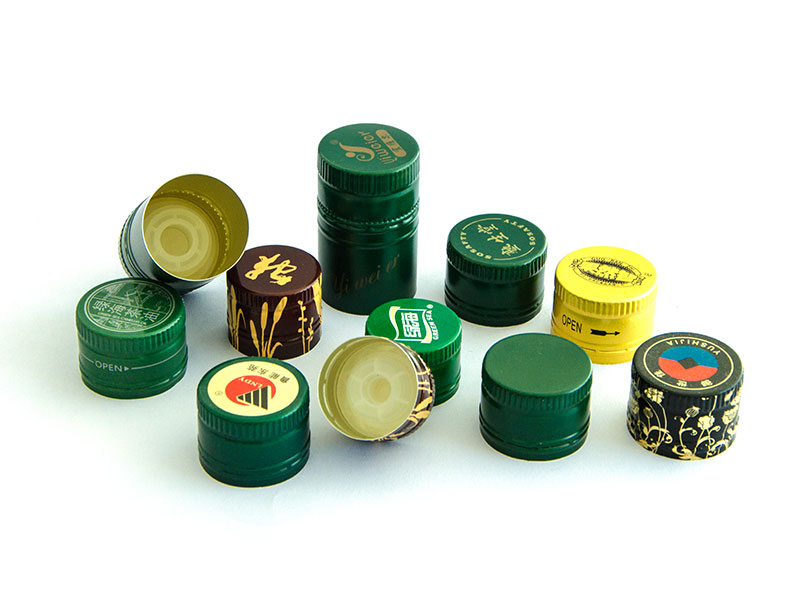


Soda Aluminum Closures with Secure and Tamper Proof Design
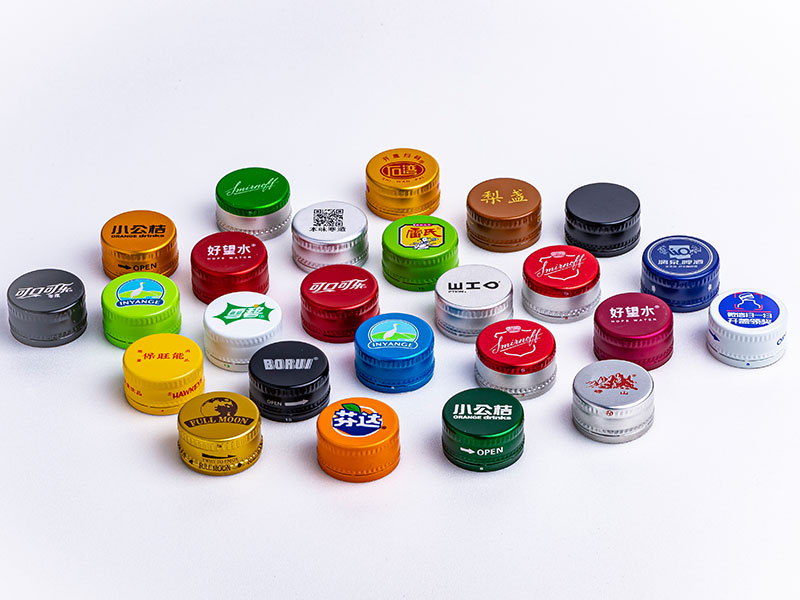
A soda closure is an object most people never introduce themselves to. It sits there, quiet and small, doing its job so well that it becomes invisible-until it doesn't. When carbonation fades, when a cap "walks" under pressure, when a tamper band breaks too early on the line, suddenly the closure becomes the headline. From the viewpoint of an aluminum alloy specialist, that tiny component is less a cap and more a pressure-managed, consumer-trust device made from engineered metal, geometry, and process discipline.
Aluminum has a particular talent for this role. It is light, corrosion resistant in beverage environments, easy to form at high speed, and predictable under controlled temper conditions. Yet the most important reason is subtler: aluminum closures are excellent at telling the truth. When properly designed, they make tampering visibly obvious. When properly manufactured, they retain carbonation reliably without resorting to excessive torque that frustrates consumers. In other words, a good soda aluminum closure is a balance of honesty and restraint.
Security begins with pressure, not paranoia
Soda is not water; it is a low-temperature, pressurized system that tries to escape. Carbonated soft drinks commonly sit in the range of roughly 3–6 bar internal pressure depending on CO₂ volume and temperature. This pressure continually loads the seal interface and the skirt. A secure closure is one that holds pressure without creeping, losing thread engagement, or compressing the liner unevenly. A tamper-proof closure is one that makes interference visible and irreversible.
Designers often talk about "tamper evidence" as if it were a purely visual feature. In practice, tamper evidence is a mechanical story. It is told by bridges that must break at a controlled force, a band that must deform in a controlled way, and threads that must resist back-off without requiring extreme application torque.
Aluminum performs best when the metal's temper and grain direction are chosen to support predictable fracture at the bridges while keeping the skirt tough enough to survive capping, conveyance, and consumer handling. Security is therefore born as much in the coil specification as in the CAD model.
The closure as a system: shell, liner, band, and threads
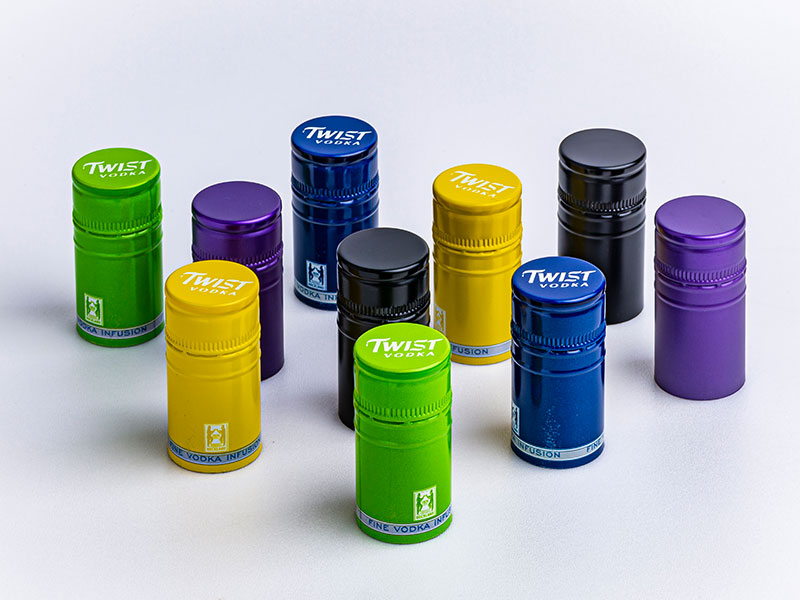
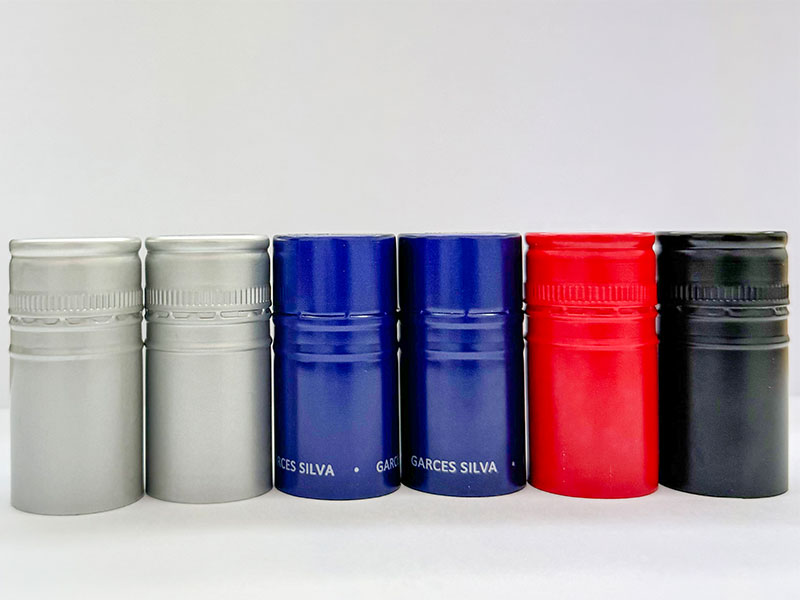
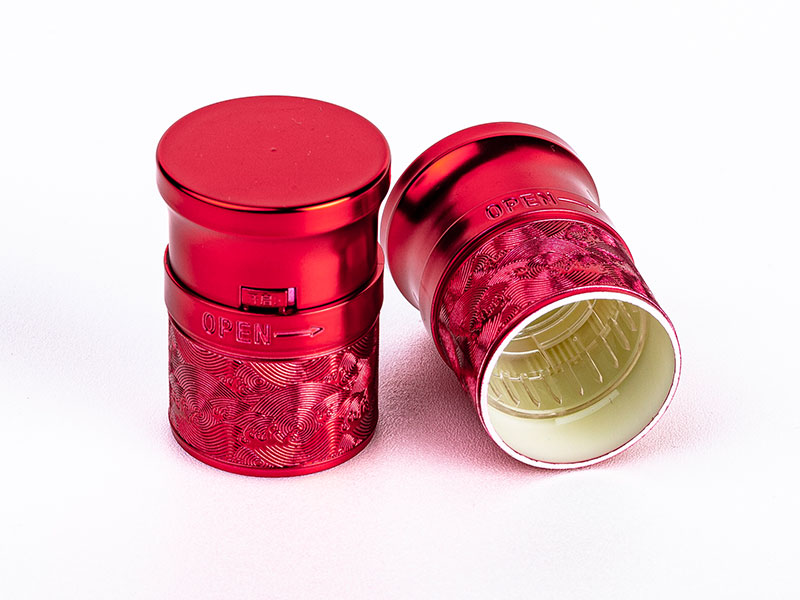
A soda closure is usually a multi-element system even when it looks monolithic. The aluminum shell provides structural strength and thread features. The liner-often a food-grade polymer or compound-provides the actual seal, compensating for microscopic irregularities on the bottle finish. The tamper-evident band provides consumer assurance and discourages re-closure after opening. The thread profile, knurl, and top panel geometry translate torque into axial load.
In secure designs, the top panel stiffness matters more than people expect. A panel that is too flexible can "dish" under pressure, reducing liner compression and creating micro-leaks that slowly bleed carbonation. Too stiff, and you may concentrate stress at the curl or thread roots, inviting cracks during forming. The goal is elastic stability: the panel should remain dimensionally calm during storage and distribution, including thermal cycling.
Tamper-proof performance relies on a careful relationship between the band and the bottle's retaining bead. If the band teeth are too aggressive, the band can catch and pre-break on the line. Too weak, and the band may slip over the bead without clear evidence. Aluminum's formability allows crisp features, but crisp features require the right temper and clean tooling to avoid tearing.
Alloy choice: why 8011 and 5052 show up so often
Soda aluminum closures commonly use AA8011 or AA5052 families, depending on forming route and performance targets.
AA8011 is widely used for packaging because it offers good formability, consistent mechanical properties in thin gauges, and strong supply-chain familiarity. It is especially popular for high-speed stamping and drawing where uniformity matters.
AA5052 brings higher strength and excellent corrosion resistance thanks to magnesium content, often favored when additional mechanical robustness is needed. The trade-off is that it can be less forgiving in some forming steps if not properly tempered, and it can demand tighter control of lubrication and die conditions.
What matters is not only the alloy, but the temper. For closures, H14, H16, and H18 conditions are common because they provide a balance between stiffness and formability. Too soft and the skirt may deform under torque or pressure; too hard and you risk split edges, cracked knurls, or unreliable bridge fracture behavior in the tamper band.
Typical material parameters and what they mean on the line
A practical closure line cares about repeatability more than hero numbers. In the real world, small variations in yield strength or thickness can change application torque, bridge break force, and leak performance.
Typical coil thickness for aluminum closure shells often falls around 0.20–0.30 mm depending on diameter and design, with tight thickness tolerances preferred to keep liner compression consistent. Surface cleanliness is not cosmetic; it affects coating adhesion and liner compatibility. Coating systems-internal and external-must meet food-contact requirements and resist acidic beverage environments and condensation-driven corrosion.
The forming sequence usually includes blanking, drawing, trimming, knurling, thread forming, band forming, and curling. Each step imposes local work hardening. That means the incoming temper is only the starting point; the final mechanical behavior is a mix of alloy, initial temper, and process-induced hardening. Manufacturers who treat temper as a static label often struggle with unexpected band failures or cap cracking.
Chemical composition and mechanical properties (typical reference)
Below are commonly referenced typical compositions and property ranges used in aluminum closure applications. Exact limits depend on the governing specification and supplier certification.
Typical chemical composition (wt.%)
| Alloy | Si | Fe | Cu | Mn | Mg | Cr | Zn | Ti | Al |
|---|---|---|---|---|---|---|---|---|---|
| AA8011 | 0.50–0.90 | 0.60–1.00 | ≤0.10 | ≤0.20 | ≤0.05 | ≤0.05 | ≤0.10 | ≤0.08 | Balance |
| AA5052 | ≤0.25 | ≤0.40 | ≤0.10 | ≤0.10 | 2.2–2.8 | 0.15–0.35 | ≤0.10 | ≤0.10 | Balance |
Typical mechanical properties for sheet (indicative)
| Alloy / Temper | Tensile Strength (MPa) | Yield Strength (MPa) | Elongation (%) |
|---|---|---|---|
| AA8011-H14 | 110–150 | 95–125 | 2–6 |
| AA8011-H16 | 130–170 | 110–145 | 1–5 |
| AA5052-H14 | 190–230 | 160–200 | 4–10 |
These ranges are indicative; closure producers should lock targets based on forming results, bridge behavior, and sealing tests rather than choosing solely from a datasheet.
Implementation standards and verification that actually protects the brand
A tamper-evident closure is only as trustworthy as the verification behind it. In beverage packaging, practical standards typically connect to food-contact compliance, dimensional control, and performance tests.
Food-contact compliance is often demonstrated via FDA 21 CFR applicable sections in the United States and EU Framework Regulation (EC) No 1935/2004 plus relevant GMP requirements in Europe, along with migration testing for coatings and liners as needed. For aluminum alloy and temper certification, producers commonly rely on EN 573/EN 485 series in Europe or ASTM B209 for aluminum sheet in other markets, supported by mill test certificates.
Performance verification on the line and in the lab usually includes torque application window control, removal torque checks after conditioning, pressure leak testing, bridge break force observation, and tamper band retention checks on the bottle bead. Thermal cycling matters because carbonation pressure and material expansion move together; a cap that seals at room temperature may weep after cold-fill or during hot warehouse exposure.
From the outside, tamper proofing looks like distrust. From the inside of the package engineer's world, it is a contract. The cap says: no one has interfered, the carbonation you paid for is still here, and the opening experience will be consistent. Aluminum is well suited to that contract because it is measurable. You can certify it, form it, coat it, test it, and predict it.
The most secure and tamper-proof soda aluminum closures are not the ones with the most aggressive bands or the tightest torques. They are the ones designed with humility toward the system: the bottle finish tolerances, the filler speed, the distribution temperature swings, and the consumer's hand strength. When alloy selection, temper choice, and forming discipline align, the closure becomes quietly invisible again-exactly where it belongs, guarding the fizz and the brand's credibility without ever asking to be noticed.
https://www.bottle-cap-lids.com/a/soda-aluminum-closures-with-secure-and-tamper-proof-design.html