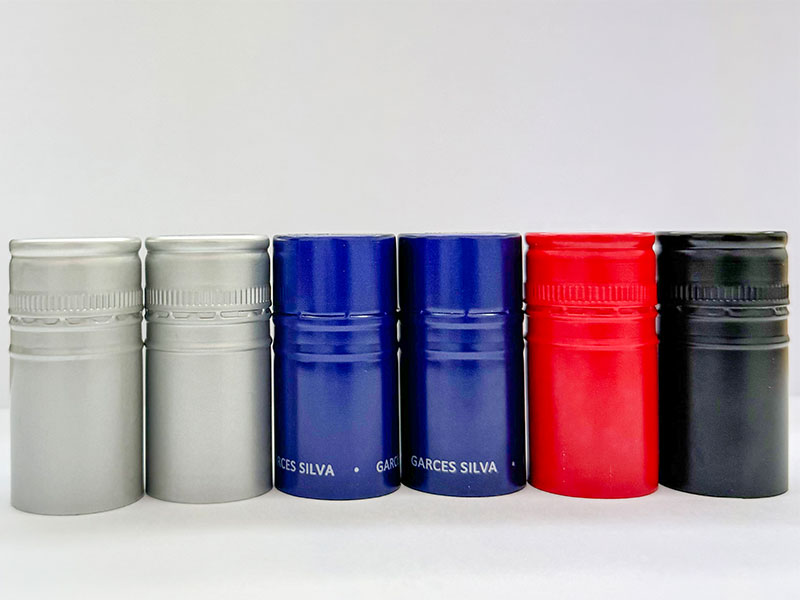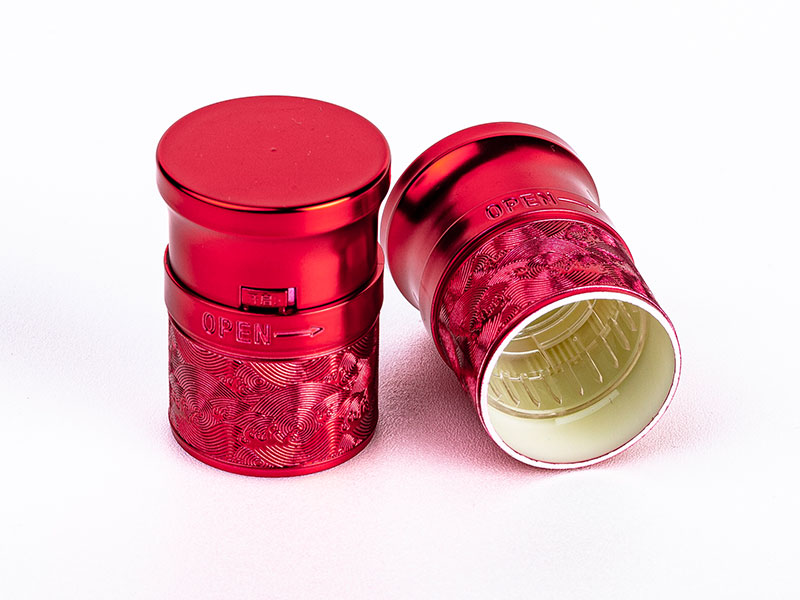


Aluminum Screw Caps for Soda Bottles with Easy Open Mechanism
Aluminum screw caps for soda bottles rarely get the spotlight. Yet they are the "front door" of a carbonated drink: the first tactile contact, the first audible cue, and the part that must quietly solve several hard engineering problems at once. When you add an easy open mechanism to a cap designed for pressurized beverages, you're essentially asking one small component to balance two competing emotions in the consumer's hand: effortless access and absolute confidence against leaks.
What "easy open" really means on a soda bottle cap
In carbonated applications, "easy open" is not the same as "weak torque." The cap must hold pressure, resist creep over shelf life, and avoid micro-leak paths that can flatten carbonation. The easy open mechanism is usually achieved through design and friction management rather than simply reducing tightness.
Common easy open features include:
A refined knurl profile that improves grip even with condensation
Optimized thread geometry that reduces binding and enables smooth run-down and back-off
Low-friction liner surfaces that release cleanly from the bottle's sealing land
Controlled venting behavior so pressure equalizes progressively during opening, reducing sudden "kick" and improving safety and comfort
Optional tamper-evident band or fold-over pilfer proof details designed to break predictably without excessive effort
In practice, the best easy open aluminum screw caps feel consistent. They don't "stick" after cold-chain storage, and they don't require a second hand to stabilize the bottle.
Typical parameters customers ask for
Because soda packaging varies by market and filling line, aluminum screw caps are often supplied to a defined neck finish and torque window. The values below represent common targets and can be customized for your bottle design, liner system, and filling conditions.
Cap size range commonly used for carbonated bottles: 28 mm, 30 mm, 38 mm (depending on region and bottle type)
Shell thickness: typically 0.18–0.25 mm aluminum sheet, chosen by pressure needs and top-load requirements
Thread type: continuous thread matched to bottle finish standard
Opening torque (application-dependent): typically controlled within a narrow range for user comfort and sealing reliability
CO₂ pressure resistance: designed to withstand expected internal pressures at elevated temperature during storage and transport
Tamper evidence: breakable band, roll-on feature, or score-based system depending on market expectation
Liner: EPE, TPE, PVC-free compounds, or specialized barrier liners depending on beverage sensitivity and regulatory preference
What matters is not just the nominal numbers, but the stability of those numbers across high-speed capping, temperature swings, and long-term shelf life. Easy open performance that is excellent on day one but inconsistent after several weeks is not "easy open" in a real-world sense.
Implementation standards and quality expectations
Aluminum screw caps for soda bottles are generally designed and verified against widely used packaging and food-contact frameworks. The exact compliance path depends on your destination market and beverage type, but manufacturers commonly align production and inspection with:
Food-contact compliance applicable to the market (such as FDA or EU food contact requirements for coatings and liners)
Good Manufacturing Practice principles for packaging materials
Quality management systems such as ISO 9001
Dimensional control based on customer neck finish drawings and cap thread gauges
Torque, leakage, and carbonation retention testing aligned with bottler internal standards
Coating and corrosion resistance verification, especially for acidic beverages and humid storage
From a technical viewpoint, "standard compliance" is really about repeatability: the cap should behave the same way at 10,000 caps/hour as it did in the lab, and it should behave the same way in summer logistics as it does in climate-controlled storage.
Alloy tempering and forming conditions: why aluminum wins here
Aluminum is favored for premium beverage closures because it offers a rare combination: light weight, excellent formability, corrosion resistance (with proper coating), and a tactile "clean" feel. But the real secret is temper selection.
Most aluminum screw caps for beverage use rely on 3xxx series alloys (Al-Mn) or sometimes 1xxx/8xxx variants depending on supply chain and forming method. A typical choice is AA3105 or AA3003 in an H temper suitable for deep drawing and threading.
Recommended alloy/temper examples for cap shells:AA3105 H14/H24 for balanced strength and formability
AA3003 H14/H24 for good drawing behavior and corrosion resistance
AA8011 H14 as an option in some supply chains for thin gauge closure stock
The temper affects how the shell forms during stamping, knurling, and thread rolling. Too hard, and you risk cracking, excessive springback, or inconsistent threads. Too soft, and you risk deformation under capping load, poor torque retention, or gasket compression relaxation. Easy open performance benefits from consistent temper because consistent metal elasticity means consistent torque and liner compression.
Coatings also play a role. Internal lacquer reduces corrosion risk and can improve liner interaction, while external coatings support branding and abrasion resistance. For carbonated drinks, coating integrity is not just cosmetic; it's part of the closure's long-term reliability.
Chemical properties table (typical aluminum closure alloys)
Below is a typical composition reference for common closure alloys. Actual specifications depend on the supplier standard and mill certification. Values are approximate maximums unless noted.
| Alloy | Si (%) | Fe (%) | Cu (%) | Mn (%) | Mg (%) | Zn (%) | Ti (%) | Al (%) |
|---|---|---|---|---|---|---|---|---|
| AA3105 | 0.60 | 0.70 | 0.30 | 0.30–0.80 | 0.20–0.80 | 0.40 | 0.10 | Remainder |
| AA3003 | 0.60 | 0.70 | 0.05–0.20 | 1.00–1.50 | 0.10 max | 0.10 | 0.10 | Remainder |
| AA8011 | 0.50–0.90 | 0.60–1.00 | 0.10 max | 0.20 max | 0.05 max | 0.10 max | 0.08 max | Remainder |
If your beverage is especially sensitive, it's worth discussing not only alloy chemistry but also coating type, liner formulation, and any migration testing needed for your market.
How easy open is engineered without sacrificing carbonation
A reliable seal for soda comes from the interaction of three elements: the bottle finish, the liner, and the cap's ability to maintain compression. Easy open design aims to reduce friction and user effort during removal while preserving sealing compression.
tuning points include:
Thread lead-in geometry that reduces cross-threading and allows smooth first engagement
A liner hardness profile that seals at low torque but resists cold-flow under pressure
Controlled knurl depth that improves grip without feeling sharp
Consistent skirt roundness so torque is applied evenly around the neck
Optional pressure-management features that allow gradual venting during initial back-off
From the consumer's perspective, this translates into a cap that opens with a confident twist and a clean release sound, instead of a jerky "stick-slip" motion that feels cheap or unsafe.
A closure that protects both brand and beverage
Aluminum screw caps with easy open mechanisms are often chosen by beverage brands that care about the full sensory arc: the look of the closure, the feel in hand, the sound at first opening, and the confidence that the drink will still be sparkling after transport. Behind that simple twist is a controlled combination of alloy temper, forming precision, coatings, liners, and testing discipline.
https://www.bottle-cap-lids.com/a/aluminum-screw-caps-for-soda-bottles-with-easy-open-mechanism.html