

Aluminum Closures for Wine Bottles with Custom Color and Finish Options
Aluminum closures for wine bottles have quietly reshaped how we experience a bottle long before the first pour. They are the handshake between the winery and the drinker, the first physical contact, and often the first test of quality. Yet most conversations about them get stuck in the cork-versus-screwcap debate and never reach the interesting part: how alloy design, surface treatments, and color and finish options can be engineered as deliberately as the wine itself.
From a materials standpoint, a wine closure is not just “a cap.” It’s a carefully tempered aluminum alloy shell, a printed and lacquered surface, an internal coating designed for food contact, and a liner system calibrated to oxygen transmission targets. Each choice quietly shapes shelf life, brand perception, recyclability, and the tactile moment when someone twists the cap.
Why aluminum closures suit modern wine
Aluminum behaves in a way that suits the realities of contemporary wine logistics. It is lightweight, highly formable, naturally corrosion-resistant, and infinitely recyclable without meaningful loss of properties. A typical wine screw closure uses a 3xxx series or 8xxx series alloy strip, optimized for deep drawing and thread rolling while maintaining dimensional stability under capping torque.
For many producers, the primary performance task is oxygen management. A good closure must protect the wine from excessive oxygen ingress but not create a hard “oxygen zero” barrier that can lead to reductive aromas in certain styles. The aluminum shell works with a polymer or tin–saran liner to form a customized barrier system. The shell must keep its geometry over time so the torque and seal force remain consistent. That requirement quietly dictates alloy choice and temper.
Common alloys include:
- 8011-H14 or H16 for deep-drawn capsules and roll-on pilfer-proof (ROPP) closures
- 3105-H16 where a balance of strength, formability, and printability is needed
These alloys can be rolled to a typical thickness range of about 0.20–0.23 mm for wine closures, though premium extra-long capsules may use slightly heavier gauge for a more substantial hand-feel.
A representative chemical composition for a widely used closure alloy such as AA8011 is:
| Element | Typical Range (wt %) |
|---|---|
| Al | Balance |
| Fe | 0.60 – 1.00 |
| Si | 0.50 – 0.90 |
| Cu | ≤ 0.10 |
| Mn | ≤ 0.20 |
| Mg | ≤ 0.05 |
| Zn | ≤ 0.10 |
| Ti | ≤ 0.08 |
| Others (each) | ≤ 0.05 |
| Others (total) | ≤ 0.15 |
This chemistry, combined with strain hardening to H14 or H16 tempers, produces a closure stock that resists tearing on high-speed lines, maintains thread definition, and supports consistent knurling and pilfer band formation.
Color and finish as an extension of the wine’s narrative
Once the structural aspects are correct, the closure becomes a storytelling surface. A bottle might carry a cool-climate Riesling with bracing acidity, yet if it’s topped with a dull, anonymous cap, the emotional promise stops at the label. Color and finish offer a second canvas.
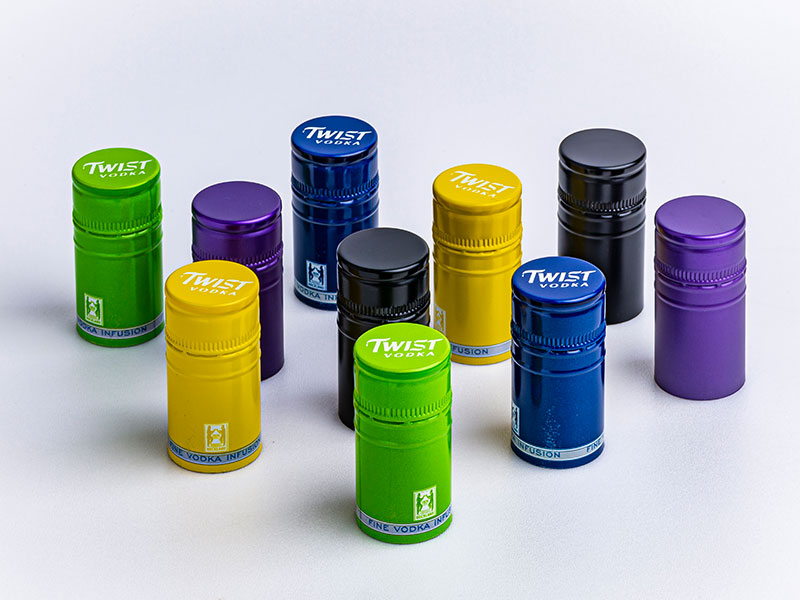
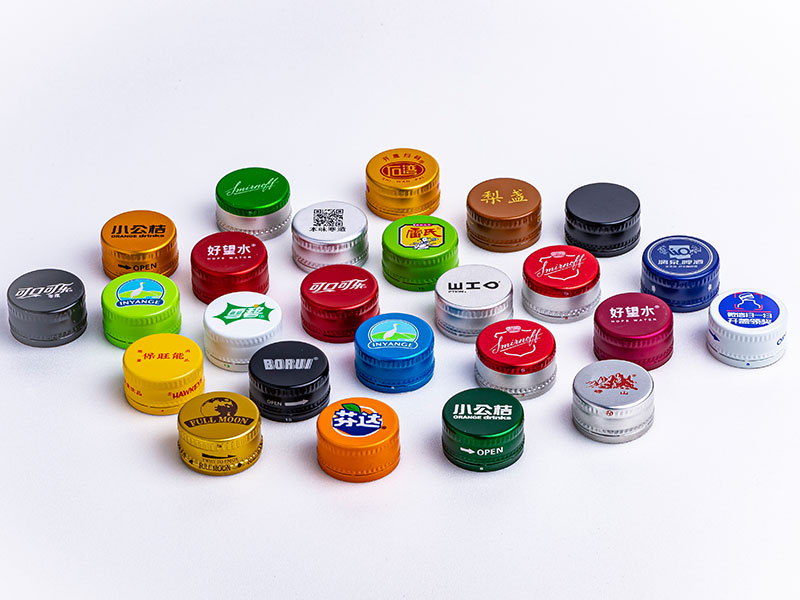
Wine brands increasingly treat the closure as the “crown” of the bottle, synchronizing glass tone, label palette, capsule color, and surface texture into a single composition. Aluminum’s compatibility with lithographic printing, offset printing, and multi-layer lacquer systems makes this possible with repeatability.
Several stylistic directions stand out:
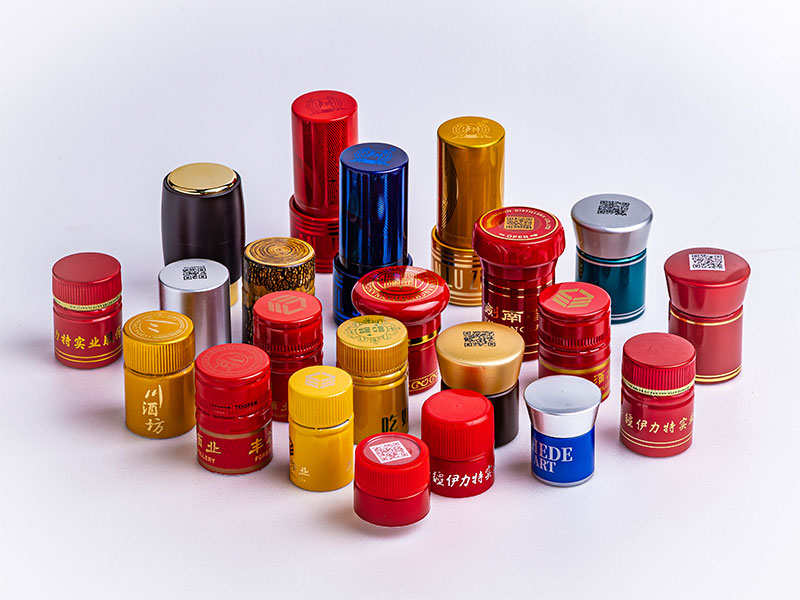
- Gloss finishes for high-impact shelf presence, ideal for youthful, fruit-forward wines aimed at immediate consumption.
- Satin or soft-touch matte finishes to suggest sophistication and restraint, often favored by premium still wines and boutique producers.
- Brushed or mechanically grained aluminum to retain a sense of materiality, where the consumer can still feel the metal and see its linear grain beneath translucent lacquer.
Because aluminum readily forms a stable oxide layer, it accepts coatings uniformly. Pre-treatment lines use alkaline or acidic cleaners and conversion coatings (often chromium-free systems such as zirconium- or titanium-based) to optimize adhesion. Over this, primer and top coats are applied in thin, controlled layers—typically in the range of 6–12 µm total dry film, tailored to line conditions and friction requirements.
Custom color: where aesthetics meet process constraints
Custom color is rarely “just pick a Pantone.” On the production floor, pigment systems must survive curing temperatures, resist abrasion in capping machines, and remain stable against UV and humidity during transport and storage.
Opaque systems use organic or inorganic pigments dispersed in polyester, epoxy-polyester, or polyurethane resins. For metallic or pearlescent looks, aluminum flakes or mica-based effect pigments are introduced, demanding careful orientation and dispersion to avoid striping or cloudiness, especially at the narrow diameter of a closure shell.
For wineries pursuing precise brand matches, several practical factors shape feasibility:
- Line speed and bake schedule: Colors must withstand the curing oven at typically 180–220 °C for prescribed dwell times without yellowing or gloss loss.
- Friction needs: Deep mattes look elegant but can create higher friction, affecting torque requirements during application and potentially twisting labels on automated lines.
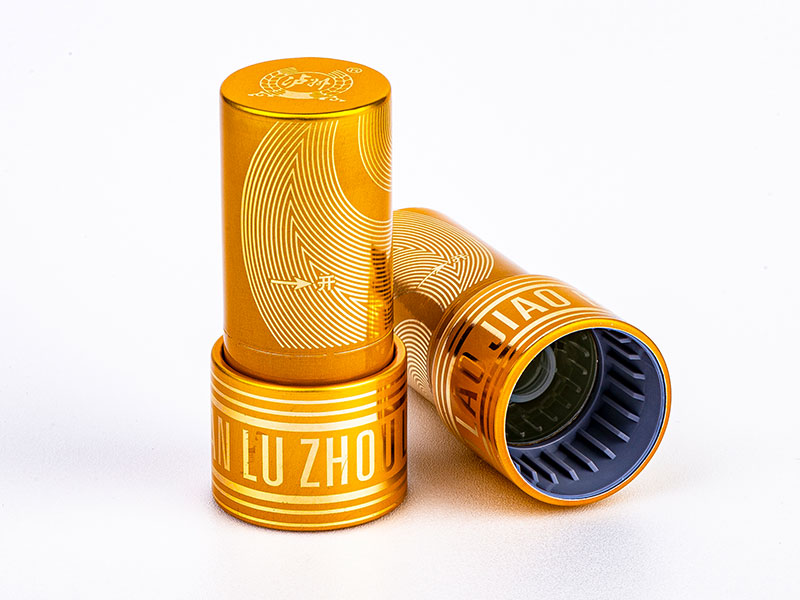
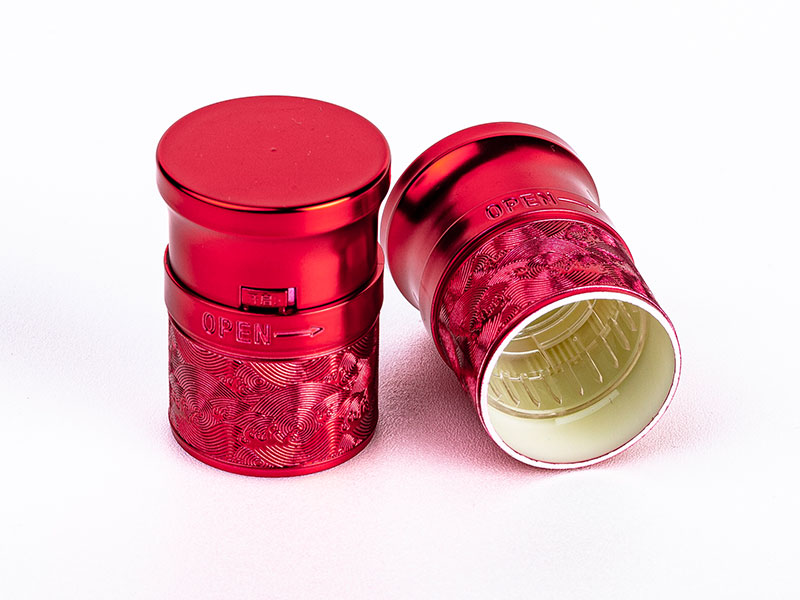
- Compatibility with post-operations: Embossing, debossing, hot-foil stamping, and overprinting all place added mechanical and thermal stress on the lacquer.
That is why closure manufacturers often propose a “brand color family” rather than a single, unforgiving tone: a small range within which batch-to-batch variation can be tightly controlled, yet still remains visually consistent on the shelf.
Finish as touch and sound, not just appearance
Closures also contribute to what could be called the “uncorking acoustics.” The micro-texture of the outer lacquer, the knurl depth, and the pilfer band design all influence the tactile and auditory feedback when the consumer opens the bottle.
A very smooth, high-gloss finish paired with a shallow knurl can feel slippery and produce a low, clean twist sound. A fine-etched, micro-rough finish gives better grip, a slightly subdued sheen, and a softer, more muted opening sound. For wines positioned as artisanal or natural, that subtle difference can help align the opening ritual with the brand story.
Some producers experiment with dual-finish closures: a matte body with a glossy top panel, or vice versa. This allows the top surface—the part facing upward in storage and photography—to become a miniature billboard for logos, crests, or icons, while the sides remain optimized for handling and friction.
Temper, forming, and the demands of high-speed bottling
From the winery’s point of view, the closure must run cleanly on existing equipment. That requirement loops back to alloy temper and thickness.
- Too soft, and the closure may deform under capping torque, causing ovality and visible defects.
- Too hard, and the metal can crack at scores or pilfer bridges, leading to non-functional tamper evidence.
H14 and H16 tempers offer a controlled work-hardening level that provides resilience with enough elongation for thread forming and knurling. Mechanical properties are typically in this range:
- Tensile strength: 110–150 MPa
- Yield strength: 60–120 MPa
- Elongation (A50): 5–15%
These ranges let closure shells survive several forming stages—blanking, deep drawing, trimming, threading, knurling, and slitting—without edge cracking or excessive springback that would compromise fit on glass threads.
For premium lines with tall capsules or heavy embossing, a slightly softer temper or a modified process route may be chosen to accommodate deeper deformation. In such cases, the surface coating system must flex without microcracking, which can otherwise become a path for corrosion in humid cellars.
Food safety, sustainability, and the coatings you cannot see
Invisible aspects of closure design are as critical as the visible ones. The inside of the shell is coated with food-contact-approved lacquer, often a BPA-NI (bisphenol-A non-intent) epoxy alternative, designed to resist wine’s acidity, sulfur dioxide, and potential condensation. This inner coating prevents any direct contact between the wine and the alloy, preserving both the wine’s sensory profile and the metal’s integrity.
The liner—a separate component, but integral to performance—defines oxygen transmission rate (OTR). For wines intended for early consumption, an almost hermetic barrier can be beneficial. For age-worthy reds or nuanced whites, a micro-oxygenation approach via controlled OTR liners can support desirable aromatic evolution. Color and finish decisions on the shell must not disturb this deeper engineering of closure–wine interaction.
On the sustainability side, aluminum closures present a clear path: they are mono-material and widely recyclable where collection systems exist. Clear marking, such as printed recycling symbols on the closure top or skirt, can nudge consumers to treat them as metal rather than general waste. Choosing coatings that burn off cleanly in remelting and minimizing unnecessary multi-material additions (like heavy plastic tops) enhance end-of-life performance.
Designing closures as part of the wine, not just the package
When a winery sits down to design a new line, involving the closure supplier early opens up options that go beyond picking a catalog color. Oxygen management can be tuned alongside brand positioning. Alloy temper can be chosen to suit line speeds and glass tolerances. Surface finishes can be harmonized with the tactile and acoustic identity the brand wants at the moment of opening.
The most successful aluminum closures provide a convergence of technical and emotional functions: they protect the wine, they communicate its identity, and they make the opening ritual intuitive and satisfying. Custom colors and finishes are not mere decoration; they are the visible expression of careful engineering, alloy selection, and coating science that begins long before the bottle reaches the shelf—and continues, silently, as the wine rests safely beneath that small, precisely crafted cap.