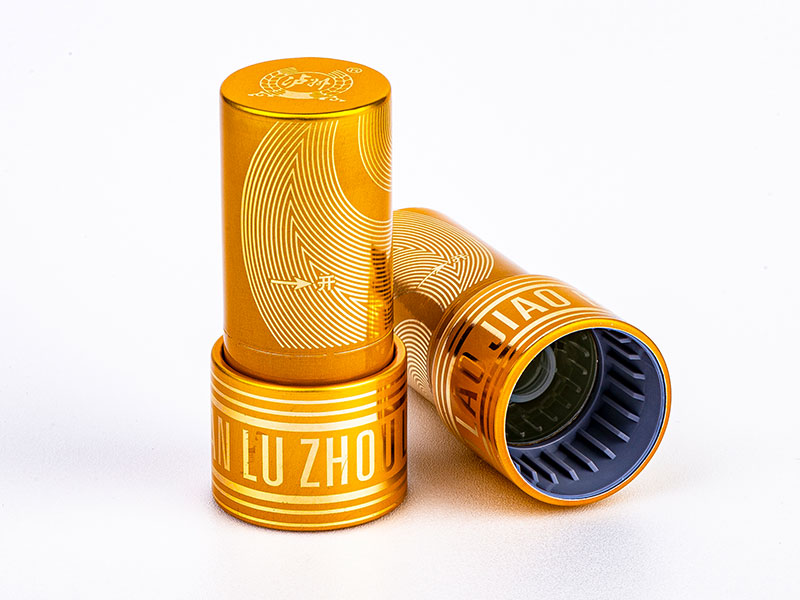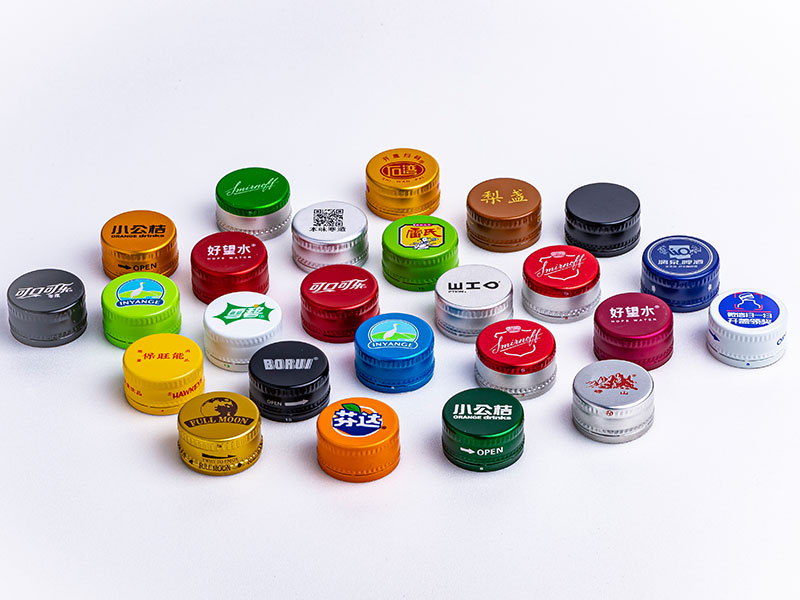


Customizable 30x60mm Aluminum Caps for Wine Bottles with Printed Design
Customizable 30x60mm Aluminum Caps for Wine Bottles: Where Alloy Science Meets Brand Storytelling
Customizable 30x60mm aluminum caps for wine bottles are often described in terms of colors, logos, and print quality. That is only the surface. Beneath the ink and varnish sits a precisely engineered piece of metallurgy that must crimp cleanly, seal reliably, resist corrosion from wine and storage environments, and still carry a flawless printed design.
Why 30x60mm Aluminum Caps Became the Technical Standard for Still Wine
The 30x60mm format did not become dominant by accident. Its dimensions align with:
- Standard BVS and similar screw-neck finishes for still wine
- Automated capping heads that rely on predictable wall thickness and hardness
- A balance between branding space and material efficiency
The 30 mm diameter interfaces with the glass finish and liner to form a controlled seal. The 60 mm height is long enough for visual presence, tamper-evidence elements, and mechanical grip during capping, without wasting aluminum or complicating application torque.
Behind this standard size is a quietly demanding specification. The cap must be soft enough to form around the glass threads during roll-on pilfer-proofing, but strong enough to resist tearing, thread deformation, and crushing in logistics. That balance begins with the alloy and temper.
Alloy Selection: Why 8011‑H14 and 3105‑H16 Dominate Wine Caps
Custom 30x60mm aluminum caps are typically produced from flat-rolled sheet in alloys such as 8011 or 3105 in controlled tempers. Each alloy brings a different balance of formability, strength, and printability.
A typical technical configuration might look like this:
- Alloy: 8011, 3105 or 3003 (depending on required strength and forming performance)
- Temper: H14, H16 or similar strain‑hardened tempers, fine-tuned through cold rolling and controlled annealing
- Thickness: usually in the 0.18–0.25 mm range for wine caps of this size
- Surface: pre-coated with primer and basecoat, optimized for offset or UV printing
From a branding perspective, this alloy choice appears invisible. From a production and quality perspective, it controls how cleanly embossing takes, how sharply threads form, and how consistently your print remains undistorted after capping.
Distinctive Viewpoint: The Cap as a “Dynamic” Branding Surface
Most packaging is considered in its pre-use state: flat proof, color sample, artwork approval. But the aluminum wine cap lives a double life:
- First life: as a flat, coated, printable strip moving through high-speed decorating lines
- Second life: as a three-dimensional, plastically deformed closure after capping
This means the alloy temper and mechanical properties must be chosen not only to run well on the press, but to protect the printed design during deformation. A more ductile temper can reduce micro-cracking in inks and varnish during thread forming and skirting. A slightly harder temper can hold sharper knurling and tamper bands, but risks stressing the printed layer if not balanced correctly.
From this angle, the printing process is no longer independent of the metallurgical design. Color, resolution, and brand elements depend directly on yield strength, elongation, and surface treatment.
Mechanical Parameters for 30x60mm Aluminum Wine Caps
For a well-engineered cap, several mechanical parameters are commonly controlled:
- Tensile strength: Targeted range sufficient to ensure thread stability and tamper-band integrity while still allowing proper roll-on
- Yield strength: Balanced to allow plastic deformation around the glass finish without spring-back or cracking
- Elongation: Enough ductility to sustain forming of knurls, threads, and skirts without tearing or surface crazing
- Earing performance: Controlled anisotropy in the rolled sheet so skirts form uniformly and decoration remains visually even
In practice, this translates into sheet properties tailored to the capper settings on modern bottling lines. The metallurgy behind a premium printed cap is not theoretical; it is tuned against actual torque measurements, thread tightness, and leak test results.
Surface Engineering: Primer, Ink, and Varnish as a Functional System
The printed design on a 30x60mm aluminum cap is not simply decoration; it is a layered protective system:
- Conversion coating: Forms a stable, corrosion-resistant interface between aluminum and organic coatings
- Primer: Ensures strong adhesion and forms a uniform base for color consistency
- Basecoat / topcoat: Provides brand color, gloss level, and additional barrier performance
- Overvarnish: Protects the ink from scuffing, chemical attack, and deformation during capping
The alloy surface chemistry, particularly the presence of elements such as Fe, Si, and Mn, influences how well the conversion coating forms and how durable the print will be in real-world conditions: chilled storage, condensation, transport vibration, and handling.
Typical Chemical Composition: Alloy 8011 and 3105 for Wine Caps
Here is an example of typical chemical compositions commonly used in 30x60mm aluminum wine caps. Exact values can be adapted to customer specifications and relevant standards such as EN and ASTM.
Typical Chemical Composition – Alloy 8011 (wt%)
| Element | Typical Range (%) |
|---|---|
| Al | Balance |
| Si | 0.50 – 0.90 |
| Fe | 0.60 – 1.00 |
| Cu | ≤ 0.10 |
| Mn | ≤ 0.20 |
| Mg | ≤ 0.05 |
| Zn | ≤ 0.10 |
| Ti | ≤ 0.10 |
| Others (each) | ≤ 0.05 |
| Others (total) | ≤ 0.15 |
Typical Chemical Composition – Alloy 3105 (wt%)
| Element | Typical Range (%) |
|---|---|
| Al | Balance |
| Mn | 0.30 – 0.80 |
| Mg | 0.20 – 0.60 |
| Si | ≤ 0.60 |
| Fe | ≤ 0.70 |
| Cu | ≤ 0.30 |
| Zn | 0.20 – 0.80 |
| Ti | ≤ 0.10 |
| Others (each) | ≤ 0.05 |
| Others (total) | ≤ 0.15 |
In the context of wine closures:
- 8011 offers excellent formability and tightly controlled earing behavior, ideal for deep drawing and uniform skirt formation
- 3105 provides slightly higher strength with good corrosion resistance, supporting demanding capping conditions and transport stresses
The subtle differences in Fe, Si, and Mn content help control grain structure, surface behavior, and the way coatings anchor to the metal. That directly affects both the functional sealing performance and the aesthetic stability of your printed design.
Typical Mechanical Properties for 30x60mm Cap Stock
Representative mechanical values (indicative ranges) for alloys used in wine cap stock:
| Alloy / Temper | Tensile Strength (MPa) | Yield Strength (MPa) | Elongation (%) |
|---|---|---|---|
| 8011‑H14 | 110 – 145 | 60 – 100 | 4 – 10 |
| 8011‑H16 | 130 – 165 | 80 – 120 | 2 – 8 |
| 3105‑H14 | 130 – 170 | 70 – 120 | 3 – 10 |
| 3105‑H16 | 150 – 190 | 90 – 140 | 2 – 8 |
These ranges are tuned for:
- Stable pilfer-band formation without fracture
- Controlled torque-on and torque-off performance
- Resistance to cap collapse during stacking and transport
From a marketing angle, this means the printed design stays undistorted and the cap feels “solid” in the consumer’s hand, with no crushing or warping when the bottle is opened.
Tempering: The Hidden Control Knob Behind Seamless Customization
When winemakers request “customizable” caps, they often think in terms of color palette, embossing, special varnish, or metallic effects. Alloy temper is an equally powerful but less visible customization lever.
Through controlled cold reduction and subsequent partial annealing, different tempers can be tailored for:
- Premium still wines: Slightly softer tempers favor gentle, tight roll-on, minimizing stress on complex graphics and metallic inks
- High-speed bottling lines: Slightly harder tempers maintain thread definition under fast, high-torque application
- Embossed logos or textured finishes: Balanced temper enables clear relief without cracking paints or varnishes
This is where the metallurgical and design teams intersect. A complex printed gradient or fine-line illustration may benefit from a temper with higher elongation to avoid micro-cracks in the ink film during forming. A heavily embossed crest might favor a temper that resists over-stretching, keeping edges crisp.
Implementation Standards: From Sheet to Finished Printed Caps
To meet the global demands of wineries and bottlers, high-quality 30x60mm aluminum caps are typically manufactured in line with international standards, while simultaneously interpreting them through the specific lens of closures.
Common reference frameworks include:
- EN standards for aluminum and aluminum alloy flat-rolled products
- ASTM standards for mechanical testing and chemical analysis
- ISO standards for quality management and process consistency
- Food-contact compliance such as EU and FDA regulations for coatings and inks
Within this framework, closure-specific criteria are layered on top:
- Dimensional tolerances for height, diameter, and wall thickness to match neck finishes precisely
- Thread and knurl geometry verified against capping machine specifications
- Coating adhesion tests, solvent rub resistance, and impact tests to ensure the printed design survives production and shipping
- Corrosion tests in contact with wine simulants, SO₂ atmosphere, and humidity cycling
In effect, the 30x60mm aluminum cap becomes a convergence zone where general metallurgical standards are translated into practical, bottle-by-bottle reliability.
Custom Printed Design: How Artwork Is Engineered, Not Just Printed
When a designer prepares artwork for a custom cap, they are usually thinking in flat terms: a cylindrical layout unrolled into a rectangle. In reality, the ink layer must withstand three distinct stress regimes:
- Circumferential compression and expansion in the skirt during roll-on
- Localized high strain at thread and knurl locations
- Edge deformation around the top panel and tamper band
To accommodate this:
- The basecoat and inks are chosen for flexibility, not only for chroma and gloss
- Color density and layering are controlled in high-strain areas to prevent micro-cracking
- Metallic, matte, and tactile effects are balanced with the mechanical limits of the alloy temper
A winery that invests in detailed, premium cap artwork is really investing in an engineered ink‑on‑metal system. Alloy choice, tempering, and coating chemistry collectively determine whether those visual elements look pristine even after a million bottles have passed through the line.
Functional Performance: Oxygen Ingress, Liner Compatibility, and Aging
While much attention is placed on the aluminum shell, its behavior influences the performance of the entire closure system, including the liner. A stable, well-formed cap geometry ensures consistent compression of the liner against the bottle mouth, which in turn controls oxygen ingress and long-term wine evolution.
From a technical angle:
- Controlled cap hardness ensures the right compression profile on the liner
- Precise inside dimensions prevent liner displacement or uneven sealing
- Stable surface and correct internal coatings prevent interaction with the liner material
This is where mechanical consistency of the cap translates directly into sensory consistency in the glass. A well-designed 30x60mm aluminum cap supports predictable wine development and reduces bottle-to-bottle variation.
Sustainability: Alloy Recyclability Behind the Printed Design
Modern wineries increasingly view closures as part of their environmental narrative. Aluminum excels here:
- Fully recyclable without loss of properties
- Compatible with established metal recycling streams
- Relatively low mass per closure, especially compared with heavier alternatives
The alloy chemistry used for caps, such as 8011 and 3105, is well within the mainstream of recycled aluminum flows. Even after printing and coating, the cap remains recyclable in standard aluminum recovery systems. From a technical standpoint, maintaining stable, well-known alloy compositions helps keep recycling efficient and predictable.
Turning Technical Precision into Brand Advantage
Custom 30x60mm aluminum caps for wine bottles are not just decorative shells. They are engineered alloys, controlled tempers, tightly specified coatings, and precision forming all wrapped around a printed story.
When a winery selects:
- A specific alloy (8011 or 3105)
- A carefully tuned temper (H14, H16, or customized)
- Coatings compatible with their bottling line and storage profile
- A print design optimized for forming stresses
they are effectively designing a high-performance micro-component that carries the brand from bottling line to consumer, while protecting the wine itself.
Looking at the aluminum cap through this lens transforms it from a commodity item into a strategic interface between metallurgy, manufacturing, and marketing. The printed design is only the visible expression of a much deeper technical conversation happening in every 30x60mm closure that reaches the neck of a bottle.