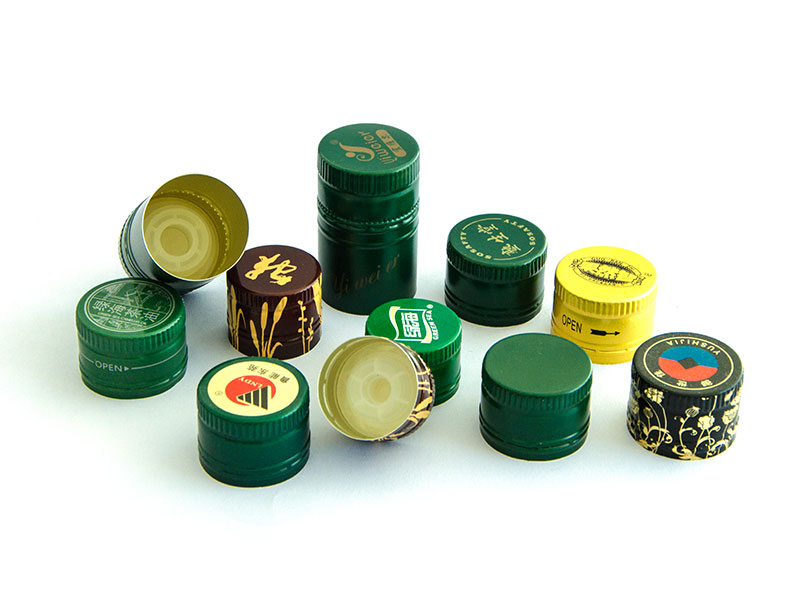


Aluminum Wine Bottle Closures for Bottles with Strong Grip Seal
In the world of wine, people often obsess over the grape, the oak, the terroir, the shape of the glass. Yet one of the most critical guardians of flavor is something that usually leaves the spotlight as soon as it is twisted off and dropped on the table: the aluminum closure. When designed properly for a strong grip seal, an aluminum wine closure is not just a cap. It is a precision-engineered pressure manager, oxygen gatekeeper, branding surface, and safety device all at once.
What looks simple on top of a bottle is actually a quiet convergence of metallurgy, surface chemistry, polymer science, and filling-line engineering.
Why “Strong Grip” Matters More Than It Sounds
The phrase “strong grip seal” might evoke only the sensation in your hand as you twist open a bottle, but that tactile impression is just the final expression of a much more technical story.
A strong grip closure has to do several things at the same time:
- Conform tightly to a glass finish that is never perfectly identical from bottle to bottle
- Maintain a stable seal under temperature swings in storage and transport
- Withstand the internal pressure of still wines, sparkling products, or wines subjected to warm-chain risks
- Provide controlled torque: tight enough to protect, not so tight that consumers curse the bottle
When an aluminum closure is designed for strong grip performance, the internal liner, the skirt, the thread profile, and the alloy itself must all work in synchronized tension. The consumer feels only the ease of opening and the fresh condition of the wine. The producer feels the peace of mind that every bottle leaving the line will behave predictably in the market.
The Role of the Alloy: Strength, Ductility, and Memory
A closure that grips too stiffly might crack or deform the glass finish. One that is too soft will lose torque and sealing pressure over time. This is why the choice of aluminum alloy and temper is not a background decision; it is the mechanical backbone of the closure.
Typical aluminum wine closures are often produced from aluminum–magnesium or aluminum–manganese alloys in the 3xxx and 5xxx series, selected for their excellent combination of strength, formability, and corrosion resistance. A common approach is to use an alloy with moderate magnesium or manganese additions to improve tensile strength without sacrificing ductility. Such alloys can be rolled to thin gauge while still handling long skirts and deep draws.
A representative alloy used for high-quality closures might be similar to AA3105 or AA8011, processed to a temper such as H14 or H16, where partial strain hardening delivers the necessary strength for thread formation and skirt integrity.
A simplified, indicative chemical composition range for a closure-grade alloy could look like this:
| Element | Typical Range (wt%) | Function in Closure Performance |
|---|---|---|
| Al | Balance | Base metal, corrosion resistance, lightness |
| Mn | 0.3 – 0.8 | Strengthening, improves formability |
| Mg | 0.2 – 0.8 | Additional strength, work hardening response |
| Fe | 0.3 – 0.7 | Controls grain structure, affects earing |
| Si | 0.2 – 0.6 | Influences formability, surface behavior |
| Cu | ≤ 0.1 | Limited for corrosion resistance |
| Others | ≤ 0.15 (each) | Impurities kept low for consistent behavior |
Exact grades and ranges depend on supplier, product line, and standards such as EN 573, EN 485, or ASTM B209, but the underlying principle remains: balance strength and ductility to achieve a closure that molds accurately to the glass thread and retains that “memory” over the product’s life.
Temper selection further refines performance. A half-hard temper offers adequate rigidity so the closure resists ovalization and caving during capping, while still allowing for precise knurling and threading. For bottles with higher internal pressure or where aggressive handling is expected, a slightly harder temper can enhance grip stability, provided the liner design compensates with sufficient elasticity.
The Hidden Partner: The Liner as the Real Seal
From the consumer’s perspective, “strong grip” is often misattributed to the metal alone. In reality, the liner is the primary sealing element, and aluminum is the skeletal frame that keeps it properly compressed against the glass.
For strong grip seals, the liner must:
- Adapt to small variations in glass neck dimensions
- Maintain elasticity under compression for long-term storage
- Resist creep and cold flow at elevated temperatures
- Offer defined oxygen transmission characteristics to match wine style
Common liner systems incorporate multi-layer structures: a backing foam or compressible polymer, an aluminum barrier layer in some designs, and a food-grade sealing layer in contact with the glass. Polyethylene-based and PVDC-containing materials have historically been used, though many producers now favor PVC-free and low-migration alternatives aligned with EU and FDA food-contact regulations.
The interaction between liner hardness and closure torque is critical. If the liner is too soft under a strong torque, it may squeeze out or change thickness over time, compromising the seal. If it is too hard, the closure has to deliver higher mechanical stress on the glass, elevating the risk of microcracks. Designing a strong grip closure is essentially the art of optimizing this stress distribution.
Standards and Tolerances: Where Precision Meets Tradition
Behind every smooth twist-open is a body of standards and test protocols that keep producers honest and bottles safe. Glass neck finishes for wine are typically specified by standards such as CETIE or GPI, defining thread profiles, diameters, and tolerances. Aluminum closures, in turn, are manufactured to tightly matching dimensions, often based on CETIE recommendations and regional standards like EN ISO 12863 for closures and related packaging tests.
Strong grip closures must be validated for:
- Application torque on the filling line
- Removal torque after conditioning and aging
- Seal integrity under internal pressure and vacuum scenarios
- Resistance to leakage during horizontal and inverted storage
- Thermal cycling performance
These tests simulate real-world stresses: warehouse heat, shipping vibrations, cold storage, or long-term cellaring. From a winery’s standpoint, the closure becomes part of a quality assurance chain as strict as any applied to the wine itself.
Surface, Coatings, and Corrosion: The Invisible Insurance
The outer appearance of an aluminum closure is often where branding teams focus: color, embossing, screen printing, foil stamping. But beneath that visual identity is a layer of functional chemistry.
Most high-quality closures use a conversion-coated or anodized base to enhance corrosion resistance and paint adhesion. Interior surfaces may receive specialized coatings compatible with the liner, acting as a barrier between wine vapors and the aluminum substrate. These layers must endure contact with sulfur-containing compounds, acidity, and potential cleaning chemicals on bottling lines.
A strong grip seal requires not only robust mechanical performance but also stability in the microenvironment just above the wine. Poor coating design can lead to discoloration, off-odors, or corrosion products that undermine consumer confidence, even if the seal itself remains technically intact.
Line Performance: Where Theory Meets Speed
No closure exists in isolation; it must harmonize with the filling line. A strong grip design that behaves perfectly in the lab but causes scuffing, mis-application, or excessive breakage at 18,000 bottles per hour is not a success.
From a production perspective, closure alloy hardness, coating slipperiness, and knurl profile influence how closures feed, orient, and roll onto the bottle. The ability of the aluminum to accept precise rolling of threads and embossing without springback ensures consistent application torque.
For wines that will travel long distances or experience temperature fluctuations, many producers request closure suppliers to tailor mechanical properties to their specific line parameters: capping head type, applied torque, bottle geometry, and even the coefficient of friction of the glass finish. A “strong grip” in these terms is not an abstract attribute, but a set of measured, repeatable values agreed upon between winery and closure manufacturer.
Oxygen, Aroma, and the Science of Just Enough Tightness
An ideal strong grip closure is not simply one that keeps everything out. It must manage gas exchange at microscopic levels. For aromatic white wines, winemakers often want exceptionally low oxygen ingress to preserve freshness and primary fruit. For certain reds, a controlled, slow ingress can aid maturation and avoid reductive faults.
The aluminum shell itself is a formidable barrier, so most oxygen transmission is governed by the liner. Different liner materials and constructions can be tuned to deliver distinct oxygen ingress rates while the mechanical “grip” of the closure remains strong and reliable. In this way, closures evolve from generic caps to enological tools, part of the stylistic arsenal of the winemaker.
Sustainability and the Circular Life of an Aluminum Cap
There is an elegance in the fact that a strong grip aluminum closure can complete multiple life cycles. Aluminum is inherently recyclable, and in many regions, closures follow the same recycling streams as beverage cans. The choice of alloy, low contamination levels, and compatible coatings all support efficient recovery and remelting.
From an environmental perspective, a closure that offers a secure, long-term seal reduces wine spoilage and product waste—a hidden but significant sustainability benefit. The energy and resources invested in viticulture, vinification, and logistics are preserved by a component weighing only a few grams.
A Small Component, A Large Responsibility
The strong grip seal on a wine bottle is not just a matter of convenience or shelf appearance. It is the last physical barrier between the winemaker’s intent and the consumer’s experience. By carefully choosing aluminum alloys and tempers, designing liners with precise mechanical and barrier properties, and aligning closely with glass and filling-line standards, closure manufacturers turn that simple twist into a highly reliable act.
Every time a cap yields with a clean, confident motion and the first pour matches the winemaker’s vision, the quiet success of engineering, metallurgy, and material science is at work. The aluminum wine closure is small, but its grip on quality is anything but.