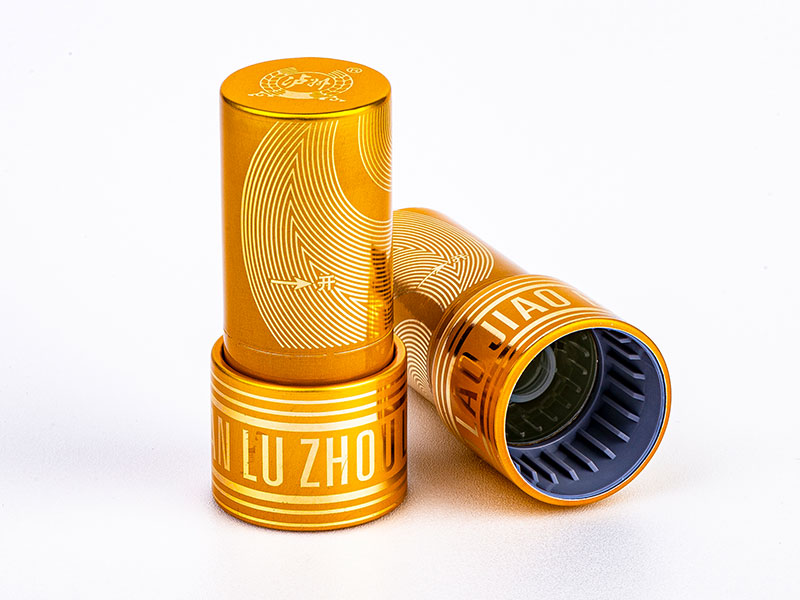


Aluminum Soda Bottle Closures with Secure and Efficient Carbonation Control
Aluminum Soda Bottle Closures with Secure and Efficient Carbonation Control
A Technical Deep-Dive from Inside the Cap
In the world of carbonated beverages, the aluminum soda bottle closure is the quiet engineer that never appears in the marketing campaign but decides whether the first sip is a brilliant burst of fizz or a flat disappointment.
Behind every twist-off closure is a micro–pressure vessel that must flex, seal, deform, and recover within extremely narrow tolerances. From alloy tempering and microstructure control, to liner compression and thread geometry, aluminum soda bottle closures are designed around one primary mission: secure and efficient carbonation control throughout the entire lifecycle of the beverage.
The Cap as a Dynamic Carbonation Valve
A well-designed aluminum closure for soda bottles does not just trap CO₂; it manages its behavior under changing conditions. During filling, storage, transport, refrigeration, and opening, internal pressure can swing dramatically. The closure must:
- Seal tightly enough to prevent CO₂ loss and oxygen ingress
- Retain strength under top-load stacking in warehouses and trucks
- Deform predictably during capping to create a repeatable closure torque
- Resist creep and stress relaxation over months at elevated temperatures
From this perspective, the aluminum closure is a calibrated spring-membrane system. The metal shell carries mechanical loads and distributes torque, while the liner forms a micro-scale gasket. The carbonation remains stable only if the interaction between shell stiffness, liner elasticity, and thread engagement is consistent across millions of units.
Why Aluminum? A Material Scientist’s View
Several materials can function as closures, but aluminum strikes a unique balance between mechanical, chemical, and sustainability requirements. Its advantages come from the alloy system and tempering rather than from “aluminum” as a generic metal.
Aluminum closures are typically manufactured from high-purity alloys of the 3xxx or 5xxx series, such as AA3105 or AA5052, chosen for their combination of formability, strength, and corrosion resistance. The cap-making process involves deep drawing, thread-forming, and knurling, all of which demand a sheet that can flow without tearing, then harden enough to hold its shape under load.
Here, temper condition is the hidden lever. A too-soft temper deforms excessively under top load and can compromise seal integrity. A too-hard temper risks cracking during forming or over-springing after capping, leading to micro-leak paths. The art is to position the temper in a window where work-hardening during forming raises the strength into the ideal operating range.
Temper Strategy: Designing the Stress Landscape of a Cap
To understand carbonation control, it helps to think of the closure’s temper as a pre-programmed stress landscape. The cap leaves the mill with a specific hardness, then is locally deformed during production and capping, redistributing residual stresses.
Common temper designations for closure stock include conditions such as H14, H16, or H19 for work-hardened sheet. For more demanding applications, intermediate tempers like H22 or H24 can be used to tune formability versus final strength. The material is rolled, annealed, and cold-worked to create a gradient of properties through the thickness that supports:
- Deep drawing of the shell
- Reliable knurl formation for consumer grip
- Crisp thread definition for secure bottle engagement
- Adequate resistance to back-off and cap creep under pressure
A well-controlled temper profile ensures that when the cap is torqued onto the bottle, the metal yields just enough to lock the thread and compress the liner without springing back excessively. This “controlled yielding” is essential for maintaining carbonation over time.
Parameters that Govern Carbonation Control
Several engineering parameters interact to define how effectively an aluminum closure protects carbonation. These are rarely seen by consumers, but they are measured constantly in production and QA labs.
parameters often include:
- Closure shell thickness, commonly in the range of about 0.18–0.24 mm, optimized for both formability and top-load performance
- Yield strength and tensile strength tailored to withstand internal carbonation pressures typically between about 0.4–0.7 MPa (4–7 bar) during warm storage scenarios
- Proof stress and elongation, controlling the closure’s ability to absorb deformation without cracking during roll-on or press-on threading
- Residual torque after capping and after temperature cycling, ensuring the closure does not loosen during distribution
- Liner hardness and compression set, determining how effectively the gasket maintains seal pressure as the bottle and cap expand and contract with temperature
These parameters are coordinated by implementation standards such as:
- Dimensions and thread profile standards (e.g., GPI/CMI finish standards, ISO thread specifications)
- Food-contact and migration standards like FDA 21 CFR for the liner and coatings in the United States, and EU regulations such as (EC) No 1935/2004 and (EU) No 10/2011 for the European market
- Performance test standards for internal pressure resistance, vacuum retention (for certain beverages), and torque retention under accelerated aging tests
Instead of viewing these parameters as separate checkboxes, closure engineers treat them as a system: thread torque, temper, liner compression, and shell geometry are tuned together to control the rate at which CO₂ attempts to escape and O₂ tries to get in.
Alloy Selection Through the Lens of Surface Chemistry
Another distinctive way to look at aluminum soda closures is to see them as engineered surfaces rather than simple bulk metals. The outer few nanometers of the aluminum alloy determine corrosion resistance, taste neutrality, and long-term seal reliability.
Aluminum naturally forms an oxide film, predominantly Al₂O₃, which serves as a passive barrier. This passivity is enhanced by conversion coatings and organic lacquers applied to both interior and exterior surfaces. For carbonated beverages, especially acidic sodas with pH often in the 2.5–3.0 range, this barrier must remain stable against:
- Carbonic acid from dissolved CO₂
- Phosphoric or citric acid in the beverage formulation
- Chlorides, sulfates, and other ions that may accelerate pitting corrosion
Chemical and Physical Properties: A Focused Data View
Below is a representative overview of properties relevant to aluminum soda bottle closures made from a typical closure-grade alloy such as AA3105-H14 or a similar 3xxx-series alloy. Values are indicative, not absolute, as exact figures depend on specific mill practices and temper tuning.
Chemical Composition (typical mass %)
| Element | Typical Range (%) | Functional Role |
|---|---|---|
| Al | Balance | Base matrix, light weight, corrosion resistance |
| Mn | 0.3 – 0.8 | Strengthening, improved corrosion resistance, grain refinement |
| Mg | 0.2 – 0.8 | Solid-solution strengthening, moderates work-hardening behavior |
| Fe | 0.2 – 0.7 | Controls intermetallic formation and texture; excessive Fe can affect formability |
| Cu | ≤ 0.3 | Limited to maintain corrosion resistance in acidic beverages |
| Zn | ≤ 0.3 | Kept low to avoid unfavorable galvanic behavior |
| Ti | ≤ 0.1 | Grain refiner in casting stage |
| Others (each) | ≤ 0.05 | Minor impurity limits per alloy standard |
| Others (total) | ≤ 0.15 | Ensures consistent electrochemical behavior |
Selected Mechanical and Physical Properties (indicative)
| Property | Typical Value Range | Relevance to Carbonation Control |
|---|---|---|
| Tensile Strength (Rm) | 130 – 170 MPa | Resists deformation under capping and stacking loads |
| Yield Strength (Rp0.2) | 70 – 120 MPa | Controls elastic–plastic response during thread formation |
| Elongation (A50) | 4 – 10 % | Ensures ductility for deep drawing without cracking |
| Hardness (HV) | 35 – 55 HV | Balances formability and torque resistance |
| Density | ~2.7 g/cm³ | Keeps closure weight low for cost and sustainability |
| Modulus of Elasticity | ~69–71 GPa | Influences springback during roll-on and torque retention |
| Coefficient of Thermal Expansion | ~23 x 10⁻⁶ /K | Critical in matching cap–bottle liner compression through temperature cycling |
| Electrical Conductivity | 30 – 40 % IACS | Related to galvanic interactions with other metals (e.g., bottling equipment) |
| Corrosion Potential (in neutral media) | approx. –0.7 to –0.8 V vs. SHE | Governs galvanic behavior and passivation tendencies |
Because carbonation control is partly a function of long-term seal integrity, these properties intersect directly with liner behavior. The closure alloy must not corrode in a way that undermines liner adhesion or creates under-film attack that could propagate to the sealing surface.
Implementation Standards: From Sheet to Shelf
In practice, aluminum soda closures sit at the intersection of several standards and cross-industry codes. While beverage brands focus on taste and branding, closure producers navigate:
- Aluminum material standards (e.g., EN 573/EN 485 series in Europe or ASTM B209 in North America) covering composition, temper, and mechanical properties of sheet stock
- Closure geometry and finish standards, such as GPI/CMI and relevant ISO standards, specifying thread profiles, shell diameters, pilfer-band details, and sealing surface geometry
- Food-contact compliance under regulations like FDA 21 CFR 175.xxx–https://www.bottle-cap-lids.com and relevant EU or national guidelines governing lacquers, liners, and adhesives
- Migration and sensory neutrality testing, ensuring no detectable off-taste or odor from coated or uncoated metal surfaces and liner compounds
- Performance protocols for internal pressure resistance, CO₂ loss curves under accelerated aging, torque retention, thermal cycling, and drop and impact tests
Under these frameworks, carbonation control becomes a quantifiable performance metric. Caps are tested after simulated distribution cycles in warm climate conditions, with CO₂ content measured and compared to initial values. A closure system that can hold carbonation within a narrow tolerance band after months of abuse is considered robust.
The Micro-Mechanics of the Seal: Liner and Shell as a Coupled System
The liner inside an aluminum soda closure is often overlooked, but from a carbonation standpoint, the liner is the active sealing element while the shell is the structural scaffold. Efficient carbonation control depends on how these two work together.
The liner is generally a polymeric compound (such as PVC-based or PVC-free formulations) that must:
- Flow into micro-roughness of the bottle finish during capping
- Provide sufficient compression set resistance to maintain contact pressure over time
- Maintain resilience and integrity across large temperature swings, from hot filling or warm storage to chilled consumption
The aluminum shell’s alloy and temper determine how the sealing force is applied. During capping, the metal is elastically and plastically deformed around the bottle finish. An under-tempered cap may relax too much, reducing compression on the liner and allowing slow CO₂ loss. An over-tempered cap may not conform adequately to finish variations, creating micro-channels for gas escape.
Engineers treat this as a coupled mechanical problem: liner modulus, thickness, and hardness are matched to cap stiffness, yield strength, and thread geometry. Using finite element simulation and empirical testing, designers adjust shell thickness, knurl pattern, and temper condition to achieve the right pressure distribution on the liner over the entire circumference of the bottle mouth.
Corrosion and Taste: Electrochemistry Meets Sensory Science
For soda, corrosion is not just a cosmetic or structural issue; it can directly influence flavor. Aluminum itself is tasteless when properly passivated, but corrosion products and interactions with beverage components can lead to off-notes.
To control this, closure producers pay particular attention to:
- Conversion coatings on the aluminum surface that promote lacquer adhesion and enhance corrosion resistance
- Internal lacquers formulated to resist acidic attack from carbonic and phosphoric acids
- Control of copper, iron, and other elements in the alloy that could increase susceptibility to pitting in chloride-containing environments
In accelerated tests, closures are exposed to hot, acidic environments and then evaluated for blistering, pitting, and any sign of coating failure. Sensory panels or analytical instruments may be used to check if corrosion by-products migrate into the beverage. Alloy composition and tempering indirectly influence these outcomes by affecting the microstructure, grain boundary character distribution, and residual stress state at the surface.
One unconventional way to frame an aluminum soda closure is as an energy buffer between internal pressure and the external world. Carbonation is stored mechanical energy in the form of compressed gas. The closure, particularly the aluminum shell, absorbs, redistributes, and partially releases that energy during each life-stage event:
- During filling, it flexes and yields under application torque and axial force
- During storage and thermal cycling, it experiences cyclic loading as internal pressure rises and falls
- During opening, it temporarily stores torsional energy until the threads disengage and that energy releases as the “pssst” the consumer hears
Tempering, alloy design, and shell geometry are the tools used to tune this energy buffer. Too stiff, and the cap fails to adapt to process variations and bottle finish tolerances. Too soft, and it cannot hold pressure or survive stacking and impact. In this sense, the aluminum closure is a miniature mechanical regulator, translating internal gas pressure into a controlled mechanical state that preserves carbonation.
Sustainability and Circularity without Compromising Performance
Beyond carbonation control, aluminum soda closures are part of the broader circular economy. Their light weight reduces shipping emissions; their recyclability aligns with beverage industry sustainability targets. Despite the growing focus on environmental impact, performance standards have not relaxed. Any move to thinner gauges or alternative alloys must still meet stringent carbonation retention and safety criteria.
Modern closure alloys are being engineered to:
- Allow gauge reduction while maintaining or improving mechanical strength
- Offer better formability for complex cap geometries without sacrificing pressure performance
- Improve corrosion resistance to reduce lacquer thickness or complexity, simplifying recycling and lowering environmental footprint
In this context, secure and efficient carbonation control becomes not just a performance requirement, but a design constraint within a sustainability optimization problem.