

Recyclable Aluminum Bottle Caps for Soda with Tamper Evident Features
Recyclable Aluminum Bottle Caps for Soda with Tamper Evident Features
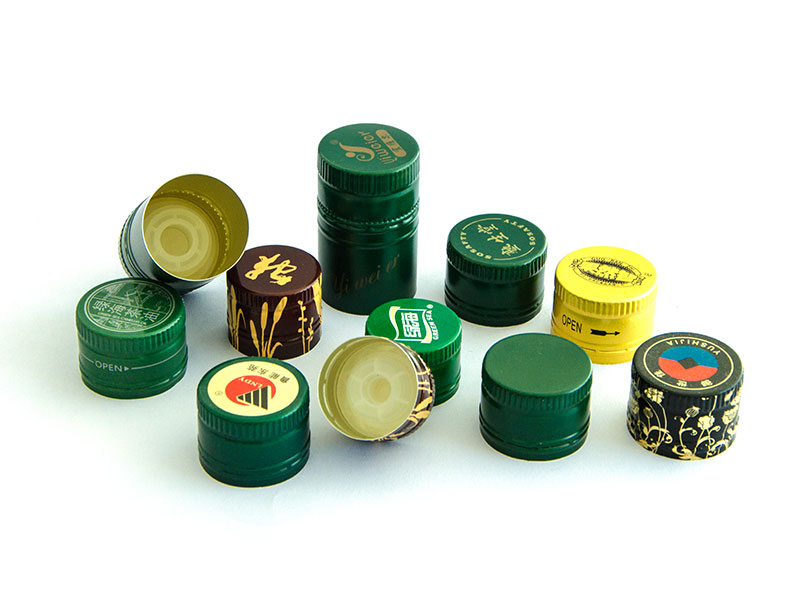
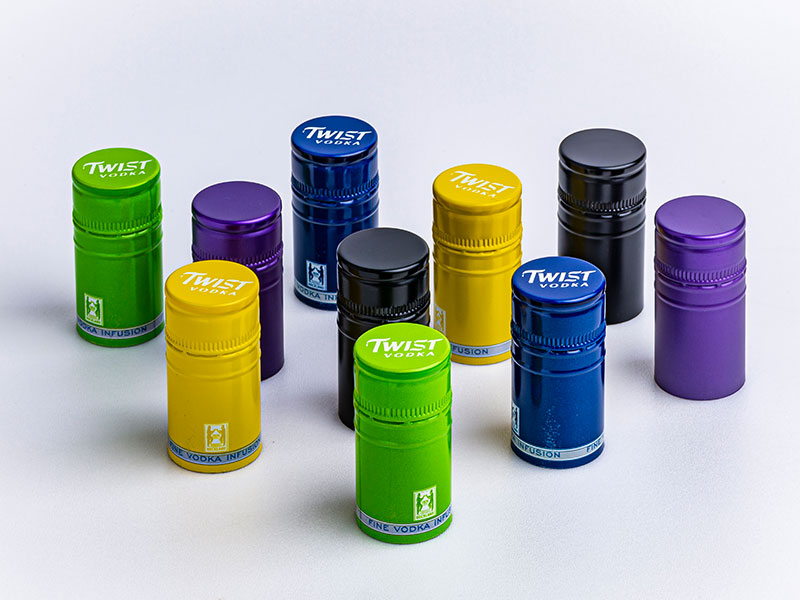
Aluminum bottle caps for soda have quietly become one of the most engineered small components in the beverage world. They are light, safe, fully recyclable, and now carry tamper evident features that protect both brands and consumers. Yet behind this familiar twist-off top is a carefully balanced combination of alloy selection, tempering, surface treatments, and food-contact safety standards.
Why Aluminum for Soda Bottle Caps?
From a technical standpoint, aluminum offers a blend of properties that is difficult to match:
- Low density: easy to transport and store, reduces logistics costs
- Corrosion resistance: naturally forms a thin protective oxide layer
- Excellent formability: can be stamped, drawn, and knurled without cracking
- Recyclability: infinitely recyclable with minimal loss of performance
- Food and beverage safety: compatible with food-grade coatings and liners
For carbonated soft drinks, caps must withstand internal pressure, repeated handling, and temperature changes from hot filling lines to chilled distribution. Aluminum’s strength-to-weight ratio and stable oxide film make it ideal for these conditions, especially when combined with the right alloy and temper.
The Unique Challenge: Tamper Evidence Meets Full Recyclability
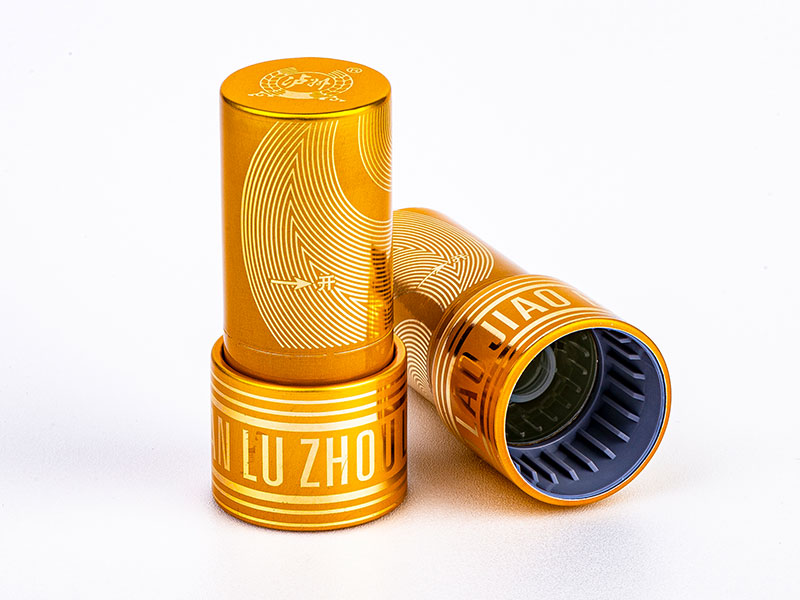
Tamper evident features on soda caps typically take the form of a breakable ring or bridge system at the bottom of the closure. Once the cap is opened, these bridges break, leaving the ring on the neck of the bottle or visibly deformed.
From a design perspective, this is a controlled failure mechanism. The bridges must:
- Be strong enough to survive capping torque and transport
- Be weak enough to break predictably during the first opening
- Not crack the main cap body
- Not compromise the sealing performance
At the same time, sustainability teams now insist on closures that remain mono-material or easy to separate during recycling. Aluminum caps with tamper evident features are thus engineered so that:
- The cap and ring are made from the same alloy family whenever possible
- The liner and coatings are minimal and comply with recycling stream standards
- Any plastic inserts are reduced, detachable, or compatible with established sorting processes
This intersection of mechanical design and circular economy principles is what makes modern aluminum caps particularly interesting.
Common Alloys and Tempering for Soda Caps
Producers of aluminum bottle caps do not simply use “generic aluminum.” They rely on specific alloy series tailored to closure performance. Two families dominate:
- 3000 series (e.g., 3105, 3004): aluminum-manganese alloys, good formability, moderate strength
- 5000 series (e.g., 5052): aluminum-magnesium alloys, higher strength, good corrosion resistance
For soda closures with tamper evident rings, engineers favor tempers that allow clean forming of threads, knurling, and bridges without micro-cracking. Typical tempers include:
- H14 / H16: strain-hardened to half or higher hardness, offering good strength while remaining formable
- H18: higher hardness where higher pressure resistance is needed, often used in specific parts or combined tooling setups
- H46 or similar process tempers: customized hardening and partial annealing sequences developed by closure manufacturers for best balance between drawability and strength
The temper choice is tuned to several parameters: cap diameter, wall thickness, neck thread design, bottle material (glass or PET), and filling pressure.
Technical Parameters for Aluminum Soda Caps
While consumers only see the outer color and logo, engineers manage a tight window of technical specifications. Common parameters for recyclable aluminum soda caps with tamper evident features include:
- Cap diameter: typically in the range of 26–38 mm for soda applications
- Material thickness: usually about 0.18–0.24 mm, depending on pressure and cap size
- Internal pressure resistance: designed to withstand typical carbonation levels and a safety margin, often exceeding 0.8–1.2 MPa internal pressure depending on bottle system
- Torque performance: defined opening torque window to avoid both accidental opening and consumer difficulty
- Bridge strength: calibrated so that all bridges break under normal opening torque, with minimal variation
- Liner compatibility: pressure-sensitive, induction, or compression-molded liners formulated for CO₂ retention and taste neutrality
These parameters are continuously verified through quality testing: pressure burst tests, leak testing, torque tests, bridge break tests, and aging simulations under temperature cycles.
Implementation Standards and Regulatory Compliance
Aluminum soda caps need to meet both mechanical performance standards and food safety regulations. While exact standards vary by region and association, manufacturers design caps to align with:
- EN or ISO standards for aluminum strip and sheet used in closures
- Coca-Cola, PepsiCo, and other brand-owner closure specifications for pressure performance, torque, and tamper evidence
- Food contact regulations:
- EU Framework Regulation (EC) No 1935/2004
- EU Regulation (EU) No 10/2011 when plastics are present
- US FDA CFR Title 21 for food-contact materials
In addition, sustainability certifications and guidelines—such as those from the Aluminum Association, Metal Packaging Europe, or local recycling schemes—shape the allowable coating systems and alloy compositions to ensure that caps do not contaminate the aluminum recycling stream.
Chemical Composition: Typical Alloy Profile
Exact compositions vary by supplier, but a representative alloy for soda caps, such as 3105-H16, might look like this:
| Element | Typical Range (% by weight) |
|---|---|
| Aluminum (Al) | Balance (approx. 96–98) |
| Manganese (Mn) | 0.3 – 0.8 |
| Magnesium (Mg) | 0.2 – 0.8 |
| Iron (Fe) | ≤ 0.7 |
| Silicon (Si) | ≤ 0.6 |
| Copper (Cu) | ≤ 0.3 |
| Zinc (Zn) | ≤ 0.4 |
| Chromium (Cr) | ≤ 0.1 |
| Titanium (Ti) | ≤ 0.1 |
| Others (each) | ≤ 0.05 |
| Others (total) | ≤ 0.15 |
Manganese and magnesium are the strengthening elements here. They provide better yield strength and work-hardening behavior, which helps the cap maintain thread form, pressure resistance, and tamper ring integrity without excessive thickness.
Surface Treatments, Coatings, and Liners
Bare aluminum is not enough for a high-speed soda filling line. Several layers of functional engineering are added:
- Conversion coating: a thin, usually chromium-free layer to improve paint adhesion and corrosion resistance
- Exterior lacquer: decorative and protective coating, printable for brand graphics and color coding
- Interior lacquer: food-grade coating that protects metal from beverage contact, especially important for acidic drinks
- Liner system: usually a PVC-free or reduced-PVC compound applied as a ring or disc, providing a tight seal and preserving carbonation
Modern development focuses on:
- BPA-NI (Bisphenol A non-intent) lacquers for global compliance
- Coatings that cure rapidly for high line speeds
- Easy separation of liner materials during recycling processes
Design Considerations for Tamper Evident Features
The tamper evident ring on an aluminum cap is formed during the same stamping and forming sequence as the rest of the closure. Its function relies on:
- Bridge geometry: narrow, shallow connections calibrated to break at a known torque range
- Material temper: enough work hardening to keep bridges stable during transport, but not so brittle that random cracks appear
- Bottle neck finish: carefully matched thread profile and bead geometry to ensure the ring catches and separates cleanly during opening
Because aluminum is comparatively more ductile than some steels, its tamper evidencing relies more on precise die design and controlled temper than on brute rigidity. This is a subtle but crucial difference: the cap is intentionally “intelligent” in where it fails.
Recyclability and Circular Design
A advantage of aluminum caps is that they can go right back into the metals loop:
- Aluminum is endlessly recyclable without losing quality
- Recycling aluminum uses only a fraction of the energy needed for primary metal
- Caps can be collected with cans and other aluminum packaging, depending on local sorting
To maximize circularity:
- Caps are increasingly designed as mono-material aluminum where possible
- Coatings and liners are chosen to burn off cleanly or separate easily in standard recycling furnaces
- Color systems and printing inks are evaluated for minimal impact on melt quality
For brand owners, this means that choosing recyclable aluminum caps does not just support current sustainability messaging; it also secures access to a stable, high-quality recyclate stream in the long term.
What This Means for Beverage Brands and Buyers
From a purchasing or technical sourcing standpoint, evaluating a supplier of aluminum soda caps with tamper evident features should focus on:
- Alloy and temper consistency for stable performance
- Proven compliance with food-contact and regional standards
- Ability to customize dimensions, coating systems, and tamper ring design for specific bottle finishes
- Documented recyclability and environmental performance data
- Quality systems for torque, pressure, and leakage testing
Behind every small aluminum cap is a finely tuned balance of metallurgy, mechanical design, regulatory compliance, and sustainability engineering. For soda brands looking to protect their product, reassure consumers with visible tamper evidence, and support a circular economy, recyclable aluminum bottle caps are not just a commodity—they are a strategic component.