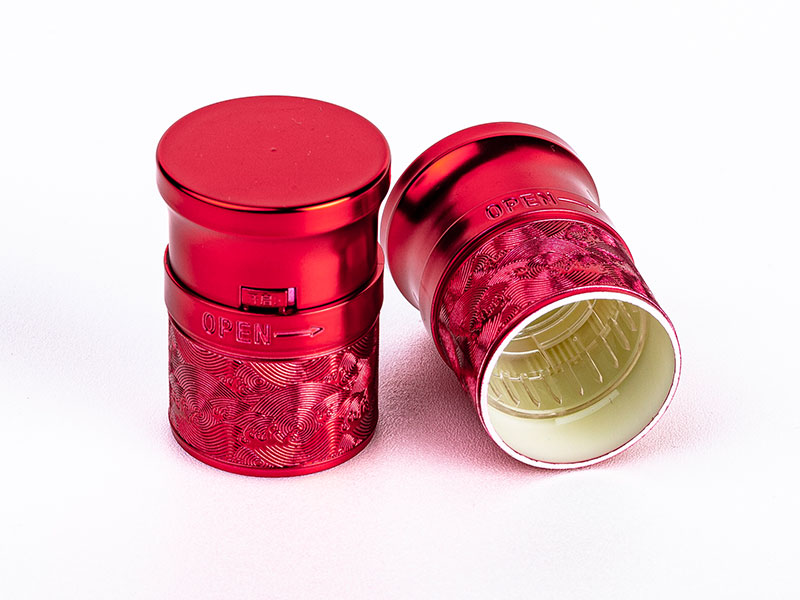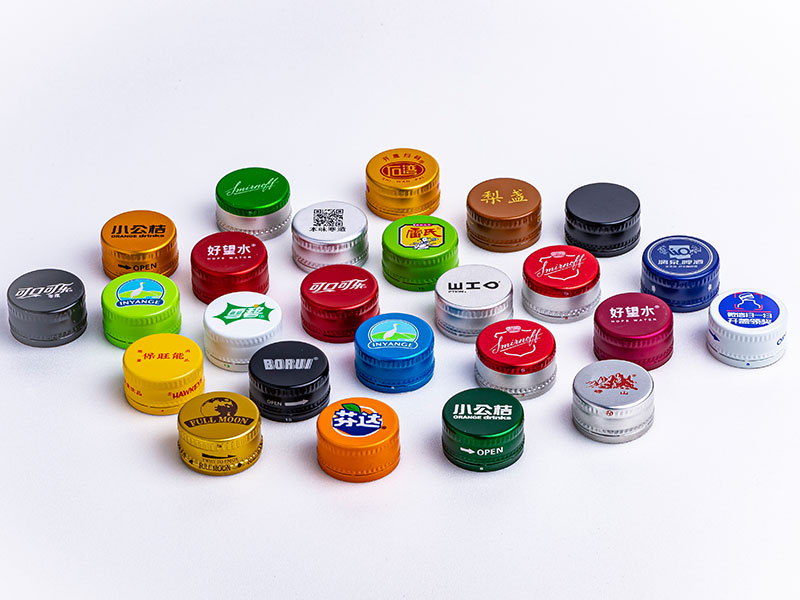


30x60mm Aluminum Bottle Closures for Wine with Pressure Tight Fit
30x60mm Aluminum Bottle Closures for Wine with Pressure Tight Fit: A Metallurgist’s Perspective
When wineries talk about “premium screwcaps,” they usually focus on branding, liner type, or oxygen transmission. But the real performance of a 30x60mm aluminum wine closure starts much earlier—at the metallurgical design stage.
From alloy selection to tempering curves and pressure performance margins, the 30x60mm aluminum bottle closure is a precisely engineered component. Below is a deep, technically grounded look from the material side, not just the packaging side.
Why 30x60mm for Wine?
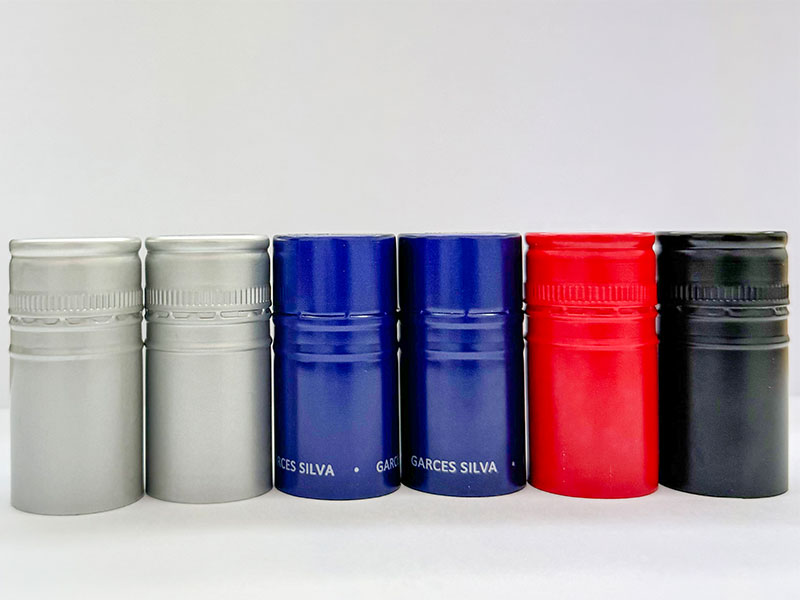
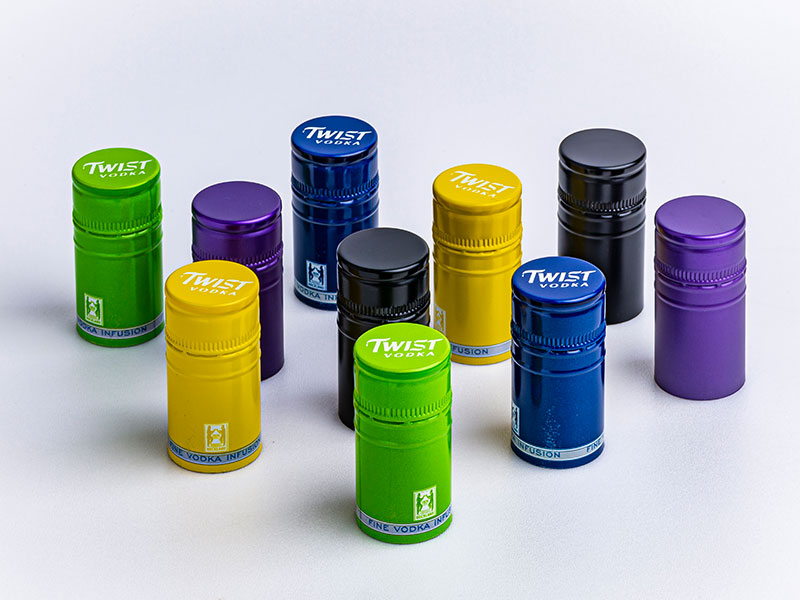
The 30x60mm size has become a de-facto global standard for still wines (and some lightly sparkling wines) using BVS finish (Bague Vin Screw). The dimensions are driven by glass finish geometry, sealing requirements, and automated closure application design.
dimensional parameters (typical ranges)
| Parameter | Value / Range | Notes |
|---|---|---|
| Nominal height | 60.0 mm | overall length of closure |
| Outer diameter | 30.0 ± 0.2 mm | matches BVS neck standards |
| Shell wall thickness (body) | 0.20–0.23 mm | balances strength and spinability |
| Shell wall thickness (top) | 0.23–0.27 mm | extra stiffness for torque and pressure retention |
| Thread profile | BVS standard | typically 2 or 3 start thread |
| Pilfer band height | 10–13 mm | to engage with glass undercut |
| Internal liner diameter | 28.0–29.5 mm | depends on liner and compression design |
These “simple” dimensions drive complex material requirements: the aluminum must be strong enough to resist pressure and handling, yet soft and ductile enough to form into sharp BVS threads without cracking—in a single high-speed operation.
The Hidden Core: Alloy and Temper Selection
Most 30x60mm wine closures are produced from aluminum alloy sheet or coil in the 3xxx or 8xxx series, optimized for deep drawing, thread forming, and consistent decoration.
A common class of alloys for screwcap closures:
- 3xxx series (e.g., 3003, 3105) – manganese-bearing, good formability, moderate strength, good corrosion resistance
- 8xxx series (special closure alloys) – tailor-made chemistries for drawability and surface treatment
From a metallurgist’s viewpoint, the closure alloy has to satisfy three contradictory needs:
- High elongation for drawing and threading
- Sufficient yield strength to hold thread form and top-load/pressure
- Stable under coatings and baking cycles (no loss of temper or shape)
That’s where tempering becomes critical.
Tempering Strategy: H14, H16 … and Why “Just Soft” Is Not Enough
In aluminum closures, temper conditions like H14, H16, H18 or customized “closure tempers” are used. The trick is to define a temper that:
- Is soft during forming (high elongation, low yield stress)
- Hardens slightly after paint baking (through strain aging or precipitate stabilization)
- Maintains exact geometry under pressure and torque
Typical mechanical property targets for closure stock (illustrative values):
| Temper | Yield Strength Rp0.2 (MPa) | Tensile Strength Rm (MPa) | Elongation A50 (%) | Application Note |
|---|---|---|---|---|
| O | 60–80 | 110–140 | 25–35 | Too soft, risks deformation in logistics |
| H14 | 100–140 | 150–190 | 12–20 | Widely used for draw & thread forming |
| H16 | 130–170 | 170–210 | 8–15 | Stronger closures, stiffer pilfer band |
| H18 | 160–200 | 185–230 | 5–10 | Limited use; can reduce formability |
| Custom “CB” | 110–160 | 160–210 | 10–18 | Tailored closure batches for wine caps |
The alloy may be delivered in pre-rolled tempers that, following lacquer + ink curing (usually 200–230°C for several minutes), stabilize at final mechanical levels matching the closure’s required performance.
This “bake-hardening” behavior is not a side effect—it’s engineered.
Chemical Composition: Designed for Formability and Food Safety
Aluminum screwcap alloys are rigorously controlled for consistency, corrosion resistance and food-contact safety. Below is a typical composition window for a manganese-bearing closure alloy similar to AA3105 (example only; exact grades vary by manufacturer):
Typical chemical composition (wt%)
| Element | Range (%) | Functional Role |
|---|---|---|
| Al | Balance | Base metal |
| Si | 0.20 – 0.60 | Improves strength, controls grain structure |
| Fe | 0.30 – 0.80 | Solid solution & dispersoid formation (strength) |
| Cu | ≤ 0.30 | Small strengthening effect, kept low for corrosion |
| Mn | 0.30 – 1.0 | Main strengthening element, grain refinement |
| Mg | ≤ 0.30 | Adds some solid solution strength |
| Zn | ≤ 0.40 | Controlled, excessive Zn can affect corrosion behavior |
| Ti | ≤ 0.10 | Grain refiner during casting |
| Other (each) | ≤ 0.05 | Impurities strictly limited |
| Other (total) | ≤ 0.15 |
From a wine packaging perspective, what matters is:
- Low copper content → improved corrosion resistance in humid cellars
- Stable Mn/Fe balance → consistent mechanical performance
- Controlled inclusions → clean, defect-free decoration and lacquering
All batches are typically compliant with EN 573-3 (aluminum and aluminum alloy chemical composition limits) and regional food-contact frameworks (e.g., EU Regulation (EC) 1935/2004).
Implementation & Manufacturing Standards
High-quality 30x60mm aluminum wine closures conform to both metal standards and packaging-specific standards.
Relevant material & process standards (illustrative):
- EN 573-3 – Chemical composition of wrought aluminum alloys
- EN 485 series – Mechanical properties, tolerances for rolled aluminum products
- EN 602 / ISO 9162 equivalents – Aluminum alloy identification
- Food-contact compliance – EU 1935/2004, EU 2023/2006 (good manufacturing practice), national positive lists for coatings/liners
- ISO 9001 / FSSC 22000 or ISO 22000 – Quality and food safety management systems in closure production
- ISO 7447 / CETIE BVS recommendations – External thread (BVS) finishes, closure-glass interface guidance
In practice, a serious closure producer controls:
- Coil mechanical test certificates per batch (Rp0.2, Rm, A50)
- Thickness tolerance for shell stock (often ±0.005–0.01 mm)
- Lacquer and ink curing curves to maintain final temper targets
- Liner materials and migration tests for food-contact compliance
Pressure Tight Fit: It Starts in the Metal
While the “pressure tight fit” is often attributed to the liner alone, the closure’s aluminum shell actually sets the mechanical foundation.
1. Neck Thread Conformance
The 30x60mm closure must adapt perfectly to glass BVS neck variations. Ductility and locally reduced yield stress (from reverse bending and forming) allow threads to flow into the glass profile during application, building a consistent radial sealing pressure.
- If the alloy is too hard: Risk of incomplete thread engagement, micro-leaks
- If the alloy is too soft: Thread may relax over time; torque loss, compromised seal
The engineered H14 / custom closure temper aims precisely at this balance.
2. Liner Compression & Recovery
Liners (e.g., Saranex, tin–Saran, EPE, or one-piece liners) create the actual seal at the top of the bottle and sometimes along the side wall.
The aluminum’s role:
- Provide repeatable compression of the liner to its designed thickness
- Maintain top-load rigidity so that carbonation or thermal expansion does not over-flatten or shift the liner
Here, top-thickness and alloy’s tensile strength are calibrated so that under typical sealing torque and internal pressure scenarios, elastic deformation dominates over plastic flattening.
3. Internal Pressure Handling
For still wines, typical internal pressures are modest (<1 bar at ambient), but real-world conditions include:
- Pressure spikes during summer transport or storage
- Residual CO₂ in some wine types
- Possible re-fermentation in bottle (fault conditions)
Well-designed 30x60 closures support:
- Internal pressures 2–4 bar for still wines as a safety margin
- With specific liner and glass specs, options exist for semi-sparkling (up to ~6 bar)
The mechanical response is a controlled, elastic “cap bulge” in the closure top panel under excess internal pressure, without material yielding or liner shear.
Surface Treatment: Corrosion Resistance & Decoration Stability
From the metallurgical viewpoint, the aluminum surface must be tailored to:
- Grip coatings, inks, and overvarnish strongly
- Offer long-term corrosion resistance in humid, possibly sulphury winery environments
- Remain neutral towards wine aroma and taste (no interactions or taints)
Anodic and Chemical Pre-Treatments
Typical treatment stack:
- Cleaning & degreasing – remove rolling oils, contaminants
- Chemical conversion coating (chromium-free in modern systems):
- zirconium-based, titanium-based or similar
- improves paint adhesion and corrosion resistance
- Internal lacquer – epoxy, BPA-NI, or more advanced food-contact formulations
- External basecoat + inks + overvarnish – branded decoration system
Control of alloy roughness and grain texture ensures uniform appearance, sharp printing, and resistance to banding or color variation—essential for premium-brand wines.
Functional Parameters Winery Engineers Actually Care About
For production and bottling engineers, the value of a 30x60mm aluminum closure is expressed in stable performance across millions of bottles, not just spec sheets. operational parameters:
| Functional Property | Typical Requirement / Range |
|---|---|
| Application torque | 10–20 N·m (varies with liner & glass) |
| Removal (break) torque | 8–18 N·m after conditioning |
| Leak-tightness | 0 leaks in standard vacuum/pressure soak tests |
| Tilt test | No leakage at prescribed angle & time |
| CO₂ retention | Compliance with selected carbonation limits |
| OTR (Oxygen Transmission Rate) | Depends on liner; usually ≤ 0.5–3.0 mg O₂ / year |
| Pilfer band break force | Consistent band separation without tearing shell |
The alloy temper, thread precision, shell hardness, and liner pairing are tuned as a system to deliver these outcomes.
Instead of asking, “What aluminum temper do we have available for caps?”, the advanced approach is:
“What mechanical and chemical environment will this wine create over 5–10 years, and how do we design the aluminum system backwards from that?”
For example:
Aroma-sensitive white wines (e.g., Sauvignon Blanc)
→ Low OTR liner, extremely stable lacquer system; alloy and temper tuned to avoid micro-corrosion under stressed capsules in cold, humid cellars.Full-bodied reds intended for 5+ year aging
→ Carefully chosen liner OTR (not ultra-low), stable deformation of the thread over time to keep torque and contact while allowing micro-oxygenation through liner (not the metal).Lightly sparkling or “frizzante” wines
→ Higher-strength temper (e.g., H16), slightly thicker shell; controlled top panel dome geometry to better withstand pressure.
In each case, the concept of “pressure tight fit” is holistic:
- Aluminum alloy & temper
- Geometry and thread design
- Glass finish specifications
- Liner type and OTR
- Application torque and equipment conditions
A 30x60mm aluminum wine closure may look simple, but it is a highly engineered metallurgical component:
- Tailored alloys with tightly controlled chemistry
- Optimized tempering for simultaneous formability and pressure strength
- Surface conversion & coatings for corrosion and sensory neutrality
- Precisely calculated thickness and mechanical properties to lock in a pressure-tight, oxygen-controlled seal
When these factors are engineered from the metal up—instead of only from the decorative surface down—wineries get closures that not only look good on the shelf but also safeguard aroma, flavor, and brand reputation throughout the wine’s life.