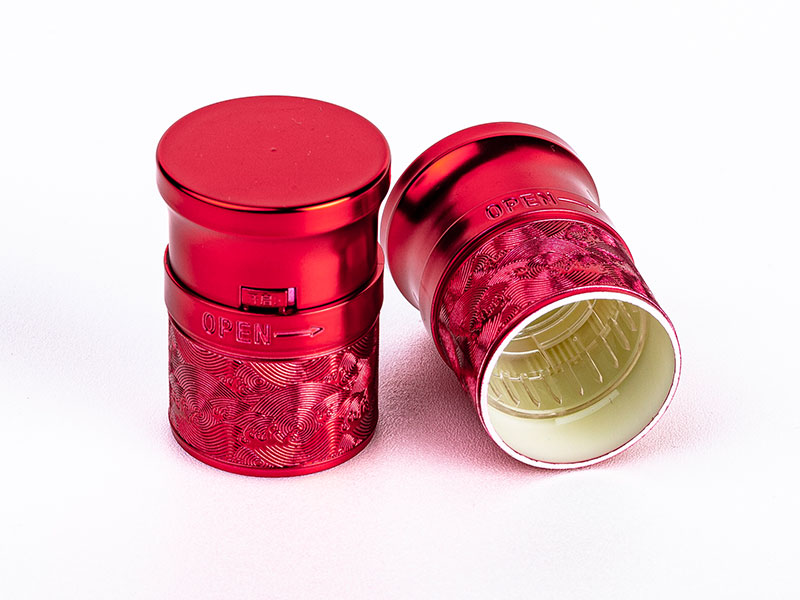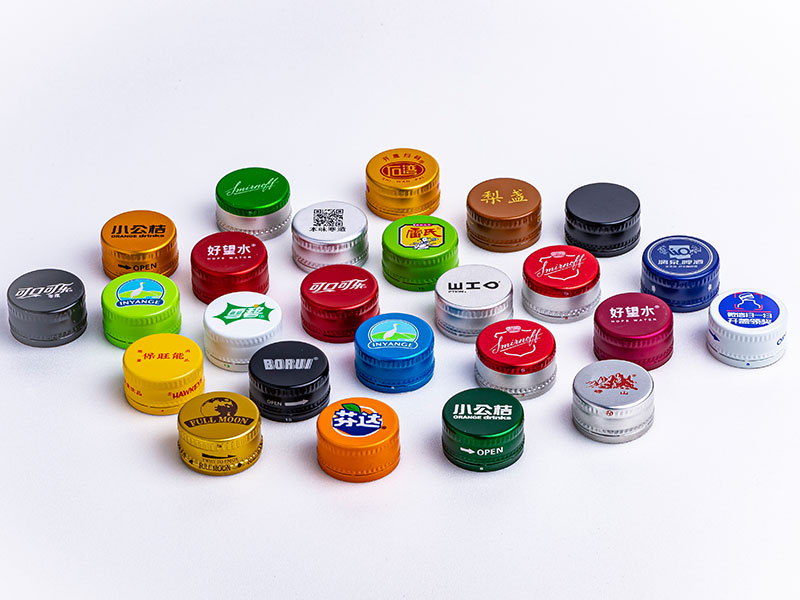


High Quality 30x60mm Aluminum Screw Caps for Bottled Wine
High Quality 30x60mm Aluminum Screw Caps for Bottled Wine
— A Technical View from Inside the Closure
When most people talk about wine quality, they focus on vineyards, barrels, and cellar conditions. From the inside of the industry, we know another truth: a bottle is only as reliable as its closure. The 30x60mm aluminum screw cap has quietly become the technical “guardian” of bottled wine quality—especially for still wines and aromatics—yet it’s often underestimated.
Below is a practical, engineering-level look at 30x60mm aluminum screw caps from the perspective of metal, temper, precision, and barrier performance—not just marketing concepts.
1. What Does “30x60mm” Actually Mean?
In professional terms, “30x60mm” specifies two dimensions:
- 30 mm – Internal diameter of the cap mouth, designed to match the 30H60 finish (thread/neck standard) on wine bottles.
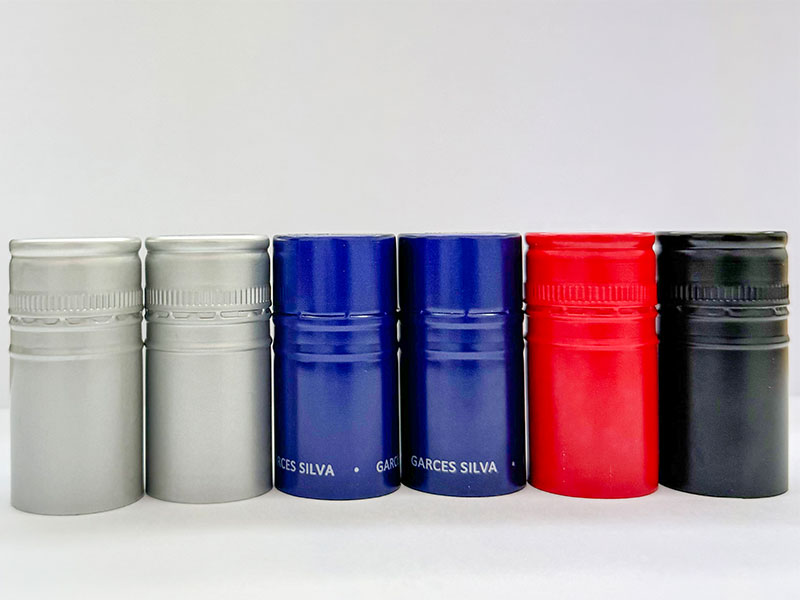
- 60 mm – Outer height of the closure, covering the glass thread and visible capsule portion.
This size has become a de facto standard for still wines (especially whites, rosés, and fruit-driven reds) in many export markets because:
- It fits standard wine bottle necks (BVS / 30H60).
- It allows sufficient space for rolling threads and decorations.
- It offers enough height to integrate reliable tamper evident features.
2. Why Aluminum? The Practical Advantages Behind the Material
2.1 Alloy Selection: Common Grades and Why They Matter
Most wine screw caps use non-heat-treatable aluminum alloys with good formability and corrosion resistance. Typical alloys:
AA 8011 / 8011A
- Al + Fe + Si alloy system
- Very good deep-drawability and folding resistance
- Stable mechanical properties for crimping and thread-forming
AA 3105
- Al–Mn alloy
- Better strength than pure Al with good corrosion resistance
- Suitable for color coating and outdoor exposure
Typical chemical composition ranges (reference values, mass %):
| Alloy | Si | Fe | Cu | Mn | Mg | Zn | Ti | Others (each) | Al |
|---|---|---|---|---|---|---|---|---|---|
| AA8011 | 0.50–0.90 | 0.60–1.00 | ≤0.10 | ≤0.20 | ≤0.05 | ≤0.10 | ≤0.08 | ≤0.05 | Balance |
| AA3105 | ≤0.60 | ≤0.70 | 0.20–0.40 | 0.30–0.80 | 0.20–0.80 | ≤0.40 | ≤0.10 | ≤0.05 | Balance |
(Exact specs depend on supplier and customer requirement; above is for reference.)
2.2 Temper Designations and Why They’re Crucial in Closures
Cap stock is usually supplied in soft to half-hard tempers to avoid cracking in thread forming:
- O (Annealed) – Maximum ductility, easy deep drawing, good for complex skirt forming.
- H14 / H16 – Half-hard, used where slightly higher stiffness is needed for crush resistance and thread integrity.
- Special closure tempers (e.g., H48 for can ends; for caps, defined by agreement):
- Controlled yield strength for predictable roll-on behavior
- Balanced between “easy to form” and “maintains shape” after rolling
Typical mechanical target ranges (for cap stock, indicative values):
| Alloy / Temper | Tensile Strength (MPa) | Yield Strength (MPa) | Elongation A50 (%) |
|---|---|---|---|
| 8011-O | 80–110 | 40–60 | ≥20 |
| 3105-H14 | 125–160 | 85–120 | ≥10 |
The is controlled consistency, not the highest strength: caps must deform in a predictable way on the bottling line to form a tight, leak-proof thread.
3. More Than a Lid: How 30x60mm Caps Protect Wine
3.1 Oxygen Management as a Design Choice
From inside the closure industry, we don’t talk about “screw cap = reduction” anymore; we talk about selective oxygen ingress:
Tin/Saran liners (Saranex, PVDC-based)
- Very low OTR (oxygen transmission rate)
- Favored for aromatic whites, Rieslings, Sauvignon Blanc, where freshness is critical.
Saran-only or alternative liners
- Slightly higher OTR
- Match wines that benefit from modest micro-oxygenation over time.
A high-quality 30x60mm cap is essentially an adjustable gas barrier system. By combining:
- The metal shell: mechanical seal, blocking light and providing rigidity.
- The liner material and density: controlling gas tightness and sealing behavior.
…we can tune the closure to the intended aging curve of the wine.
3.2 Liner Properties That Matter
Good liners must offer:
- Chemically inert contact surface – Does not react with wine components.
- Dimensional stability – Keeps contact pressure across a range of temperatures (transport & storage).
- Consistent shore hardness – Ensures uniform torque-on, torque-off performance.
liner parameters (typical ranges):
| Parameter | Typical Value |
|---|---|
| Liner thickness | 0.8–2.0 mm |
| Shore A hardness | 60–80 |
| OTR (25 °C, 1 atm) | <0.5–2.0 mg O₂/year (depending type) |
| Compression set (24h) | ≤20–30% |
| Operating temperature | -20 to 60 °C |
4. Dimension & Quality Standards: What Real “High Quality” Means
From an engineering perspective, “high quality” 30x60mm aluminum caps can be defined against specific, measurable criteria.
4.1 Dimensional Parameters
- Inner diameter (D): 30.0 ± 0.15 mm
- Cap height (H): 60.0 ± 0.25 mm
- Wall thickness: 0.20–0.24 mm typically for wine caps
- Thread/form features: matching 30H60 / BVS standards
Thread and knurl precision are essential for:
- Straight feeding and capping
- Reliable tamper band break performance
- Uniform roll-on forming, minimizing reject rate on high-speed lines (10–20k bph)
4.2 Standards & Regulatory References
A high-quality producer aligns with:
- EN 573 / EN 485 – Aluminum and aluminum alloy sheets & strips
- EN 541 – Wrought aluminum and aluminum alloys for closures and caps
- ISO bottle finish specifications for 30H60/BVS
- Food contact regulations:
- EU: Regulation (EC) 1935/2004, 10/2011 (for plastic linings)
- US: FDA 21 CFR (for liners, inks, and coatings)
Plus in-house tolerances often stricter than international standards to ensure line efficiency for bottlers.
5. Coating, Coloring and Branding: A Technical Layer Beneath the Design
5.1 Exterior Coatings
The outer surface is more than aesthetics:
Base coating (primer + topcoat)
- Polyester or epoxy-polyester systems
- Typical dry film thickness: 6–10 μm
- Requirements: abrasion resistance, flexibility (folding, knurling), and UV durability.
Color stability
- ΔE color drift minimized after accelerated aging (UV, humidity, temperature cycles)
- Essential for imported wines facing long maritime transport.
5.2 Interior Coatings
The internal surface must meet two major requirements:
- Food contact safety – No harmful migration.
- Corrosion protection – Particularly critical for wines with lower pH (high acidity).
Typically:
- Epoxy-based or BPA-NI (bisphenol A non-intent) coatings
- Thickness: 5–8 μm
- Tested in: 3–10% acetic acid simulants, ethanol solutions, and sometimes sodium chloride solutions for corrosion testing.
6. Functional Details That Win on the Bottling Line
Closures are judged not only in lab data but on the line and in market:
6.1 Capping Performance
indicators on bottling lines:
Application torque – Stable and within specified range.
Removal torque – Comfortable for consumers, stable over shelf life.
- Common range: 10–20 Lbf·in (≈1.1–2.3 N·m), depending on customer requirement.
Roll-on quality
- No splitting or cracking along the engraved thread lines.
- Defined bridge strength in tamper-evident band to ensure compulsory tearing without fragmenting.
6.2 Leak Testing & Seal Integrity
Finished caps should pass:
- Vacuum or pressure tests – 0.6 bar negative or 1 bar positive test without leakage.
- Transport simulation – Vibration + temperature cycling to confirm no cap back-off or loss of seal.
7. From a Sustainability Standpoint: Aluminum Caps as Circular Components
Viewed from an industrial ecology perspective, 30x60mm aluminum screw caps have several advantages:
- Fully recyclable metal shell
- Aluminum can be recycled indefinitely without losing properties.
- High scrap value
- Encourages collection and recovery in mature recycling systems.
- Low weight
- Reduces transport emissions per bottle compared to heavier closures or combinations.
Where possible, selecting:
- High recycled-content alloy sheets
- Solvent-reduced or waterborne coatings
- Liners without problematic halogens
…helps wineries move towards more credible sustainability claims.
8. Practical Selection Guide for Wineries and Bottlers
Looking from a winery’s point of view, here’s how to specify “high quality 30x60mm aluminum screw caps” in practice:
Confirm bottle finish
- Ensure strict compatibility with 30H60/BVS; request supplier proof of fit tests.
Specify alloy & temper
- Common: 8011-O or equivalent soft closure stock.
- State minimum and maximum mechanical properties for consistency in forming.
Define liner system by wine style
- Fresh aromatic whites & rosés: low OTR liners (e.g., Tin/Saran, high barrier).
- Light reds or wines intended for moderate aging: slightly higher OTR liner options.
Set coating requirements
- External: color, gloss, abrasion and UV performance.
- Internal: food-grade, corrosion resistance vs. typical wine pH (2.8–4.0).
Agree quality parameters
- Dimensional tolerances
- Torque specifications
- Acceptable defect rates: visual, functional (leak, thread integrity)
Run line trials
- Test at actual production speed.
- Check: feed rate, rejected cap rate, proportion of torn or incomplete TE bands, and post-filling leakage rate.
9. Unique Role of 30x60mm Caps in Modern Wine Strategy
Seen from an internal packaging-technology lens, the 30x60mm aluminum screw cap is not just a screw-threaded lid. It is:
- A calibrated gas barrier to modulate wine development.
- A precision-formed component that must deform mechanically in a very controlled way.
- A food-contact engineered system, where alloy, temper, coating, and liner must cooperate.
- A branding surface linking enological positioning with shelf presence.
- An element of logistic security, holding up under long shipping routes and variable conditions.
For wineries aiming to stabilize quality, reduce cork-related variability, and present a modern, technically rigorous image, high quality 30x60mm aluminum screw caps are not merely an option; they are a strategic tool.
https://www.bottle-cap-lids.com/a/high-quality-30x60mm-aluminum-screw-caps-for-bottled-wine.html