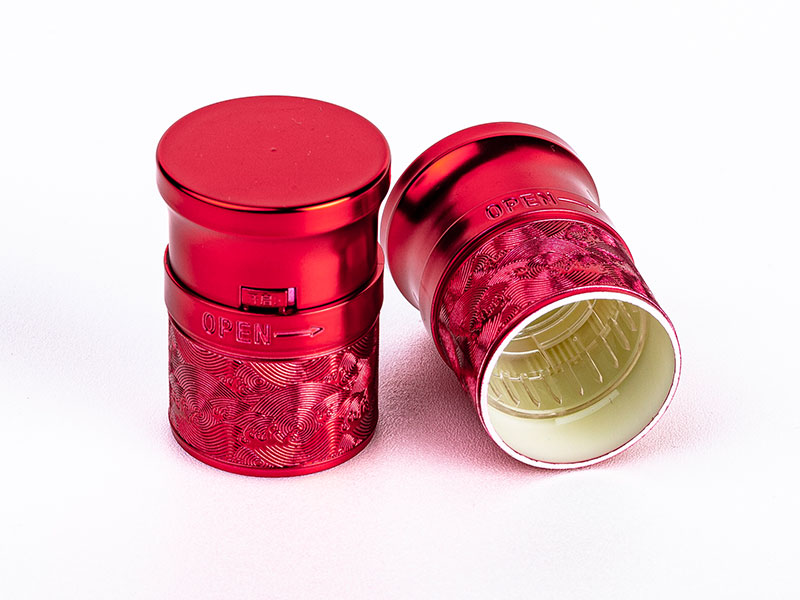


Custom Aluminum Wine Caps with Multi Layer Seal for Extra Freshness
Custom aluminum wine caps are doing a lot more than simply closing a bottle. When they are engineered with a multi‑layer seal, they become an active barrier system that protects aroma, flavor, and color from the moment the wine is filled until the moment it is poured.
Below is a clear, technically grounded look at these caps from a manufacturing and materials perspective, written for wineries and bottlers who care about both quality in the glass and consistency on the production line.
Why Multi‑Layer Seals Matter for Wine Freshness
A wine bottle is a micro‑environment. Once filled, the wine is exposed to three main threats:
- Oxygen ingress
- Volatile aroma loss
- Microbial contamination at the closure–finish interface
A custom aluminum wine cap with a multi‑layer seal addresses all three by combining an optimized metal shell with a precisely engineered liner system. Instead of relying on a single gasket, the closure uses several functional layers that work together:
- A compressible sealing layer that molds to tiny imperfections on the bottle finish
- A gas‑control layer that governs oxygen transmission
- A liquid barrier layer that resists ethanol, organic acids, and SO₂ attack
- Optionally, a liner layer tuned for cork‑like or ultra‑low oxygen ingress
The result is better retention of free SO₂, reduced oxidation risk, and more stable sensory profiles over time.
Behind every high‑performing wine cap is a specific choice of alloy and temper. These parameters determine how well the cap forms, how it behaves on the bottling line, and how it holds sealing pressure over months and years.
Common aluminum alloys for wine caps include:
- 8011 and 3105 for general screw‑cap shells
- 3003 and 5052 for applications demanding additional strength or deep drawing
Typical temper conditions:
- H14 / H16 for a balance of strength and ductility
- H24 / H26 where greater rigidity and thread stability are required
The cap must be soft enough to form into detailed spiral threads and pre‑curl without cracking, yet strong enough to maintain those features under torque and handling.
Parameters for Custom Aluminum Wine Caps
When specifying custom caps with multi‑layer seals, several parameters define performance:
Shell diameter and height
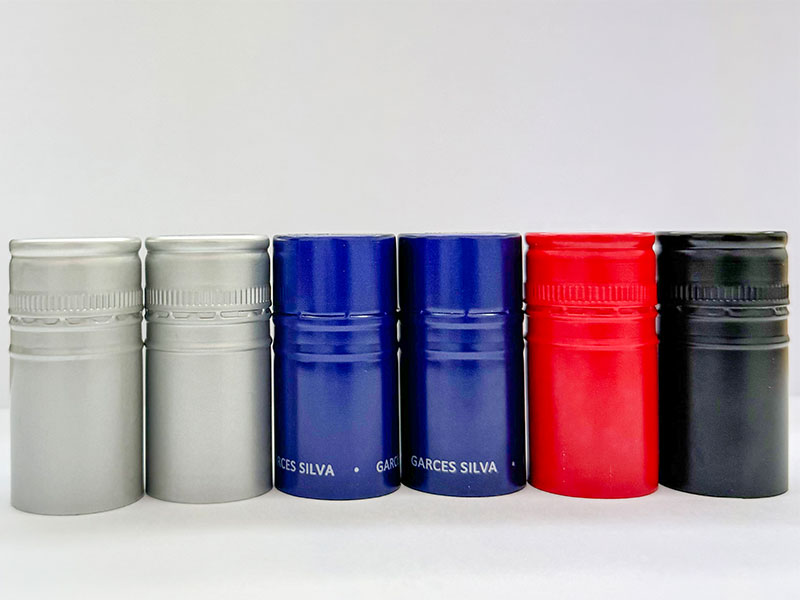
Designed to match standard wine finishes such as BVS 30×60, 30×44, or custom profiles for specialty bottles.Wall thickness
Typically in the range of 0.20–0.25 mm, optimized so the cap is rigid enough for capping speed and transport, but not so stiff that it can’t form a tight seal or be removed by hand.Thread geometry
Internal thread design must align precisely with the bottle finish standard to avoid over‑torque, stripping, or micro‑leaks. Consistency here is essential for oxygen control.Surface coating
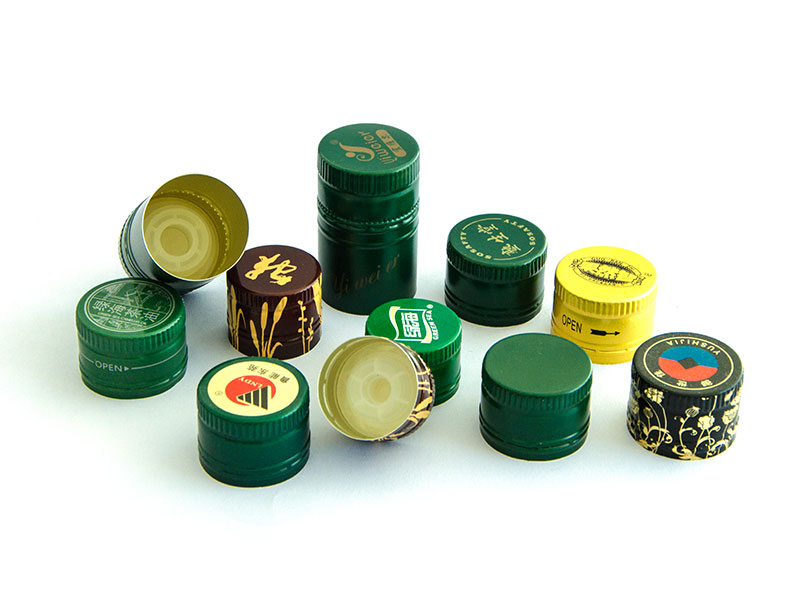
External coatings provide brand aesthetics and corrosion resistance. Internal coatings provide a food‑safe barrier between wine and metal, protecting both wine quality and the cap.Liner design
The heart of the multi‑layer seal, influencing oxygen transmission rate (OTR), flavor scalping, and long‑term sealing integrity.
Inside the Multi‑Layer Seal
While designs vary by supplier and winemaker preference, a typical multi‑layer sealing system may include:
Facing layer
Inert, food‑grade material in direct contact with the wine. It must resist ethanol, organic acids, and cleaning residues without absorbing aroma compounds.Compressible core
A foam or elastomer layer that deforms under torque. This layer compensates for microscopic bottle‑finish variations and ensures uniform sealing pressure.Barrier layer
Often a polymer or composite engineered for specific OTR levels. Lighter, fruit‑forward wines may benefit from extremely low OTR, while some reds might use a slightly more permeable liner to mimic slow cork oxygen ingress.Backing and adhesion layers
Ensure the liner remains securely bonded to the cap and does not delaminate during filling, storage, or opening.
By adjusting material choice and thickness across these layers, producers can customize oxygen ingress to match each wine style, while maintaining mechanical seal integrity and freshness.
Standards and Implementation for Reliable Performance
For wineries, compliance and repeatability are as critical as sensory outcomes. Custom aluminum wine caps are generally designed to align with:
Food‑contact regulations such as
- EU Regulation (EC) 1935/2004 for materials intended to contact food
- FDA 21 CFR for food‑contact substances in the United States
Bottle and closure dimensional standards
- BVS and CETIE guidelines for the 30×60, 30×44, and similar wine finishes
Quality and safety systems
- Production under ISO 9001 quality management
- HACCP or similar systems for traceability and risk control
On the line, recommended practices typically include:
Proper torque application
Defined torque ranges ensure enough compression to activate the multi‑layer seal without deforming the cap or stressing the bottle neck.Clean bottle finishes
Dust, glass chips, or residual label adhesive on the neck can compromise sealing. Clean, undamaged finishes are essential.Controlled storage
Capped bottles should be stored in conditions that avoid extreme temperature swings, protecting both liner elasticity and wine chemistry.
Alloy and Liner Chemistry at a Glance
Below is a simplified table capturing typical chemical composition ranges for aluminum alloys commonly used in wine caps, along with a descriptive overview of liner chemistry. Values are indicative and may vary by supplier and region.
| Component / Material | Typical Range / Description | Function in Wine Cap |
|---|---|---|
| Aluminum (Al) base | Balance (≥ 97–98% depending on alloy) | Primary structural metal, provides formability and strength |
| Silicon (Si) | 0.4–1.0% (8011) | Improves castability and formability |
| Iron (Fe) | 0.5–1.0% (8011, 3105) | Enhances strength and hardness |
| Manganese (Mn) | 0.3–0.8% (3003, 3105) | Increases corrosion resistance and mechanical strength |
| Magnesium (Mg) | 0.2–0.8% (3105, 5052) | Boosts strength, work‑hardening capability |
| Copper (Cu) | ≤ 0.1–0.3% (depending on alloy) | Minor strengthening element, kept low to avoid corrosion |
| Zinc (Zn) | ≤ 0.2–0.4% (3105) | Secondary strengthening, contributes to formability |
| Chromium (Cr) | ≤ 0.15–0.35% (5052) | Corrosion resistance, grain refinement |
| Organic internal coating | Epoxy, BPA‑NI epoxy, or polyester systems | Barrier between wine and aluminum, protects taste and metal |
| Facing liner layer | Food‑grade polymer (e.g., PE, PP, specialty blends) | Direct wine contact, resistant to acids, ethanol, SO₂ |
| Compressible liner core | Polyolefin foam or elastomeric composite | Provides elastic sealing pressure and conformity to glass |
| Barrier liner layer | Modified polymers or multilayer composites | Controls OTR, reduces aroma loss and oxidation |
| Adhesive / backing layers | Specialized bonding agents compatible with food use | Maintain cohesive, stable multi‑layer structure |
All liner components are selected to be physiologically inert, non‑tainting, and compliant with relevant food‑contact legislation.
Why Wineries Choose Custom Multi‑Layer Aluminum Caps
From a winemaker’s standpoint, these closures deliver several practical and marketing advantages:
Consistent aging curves
More predictable OTR compared with natural cork helps align product release schedules and shelf‑life expectations.Sensory protection
Better retention of delicate floral and fruit notes, especially in aromatic whites and rosés, and reduced risk of random oxidation events.Brand differentiation
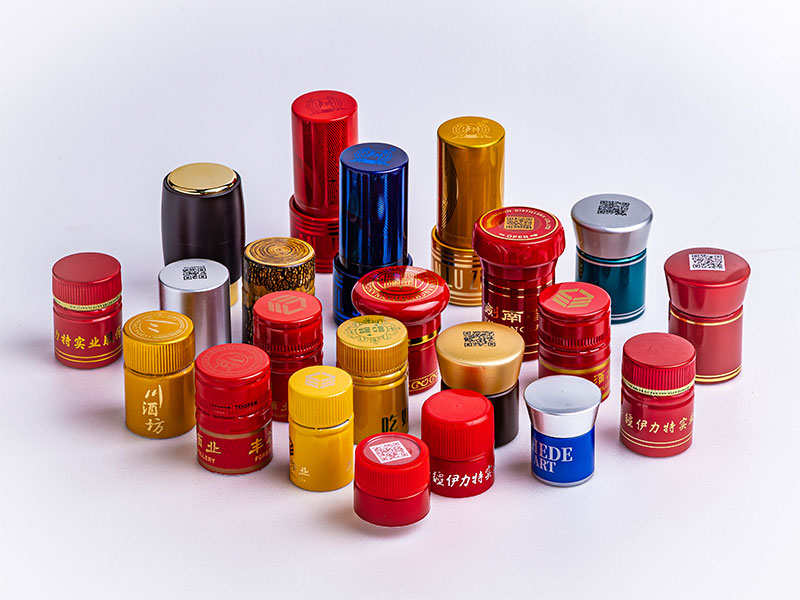
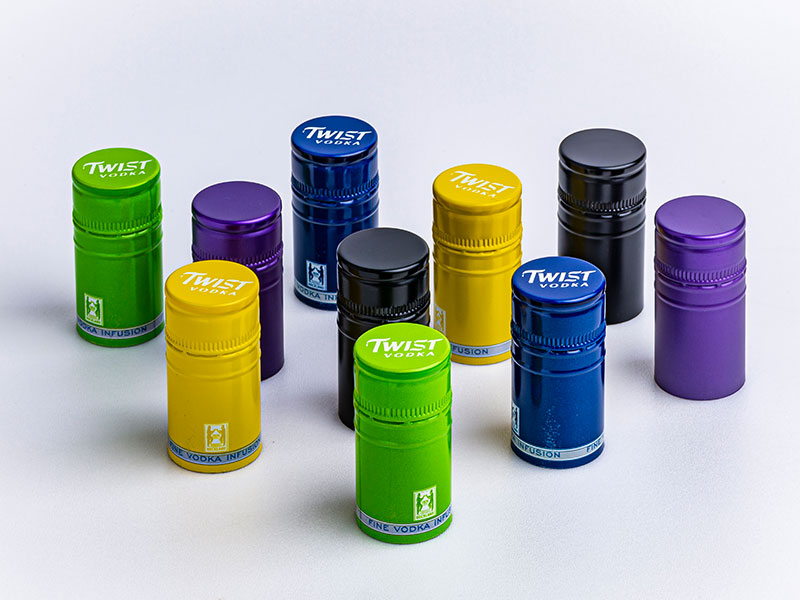
Custom colors, embossing, printing, and top emboss give a premium look while the multi‑layer seal works silently to preserve what’s inside.Operational efficiency
Screw‑cap closures are easy to automate, reduce line stoppages, and minimize closure‑related spoilage compared with natural closures.Sustainability potential
Aluminum is highly recyclable, and screw caps can be collected and reprocessed in many markets, supporting circular economy goals.
Bringing It All Together
A custom aluminum wine cap with a multi‑layer seal is a fine balance of metallurgy, polymer science, and bottling engineering. The alloy choice, temper condition, dimensioning, internal coatings, and liner architecture are all tuned to one purpose: keeping the wine as fresh, expressive, and stable as the day it left the cellar.
For wineries aiming to protect quality while adding visual impact on the shelf, these closures offer a modern, technically sophisticated answer to an age‑old challenge: preserving freshness in every bottle opened, anywhere in the world.