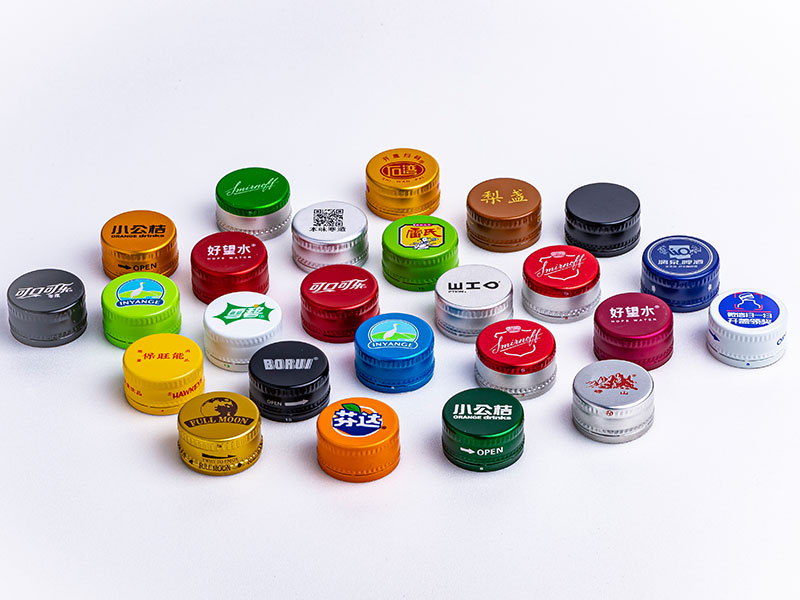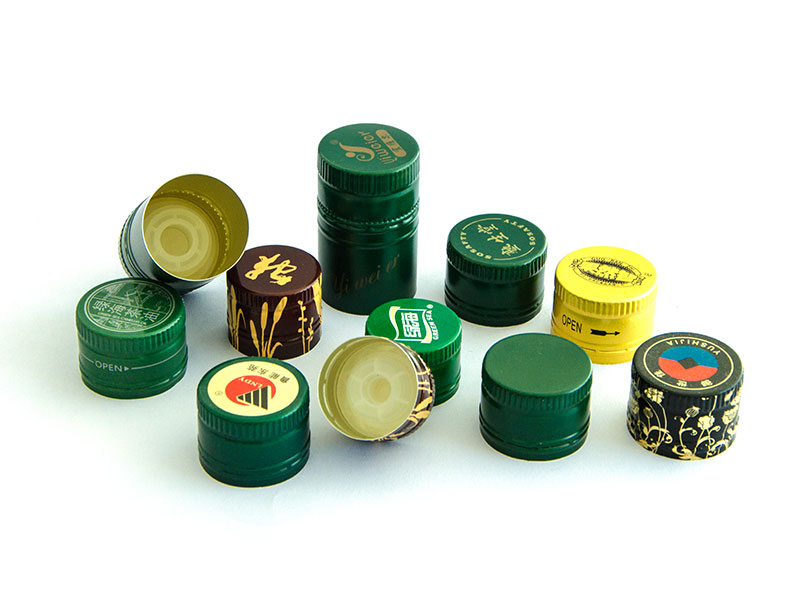


Leak Proof Aluminum Bottle Caps for Soda with Adjustable Sealing
Soda is not a "still beverage with bubbles." It is a living pressure system that keeps trying to equalize with the world around it. The moment carbonation is trapped in a bottle, every interface becomes a negotiation between gas, liquid, time, and temperature swings in storage or transport. Leak proof aluminum bottle caps for soda with adjustable sealing are best understood from this pressure-management perspective: the cap is not just a closure, it's a controllable boundary layer designed to protect CO₂, prevent syrup creep, and keep the bottle's opening geometry stable through repeated cycles of opening and reclosing.
Why "Adjustable Sealing" Matters for Carbonated Drinks
In soda packaging, "leak proof" is not only about stopping liquid. The real enemy is micro-leakage of CO₂, because even tiny gas losses reduce internal pressure, flatten taste, and accelerate flavor oxidation. Adjustable sealing refers to a closure system designed to maintain sealing performance across variations such as:
- Bottle neck tolerances (minor diameter, thread pitch variations, ovality)
- Filling temperatures and headspace pressures
- Consumer reclose behavior (variable hand torque)
- Repeated open-close cycles for multi-serve soda bottles
From a distinctive viewpoint, adjustable sealing is essentially a controlled deformation system. The cap is engineered so that a specific range of compressive force is delivered to the liner. Too little compression risks CO₂ diffusion paths; too much compression risks liner extrusion, thread jump, or distortion that compromises reclose integrity. Aluminum's strength-to-formability balance makes it excellent for this "repeatable controlled deformation" job when paired with the correct temper and liner.
Leak-Proof Performance Starts with Aluminum Alloy and Temper
Aluminum bottle caps for carbonated beverages commonly use 3xxx-series alloys because manganese additions strengthen the metal without destroying formability. The temper choice is the difference between a cap that holds shape under torque and pressure, and one that relaxes, springs back, or cracks during forming.
A practical way to think about it:
- Softer tempers help deep drawing and knurling, improving aesthetic definition and reducing forming cracks.
- Harder tempers resist thread deformation and torque relaxation, improving seal stability over shelf life.
- "Half-hard" conditions often strike the best balance for soda, where caps see both forming demands and pressure retention demands.
Typical alloys include AA3003, AA3105, AA5052 for specialty demands, and in some supply chains AA8011 is used where forming and coating lines are optimized for it. Selection depends on cap geometry, liner system, and whether the cap needs high knurl definition or enhanced anti-buckle behavior.
Parameters for Leak Proof Soda Caps with Adjustable Sealing
The cap's sealing performance is engineered around a few measurable parameters that production teams can control and audit.
Dimensional parameters
- Cap diameter (common beverage closures include 28 mm, 30/25 mm, 38 mm for multi-serve formats; final choice depends on bottle finish)
- Skirt height and knurl geometry for grip and torque transfer
- Thread profile compatibility with PCO/BPF or regional bottle finish standards
- Shell thickness typically in the 0.20–0.28 mm range depending on diameter and torque requirement, with thicker shells resisting ovalization under high application torque
Sealing parameters
- Liner thickness and hardness (often 0.8–2.0 mm depending on design)
- Compression set performance under carbonation pressure and elevated storage temperature
- Target application torque window tuned to bottle finish and liner system, often in the range of 0.8–2.5 N·m for consumer beverage formats, while larger diameters may require more
Performance parameters
- Internal pressure retention under typical soda conditions, often validated around 4–8 bar depending on product carbonation and storage temperature
- CO₂ loss rate targets defined by brand shelf-life requirements
- Leak testing under inverted storage, thermal cycling, and vibration typical of transport
Adjustable sealing is achieved by designing the closure-liner system to perform across this torque and tolerance window without "falling off the seal cliff."
Implementation Standards and Quality Benchmarks in Practice
Leak proof aluminum bottle caps for soda are commonly built to align with beverage packaging norms and food-contact compliance rather than a single universal cap standard. In practice, implementation is controlled by a combination of:
- Bottle finish standards (PCO family, BPF/Ropp-related geometries depending on region and bottle type)
- Internal brand specifications for CO₂ retention, torque windows, and drop/transport resistance
- Food-contact regulatory frameworks for coatings and liners, such as EU Framework Regulation 1935/2004, EU 10/2011 where applicable to plastics in liners, US FDA 21 CFR indirect food additives, and relevant national GB/IS standards depending on supply region
- Quality systems such as ISO 9001, plus hygiene management like GMP expectations for packaging components
Where "adjustable sealing" becomes real is in process control: cap curl height, liner deposition weight, cure conditions, and thread forming tolerances are controlled with SPC so that sealing force remains predictable.
How the Cap Actually Seals: Thread, Curl, and Liner as a Pressure System
A soda cap's leak-proof behavior comes from a three-part interaction:
Thread engagementThe thread converts tightening torque into axial load. Thread flank angles and pitch determine how efficiently torque becomes compression. Aluminum's ability to form consistent threads with good surface finish helps reduce scatter in the torque-to-load relationship.
Curl geometryThe curl defines the liner pocket and controls how the liner is constrained. A well-designed curl prevents liner "cold flow" outward under long-term pressure, which is a subtle cause of pressure loss over time.
Liner materialFor adjustable sealing, the liner must seal under low torque and resist extrusion under high torque. Common systems include PVC-free TPE, EPE-based composites, or specialized elastomers depending on recyclability targets and carbonation demands. For soda, gas barrier behavior and compression set resistance become decisive.
From a distinctive viewpoint, the liner is the "valve seat," and the aluminum shell is the "actuator." Adjustable sealing is simply actuator consistency across real-world variability.
Alloy Tempering Conditions and Forming Considerations
Aluminum caps are produced through stamping and forming operations that demand stable mechanical properties:
- Temper conditions like H14/H16 (strain-hardened) provide stronger thread retention and better resistance to torque relaxation.
- Softer conditions like H12 may be chosen for complex knurl or deep profile caps to avoid microcracking.
- Annealed O temper can be used before forming and then work-hardened during forming; this is useful when the forming step itself is designed to "create" the final strength.
Coil quality matters as much as temper: grain size distribution, earing tendency, and surface cleanliness affect forming consistency and coating adhesion. For beverage caps, coating integrity is not cosmetic; it protects against corrosion from acidic condensate and prevents taste/odor interactions.
Chemical Properties and Typical Composition Table for Common Cap Alloys
Exact composition depends on supplier and standard (AA/EN/GB equivalents), but the following table reflects typical ranges used in closure-grade aluminum. Values are in weight percent.
| Alloy | Si (%) | Fe (%) | Cu (%) | Mn (%) | Mg (%) | Zn (%) | Ti (%) | Al (%) |
|---|---|---|---|---|---|---|---|---|
| AA3003 | ≤0.6 | ≤0.7 | 0.05–0.20 | 1.0–1.5 | ≤0.05 | ≤0.10 | ≤0.10 | Balance |
| AA3105 | ≤0.6 | ≤0.7 | ≤0.30 | 0.3–0.8 | 0.2–0.8 | ≤0.40 | ≤0.10 | Balance |
| AA5052 | ≤0.25 | ≤0.40 | ≤0.10 | ≤0.10 | 2.2–2.8 | ≤0.10 | ≤0.10 | Balance |
| AA8011 | 0.5–0.9 | 0.6–1.0 | ≤0.10 | ≤0.20 | ≤0.05 | ≤0.10 | ≤0.08 | Balance |
AA3003 and AA3105 are widely favored for soda caps because they combine formability with sufficient strength for consistent torque response. AA5052 appears when higher corrosion resistance or higher strength is desired, though its forming behavior and cost profile may shift the optimal design.
Corrosion Resistance and Coating Chemistry: Protecting Flavor as Well as Metal
Soda environments are deceptively harsh. Acidic vapors, sugar residues, and temperature cycling create conditions where unprotected aluminum interfaces can corrode or stain. Modern caps rely on:
- Internal lacquer systems designed for beverage contact, preventing metal-ion migration and protecting the liner pocket
- External coatings or inks that must remain flexible through crimping/knurling and resist abrasion during distribution
From a sealing viewpoint, coatings also reduce friction scatter between cap and bottle finish, helping the "adjustable sealing" torque window behave more predictably.
What "Leak Proof" Means in Testing for Carbonated Applications
A closure can feel tight and still lose CO₂ slowly. Leak-proof qualification for soda typically includes:
- Pressure hold tests at representative carbonation pressures and elevated temperatures
- Inversion leak tests with agitation to detect syrup creep paths
- Thermal cycling to simulate warehouse and transport transitions
- Torque retention and reclose tests after multiple open-close cycles
Because adjustable sealing must work for both automated capping lines and consumer hands, caps are evaluated for consistent breakaway torque, smooth reapplication torque, and stable sealing after reclose.
Practical Specification Window for Leak Proof Aluminum Soda Caps
In production, customers often specify a cap not by poetic descriptors but by measurable windows. A robust soda cap program commonly targets:
- Consistent shell thickness and hardness suitable for predictable thread formation
- Liner system with low compression set and good CO₂ sealing behavior
- Application torque window wide enough to accommodate bottle variation, yet narrow enough to prevent liner damage
- Coatings compliant with intended market food-contact regulations and resistant to beverage vapor exposure
The distinctive point is that "adjustable sealing" is not a gimmick; it is engineered tolerance. The best designs are those where the cap, liner, and bottle finish behave like a matched system rather than separate parts.
Closing Thought: A Soda Cap is a Pressure Instrument, Not Just Packaging
Leak proof aluminum bottle caps for soda with adjustable sealing succeed when they are treated like miniature pressure instruments: the alloy and temper provide repeatable mechanical response, the forming accuracy ensures stable load paths, and the liner chemistry delivers elastic sealing without creep. When these elements align, carbonation stays where it belongs, the drink tastes fresh longer, and consumers get a confident reclose experience that feels effortless but is, in reality, carefully engineered.