

Customizable Aluminum Screw Caps for Wine Bottles with Branding and Labeling
Customizable Aluminum Screw Caps for Wine Bottles with Branding and Labeling
When a customer opens a bottle of wine, the first "conversation" they have with the brand often happens before the first sip. It's the grip, the twist, the subtle resistance of the thread, and the crisp click of tamper evidence breaking cleanly. In that short moment, a closure can feel either generic or intentional. Customizable aluminum screw caps sit right in that sensory threshold: they protect the wine, reinforce authenticity, and quietly carry branding like a miniature billboard-without distracting from the bottle's elegance.
Why aluminum screw caps have become a branding surface, not just packaging
Aluminum is unusually cooperative for premium branding. It takes color and texture well, holds sharp embossing details, and stays stable through transport and temperature changes. Unlike some plastics, it doesn't "soften" your brand impression over time. Unlike more fragile decorative elements, it doesn't crack or peel easily when engineered correctly.
Branding and labeling options typically include:
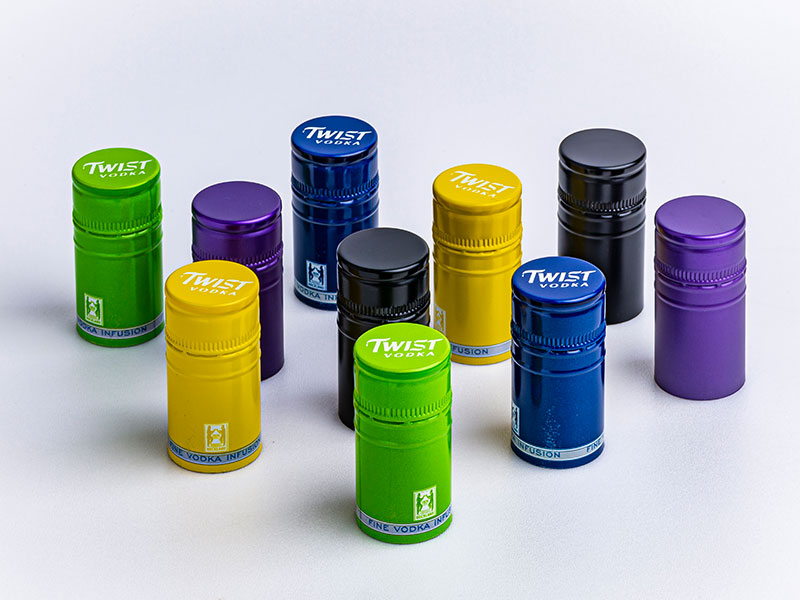
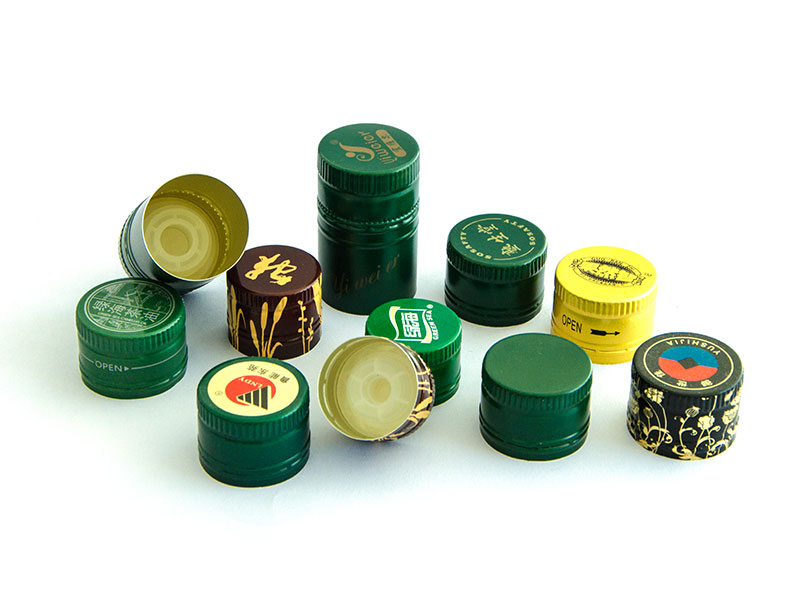
- High-definition offset printing for gradients, small text, and rich color matching
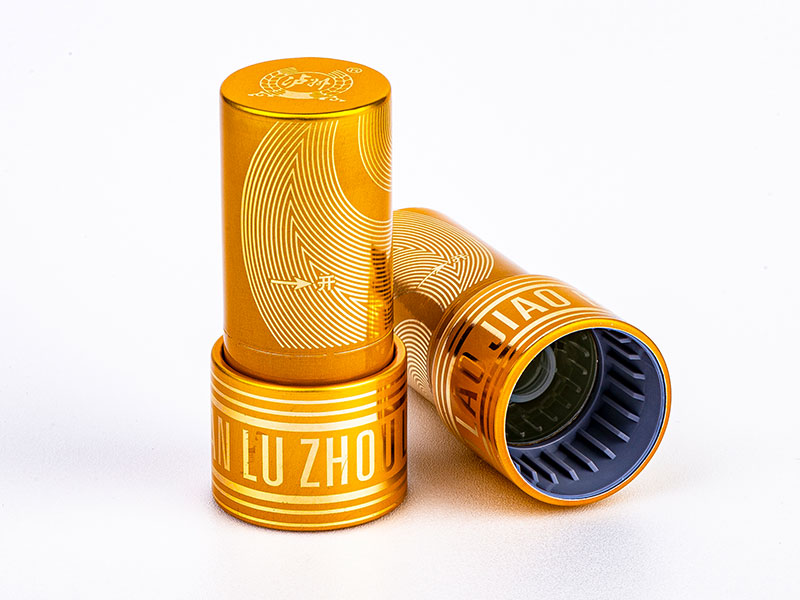
- Hot stamping in metallic foils for crest marks and premium accents
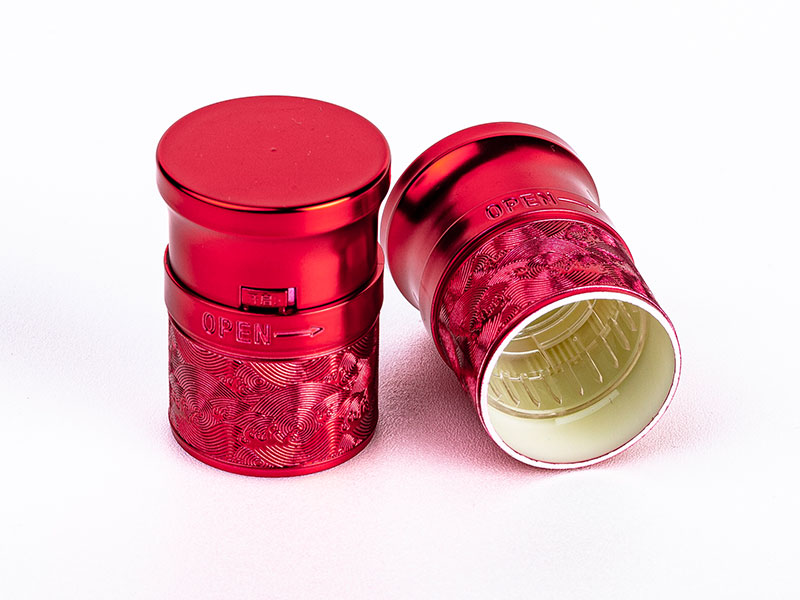
- Embossing or debossing for tactile logos customers can feel
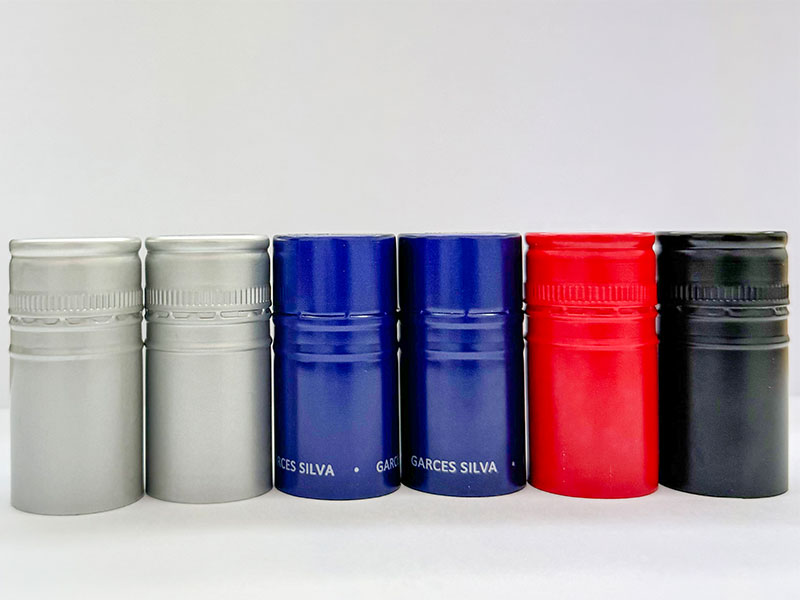
- Matte, gloss, satin, and brushed finishes that align with wine style and price tier
- Custom top printing plus side-wall printing, useful for SKU differentiation or legal text
- Laser coding or inkjet variable data for traceability and anti-counterfeit programs
This is where closures become strategic: small SKU changes, seasonal editions, winery club releases, and export compliance can all be handled at the cap level with less disruption than redesigning full labels.
Technical snapshot: what a "custom" aluminum wine screw cap is made of
A typical wine screw cap is a composed system:
- An aluminum shell for strength, printability, and deformation control
- An internal liner that determines oxygen transmission behavior and sealing style
- A tamper-evident band that breaks predictably for consumer trust
- A thread profile matched to the bottle finish (commonly BVS-type finishes)
The best customization programs treat branding and performance as a single design problem. A cap that looks premium but scuffs easily, or a cap that seals beautifully but prints inconsistently, weakens the total experience. The goal is harmony: aesthetics supported by metallurgy, coating chemistry, and closure geometry.
Common parameters customers ask for (and what they mean in practice)
Most wine screw cap projects start with a familiar set of parameters. Actual values can vary with regional bottle standards and filling lines, but the ranges below reflect common industry practice.
Typical dimensional and performance parameters
- Cap diameter: commonly around 30 mm (other formats available for spirits or specialty bottles)
- Cap height: commonly in the mid‑50 mm range for standard wine applications
- Aluminum thickness: often around 0.20–0.23 mm for wine caps, selected for formability and dent resistance
- Tamper-evident band style: perforated or bridged designs to control break behavior
- Thread system: matched to bottle finish specification (torque performance depends on precise fit)
- Application torque and removal torque: tuned to line speed, liner type, and consumer feel
- Liner type: chosen for oxygen management, reseal performance, and product compatibility
For customers, the practical takeaway is simple: a "custom cap" is not just artwork. It's artwork embedded into a closure engineered for your bottle finish, your filling environment, and your wine's aging needs.
Implementation standards and quality expectations
While closure requirements vary by market, a reliable supplier will manufacture and test against commonly accepted packaging and food-contact expectations. Typical implementation references include:
- Food-contact compliance aligned with FDA (US) and EU framework requirements, depending on destination markets
- Coating and ink systems formulated for indirect food contact and resistance to ethanol vapor and winery humidity
- Torque and leak testing procedures that reflect bottling-line reality rather than lab-only conditions
- Dimensional inspection for thread geometry, height, ovality, and band consistency
- Adhesion and abrasion resistance testing for printed finishes
- Migration and sensory neutrality assessments for liner systems (important for aroma-sensitive wines)
Because wineries ship across climates, the closure also needs stability under temperature swings. Good aluminum shell tempering and coating design help prevent scratching, stress whitening, and print degradation during distribution.
Alloy selection and tempering: the "invisible" premium factor
The aluminum used for screw caps is typically from the 3xxx series, where manganese improves strength without sacrificing formability. Two alloys often used for closure shells are AA 3105 and AA 3004. The temper condition is commonly H14/H16/H19, depending on desired hardness and forming behavior.
- Softer tempers improve deep drawing and reduce cracking risk in forming
- Harder tempers improve dent resistance and help maintain crisp embossing definition
- The best choice depends on cap geometry, decoration method, and the expected handling stress in the supply chain
In other words, temper isn't a background detail-it determines whether your cap feels solid in-hand, prints cleanly, and survives logistics with fewer cosmetic rejects.
Chemical composition (typical ranges) for common closure alloys
Actual composition depends on mill certificates and standards, but the table below shows widely used typical ranges for reference.
| Alloy (typical for caps) | Si (%) | Fe (%) | Cu (%) | Mn (%) | Mg (%) | Zn (%) | Ti (%) | Al |
|---|---|---|---|---|---|---|---|---|
| AA 3105 | ≤0.60 | ≤0.70 | ≤0.30 | 0.30–0.80 | 0.20–0.80 | ≤0.40 | ≤0.10 | Balance |
| AA 3004 | ≤0.30 | ≤0.70 | ≤0.25 | 1.00–1.50 | 0.80–1.30 | ≤0.25 | ≤0.10 | Balance |
Why this matters for branding and sealing: Mn and Mg strengthen the shell, supporting sharper forming, better dent resistance, and more stable top-panel appearance-especially important for dark matte finishes and high-contrast prints where small defects are more visible.
Liner choices: branding's quiet partner
While the shell carries your visual identity, the liner protects your wine. Two common liner families are:
- Saran-based liners (very low oxygen transmission, often chosen for wines intended to preserve freshness)
- Saranex or co-extruded liners (balanced oxygen transmission, often used to support controlled evolution)
Selecting a liner is less about "best" and more about aligning closure behavior with the wine style and release plan. A supplier who can explain liner oxygen performance in plain language is usually a supplier who understands the full system-not just the cap as a decorative part.
A distinctive viewpoint: the cap as a trust seal and a marketing tool
A label tells a story. A cap proves it's real. Tamper evidence, consistent removal torque, and reliable reseal create a subconscious signal: "This bottle was made with care." That signal becomes part of your brand equity, especially in export markets and direct-to-consumer channels where counterfeiting and transit stress are real concerns.
Custom aluminum screw caps are small, but they travel far-through warehouses, wine fridges, picnic baskets, restaurants, and shipping boxes. A well-designed cap keeps looking intentional all the way to the final twist.
What to provide when requesting a custom aluminum wine screw cap
To speed sampling and ensure the cap performs on your line, most projects benefit from sharing: bottle finish specification, desired liner type or wine style, decoration method, target finish (matte/gloss), Pantone or color references, and your expected annual volume and markets.
Because in the end, the best closure is the one customers don't worry about. They just twist, pour, and remember the brand-starting from the very first touch.