

Custom Aluminum Wine Bottle Closures with Embossed Branding
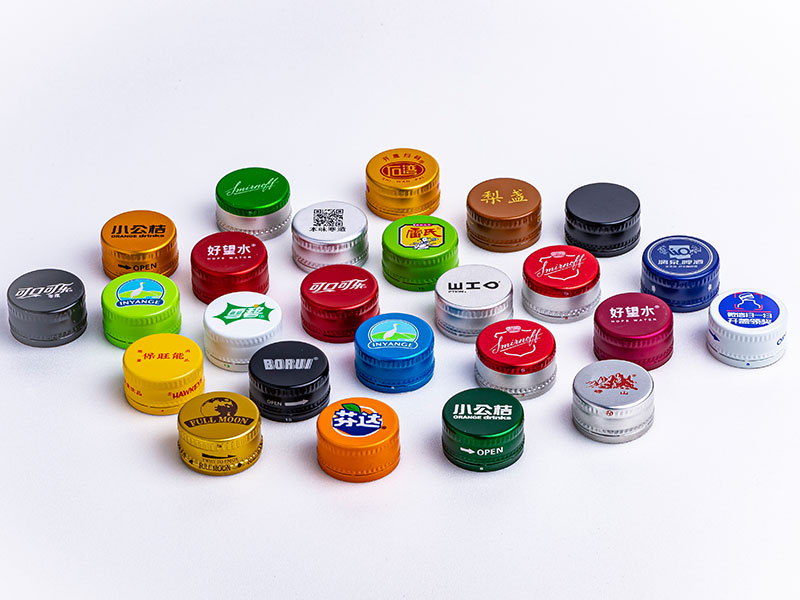
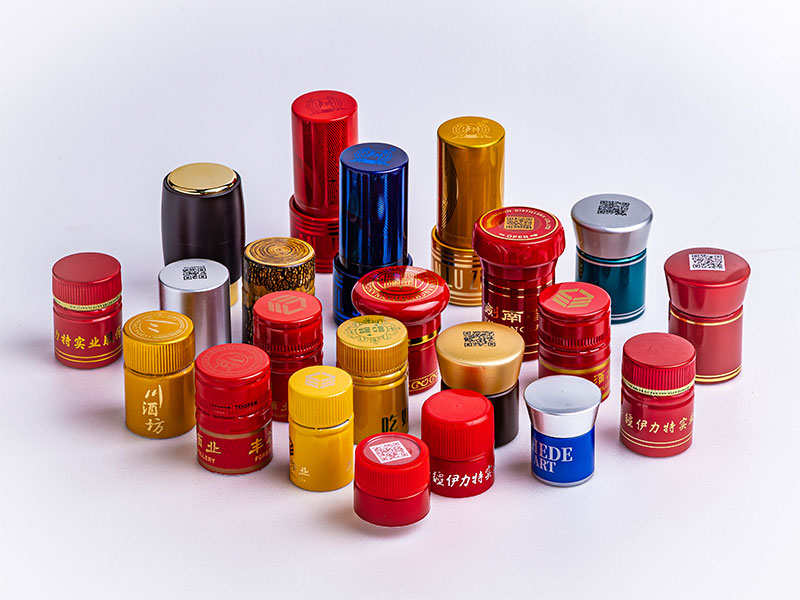
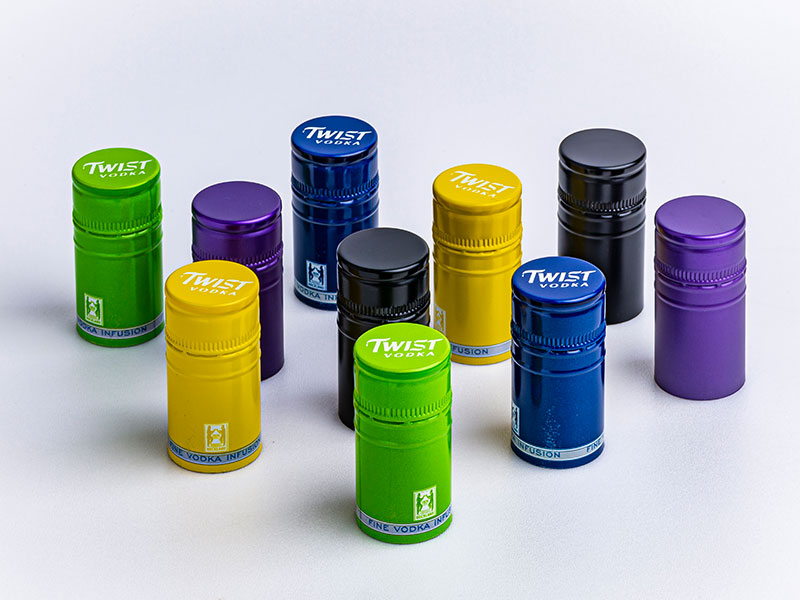
Custom aluminum wine bottle closures with embossed branding occupy a rare intersection where metallurgy, design, and brand psychology converge on a surface barely a few centimeters wide. When treated as more than a commodity component, these closures become precision-engineered microstructures that protect wine chemistry, stabilize bottling performance, and anchor a brand’s visual identity at the point of touch.
Instead of viewing an aluminum closure merely as “a cap,” it is more accurate to see it as a layered system: alloy substrate, surface treatments, embossing deformation zones, coating architectures, and sealing interfaces—each governed by standards, temper conditions, and chemical interactions that quietly determine how the bottle will perform on shelf, in storage, and in the consumer’s hand.
Why embossed branding on aluminum closures is more than decoration
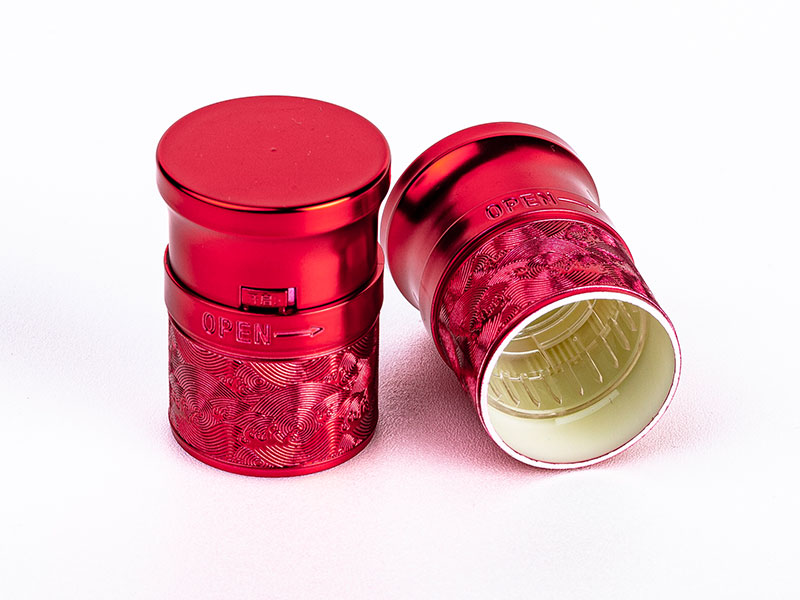
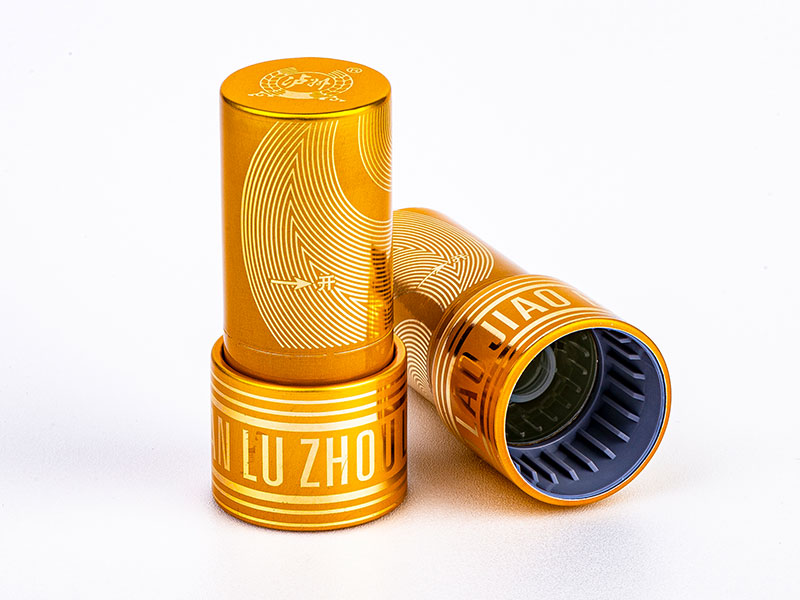
Embossed logos and textures are often discussed as purely aesthetic. From a technical standpoint, they are controlled plastic deformations applied to a thin, work-hardened aluminum shell that must still:
- Hold torque reliably during capping and opening
- Maintain thread integrity under carbonation or thermal cycling
- Preserve interior lacquer continuity to avoid corrosion or flavor taint
- Resist fatigue cracks originating at embossed peaks or valleys
The embossed area becomes a mechanical “hot spot” where material thickness, alloy temper, and deformation depth need to be engineered together. A well-designed custom closure will place embossing where the stress envelope is lowest and tune temper so that the metal flows plastically without tearing or springback that distorts the logo.
When embossing is handled correctly, it actually enhances tactile grip and perceived quality. When mishandled, it creates micro-cracks, lacquer fractures, and misaligned knurls that eventually manifest as leakage, cosmetic defects, or poor openability.
Choosing the right aluminum alloy and temper for wine closures
Most high-quality wine closures rely on aluminum alloys optimized for forming and surface treatment, rather than extreme strength. The closure must be strong enough to resist deformation during transport and use, yet soft and ductile enough for deep drawing, rolling of threads, and embossing without fracture.
A typical choice is in the 3xxx and 8xxx alloy families. A commonly used, well-balanced alloy for wine bottle closures is similar to AA8011 or AA3105. From the perspective of an alloy engineer, these materials are chosen for:
- Formability during deep drawing and redrawing of the shell
- Good response to surface finishing and lacquering
- Adequate strength after work hardening (cold rolling and forming)
- Corrosion resistance in contact with wine vapor and cleaning chemicals
Temper is equally critical. Full-soft O temper allows maximum forming but is too weak in the finished cap. Over-hardened tempers crack during embossing and threading. Closure producers commonly use half-hard tempers like H14 or specially tailored tempers between H12 and H16, sometimes achieved with controlled cold reduction and intermediate annealing. This “tuned” temper enables:
- Smooth flow of aluminum into embossing dies
- Dimensional stability of skirt, head, and thread features
- Controlled elastic recovery, preserving thread geometry
- Predictable torque under standardized capping conditions
A closure optimized for embossing often uses a slightly softer temper in the head region, where the logo and decorative patterns are formed, and a marginally stronger condition in the skirt for better thread retention. This can be influenced by thickness distribution and reduction passes during strip rolling, even if the nominal temper designation is uniform.
Technical parameters that actually matter in custom wine closures
Generic specs are not sufficient when you are pushing customization, embossing, and brand-critical finishes. The following groups of parameters are typically defined in a serious closure project, even if they are not always visible in marketing brochures.
Dimensional parameters
- Shell thickness range, frequently around 0.20–0.30 mm, tuned to bottle neck type
- Head diameter and skirt length, matched to BVS / Stelvin-type finishes or custom necks
- Thread profile and pitch, designed to match glass standards and closure machine tooling
- Embossing depth and radius, coordinated with alloy thickness and temper to avoid tearing
Mechanical parameters
- Tensile strength and yield strength, ensuring no collapse during transportation or capping
- Elongation, critical for drawing, knurling, and embossing without cracking
- Opening torque and bridge-break torque, carefully balanced to avoid over-tightening or accidental opening
Surface and coating parameters
- Outer coating type (polyester, epoxy-polyester hybrid, or PU-based): gloss, hardness, and color stability
- Inner lacquer type (usually BPA-NI epoxy-based or alternative): chemical resistance to wine acids, sulfur dioxide, and ethanol vapors
- Coating thickness: typically a few microns, thick enough for corrosion protection, thin enough to preserve thread precision and embossing clarity
Sealing and liner parameters
- Liner material: commonly EPE (expanded polyethylene) or coextruded liners, sometimes with oxygen scavengers for sensitive wines
- Compression set and resilience: ensuring sealing after multiple thermal cycles
- Migration and sensory compliance: tested for flavor neutrality and regulatory standards
Each of these parameters is influenced directly or indirectly by the choice of alloy and temper. For example, slightly higher yield strength demands a refined threading process to avoid springback that can alter the pitch and seal contact. Similarly, embossing depth cannot be defined in isolation; it must be calculated relative to thickness, temper, and expected torque loading.
Alloy composition and chemical behavior in a wine environment
The interaction between the aluminum closure and wine is mediated almost entirely by the internal lacquer and liner. Still, engineers specify alloy chemistry to minimize risk if there are micro-defects in coating.
A typical closure alloy comparable to AA8011-H14 or AA3105-H14 might present chemical ranges similar to the following:
| Element | Typical Range (wt%) | Functional Role in Closures |
|---|---|---|
| Al | Balance | Base metal, provides formability and low density |
| Si | 0.4 – 0.8 | Improves castability and contributes to strength; influences surface behavior in finishing |
| Fe | 0.5 – 1.0 | Strengthening; controls grain structure but must be limited to avoid brittleness |
| Cu | ≤ 0.10 (often lower) | Kept low to improve corrosion resistance in acidic environments |
| Mn | 0.3 – 1.0 | Solid-solution strengthening and improved formability; stabilizes grain structure |
| Mg | ≤ 0.05 – 0.3 | Optional; small additions can improve strength but must not impair deep draw characteristics |
| Zn | ≤ 0.20 | Limited to avoid corrosion issues; higher Zn would not suit wine closure environments |
| Ti | ≤ 0.10 | Grain refiner; stabilizes microstructure during processing |
| Others | ≤ 0.05 each, 0.15 total | Impurities are tightly controlled to avoid unpredictable corrosion or forming defects |
This compositional window is intentionally conservative for wine applications. Low copper and zinc, plus moderate manganese, are chosen to keep the alloy stable in the presence of organic acids, sulfur compounds, and fluctuating humidity. Even though the lacquer is the primary barrier, the underlying alloy must remain passive when exposed through occasional pinholes or damage.
How tempering and work hardening shape embossing behavior
From a metallurgical perspective, embossing is not just “pressing a logo.” It is localized strain hardening applied late in the manufacturing sequence. The alloy may begin as coil in a half-hard temper, undergo deep drawing and wall ironing, threading, knurling, and then receive the embossing as a final forming step.
In this context, tempering does three things:
- Controls dislocation density to regulate flow during forming
- Influences anisotropy so that embossing appears uniform around the circumference
- Determines residual stress levels that can later distort the closure under heat or pressure
A closure in a properly controlled H14-type temper will exhibit:
- Sufficient yield strength to hold the embossed relief over time
- Adequate ductility for fiber flow around the embossing die without micro-cracks
- Limited springback, preserving embossed edge sharpness and legibility
If the strip is over-rolled (too hard), the embossed areas may show fine radial cracks, particularly around sharp logo edges or small text. These cracks can propagate under torsional stress during application or opening. On the other hand, if the material is too soft, the embossing can gradually lose definition under stacking loads in cartons or under capping head pressure.
The “sweet spot” is engineered by adjusting cold reduction percentage, annealing temperature, and line speed during coil production. This is rarely discussed in closure catalogs, but it is essential for consistently crisp embossing and stable performance.
Implementation standards that silently govern performance
Custom aluminum wine closures are often designed in harmony with international standards, glass finish norms, and chemical safety regulations. While end-users primarily see color, logo, and finish, engineers navigate an entire framework that dictates everything from thread height to lacquer formulation.
Standards and norms frequently involved include:
- Bottle neck and thread dimensions aligned with BVS or Stelvin-type finishes, ensuring compatibility with existing bottling lines
- Food-contact standards and regulations (e.g., EU food-contact frameworks, FDA-compliant coatings) for both inner lacquer and liner materials
- Migration and sensory test protocols, confirming no off-flavors or odors migrate into wine, even after long storage periods
- Torque and seal tests, often aligned with in-house or industry practices for vacuum retention, CO₂ resistance for sparkling variants, and thermal cycling resilience
When embossed branding is added, the closure design must still comply with these implementation standards. The embosser’s pressure, die geometry, and logo placement are validated to ensure they do not disturb the thread profile or compromise the liner’s sealing interface.
A distinct viewpoint: treating the closure head as a multi-functional “micro-plate”
A useful way to think about the head of the closure—the top disc where embossing lives—is to treat it as a small, pre-stressed plate in a mechanical sense. This plate must:
- Distribute the axial load from capping heads evenly across the skirt
- Resist local buckling around embossed protrusions
- Retain shape after embossing-induced plastic deformation
In engineering terms, the embossed regions act like local stiffeners: raised logos can increase local bending stiffness but create strain concentrations around the edges. By adjusting alloy thickness and temper, you can exploit this effect to create closures that feel “solid” and premium to the touch, while using minimal material.
From this perspective, embossed branding does double duty:
- It shapes brand identity
- It subtly modifies the mechanical response of the closure head
When tuned correctly, the closure feels more rigid when pressed by the consumer’s fingers, reinforcing the perception of quality. Yet the material beneath remains responsive enough to accommodate torque and pressure during application.
Surface engineering: where color, tactility, and protection merge
The visual and tactile experience of custom aluminum wine closures with embossed branding depends heavily on a precisely layered surface system:
- Base metal: carefully rolled and cleaned aluminum strip
- Conversion layer: often a chromium-free chemical treatment for adhesion and corrosion resistance
- Primer: thin, controlled layer to bond topcoat and equalize absorption
- Topcoat: colored or clear lacquer that carries gloss, metallic effects, or soft-touch sensations
- Optional overprint varnish: protects ink, adds tactile textures (matte, satin, micro-rough)
Embossing interacts with these layers. If applied after topcoating, the lacquer must elongate with the metal without cracking. If applied earlier, the embossing can influence how color appears, with light catching embossed ridges differently from flat areas. Both approaches are viable; selection depends on logo complexity, production sequence, and visual goals.
From an SEO-oriented perspective, this interplay between embossing and coatings matters because it directly affects how the closure photographs and appears on digital platforms. Deep, clean embossing combined with advanced coatings delivers closures that look premium in high-resolution imagery—critical for e-commerce, social media, and brand storytelling.
Chemistry at the interface: protecting wine integrity
Wine is a chemically active liquid with organic acids, phenolic compounds, sulfur dioxide, and ethanol. Even if the closure does not contact liquid directly, vapor-phase interactions can occur inside the headspace. The internal lacquer and liner composition must remain inert over years, not months.
chemical and physical expectations for inner coatings and liners include:
- Resistance to acidic environments comparable to tartaric and malic acid mixtures
- Stability in the presence of sulfur dioxide, preventing discoloration or breakdown
- Low permeability to oxygen, for closures specifically designed to control oxygen ingress rates
- Minimal extractables and leachables, verified by migration tests into model wine solutions
The underlying aluminum alloy composition (as shown in the table earlier) is chosen to align with these conditions. If a micro-defect in lacquer appears, the alloy’s corrosion behavior determines whether a self-limiting, protective oxide forms or a localized pitting site develops. With carefully controlled Fe, Cu, and Zn contents, the alloy supports the formation of a stable passive film, reducing the risk of flavor contamination.
Integrating design, alloy, and process for branded performance
A custom aluminum wine bottle closure with embossed branding is most successful when branding, metallurgy, and process engineering are conceived together rather than sequentially. That means:
- Selecting alloy and temper with both forming and embossing in mind, not just deep drawing
- Positioning the logo where stress levels and thickness distribution are favorable
- Defining embossing depth relative to sheet thickness and desired tactile feel
- Synchronizing coatings, lacquers, and embossing steps in the production line so that each layer supports the rest
This integrative approach transforms the closure from a cost line item into a functional branding component with quantifiable performance: consistent torque, stable sealing, controlled oxygen ingress (where required), and a visual identity that still looks sharp and intact at the point of opening.
For wineries competing in crowded shelves and digital marketplaces, those few centimeters of embossed aluminum become a high-value touchpoint. The right alloy chemistry, temper condition, and implementation standards ensure that this touchpoint does more than look good—it protects the wine, streamlines bottling, and reinforces the brand every time the consumer twists the cap.
https://www.bottle-cap-lids.com/a/custom-aluminum-wine-bottle-closures-with-embossed-branding.html