

Premium 30x60mm Aluminum Wine Bottle Caps with Enhanced Leak Prevention
Premium 30x60mm Aluminum Wine Bottle Caps with Enhanced Leak Prevention
In the world of wine, people rarely talk about the cap. They talk about terroir, tannins, oak, and aging potential, but hardly anyone celebrates the thin piece of engineered aluminum that stands between a carefully crafted wine and the outside world. Yet for any winery that depends on consistent quality, the 30x60mm aluminum wine bottle cap is not just packaging; it is an invisible quality-control partner.
Looking at these caps from the inside out—starting with the alloy and finishing at the consumer’s hand—reveals how much quiet technology is hidden in that small cylinder of metal.
Why 30x60mm Became the Silent Standard
The 30x60mm dimension is more than a convenient size. It is essentially the global language of the modern screw-cap wine closure.
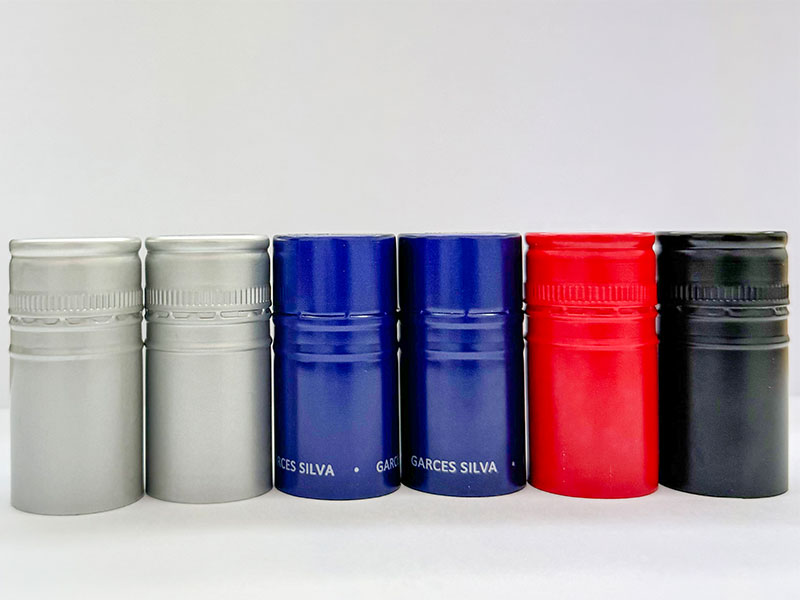
The “30” refers to the approximate outer diameter in millimeters, matched to standard BVS bottle neck finishes. This ensures a snug, repeatable engagement with the glass thread. The “60” describes the cap height, chosen to balance aesthetics, mechanical strength, and thread engagement length, while providing enough internal space for the liner that creates the seal.
From the outside, one winery’s 30x60mm cap might look much like another’s. Underneath the branding, color, and embossing, though, the material choice and forming details define whether that cap is simply decorative or a true guardian against leaks and oxygen ingress.
The Alloy Beneath the Finish: Strength with Precision
Most premium wine caps in the 30x60mm format are produced from aluminum alloy sheet in tempers designed for deep drawing and precise forming. A commonly used base alloy system is from the 3xxx or 8xxx series, engineered for a balance of formability, surface quality, corrosion resistance, and predictable mechanical behavior.
A representative alloy configuration for high-end screw caps is shown below:
Typical Chemical Composition of Premium Cap-Grade Aluminum Alloy (Example)
| Element | Content (wt%) |
|---|---|
| Al | Balance |
| Mn | 0.30–0.60 |
| Mg | 0.20–0.60 |
| Fe | ≤ 0.50 |
| Si | ≤ 0.35 |
| Cu | ≤ 0.10 |
| Zn | ≤ 0.10 |
| Ti | ≤ 0.05 |
| Others (each) | ≤ 0.05 |
| Others (total) | ≤ 0.15 |
The manganese and magnesium contribute to strength without sacrificing drawability. Low copper content preserves corrosion resistance—important in environments where condensation, temperature swings, and occasional contact with acidic wines or cleaning chemicals are very real conditions.
These alloys are typically supplied in tempers such as H14 or H16, then further processed through controlled annealing and forming. The objective is simple: caps must form deep, sharp threads and pilfer bands without cracking, retain the exact geometry of those features, and deform elastically enough during capping to lock onto the bottle without springing back or tearing.
Typical mechanical properties for such a cap-grade aluminum in final sheet form:
| Property | Typical Range |
|---|---|
| Tensile Strength (Rm) | 140–200 MPa |
| Yield Strength (Rp0.2) | 70–140 MPa |
| Elongation (A50) | 8–18 % |
| Hardness (HBW) | 35–55 |
These values are tuned to the customer’s capping machinery and bottle design. Too soft, and the cap may deform excessively, compromising the thread engagement and seal. Too hard, and the risk of cracking at the knurl or pilfer bridges increases, especially at high line speeds.
Enhanced Leak Prevention: More Than Just a Tight Cap
Leak prevention in a 30x60mm aluminum cap is the outcome of several tightly coordinated factors:
Bottle finish precision
The cap alone cannot prevent leakage if the bottle neck is inconsistent. Premium caps are engineered around the BVS standard finish, which defines thread geometry, sealing surface profile, and tolerances. Part of the “premium” in a premium cap is its compatibility with glass from high-quality, often audited, bottle manufacturers.
Cap thread and pilfer band design
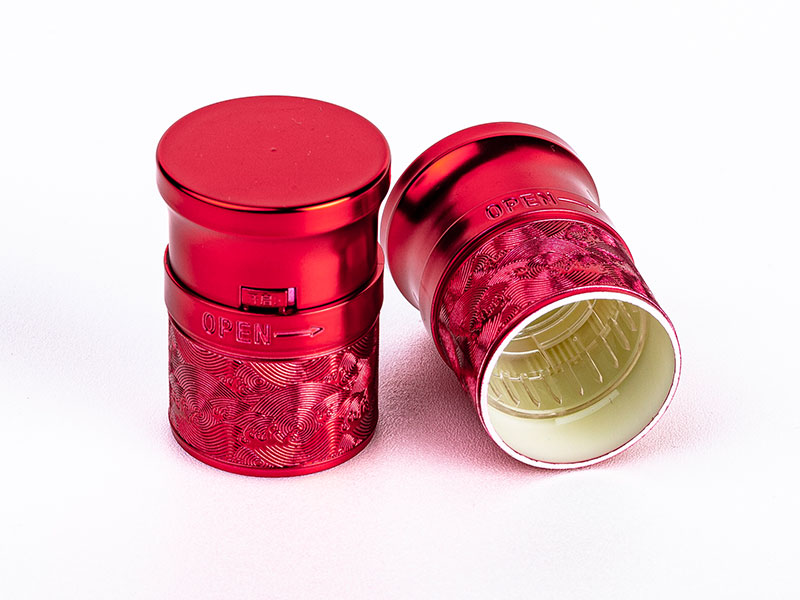
During production, the inner surface of the cap is roll-formed to create threads and, in many cases, a tamper-evident pilfer band with controlled bridges. This forming process must create threads that will precisely track the glass threads without cross-threading, and a pilfer band that tears cleanly when first opened but remains stable during transport.
Liner material and compression behavior
The real hero of leak prevention is the liner. This is the internal seal—often an expanded polyethylene (EPE) foam, PVDC-based, Saranex, or premium tin–saran structure—designed to compress against the bottle’s sealing surface.
liner characteristics include controlled thickness, resilience (ability to spring back after compression), chemical resistance to wine and spirits, and low oxygen transmission rate (OTR) where preservation demands it.
Capping torque and application conditions
Even the best cap can fail if the application torque is wrong or the capping head is misaligned. Premium caps are engineered for a defined application torque window, often in the range suitable for BVS closures, and validated at the customer’s specified line speed, temperature, and humidity conditions.
When all these pieces are in harmony, leak prevention becomes not a random outcome but a repeatable, measurable performance attribute.
Surface Engineering: More Than Decoration
The outside of a 30x60mm cap is often the first tactile and visual contact a consumer has with the bottle. But the decorative finish is also a technical layer.
Before printing or coloring, the cap surface is typically chemically cleaned and then anodized or coated with a conversion layer. This improves paint adhesion, corrosion resistance, and scratch resistance. Lacquers—both exterior and interior—are selected to remain stable under UV exposure, transport vibration, refrigeration, and wet conditions in ice buckets or coolers.
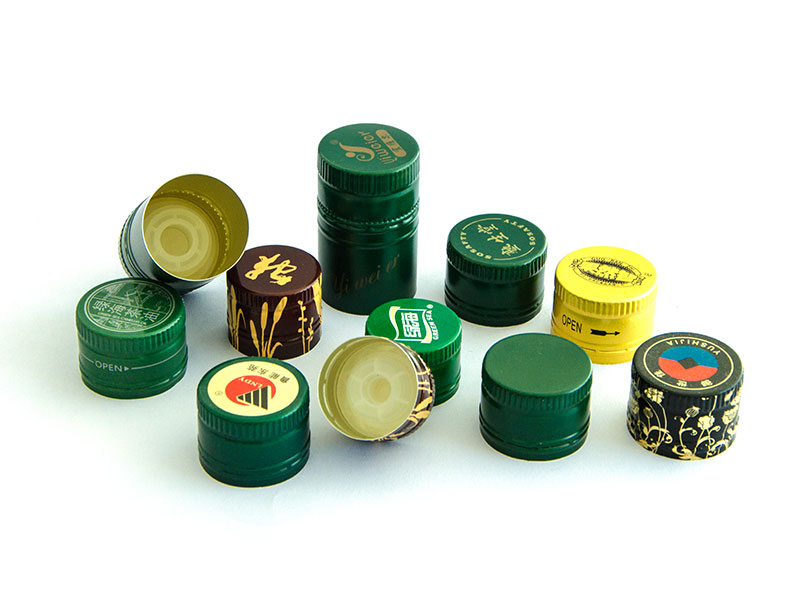
For wineries focused on brand integrity, color consistency is critical. Coil-coated aluminum for caps must maintain tight ΔE color tolerances across batches, so that a vintage from this year and one from the next share the same visual identity on the shelf. The same coating system must also withstand the mechanical stresses of deep drawing, thread rolling, and knurling without cracking or delaminating.
Standards, Compliance, and Food-Contact Safety
Premium aluminum wine caps are not merely attractive—they are regulated packaging components. Suppliers of cap-grade aluminum and finished caps typically work within frameworks such as:
- EN 573 and EN 485 series for wrought aluminum alloys and sheet products
- EN 602 or equivalent standards for aluminum closures for containers
- European food-contact regulations (EU) No. 1935/2004 and related measures
- FDA 21 CFR for food-contact materials in North American markets
Lacquers, inks, and liners must be certified for food contact, with controlled migration limits. For wines with specific sensitivities—organic certifications, reduced preservative loads, or particular aroma profiles—liner selection and lacquer chemistry can be further refined to avoid any sensory impact.
From Vineyard to Warehouse: Real-World Durability
On a winery floor, closures are not handled gently. Pallets are stacked, cartons are moved by forklifts, caps are fed into high-speed cappers, and finished bottles are shipped long distances through changing climates.
A robust 30x60mm cap must survive:
- Mechanical vibration in freight
- Temperature changes from cellar to container ship to retail shelf
- Humidity cycles that promote condensation under the skirt
- Occasional rough handling by distributors and retailers
The chosen aluminum alloy and temper must retain its structural integrity through all this. Caps cannot become brittle at low temperatures, nor overly soft at high ones. The pilfer bridges must remain intact during logistics, yet reliably tear away when the consumer opens the bottle the first time.
Leak testing—often involving vacuum, pressure, and tilt tests—is used not only to validate the design but also as a batch control tool. A premium cap supplier will maintain process capability so that leak performance stays consistent across large production volumes.
Sustainability: When Recycling Meets Performance
One overlooked advantage of aluminum wine caps is their inherent recyclability. Unlike certain multi-material closures, a monobloc aluminum cap with compatible lacquers can be readily reclaimed in standard aluminum recycling streams.
Modern cap alloys increasingly incorporate recycled aluminum content while maintaining strict compositional control. The challenge is to keep residual elements such as iron, copper, and zinc within tight windows so that formability and corrosion resistance are preserved.
For wineries building sustainability narratives, premium caps can be specified with documented recycled content, low-VOC coatings, and liners optimized for minimal environmental impact—all without compromising the critical leak-prevention and oxygen-barrier functions.
The Quiet Craftsmanship in Every Twist
When a consumer twists open a bottle sealed with a 30x60mm aluminum cap and hears that clean, crisp crack of the pilfer band, they are experiencing the last link in a long chain of engineering decisions.
Alloy composition, temper selection, drawing and threading precision, liner chemistry, coating systems, and application torque have all been tuned for one simple outcome: the wine inside tastes exactly as the winemaker intended, with no leaks, no off-notes, and no surprises.
From a distance, these caps are just small pieces of metal on top of bottles. Viewed closely, they are compact systems of materials science and process control, wrapped around a glass neck. Premium 30x60mm aluminum wine bottle caps do more than close a bottle; they quietly protect a winery’s reputation—one leak-free, perfectly preserved bottle at a time.