

Aluminum Closures for Wine Bottles with Advanced Pressure Control
Aluminum Closures for Wine Bottles with Advanced Pressure Control
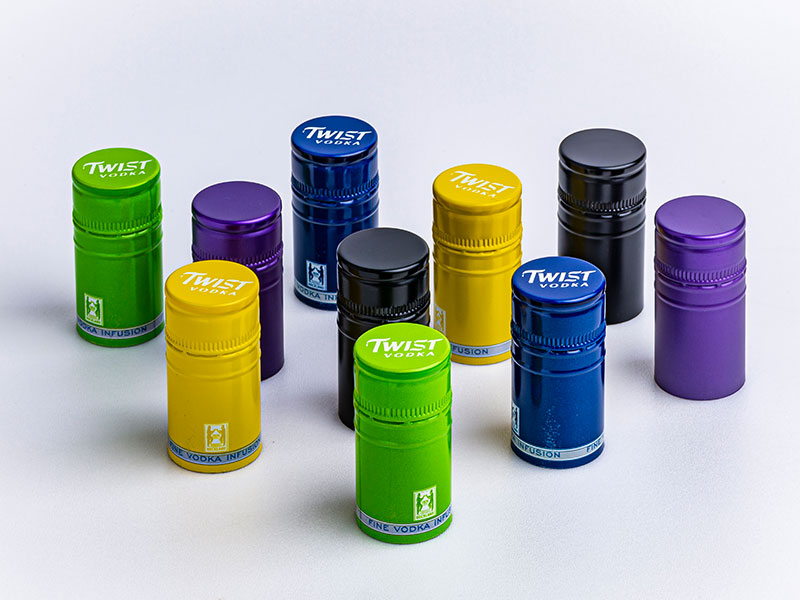
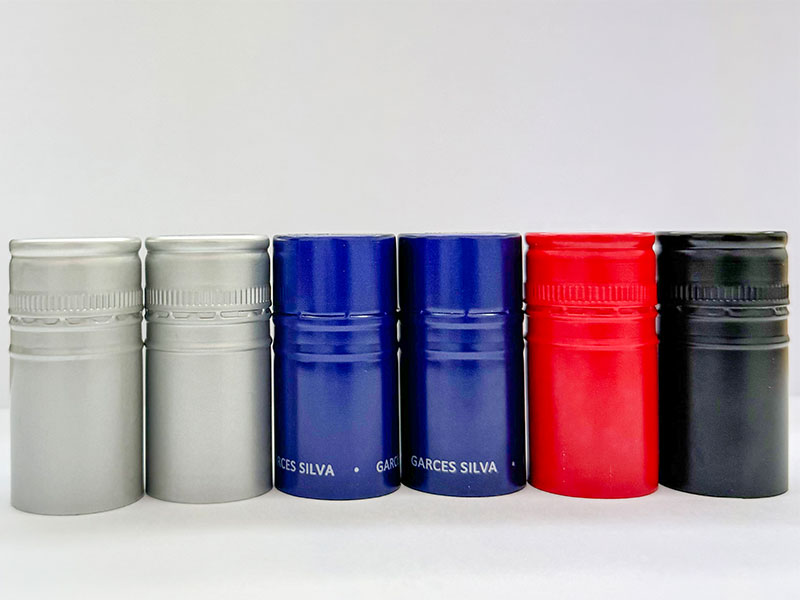
Wine is a living liquid long after the cork is pulled from the oak tree or the aluminum coil is rolled into a cap. It breathes, it shifts, it off-gasses, and it sometimes surprises the cellar team with pressure where they didn't expect it. For decades, closures were discussed as flavor guardians: oxygen transmission, scalping of aromatics, taint risk. Yet in modern bottling rooms and distribution chains-hot containers, high-altitude trucking routes, e-commerce warehouses-pressure control has quietly become the closure's second job. Aluminum closures, especially screw caps, are increasingly engineered not only to seal, but to manage pressure like a disciplined valve that never looks like one.
From a materials viewpoint, the appeal of aluminum is not merely its shine or recyclability. It's its honest predictability. Aluminum's mechanical response is uniform; its forming behavior can be tuned by alloy selection and temper; its barrier performance is built by systems, not by luck. When pressure spikes, that predictability is the difference between "a cap that holds" and "a closure system that behaves."
Pressure in still wine: the hidden variable
Still wine is not supposed to be pressurized, but reality disagrees. Residual fermentation, microbial activity, temperature swings, and dissolved CO₂ left intentionally for freshness can all contribute. Even a modest increase in internal pressure can push a closure-liner interface into a different regime: micro-slips, liner compression set, or thread relaxation after thermal cycling. The result is not always catastrophic leakage. Often it's subtle: intermittent venting, creeping oxygen ingress, or a slow loss of free SO₂ due to inconsistent headspace behavior.
Sparkling wine is a different world with purpose-built bottles and closures, but the "in-between" category is growing: pét-nat, frizzante, low-intervention wines, and aromatics bottled with a touch of spritz. These products frequently seek a closure that can tolerate higher internal pressure than classic still wine assumptions, while still offering consumer-friendly opening and reliable shelf behavior. This is where advanced pressure control in aluminum closures stops being niche and becomes practical.
What "advanced pressure control" really means in an aluminum closure
Pressure control is often misunderstood as a single feature. In practice, it's a system built from geometry, material temper, thread design, liner elasticity, and manufacturing consistency.
An aluminum closure controls pressure through three mechanisms working together:
The shell's hoop strength and elastic recovery determine how the cap resists expansion and maintains load on the liner. A cap that plastically relaxes too easily can lose sealing force after a heat cycle. Alloy and temper matter here.
The thread and skirt design translate application torque into a predictable axial load and maintain it under vibration and thermal cycling. Thread pitch, thread profile, and knurl geometry affect how the cap "settles" after application.
The liner is the real interface: it holds the seal, absorbs micro-movement, and can be engineered to allow controlled permeability or even limited pressure release in specialized designs. Most wine screw caps rely on liners such as Saranex-based structures for balanced OTR or tin-based structures for very low OTR; pressure-capable designs often use higher resilience compressible layers or engineered venting microstructures when the product category demands it.
So "advanced" doesn't necessarily mean a visible valve. It means the closure behaves consistently when pressure tries to turn your bottle into a small mechanical experiment.
Alloy selection: why 8011 and 3105 show up so often
In closure manufacturing, common aluminum alloys include AA8011 and AA3105. They form well, accept coatings, and provide stable mechanical properties at scale.
AA8011 is widely used in packaging foils and closure stock because it offers good formability and barrier-friendly surface behavior. AA3105, a manganese-bearing alloy, can provide higher strength and is often favored where better rigidity or dent resistance is needed. In pressure-sensitive applications, strength is not about brute force; it's about retaining sufficient residual stress after forming so the cap maintains sealing load throughout shipping and storage.
Temper selection is equally important. Closure shells are commonly produced from H14/H16/H18-type tempers depending on supplier practice, forming method, and performance targets. A harder temper improves buckle resistance and maintains skirt tension, but pushes back against deep drawing and can elevate the risk of micro-cracking if process windows are tight. A softer temper forms beautifully but may relax more under sustained stress. The "right" choice is the one that matches the capping line's application torque, bottle finish tolerances, and expected distribution stress.
Practical performance parameters that matter on the line
Pressure control begins before the wine is even filled. It begins with specifications that the bottling line can repeat.
Application torque and removal torque define the closure's mechanical life. Too low and the seal load is insufficient; too high and you risk thread damage, liner extrusion, or glass finish stress. For many 30×60 mm wine screw caps, application torque often falls in the broad neighborhood of 16–22 lbf·in (about 1.8–2.5 N·m), but the correct value depends on cap design, liner type, and bottle finish. The point is not the number; it's the stability of that number across shifts, heads, and humidity.
Top load and buckle resistance indicate how a closure behaves under vertical compression during case stacking. Advanced pressure control is meaningless if the cap panel buckles and loses liner compression in a hot warehouse.
Leak resistance and pressure tolerance should be validated with internal pressure tests appropriate to the wine style. For lightly sparkling products, producers often test at several bar equivalents and include temperature conditioning because warm CO₂ is the real troublemaker. A closure that survives pressure at 20°C may behave differently after a 40°C hold.
OTR targets should be selected alongside pressure requirements. A very low OTR liner can preserve reductive styles but may also trap more CO₂ and volatiles; a more permeable liner can moderate reductive risk but interacts differently with pressure and aroma evolution. Advanced closures are chosen like a winemaking tool, not a commodity.
Implementation standards: manufacturing discipline behind the shine
The romance of a screw cap is that it feels simple. The reality is that closures are small engineered laminates and formed shells that demand process control.
For aluminum coil and sheet used in closures, widely referenced standards include ASTM B209 for aluminum sheet and plate and EN 485 series for aluminum sheet/strip tolerances and mechanical properties. Coatings used on closures are typically food-contact compliant systems, designed to resist wine acidity and SO₂. Liner materials must comply with relevant food-contact regulations depending on market, such as EU Framework Regulation (EC) No 1935/2004 and specific measures for plastics, and FDA requirements in the United States.
In production, checkpoints include coating thickness uniformity, curing performance, shell dimensions, thread profile integrity, and liner insertion quality. Small deviations become big problems when pressure fluctuates: an uneven liner can create a preferential leak path; a poorly cured coating can lead to corrosion sites that undermine the seal; inconsistent skirt dimensions can produce variable torque and variable sealing force.
Tempering and forming: where pressure capability is born
Advanced pressure control is often decided in the forming press, not in the marketing brochure. Deep drawing and shell forming introduce work hardening and residual stresses. If the process is tuned well, the skirt behaves like a spring that maintains radial load on the glass finish. If it is tuned poorly, the cap can "set" and lose its grip, especially after thermal cycles.
Producers aiming for pressure-capable performance typically pay attention to:
Consistent earing control, because uneven draw leads to uneven skirt tension.
Controlled annealing or temper selection upstream, so the forming strain doesn't push the alloy into brittle behavior.
Surface treatment and lubricants that don't compromise coating adhesion or liner bonding.
The goal is not maximum strength; it's stable elasticity in service.
Chemical properties: what the alloy brings to the closure
Below is a practical reference table for typical compositions (approximate ranges) of common closure alloys. Actual limits depend on supplier certification and specific standard editions.
| Alloy | Si (%) | Fe (%) | Cu (%) | Mn (%) | Mg (%) | Zn (%) | Ti (%) | Al |
|---|---|---|---|---|---|---|---|---|
| AA8011 | 0.50–0.90 | 0.60–1.00 | ≤0.10 | ≤0.20 | ≤0.05 | ≤0.10 | ≤0.08 | Remainder |
| AA3105 | ≤0.60 | ≤0.70 | ≤0.30 | 0.30–0.80 | 0.20–0.80 | ≤0.40 | ≤0.10 | Remainder |
These chemistries translate into forming behavior and strength potential. AA3105's Mn and Mg support higher strength and improved dent resistance, while AA8011's Si/Fe balance is well-proven for packaging applications with reliable formability and surface response.
A closure as a quiet "pressure moderator"
The most distinctive way to think about a pressure-controlled aluminum wine closure is to treat it like a silent cellar worker. It does not make decisions, but it enforces consistency. It keeps the liner load where it needs to be. It tolerates the long haul through heat and vibration. It accepts the wine's small internal changes without punishing them with leaks or sudden oxygen pulses.
For wineries experimenting with lightly sparkling expressions or pushing lower-intervention bottling where pressure variability is a reality, advanced pressure control isn't a gimmick. It's humility engineered into metal: acknowledging that wine will not always behave perfectly, and choosing a closure that can calmly handle the moments when it doesn't.