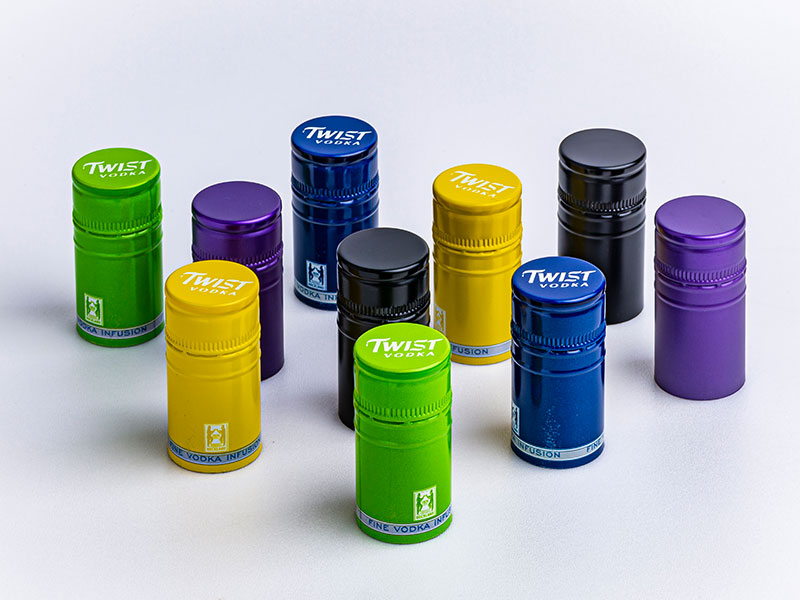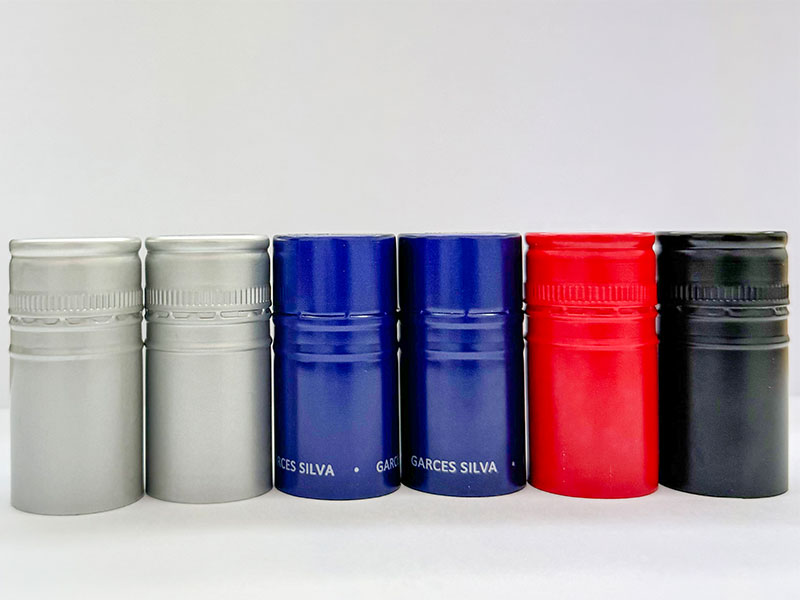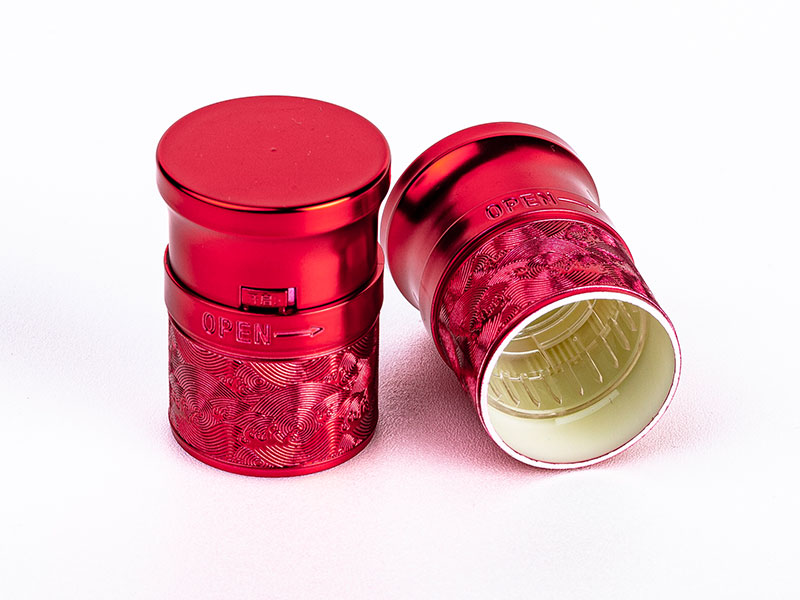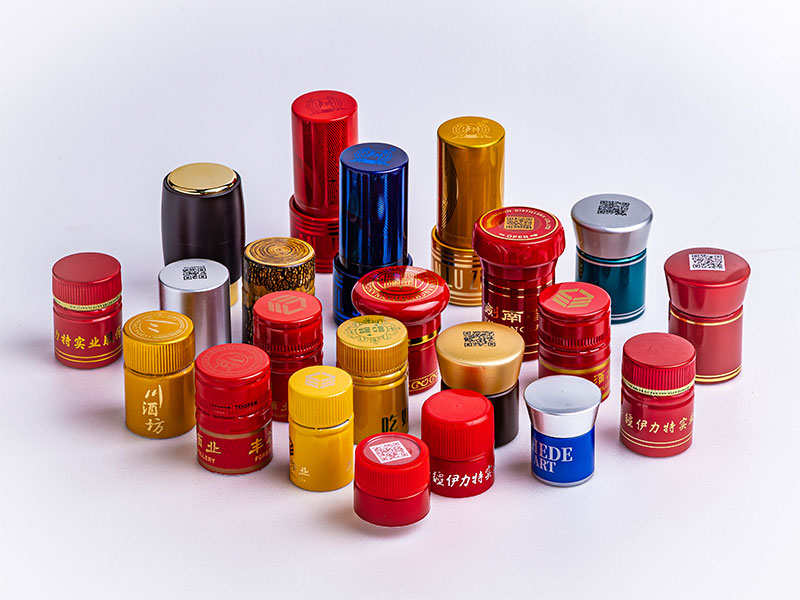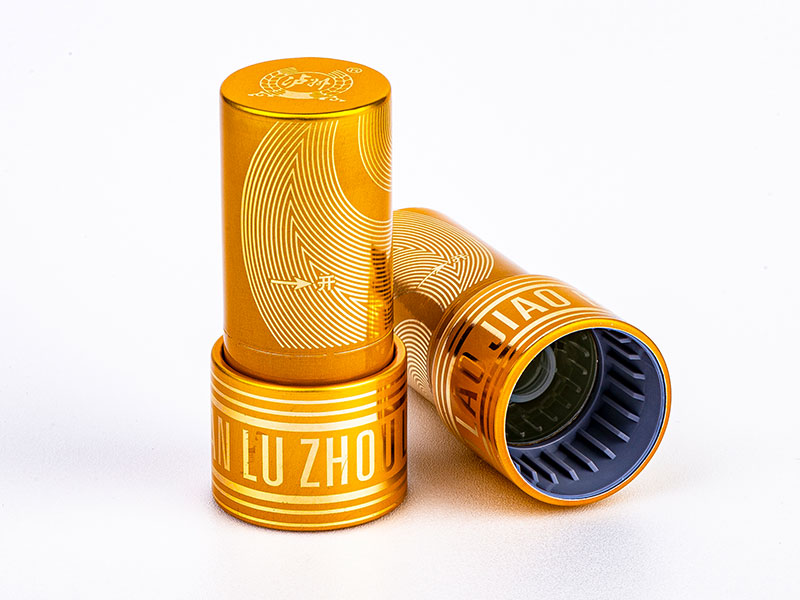


30x60mm Aluminum Screw On Closures for Wine Bottles with Tight Seal
A wine closure is often treated like a small accessory-something you twist, discard, or forget. Yet it is the final "valve" between a winemaker's intention and the drinker's glass, deciding how oxygen enters, how aroma stays, and how reliably the bottle survives transport, storage, and time. From that viewpoint, a 30x60mm aluminum screw on closure is not just a cap; it's a precision component that behaves like a miniature piece of packaging engineering. When the goal is a tight seal with consistent performance, this size and format has a quietly persuasive logic.
The "30x60mm" designation points to two dimensions that matter in real-world bottling lines and consumer use. The 30 mm typically references the nominal diameter that interfaces with the bottle finish, while the 60 mm height provides enough skirt length for secure thread engagement and a stable tamper-evident band. That extra height is not cosmetic. It helps the closure resist top-load impacts, improves application stability at speed, and offers a generous canvas for branding while keeping the mechanical function uncompromised.
Why aluminum, and why it keeps showing up in modern wine
Aluminum is widely chosen for wine screw on closures because it provides a rare combination of formability, corrosion resistance, low mass, and excellent surface decoration. The body of the closure must be drawn and formed without cracking, then survive crimping onto threads with consistent springback behavior. That is exactly where aluminum alloys shine: they can be engineered to flow during forming, then hold shape afterward.
From a quality-control mindset, aluminum also supports highly repeatable torque application. A tight seal is not only about "tightening harder." It's about achieving the correct compression of the liner against the bottle lip, in a controlled range of application torque, without tearing the liner, deforming the skirt, or creating micro-paths for oxygen ingress. Aluminum's predictable mechanical response helps keep that window stable across long production runs.
The tight seal: where liner design does the heavy lifting
A closure body provides structure, but the liner provides sealing. For 30x60mm wine closures, tight seal performance typically depends on the liner system, most commonly:
An Saranex-type co-extruded liner, designed to balance oxygen transmission and flavor neutrality while remaining cost-effective.
A tin-saran liner, traditionally used when extremely low oxygen transmission is desired, offering a strong barrier profile and excellent long-term consistency.
What feels like a simple twist becomes a controlled compression seal: the liner is pressed against the bottle's top surface and inner lip geometry. A well-made closure aims for uniform liner compression around the full circumference. In practice, that uniformity is influenced by bottle finish consistency, closure concentricity, liner thickness control, and application head alignment.
A "tight seal" should be understood as a measurable performance target, not a marketing adjective. Producers often evaluate it indirectly through torque retention, leakage testing, and oxygen ingress studies. For customers purchasing closures, it's worth asking suppliers about liner material traceability, compression set behavior, and migration compliance for food-contact packaging.
Implementation standards and practical acceptance criteria
In the field, screw on wine closures are usually designed to mate with common bottle finishes such as the Roll-On Pilfer-Proof style used globally for wine. The closure must be compatible with the bottle's thread profile, tamper band geometry, and sealing land dimensions. Even a high-quality closure will underperform if paired with an inconsistent glass finish.
For food contact and packaging compliance, typical reference frameworks include:
US FDA guidance relevant to indirect food additives and packaging materials, depending on the liner and any coatings.
Industry practices for torque application and tamper-evident performance, commonly validated by in-line checks during bottling.
On the production floor, acceptance often centers on application torque range, removal torque after conditioning, drop and leak resistance, and tamper band integrity. Tight seal performance should remain stable after temperature cycling, because closures experience hot warehouses, cold shipping containers, and fluctuating cellar storage.
Alloy choice, tempering, and what it changes in performance
A distinctive way to view the closure body is as a "formed spring" with decorative skin. It needs enough softness to be drawn and rolled into shape, yet enough strength to resist buckling and thread damage during capping and handling.
Common aluminum alloys for closure shells include AA8011 and AA3105. Both are widely used in packaging because they offer good formability and corrosion resistance. Temper selection matters because it controls hardness and elongation.
In practice, closure sheet is often supplied in a temper optimized for deep drawing and forming. Softer tempers reduce cracking risk during forming, while slightly harder conditions can improve dent resistance after application. The final choice depends on the closure design, forming tooling, skirt height, and the liner compression strategy.
Below is a practical, packaging-oriented reference for typical alloy chemistry ranges. Exact limits vary by supplier specification and region, so these values should be treated as common industry ranges rather than a substitute for a mill test certificate.
Typical chemical composition (wt. %) for closure-grade aluminum alloys
| Alloy | Si | Fe | Cu | Mn | Mg | Zn | Ti | Al |
|---|---|---|---|---|---|---|---|---|
| AA8011 | 0.5–0.9 | 0.6–1.0 | ≤0.1 | ≤0.2 | ≤0.05 | ≤0.1 | ≤0.08 | Balance |
| AA3105 | ≤0.6 | ≤0.7 | ≤0.3 | 0.3–0.8 | 0.2–0.8 | ≤0.4 | ≤0.1 | Balance |
From a closure buyer's viewpoint, chemistry is not just a lab detail. It influences corrosion behavior under humid storage, response to coatings and inks, and how the metal behaves under forming stress. The right alloy, matched with a suitable temper, reduces the risk of skirt splits, thread deformation, and cosmetic defects that can undermine brand perception even when sealing is technically acceptable.
Coatings, printing, and corrosion resistance where wine lives
Wine closures live in a challenging microclimate: humidity, spilled wine, cleaning agents, and sometimes salt exposure in coastal logistics. Closure shells commonly use internal and external coatings to protect the aluminum and prevent interaction with the wine environment. External coatings also support high-definition printing, matte or gloss finishes, and tactile effects.
A tight seal is partly a corrosion story. If corrosion compromises the inner surface, it can affect liner seating, aesthetic appearance, or long-term removability. A closure program that treats coatings as an engineered system-rather than merely decoration-usually delivers better consistency in the market.
Application parameters that actually matter on a bottling line
A 30x60mm closure can perform beautifully in the lab and still fail on a line if the application parameters are neglected. The practical control points include:
Stable capping head alignment and consistent bottle height.
Controlled application torque, validated with calibrated torque testers.
Removal torque and bridge integrity checks after conditioning, especially if bottles are warm-filled or stored hot.
Glass finish inspection, because chips, out-of-round necks, or inconsistent sealing lands can defeat even the best liner.
The "tight seal" is achieved by repeatability: repeatable bottle finish, repeatable closure dimensions, repeatable liner compression, repeatable torque.
A different way to judge a closure: the silence test
There's a small moment when a screw on closure is opened: the twist, the first break of resistance, the clean release. When a closure is well made and properly applied, that moment is quiet and confident-no grinding, no uneven torque jumps, no sticky drag from a damaged liner, no loose feeling that suggests oxygen has been wandering in and out.