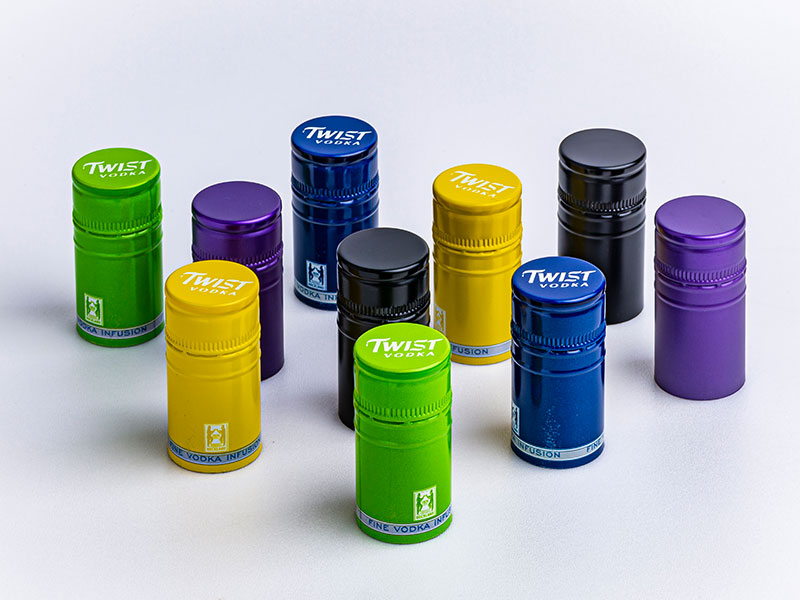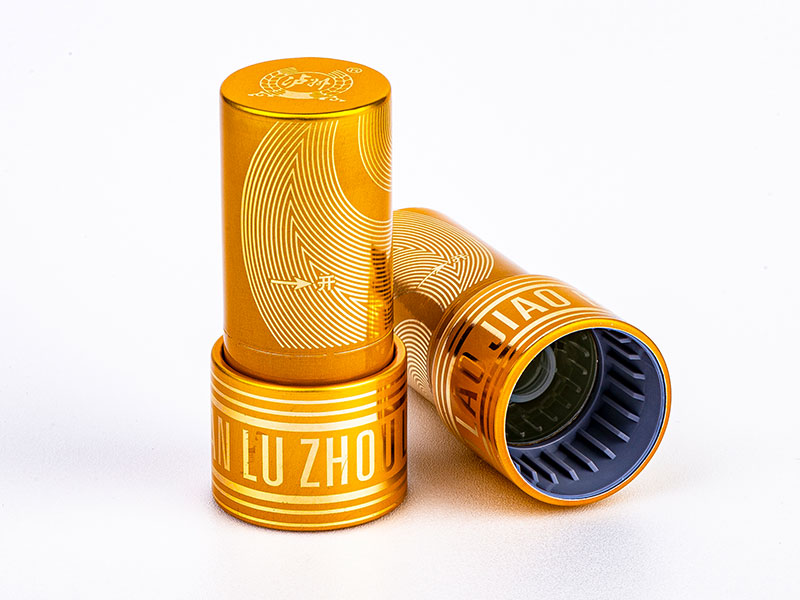


Tamper Evident Aluminum Closures for Bottled Wine with Pressure Seal
Tamper Evident Aluminum Closures for Bottled Wine with Pressure Seal: Where Metallurgy Meets Trust
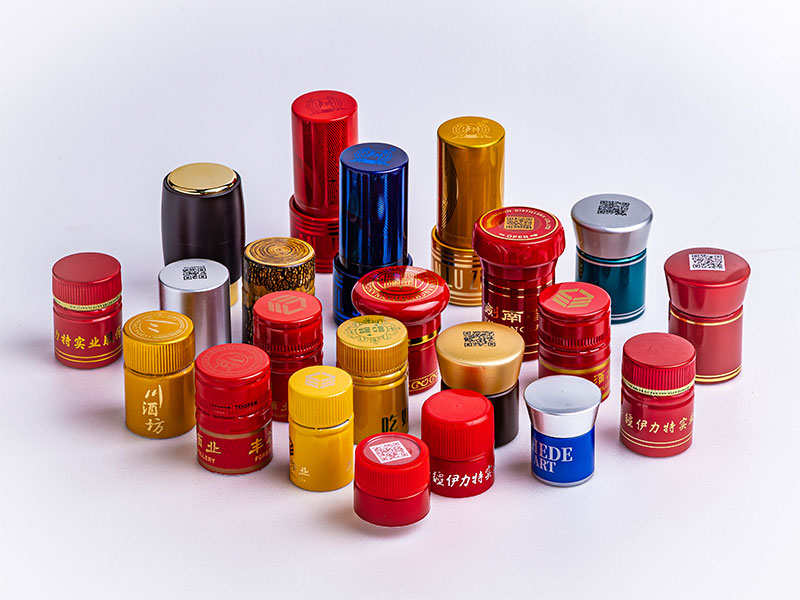
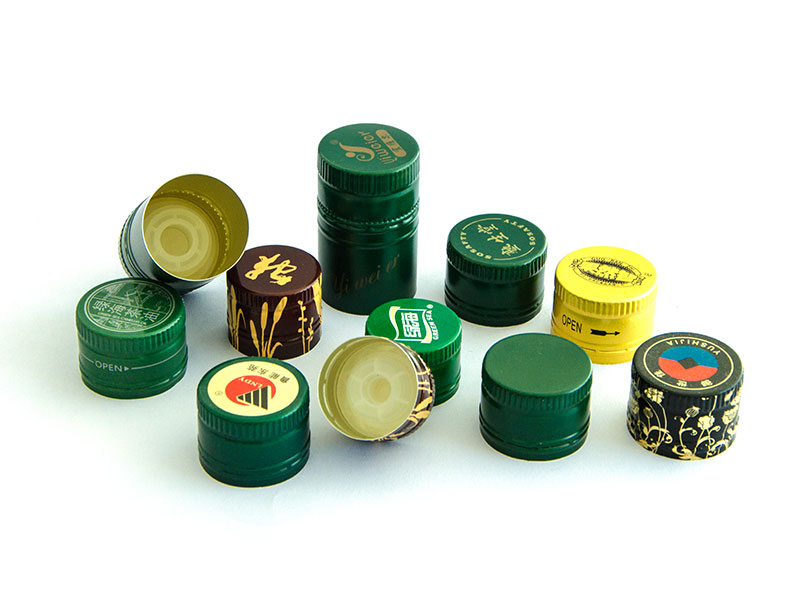
In premium wine, the closure is more than a functional component. It is a compact "contract" between producer and drinker: freshness preserved, authenticity protected, opening experience controlled. Tamper evident aluminum closures with a pressure seal sit at an interesting intersection of material science and brand security. They don't rely on cork elasticity or heavy glass-to-glass compression alone; instead, they combine precisely formed aluminum with an engineered liner that seals under controlled application force, while a tamper-evident feature makes interference obvious.
A useful way to understand these closures is to stop thinking of them as just caps and start seeing them as a miniature forming project. Every roll, score line, skirt geometry, and liner interface is a deliberate choice that must survive bottling-line speeds, distribution vibration, and temperature swings-without losing seal integrity or visual appeal.
What "Pressure Seal" Really Means in a Wine Aluminum Closure
A pressure seal closure typically achieves sealing through liner compression against the bottle finish, created by application torque and axial load during capping. The aluminum shell provides hoop strength and dimensional stability; the liner provides the compliant sealing surface. The seal performance is therefore a partnership:
- The aluminum must be strong enough to maintain formed geometry, resist creep, and hold tamper-evident features.
- The liner must be elastic enough to conform to glass micro-roughness and maintain contact pressure over time.
- The bottle finish must be consistent enough that the closure can do its job repeatedly, at scale.
From a technical viewpoint, "pressure seal" is best understood as controlled deformation: the liner compresses, the skirt is rolled or threaded to lock position, and the closure retains a residual sealing force even after the capping head releases.
The Tamper-Evident Function: A Mechanical Signature
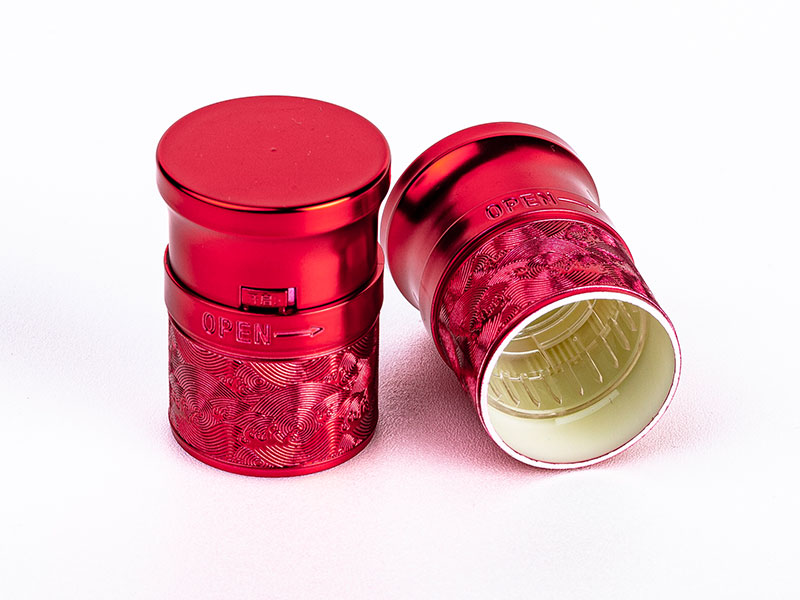
Tamper evidence in aluminum wine closures is commonly implemented by a breakaway band, perforations, or a controlled-fracture bridge pattern that separates when first opened. Unlike shrink capsules that can be replaced, the tamper-evident band is integrated into the metal structure and its failure mode is visible.
The distinctive advantage of aluminum here is predictability. Properly selected alloy and temper allow you to design a tamper feature that tears cleanly at a known load range. Too soft, and it stretches instead of tearing. Too hard, and it can crack prematurely during application. The best closures behave like engineered "fail-safe" parts: strong in transport, honest at first opening.
Parameters That Actually Drive Performance
Instead of focusing only on cap diameter, it helps to think in terms of the closure's pressure system, where each dimension influences how force becomes seal.
Common parameter ranges used in bottled wine aluminum closures with tamper evidence and pressure sealing include:
- Closure outside diameter typically around 28–33 mm, depending on bottle finish standard and market preference
- Overall height commonly around 44–60 mm for wine formats requiring a long skirt and strong brand presence
- Skirt thickness often in the 0.20–0.25 mm range for wine-grade closures, balancing formability with tear control
- Top panel thickness may be similar to skirt thickness or slightly optimized depending on embossing depth and top-load needs
- Thread form or roll-on geometry tuned to the bottle finish; compatibility is often more important than aggressive thread depth
- Liner thickness and density selected to achieve seal at practical torque and to maintain resilience over shelf life
Application torque and axial load are process parameters that matter as much as the closure itself. A well-designed closure paired with uncontrolled capping torque can still leak, "spin," or show cosmetic deformation. Conversely, a controlled application process can make a moderately thin shell perform like a premium closure.
Implementation Standards and Compatibility Expectations
Tamper evident aluminum closures for wine often align with established bottle finish and packaging standards used in the beverage industry. While exact requirements vary by region and customer specification, implementation typically includes:
- Dimensional conformity to the target bottle finish standard used for roll-on pilfer-proof or wine screw-cap finishes
- Verification of tamper-evident band separation behavior under first opening
- Seal integrity testing using internal pressure/vacuum stability checks appropriate for still wine or lightly sparkling conditions
- Coating and migration compliance for food-contact materials, including internal lacquer and liner material suitability
- Packaging line capability validation, ensuring the closure performs at target speeds without excessive rejection rates
In practice, most producers treat standards as the baseline and build internal acceptance criteria around real shipping and storage conditions: hot warehouse peaks, cold-chain segments, vibration, and long dwell times.
Alloy Selection: Why the Best Wine Closures Behave Like Precision Sheet Metal, Not "Soft Foil"
For aluminum bottle caps in wine, the most commonly used alloys are from the 3xxx series (Al-Mn) and sometimes 5xxx series (Al-Mg), chosen for formability, corrosion resistance, and stable mechanical behavior after forming.
From a closure engineer's viewpoint, the "best" alloy is the one that survives these simultaneous demands:
- Deep drawing and panel embossing without orange peel or fracture
- Predictable tear at the tamper-evident bridges
- Sufficient rigidity to retain thread/roll form under storage creep
- Compatibility with coatings and inks for premium decoration
- Resistance to corrosion in humid cellars or salty air logistics routes
Typical choices include AA 3105, AA 3003, and AA 5052 depending on forming severity, tamper design, and required strength. For many wine screw caps with tamper evidence, AA 3105 is a widely used balance of strength and formability.
Tempering and Work Hardening: Where Opening Torque Is "Designed"
Temper is not a background detail; it is the lever that tunes the closure's personality.
- Softer tempers (such as O or very low work-hardened states) offer high formability but can lead to skirt growth, thread relaxation, or smeared tamper features.
- Harder tempers increase dimensional stability and crisp opening behavior but raise the risk of cracking at score lines or bridges, and can reduce forming margins.
In practical manufacturing, tempers like H14–H19 are often considered, with the exact selection depending on shell thickness, emboss depth, and tamper-evident geometry. The "right" temper is the one that gives a stable roll-on process while ensuring the tamper band separates cleanly when opened and does not pre-fracture during application.
Chemical Composition and Typical Mechanical Conditions
Below is a reference-style table for commonly used aluminum alloys in closures. Exact composition limits can vary by standard and supplier agreement, but these ranges reflect typical industry expectations for closure-grade sheet.
Typical Chemical Composition (wt.%)
| Alloy | Si | Fe | Cu | Mn | Mg | Zn | Cr | Ti | Al |
|---|---|---|---|---|---|---|---|---|---|
| AA 3105 | ≤0.60 | ≤0.70 | ≤0.30 | 0.30–0.80 | 0.20–0.80 | ≤0.40 | ≤0.20 | ≤0.10 | Balance |
| AA 3003 | ≤0.60 | ≤0.70 | 0.05–0.20 | 1.00–1.50 | ≤0.05 | ≤0.10 | - | - | Balance |
| AA 5052 | ≤0.25 | ≤0.40 | ≤0.10 | ≤0.10 | 2.20–2.80 | ≤0.10 | 0.15–0.35 | ≤0.10 | Balance |
Typical Temper and Mechanical Property Windows for Closure Sheet
| Alloy | Common Tempers for Closures | Typical Tensile Strength (MPa) | Typical Yield Strength (MPa) | Typical Elongation (%) |
|---|---|---|---|---|
| AA 3105 | H14, H16, H18, H19 | 150–230 | 120–200 | 2–10 |
| AA 3003 | H14, H16 | 130–200 | 110–170 | 3–12 |
| AA 5052 | H19 (select cases), H32 (some designs) | 230–330 | 180–280 | 3–10 |
These ranges are influenced by thickness, rolling schedule, and supplier practice. In closure-making, what matters is not only the lab tensile result but also how consistently the coil behaves during high-speed forming and how stable the formed shell remains after application.
Coatings, Liners, and Corrosion: The Hidden Half of Closure Engineering
Aluminum closures for wine almost always use internal lacquer systems to prevent interaction between the beverage environment and the metal, especially where moisture or acidic vapors might be present. External coatings support decoration, abrasion resistance, and brand color stability under UV exposure.
The liner selection is equally critical for pressure seal performance. Common liner families include:
- PVDC-based and PVDC-free barrier liners designed to control oxygen ingress
- Foamed polyolefin liners that provide compression resilience for pressure sealing
- Multi-layer structures tuned for scalping resistance and sensory neutrality
From a distinctive viewpoint, the liner is the "micro-gasket" that makes the macro-shell relevant. A beautiful cap without the right liner is just a well-printed dust cover.
Manufacturing Reality: What Quality Control Looks Like When You Treat Closures as Safety Components
Producers who treat tamper evident aluminum wine closures as a security and freshness system tend to monitor a blend of dimensional, mechanical, and functional indicators:
- Shell thickness consistency and coating adhesion to prevent crack initiation at tamper bridges
- Bridge geometry and perforation quality to ensure consistent first-open separation
- Application torque window capability and removal torque behavior after aging
- Leak testing under vacuum/pressure protocols aligned with the wine style
- Drop, vibration, and thermal cycling simulations reflecting actual distribution routes
Because aluminum is highly formable, the temptation is to push thinner gauges. The long-term winners are usually those who optimize alloy temper and liner design first, then reduce thickness only when process capability proves stable.
Tamper evidence requires an intentional weakness that triggers at the right moment. That's a rare design problem: building a part that is strong and fragile at the same time, depending on the direction and type of load.
Aluminum alloys excel here because their work-hardening behavior and tear characteristics can be tuned by temper and by localized geometry. The tamper band bridges become the closure's "signature fracture," and the best closures are the ones that fracture like a well-designed beam: predictably, cleanly, and without collateral deformation to the sealing area.
When this is done correctly, the consumer doesn't just see a cap that opened. They see proof that it was unopened.
Why Tamper Evident Aluminum Closures with Pressure Seal Keep Winning in Modern Wine Packaging
They provide a compelling combination of brand aesthetics, line efficiency, and security signaling. They are lightweight, recyclable, decoration-friendly, and engineered for repeatable sealing when alloy, temper, liner, and bottle finish are treated as one system.