

30x60mm Aluminum Bottle Caps for Wine with Secure Anti Leak Features
30x60mm Aluminum Bottle Caps for Wine with Secure Anti-Leak Features
A Technical Yet Practical Guide for Wine Brands
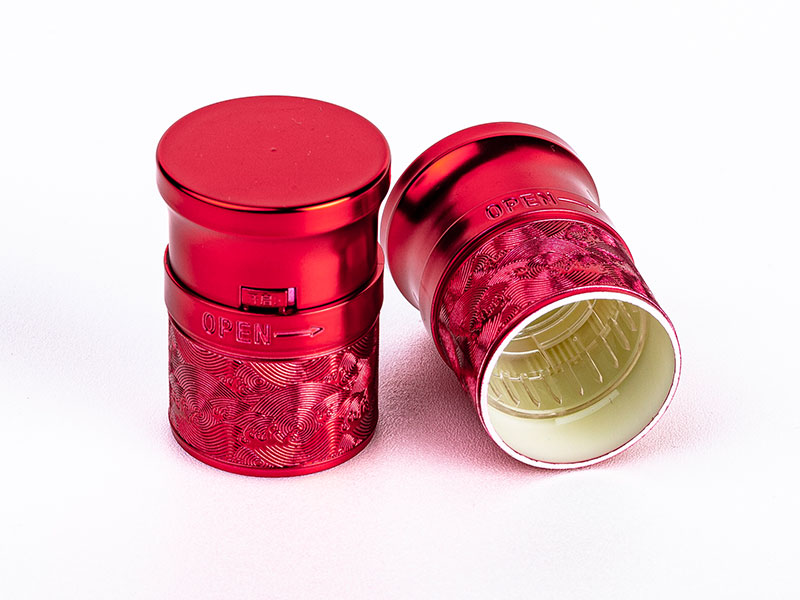
In modern wine packaging, the 30x60mm aluminum bottle cap has quietly become a strategic component rather than a simple closure. For many wineries, this cap size is the “new standard” for still wines, especially when balancing shelf appeal, flavor protection, and cost control. Looking closely at its structure, alloy tempering, and sealing technology reveals why this cap is so reliable for anti-leak performance and long-term stability.
Why the 30x60mm Format Dominates Still Wine
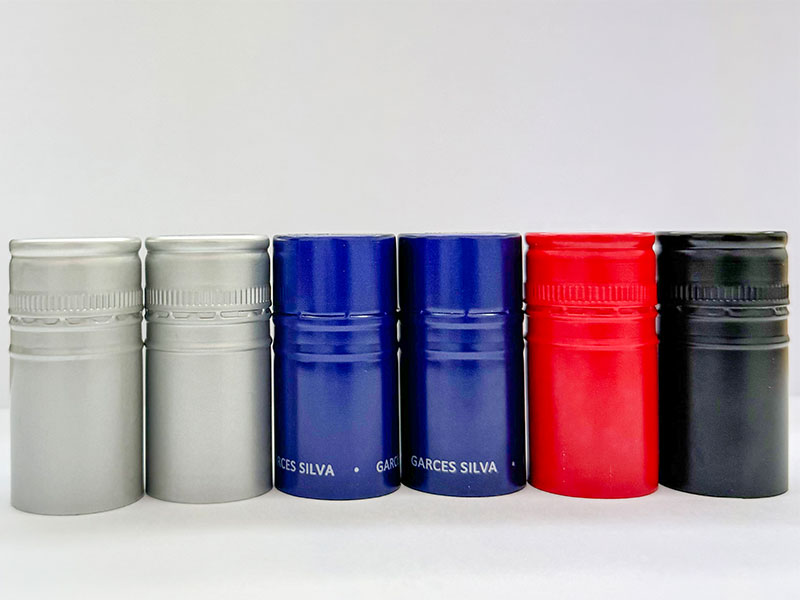
The 30x60mm dimension refers to a 30 mm outer diameter and a 60 mm height. This geometry is not arbitrary. It is designed to match common BVS/BVP wine bottle neck finishes, creating a stable sealing interface.
From a packaging line perspective, this size offers three advantages:
- A tall sidewall that provides enough metal for secure thread formation and knurling
- Sufficient internal height to accommodate a variety of liners and seals
- Compatible dimensions with widely used capping machines, reducing changeover complexity
For wine brands, this means fewer leaks, fewer returns, and a better preservation of aroma and taste, all while keeping the packaging line running at speed.
The Core Material: Aluminum Alloy and Temper
Most 30x60mm wine caps are made from a specific family of aluminum alloys optimized for deep drawing and good printability. A common choice is the 8011 or 3105 series, sometimes 3003, in a carefully controlled temper.
These alloys provide a balance of properties:
- High formability for drawing and thread rolling without cracking
- Sufficient strength to resist deformation during filling, capping, and transport
- Excellent surface quality for lacquering and high-resolution printing
- Natural corrosion resistance, enhanced by coatings
Temper is equally important. Cap stock is often supplied in tempers such as H14, H16, or H24. These describe how much the aluminum has been work-hardened after rolling.
- Softer tempers improve formability but can reduce mechanical strength
- Harder tempers provide better resistance to denting and thread collapse, but must still be formable
For 30x60mm caps, manufacturers typically choose a mid-range temper that allows precise thread formation and top embossing while maintaining cap integrity under bottling torque and transport stresses.
Anti-Leak Security: How the Seal Actually Works
The anti-leak performance of a 30x60mm aluminum bottle cap is the result of several elements working together.
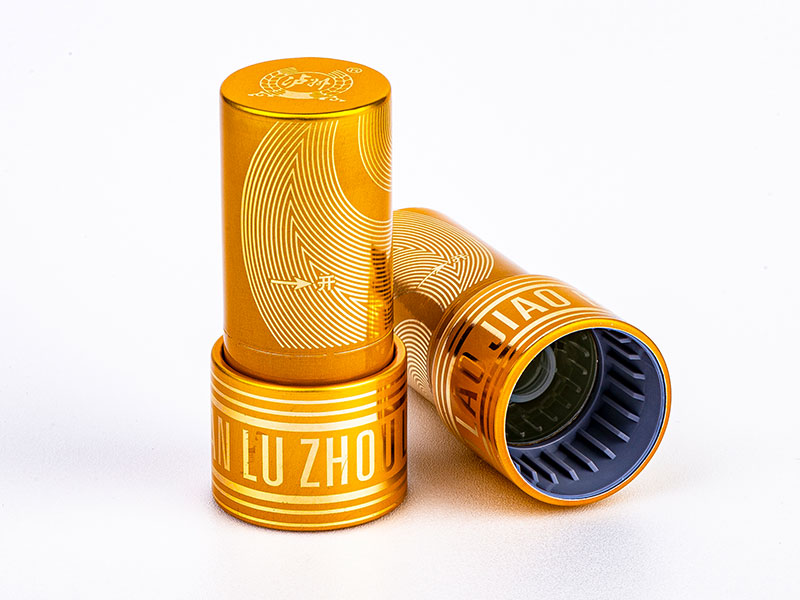
First is the interface between cap and bottle. The threads are rolled into the sidewall during capping; the metal plastically deforms around the bottle’s glass thread profile. This creates a tight mechanical “lock” that resists loosening under vibration and temperature changes.
Second is the liner. Inside the cap, a sealing liner compresses against the bottle lip when torque is applied. For wine, this liner is usually:
- Expanded polyethylene (EPE)
- Tin-Saran or Saranex-based seals
- Specialized oxygen-control liners for premium or age-worthy wines
The liner’s role is to create a continuous, elastic barrier that fills microscopic irregularities in the glass finish. This is where leak prevention truly happens: the liner absorbs slight glass variations and maintains contact pressure over time.
Third is the application torque. Capping machines are calibrated to apply an optimal torque range. Too low and the seal may not fully engage; too high and you risk stressing the threads or deforming the liner. Correct torque ensures consistent, repeatable sealing performance across large production runs.
Internal and External Coatings: More Than Just Color
While consumers see color and design, coatings are doing quiet technical work in the background.
Internally, a food-grade lacquer protects the aluminum from any contact with the wine or condensate. This prevents corrosion and metallic off-flavors. Epoxy-based or BPA-NI (BPA-non-intent) coatings are common, chosen to meet food-contact regulations in different markets.
Externally, a base coat and top coat are applied before printing. These coatings provide:
- UV resistance to protect inks and maintain branding
- Scratch resistance during transport and retail handling
- Enhanced corrosion resistance in humid cellars or coastal environments
The combination of internal and external coatings ensures that the closure maintains structural integrity and appearance across the product’s shelf life.
Typical Parameters and Performance Characteristics
While exact values can vary by producer, 30x60mm aluminum wine caps often follow similar parameter ranges:
- Diameter: 30 ± 0.2 mm
- Height: 60 ± 0.3 mm
- Wall thickness: approximately 0.20–0.23 mm depending on alloy and design
- Thread type: BVS / BVP compatible rolling profile
- Surface treatment: degreasing and chemical conversion coating prior to lacquering
- Coating thickness: typically 5–8 μm internal, 10–15 μm external (including ink layers)
performance indicators include:
- Leak tightness under pressure and inversion tests
- Torque retention after simulated transport
- Corrosion resistance in salt-spray or humidity tests
- Liner adhesion and elasticity over time
These parameters are validated against international packaging standards and regional food-contact regulations.
Implementation Standards and Quality Control
To guarantee consistent performance, 30x60mm caps are usually manufactured under:
- ISO 9001 quality management systems
- HACCP-based food safety controls for materials in contact with consumables
- Compliance with FDA, EU, or local food-contact regulations, depending on the market
Dimensional checks, visual inspections, and functional tests are carried out at critical stages:
- Aluminum strip inspection before cap forming
- Thread and knurl depth measurement after forming
- Coating adhesion and curing verification
- Liner weight and placement control
- Torque and leakage testing on sample bottles
This systemic approach ensures that each batch of caps will run smoothly on your filling line and perform consistently on the shelf.
The chemical composition of a typical alloy used for 30x60mm wine caps (for example, AA8011) can be summarized as follows. Exact ranges may differ slightly by specification.
| Element | Typical Range (% by weight) | Function in Alloy |
|---|---|---|
| Al | Balance | Base metal, provides formability and light weight |
| Fe | 0.6 – 1.0 | Improves strength, influences grain structure |
| Si | 0.5 – 0.9 | Enhances strength and formability |
| Mn | ≤ 0.3 | Adds strength and corrosion resistance |
| Cu | ≤ 0.1 | Slight strength increase, controlled for corrosion |
| Mg | ≤ 0.05 | Minor strength contribution |
| Zn | ≤ 0.1 | Controlled to avoid corrosion issues |
| Ti | ≤ 0.08 | Grain refinement, improves formability |
| Others | ≤ 0.05 each, 0.15 total | Traces within strict limits |
This alloy composition, combined with tempering, gives the cap stock its deep-drawing capability, stable mechanical strength, and good response to lacquering and printing.
How These Closures Protect Wine Quality
From a wine quality perspective, the closure must do more than just prevent leaks. It influences oxygen ingress, aroma retention, and aging behavior.
- The liner composition can be tuned to allow ultra-low oxygen transmission for delicate whites, or slightly higher ingress for reds that benefit from controlled micro-oxidation.
- A reliable anti-leak seal safeguards free SO₂ levels by preventing unwanted oxygen intrusion through cap movement or seal failure.
- Consistent thread engagement and torque retention ensure that each bottle in a batch experiences similar aging conditions, improving batch-to-batch reliability.
For exporters, robust anti-leak performance is especially critical. Bottles may experience temperature swings, long freight journeys, and variable handling. The 30x60mm aluminum cap is engineered to endure these stresses while maintaining a tight seal and a clean, premium appearance.
A Practical Choice with Technical Depth
The 30x60mm aluminum bottle cap looks simple on the outside, but its reliability depends on a precisely engineered combination of alloy, temper, coatings, liner technology, and strict process control.
For wineries, this closure offers:
- Strong anti-leak security for domestic and export markets
- Excellent compatibility with modern high-speed filling lines
- Branding flexibility through colors, embossing, and printing
- Controlled oxygen ingress via liner selection
When choosing a supplier, examining alloy specifications, temper options, liner types, and test protocols gives insight into how well the closure will perform on your wine.
In a market where packaging failures can damage both product and reputation, a properly engineered 30x60mm aluminum cap is not just a component; it is a quiet but essential guardian of your wine’s quality.