

Aluminum Wine Closures for Bottled Wine with Custom Engraving Options
Aluminum Wine Closures for Bottled Wine with Custom Engraving Options
At first glance, a wine closure looks like a small, functional detail. Yet for many wineries and wine brands, the closure is the first physical point of contact between their product and the consumer. In the hand, on the table, turning between fingers while conversation flows, the closure becomes an ambassador for quality. When that closure is aluminum, engineered for performance and enhanced with custom engraving, it stops being just a “cap” and starts acting as branded, technical packaging with a long, quiet life.
Looking at aluminum wine closures from a metallurgical and manufacturing standpoint reveals a perspective that goes well beyond aesthetics. The alloy’s composition, temper, surface treatment, and printing or engraving method all determine how the closure will behave in the bottling line, in the cellar, and in the consumer’s kitchen drawer years later.
The aluminum alloy behind a good closure
Most screw-cap wine closures are made from non-heat-treatable wrought aluminum alloys in the 1xxx or 3xxx series. The goal is to balance formability, surface finish, mechanical strength, and corrosion resistance while keeping processing efficient and predictable.
A common choice for roll-on pilfer-proof (ROPP) wine closures is an alloy such as 8011, 3105, or similar, depending on local standards and production preferences. These alloys are rich in aluminum but skillfully modified with elements like manganese, iron, and sometimes silicon to boost strength and control grain structure without sacrificing ductility.
A representative composition range for a frequently used closure alloy like AA8011, per typical industry and ASTM/EN practice, can look like this:
| Element | Typical Range (wt.%) |
|---|---|
| Al | Balance (≈ 97.0–99.0) |
| Fe | 0.60–1.0 |
| Si | 0.50–0.9 |
| Mn | ≤ 0.20 |
| Cu | ≤ 0.10 |
| Mg | ≤ 0.05 |
| Zn | ≤ 0.10 |
| Ti | ≤ 0.08 |
| Others (each) | ≤ 0.05 |
| Others (total) | ≤ 0.15 |
While the iron and silicon here might appear as “impurities” from a purist’s viewpoint, in closure strip they are deliberate tools. They help control recrystallization behavior, influence earing (edge waviness after deep drawing), and contribute to the stiffness needed so the closure holds its thread shape after roll-forming on the bottling line.
Temper and mechanical behavior
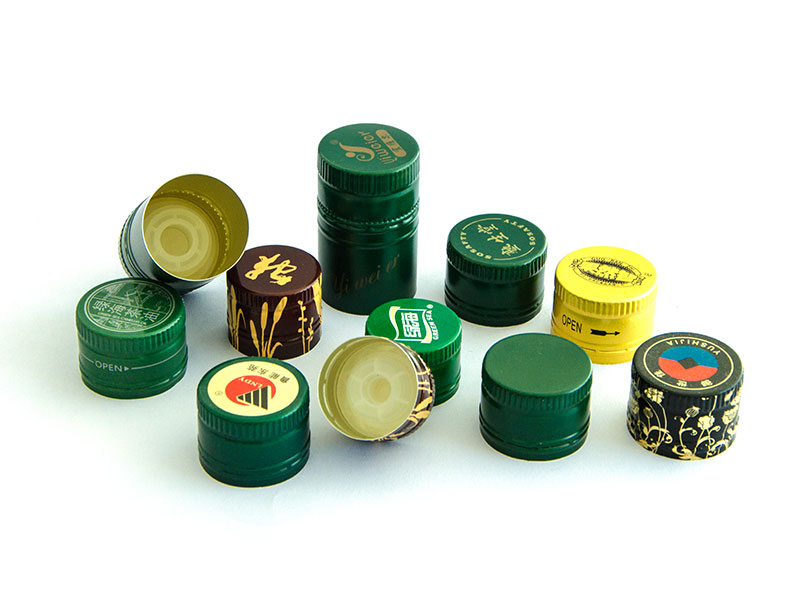
The temper of the closure sheet is a hidden but crucial variable. For wine closures, semifinished strip is often supplied in an H14, H16, or customized strain-hardened condition, then undergoes further forming, ironing, and thread-rolling. Temper determines how the metal yields under the cap forming tools and later under the roll-on equipment that impresses the thread profile around the glass finish.
Too soft and the closure can deform unevenly, leading to sealing failures, crooked caps, or visual defects. Too hard and the risk of cracking in the score lines, thread areas, or knurl zones rises dramatically, especially on high-speed bottling lines where micro-misalignments are inevitable.
Typical mechanical property targets for aluminum closure sheet might include:
| Property | Typical Range |
|---|---|
| Yield Strength (Rp0.2) | 80–120 MPa |
| Tensile Strength (Rm) | 130–160 MPa |
| Elongation (A50) | 8–15% |
These values favor controlled plastic deformation with enough reserve ductility to accommodate thread rolling and top embossing, but adequate strength so the closure remains dimensionally stable under torque testing and transport.
Surface, coatings, and food-contact performance
From the perspective of a winemaker, the interior of the closure is really where the story begins. The inside lacquer and liner must be compatible with wine chemistry, sulfur dioxide, and potential cork taint contaminants in the environment. Meanwhile, the outer surface must carry inks, protective lacquers, and optionally, engraved or embossed motifs.
Food-contact coatings for internal surfaces are typically based on epoxy, polyester, or BPA-NI (non-intent) chemistries developed to comply with FDA and EU regulations. They act as a barrier between the wine and the metal, preventing interaction that could cause off-flavors or corrosion. The aluminum itself naturally forms a thin oxide layer, but for long-term wine storage, the tailored lacquered system is critical.
On the exterior, primer and topcoat systems are designed for adhesion, scratch resistance, and compatibility with finishing operations like hot-foil stamping or engraving. The outer lacquer must be flexible enough to survive forming and thread-rolling without cracking or color shift, yet hard enough to resist scuffing during filling, cartoning, and distribution.
Standards and implementation guidance
Behind every closure that looks “effortless” on the shelf lies a network of standards and process parameters.
Aluminum alloy and temper are generally specified according to EN 573 and EN 485 or ASTM B209, ensuring consistent composition and mechanical properties. Dimensional tolerances for strip thickness, flatness, and width are tightly controlled because small deviations magnify into closure defects at hundreds of closures per minute.
Food-contact compliance must meet regulations such as EU Framework Regulation (EC) No 1935/2004, EU Regulation (EU) No 10/2011 where applicable coatings or plastics are used, and corresponding FDA CFR standards. Migration testing, sensory evaluation, and long-term storage trials with control wines verify that aluminum closures and liners do not negatively influence aroma, color, or taste.
On the bottling line, closure torque, vertical load, and thread-roller settings are all tuned to the specific closure-gold glass pair. Surface friction between lacquered aluminum and the capper components becomes important, which is another reason why coating hardness and slip modifiers in the lacquer system must be carefully selected.
Custom engraving as both art and engineering
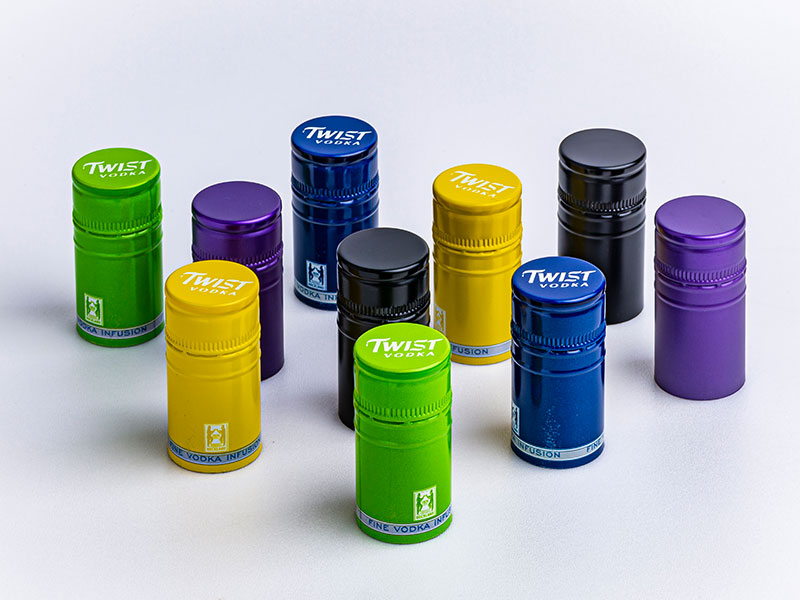
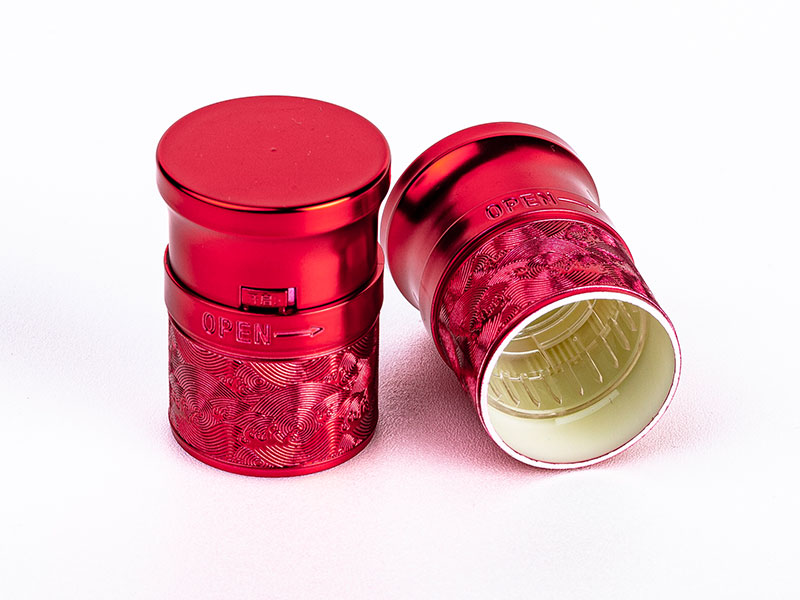
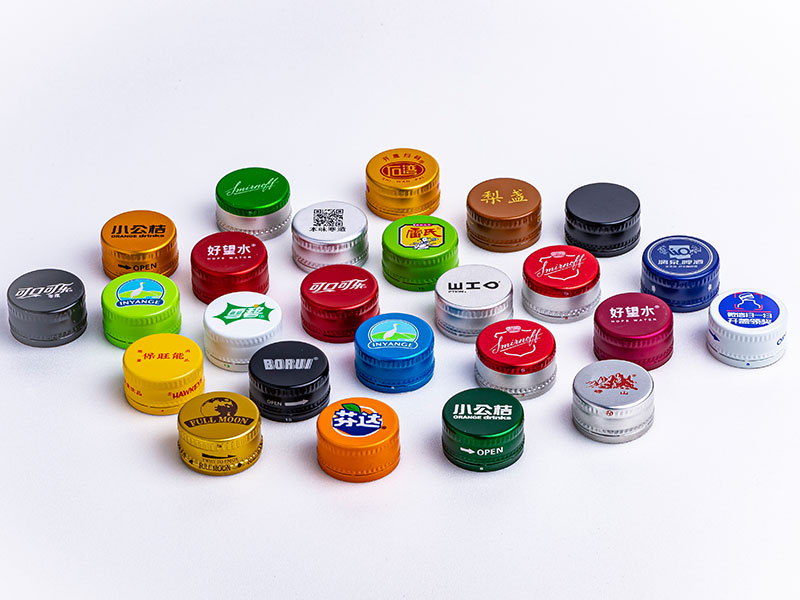
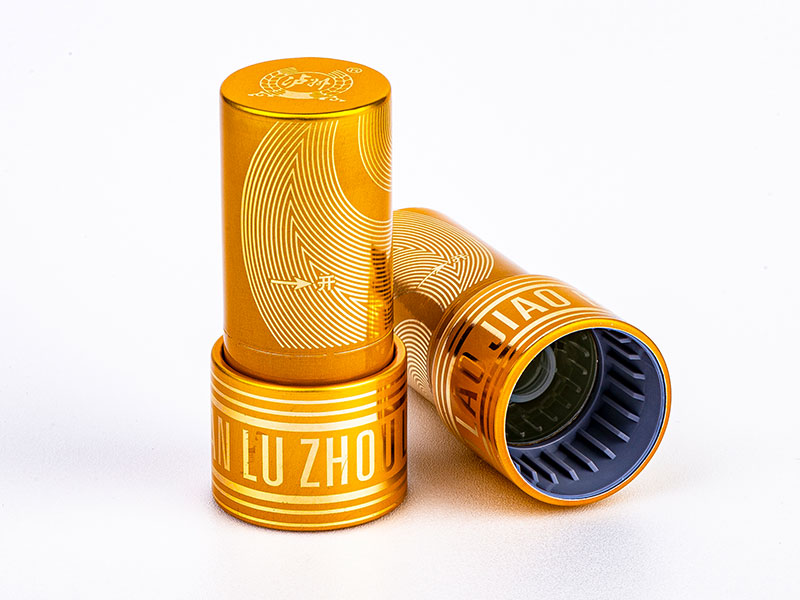
Custom engraving is where the technical material suddenly becomes personal. A winery logo, a vintage year, a geographic outline, or a signature etched into the aluminum turns each bottle into a small tactile artifact. Yet engraving is not just a design flourish; it interacts with alloy choice, temper, coating, and production speeds.
There are two main paths: physical embossing or debossing during cap forming, and post-process engraving, often laser-based.
Embossing and debossing press a raised or recessed design into the aluminum top or sidewall using dies. This cold-working locally strains the material. The alloy must therefore have enough ductility to accept deformation without microcracking, especially in thinner gauges. Forming simulations and small-batch trials help confirm that the selected alloy temper and lacquer stack can hold sharp detail without damaging the protective coatings.
Laser engraving, by contrast, removes or modifies the surface layer after lacquering and printing. Here, the parameters shift: laser power, spot size, and scan speed must be carefully matched to the lacquer system so the exposed design remains clean and won’t lead to premature corrosion. In many cases, the laser is tuned to ablate only the ink layer, revealing a contrasting underlying lacquer or metal tone, instead of burning through the full protective system.
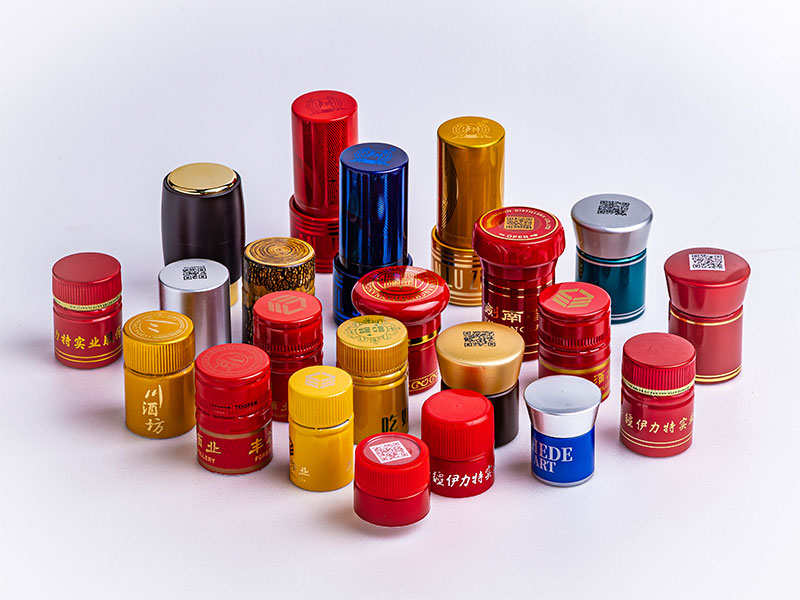
For wineries planning custom engraving options, these technical details translate into practical questions. Will the closure carry a simple monochrome logo or a complex, high-resolution pattern? Is the brand seeking a subtle, tone-on-tone effect, or high contrast visible across a tasting room? How many SKU variations will be needed each year? The answers drive whether a deep-embossed tooling strategy or digitally flexible laser customization makes more economic and technical sense.
Consistency between bottle and brand
That enduring physical presence sets a higher bar for surface feel, scratch resistance, and corrosion behavior. A closure that tarnishes, flakes, or fades in a household environment undermines the premium impression of the wine itself, even if the bottle performed perfectly in storage. This is why attention to alloy, temper, and coatings is not just a manufacturing concern; it is integral to brand identity.
The sustainability dimension
Aluminum also adds a sustainability dimension that resonates well with modern wine consumers. High recycling rates, especially in regions where beverage can recycling is already established, mean that aluminum closures typically enter a recycling stream rather than landfill. From a metallurgical standpoint, the alloy families chosen for closures are fully recyclable; the presence of coatings and liners requires proper separation in industrial recycling plants but does not fundamentally limit re-melting.
For wineries promoting environmental responsibility, specifying closures produced from high-recycled-content aluminum, backed by ISO 14001-certified production or LCA data, can strengthen their sustainability story. The durability of engraved and lacquered finishes ensures the closure can be reused by consumers for household purposes before eventually entering the recycling loop.
Bringing it all together
When judged purely on function, aluminum wine closures must provide an airtight, consistent seal, maintain wine quality, and run smoothly on bottling lines. When evaluated as part of brand experience, they must look and feel premium, tell a visual story, and stand up to handling over time. The unique viewpoint is that both of these worlds converge in metallurgy and process control.
The alloy composition, temper, and surface engineering of aluminum closures are invisible to the casual eye, but they set the limits for everything a brand might wish to express on that small disc of metal at the top of the bottle. Custom engraving options then act as the bridge between material science and storytelling, allowing each winery to turn a standardized industrial product into a distinctive, memorable signature.
For producers who understand and respect both aspects, aluminum closures stop being a commodity and become a carefully tuned component of the wine’s identity, as technical and as expressive as the glass, the label, and the wine itself.