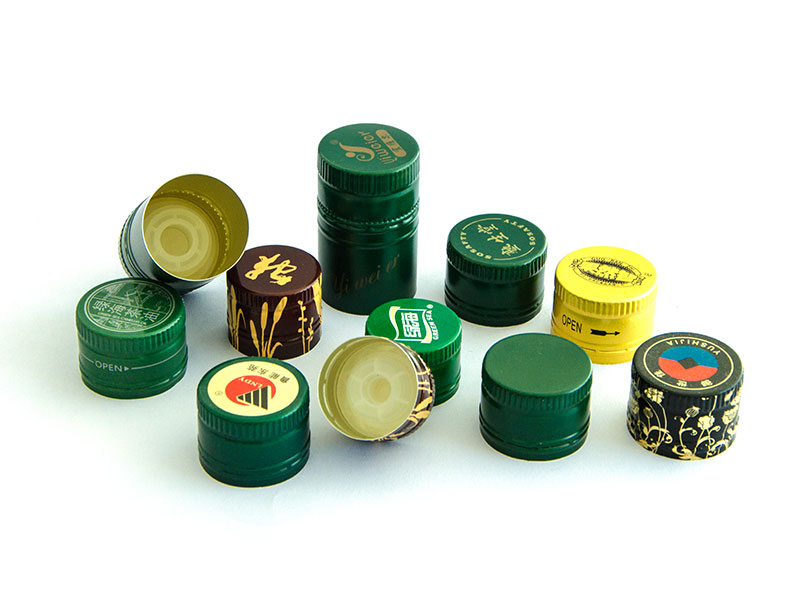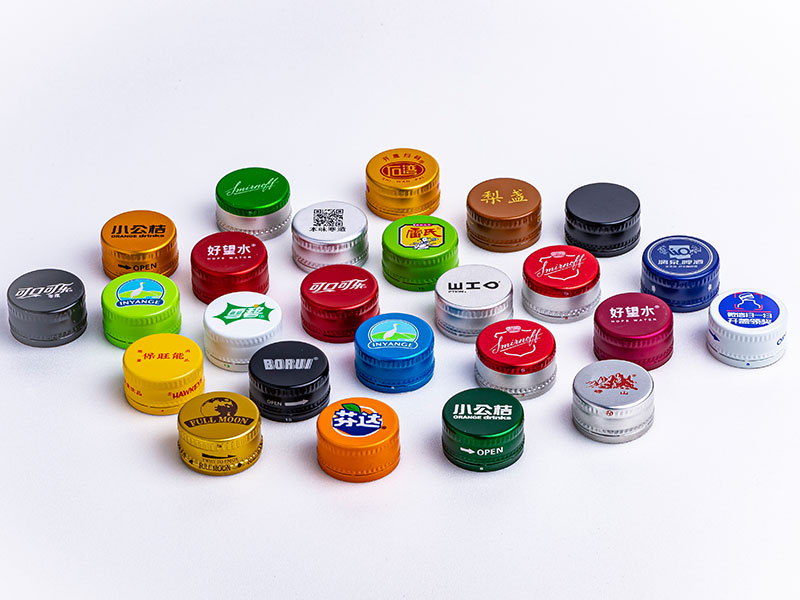


Aluminum Bottle Closures for Soda with Anti Theft and Tamper Proof Mechanism
Aluminum Bottle Closures for Soda with Anti Theft and Tamper Proof Mechanism
There is a quiet moment of truth every time someone twists open a soda bottle. Before the fizz rises and the aroma escapes, the consumer is really asking a single question: “Has anyone touched this before me?” The answer does not come from the beverage itself; it comes from the closure. For carbonated drinks, especially those sold in high‑traffic, complex distribution chains, the aluminum cap becomes both a guardian of pressure and a witness of integrity.
Looking at aluminum soda closures only as “small metal caps” misses their deeper role. They are miniature engineered systems that balance metallurgy, forming technology, food safety, and human psychology. The familiar click, pop, or visible band separation when the cap opens is not an accident; it’s a carefully tuned anti‑theft and tamper‑evident mechanism built on the behavior of specific aluminum alloys.
Why aluminum wins the trust battle
Steel and plastics still occupy part of the closure market, but aluminum closures have carved out a distinct space, especially for premium sodas and flavored carbonated drinks. The choice is not just about looks.
Aluminum closures for carbonated beverages are typically made from high‑strength, work‑hardenable alloys in the AA3000 or AA5000 series, optimized to resist internal pressure and thread deformation. A representative alloy used for roll‑on pilfer‑proof (ROPP) closures is AA3105‑H16 or AA8011‑H14, often in the form of thin sheet.
A typical composition range for an aluminum closure sheet alloy might look like this:
| Element | Typical Range (wt%) | Function in Closure Alloy |
|---|---|---|
| Al | Balance | Base metal, low density, good formability |
| Mn | 0.2–1.0 | Strengthening, improves resistance to deformation |
| Fe | 0.4–1.0 | Controls grain structure, improves form stability |
| Si | 0.2–0.8 | Enhances formability, affects surface quality |
| Mg | 0.1–0.5 (if present) | Strengthening, helps with work hardening |
| Cu | ≤0.2 | Strengthening but kept low to avoid corrosion |
| Ti | ≤0.05 | Grain refinement during casting |
| Others | ≤0.05 each | Impurity control |
The tempers—such as H14, H16, or H18—describe the level of cold work and resulting strength. For soda closures, the material must be strong enough to hold the rolled threads and tamper band bridges under internal carbonation pressures, yet ductile enough to deform and tear at precisely the right points when the consumer opens the bottle.
An over‑hardened alloy might split prematurely during capping or shipping; an under‑hardened one might not tear cleanly, leaving the tamper‑band only partially separated and undermining consumer confidence.
The role of pressure in shaping closure design
Carbonated sodas are not passive contents. They exert internal pressure that changes with temperature and handling. On a hot day in a container yard, the pressure can spike substantially. This pressure presses the closure threads against the bottle neck and challenges both sealing liners and the aluminum shell.
The intriguing part is that this internal pressure becomes part of the tamper‑resistance. When the cap is intact, the pressure is balanced by thread engagement and liner compression. But if someone tries to remove and re‑apply the closure, they must overcome that pressure and the mechanical interlock of aluminum‑formed threads and bridges.
Aluminum alloys with well‑controlled yield strength—often around 120–180 MPa for closure sheet in H14–H16 temper—allow the thread and knurl features to be rolled sharply without springback, creating a close mechanical fit to the bottle’s neck finish. This crisp fit makes undetected removal extremely difficult; attempts to back off the closure usually transfer stress to the tamper band, tearing the bridges designed to fail in a specific way.
Tamper‑proof versus tamper‑evident: an honest distinction
No closure is absolutely “unopenable” to a determined attacker with tools, time, and low regard for evidence. Modern aluminum soda closures focus less on being literally tamper‑proof and more on being tamper‑evident and theft‑deterrent. The subtle but crucial shift is: the system does not try to prevent all possible interference; it aims to make it obvious and non‑reversible.
The anti‑theft performance resides in how the closure reacts to misuse. Consider the pilfer‑proof band: it is attached to the main cap by a series of thin aluminum bridges formed during the pressing operation. These bridges are engineered weak spots—intentional fracture points. The band often engages a locking ring or bead molded into the neck of the bottle. When the cap is twisted, the bridges go into a combined tension and bending state. Properly tuned alloy temper and bridge geometry ensure that:
- During normal transport and handling, the bridges absorb vibration and impact without breaking.
- Under a consumer’s first opening torque, the bridges reliably tear, leaving the band behind the neck ring.
- After being torn, the bridge remnants cannot be re‑assembled or hidden without clear visual damage.
In metallurgical terms, the bridges operate in a controlled transition zone between elastic and plastic deformation. The closure designer works backward from typical opening torques (often in the range of 12–20 N·m for carbonated drinks, depending on bottle size and closure design) and from expected shipping loads, then chooses alloy temper and sheet thickness to place the bridge failure point in a narrow, predictable window.
Inside the closure: coatings, liners, and food contact science
The anti‑theft story does not end at the metal. The internal coating and the sealing liner have their own quiet responsibilities. Aluminum by itself is reactive, particularly in contact with acidic, carbonated beverages. To transform it into a stable food‑contact surface, an internal lacquer or epoxy‑free polymer coating is applied, often with a thickness in the range of 6–12 microns, then baked to cure.
This coating must adhere to aluminum that has undergone heavy cold work and may later be subjected to post‑forming stresses during capping. If the coating cracks or delaminates, corrosion can begin under the film, leading to blistering or pinholes that compromise both taste and safety. For closures with anti‑tamper bands, the coating has to bridge over deeply drawn and embossed regions without thinning to failure.
Between the bottle and the closure sits the liner, usually a foamed or solid polymer disc or a ring‑shaped compound. For carbonated soda, liner formulation focuses on:
- High elasticity to maintain seal under fluctuating pressure.
- Low gas permeability to retain carbonation over shelf life.
- Chemical compatibility with beverage acids, sweeteners, and flavors.
The liner is also a subtle ally in tamper prevention. When the closure is initially rolled onto the threaded neck, the liner compresses and “memorizes” that shape. Any later attempt to remove the closure and then re‑seal it without proper equipment often leaves telltale distortions or compression patterns in the liner that quality inspectors, and sometimes even consumers, can see.
Forming the invisible security features
From a distance, many aluminum closures look interchangeable. Up close, tiny geometric decisions distinguish a casually removable cap from a true tamper‑evident closure.
regions influenced by alloy selection and tempering include:
- Skirt length and wall thickness, which control the rigidity of the pilfer band area.
- Knurl pattern, which affects both grip for the user and the distribution of forming strains in the metal.
- Bridge number and spacing, governed by sheet thickness and expected opening torque.
- Thread depth and profile, formed by rolling rather than cutting, leveraging aluminum’s ductility.
The closure is typically produced by sheet blanking, cupping, and then multiple drawing and ironing steps, followed by thread and knurl rolling. Each forming step increases work hardening locally. A closure that starts as H14 sheet may end up with zones that behave closer to H18 near the knurl and band, with softer regions remaining in less‑worked areas. Managing these gradients is part of the art: the tamper band must fail where you want it to, not where uncontrolled work‑hardening or thinning makes a hidden weak point.
Standards that quietly govern trust
Beneath the marketing language on beverage labels are precise technical standards. International specifications for closure stock, food‑contact coatings, and tamper‑evidence testing give the anti‑theft features a structure beyond intuition.
Producers often reference or align with:
- EN 541 and EN 602 for aluminum and aluminum alloy sheets and strips for closures.
- EN 573 and EN 485 series defining chemical composition, mechanical properties, and tolerances of aluminum sheet.
- ASTM standards for aluminum alloys such as B209 (sheet and plate) for baseline mechanical property ranges, adapted to closure applications.
- Food contact regulations such as EU 1935/2004 and FDA 21 CFR on coatings and liners, ensuring the protective layers that enable safe metal use.
Verification includes torque testing for opening and re‑sealing, pressure retention under thermal cycling, and detailed tamper‑band integrity tests that simulate both legitimate opening and malicious attempts to bypass the anti‑theft mechanism.
Aluminum closures as narrative devices
Aluminum soda closures, seen through this lens, are less like generic caps and more like carefully cast characters in the story of a product. Their alloy design tells how the brand values safety and shelf life. Their tamper bands express the company’s commitment to transparency: “If someone interfered, you will know.” Their meticulously tuned fracture lines provide the customer with a small ritual of confirmation every time the cap is twisted or lifted.
From molten aluminum stabilized with trace elements to precisely drawn cups crowned with tamper‑evident bands, each closure carries a coded promise: the fizz inside belongs only to the first person who opens it. In a world of long supply chains and anonymous transactions, that small, audible snap of aluminum giving way is one of the clearest sounds of trust.